Best longevity peptides for anti-aging and cellular repair.

See more of CureMed in your Google results.
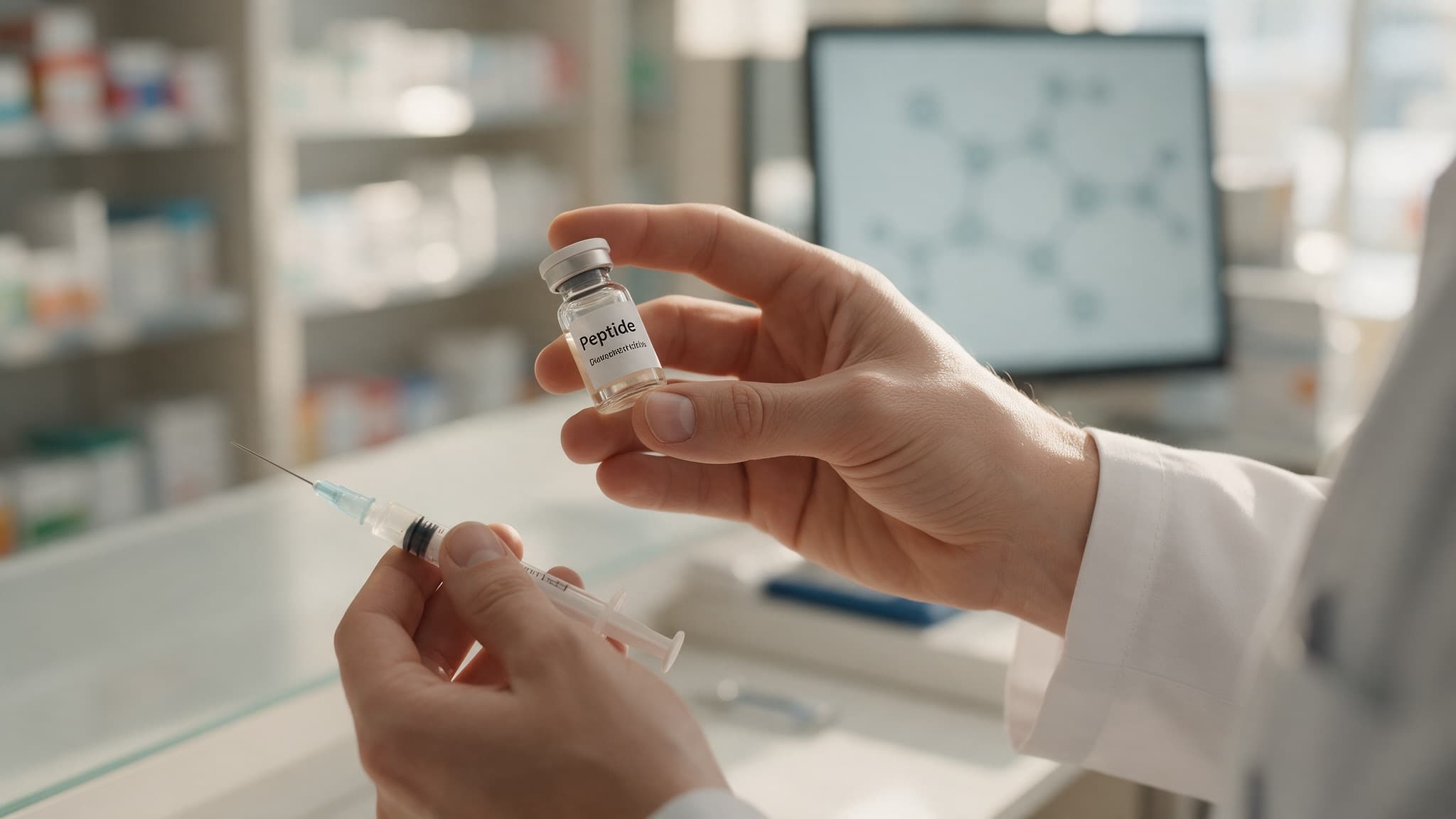
Nearly every peptide is sold as repairing cells or reversing ageing. Only one has shown a repair effect in people — GHK-Cu, on skin, in small trials. Tesamorelin genuinely reduces belly fat in patients with a specific condition. Everything else — BPC-157, TB-500, epitalon, MOTS-c and the growth-hormone peptides — has results in animals or cells, or none, and no peptide has been shown to slow ageing in a healthy person.
Ranked on human evidence for the specific repair or anti-ageing claim each peptide carries, the list is short at the top: GHK-Cu applied to skin has small human trials showing improved skin appearance and wound healing, and ranks first because it is the only peptide with a measured repair effect in people; tesamorelin has Phase 3 evidence for reducing visceral fat and a signal on liver fat, which is a metabolic-ageing effect if not a repair one; thymosin alpha-1 has immune-modulation trials in specific diseases. Everything else sold for cellular repair — BPC-157 (tissue healing), TB-500 (tissue repair), epitalon (telomeres), MOTS-c (mitochondria), sermorelin and CJC-1295/ipamorelin (growth hormone), SS-31 (mitochondrial membranes, a real drug candidate in trials) — has animal or cell data, an early trial for a disease that is not ageing, or nothing. No peptide has been shown to repair cells or slow ageing in a healthy human. The compounds with the strongest human evidence for cellular-repair biology are not peptides.
- 'Cellular repair' names a mechanism in a dish; the ranking asks which peptides have shown a repair outcome in a human, and one has — on skin.
- Tesamorelin's fat-loss evidence is real, approved, and for a patient population; it is the closest any injectable comes to a measured anti-ageing effect.
- The telomere claim for epitalon rests on decades-old reports with no independent replication; telomere length is not a validated target anyway.
- The mitochondrial peptides — MOTS-c, SS-31 — have the best biology and, respectively, no human trial and trials for diseases that are not ageing.
- BPC-157 and TB-500 are the most-sold repair peptides and the least-studied in humans; the gap between reputation and evidence is widest here.
CureMed ranks on published human evidence, and screens drug interactions first.
Peptides ranked on their repair and anti-ageing evidence
Ranked on: whether the specific repair or anti-ageing claim has been shown in a human — a measured outcome, in a trial, in people — and how strong that evidence is. Mechanism in cells or animals earns at most a C.
| # | Option | Verdict | Grade |
|---|---|---|---|
| 1 | GHK-Cu (topical) | The only peptide with a measured repair effect in humans | GRADE CEarly |
| 2 | Tesamorelin | Measured fat loss in patients; a metabolic-ageing effect, not repair | GRADE AEstablished |
| 3 | Thymosin alpha-1 | Immune modulation in disease trials; no ageing outcome | GRADE CEarly |
| 4 | SS-31 (elamipretide) | Real mitochondrial drug candidate; trials in disease, not ageing | GRADE CEarly |
| 5 | Sermorelin | Raises GH; 'repair' is inference from the hormone | GRADE BPromising |
| 6 | Epitalon | Telomere claim without replication or a validated target | GRADE DInsufficient or unsafe |
| 7 | MOTS-c | Genuine mitochondrial peptide; zero human trials | GRADE DInsufficient or unsafe |
| 8 | BPC-157 | The most-sold repair peptide; no human trial | GRADE DInsufficient or unsafe |
| 9 | TB-500 (thymosin beta-4 fragment) | Real molecule with human data by other routes; none for this | GRADE DInsufficient or unsafe |
| 10 | CJC-1295 and ipamorelin | Raise GH and IGF-1; no repair outcome; regulatory concerns | GRADE DInsufficient or unsafe |
Small human trials on skin show improved appearance, elasticity and wound healing with topical copper peptide. It is a modest, local, cosmetic-scale effect — which is still more than any injectable on this list can show. Ranked first with a C because the outcome is real and small; injectable GHK-Cu for 'systemic repair' has no human data.
Phase 3 trials show reduced visceral fat in HIV-associated lipodystrophy, with a signal on liver fat in later work. That is a genuine, approved, measured effect on a marker that tracks metabolic ageing. It is not cellular repair and it was not measured in healthy adults; grade A for evidence, with the indication caveat that applies everywhere on this site.
- 03
Thymosin alpha-1
GRADE CEarlyImmune modulation in disease trials; no ageing outcomeHas human trials as an immune modulator in hepatitis, some cancers and sepsis, with an approval in some countries. The 'immune ageing' claim extrapolates from those; no trial in healthy older adults measures an ageing outcome. Not lawfully compoundable from bulk in the US.
- 04
SS-31 (elamipretide)
GRADE CEarlyReal mitochondrial drug candidate; trials in disease, not ageingA mitochondrial-membrane-targeting peptide with genuine human trials in Barth syndrome and primary mitochondrial myopathy, with mixed results. The best mitochondrial biology on this list and the only one in a proper development programme — for rare diseases. Not available as an anti-ageing product; anything sold under the name online is unverified.
Reliably stimulates growth-hormone release with a long safety record. The repair claim is that GH and IGF-1 promote tissue maintenance; the counter-evidence is that lower IGF-1 associates with longer life in several species and some human cohorts. Grade B for a known pharmacology; the repair outcome has not been measured.
Decades-old Russian reports of telomerase activation and lifespan effects, never independently replicated. Telomere length is itself not a validated individual biomarker. The claim is specific and unsupported.
A mitochondrial-derived peptide with interesting rodent data on metabolism and exercise capacity. No human trial exists. Sold as an injectable with the grey-market sourcing risks.
Tendon, ligament, gut and vascular healing in rodents across three decades of studies from largely one research group; no completed human trial of any repair outcome. The gap between reputation and evidence is widest here.
- 09
TB-500 (thymosin beta-4 fragment)
GRADE DInsufficient or unsafeReal molecule with human data by other routes; none for thisThymosin beta-4 has been studied in humans for eye and cardiac indications; the fragment sold as TB-500, injected for musculoskeletal repair, has not. Cell and animal data only for the claim it is sold on.
- 10
CJC-1295 and ipamorelin
GRADE DInsufficient or unsafeRaise GH and IGF-1; no repair outcome; regulatory concernsThe 'repair' story is the growth-hormone story again, with the added regulatory citations of vasodilatory reactions and serious adverse events. Where tested against placebo on outcomes that matter, no benefit.
The claim, and what has actually been shown
Repair claims against the human evidence
| Peptide | Claimed to repair | Shown in humans | Shown only in animals or cells |
|---|---|---|---|
| GHK-Cu (topical) | Skin, collagen, wounds | Skin appearance, wound healing — small trials | Broad gene-expression effects |
| Tesamorelin | Metabolic ageing (via fat) | Visceral fat reduction in a patient population | — |
| Thymosin alpha-1 | Immune function | Immune modulation in specific diseases | 'Immune ageing' |
| SS-31 | Mitochondrial membranes | Mixed results in rare mitochondrial diseases | Ageing muscle and heart in rodents |
| Sermorelin / CJC-1295 / ipamorelin | Tissue via GH/IGF-1 | GH and IGF-1 rise | Any repair outcome |
| Epitalon | Telomeres | Nothing replicated | Telomerase activation, rodent lifespan |
| MOTS-c | Mitochondria, metabolism | Nothing | Exercise capacity, insulin sensitivity in mice |
| BPC-157 | Tendon, ligament, gut, vessels | Nothing | Extensive rodent healing data |
| TB-500 | Muscle, tendon, heart | Nothing by this route | Cell migration, rodent repair |
Frequently asked questions
Which peptide is best for anti-ageing and cellular repair?
On human evidence for a repair outcome, topical GHK-Cu: small trials show improved skin appearance and wound healing. Tesamorelin has approved Phase 3 evidence for reducing visceral fat in a patient population — a metabolic-ageing effect rather than repair. Every injectable sold for cellular repair — BPC-157, TB-500, epitalon, MOTS-c, the growth-hormone peptides — has animal or cell data only. No peptide has been shown to repair cells or slow ageing in a healthy human.
Does BPC-157 repair tissue in humans?
It has not been shown to. Three decades of rodent studies, largely from one research group, show healing of tendon, ligament, gut and vessels in animals; no completed human trial exists for any repair outcome. It is the most-sold repair peptide and the least-studied in people.
Does epitalon lengthen telomeres?
The claim rests on decades-old Russian reports of telomerase activation and lifespan effects that have never been independently replicated. Telomere length is also not a validated biomarker for an individual — it has no target, a large noise band and no planned response — so even a confirmed effect would be hard to interpret.
Are growth-hormone peptides good for cellular repair?
They raise growth hormone and IGF-1 reliably; that is where the repair claim comes from. The same axis, when lower, associates with longer life across species and in some human cohorts, and when higher, with certain cancers. No repair outcome has been measured in healthy adults. Tesamorelin, the approved one, was tested in a condition where the trade-off was measured; the rest were not.
What about SS-31 or MOTS-c for mitochondria?
SS-31 (elamipretide) is a genuine drug candidate with human trials in rare mitochondrial diseases and mixed results; it is not available as an anti-ageing product, and anything sold under that name online is unverified. MOTS-c has interesting rodent data and no human trial at all. The mitochondrial biology is real; the human ageing evidence is not there.
Is topical GHK-Cu worth using?
For skin, it is the one peptide with a measured human effect — modest improvements in appearance and wound healing in small trials — and a genuine safety record in cosmetics. It is a skincare ingredient with evidence, not a longevity intervention, and the site's skincare guide ranks it alongside retinoids and sunscreen, which have far larger trials.
Keep reading
- What are the safest and best longevity peptides?
The same compounds ranked on safety and regulatory status.
- Best longevity skincare routine to slow visible aging
Where GHK-Cu sits against retinoids and sunscreen.
- Best longevity supplements for cellular health and repair
The non-peptide compounds graded on the same cellular claims.
- Free stack check
Screen any peptide against your medication before it goes in.
More in Peptides
- Best longevity peptides for skin health and wrinkle reduction.
Matrixyl has the largest placebo-controlled trial (93 women, 12 weeks); copper peptide has thinner proof. Both rank below sunscreen and retinoids.
- Peptides and therapies commonly used to extend lifespan.
GLP-1 peptides rank highest for longevity, backed by outcome trials — growth hormone peptides, BPC-157, and NAD+ infusions rank far lower on human evidence.
- Which longevity peptides are best for energy and recovery?
BPC-157, TB-500, MOTS-c, CJC-1295, ipamorelin, sermorelin and tesamorelin ranked on human trials for energy and recovery — most have none in humans.
- What are the safest and best longevity peptides?
Approved peptides tesamorelin and PT-141 rank safest with Phase 3 trial data; unregulated injectables like BPC-157 and TB-500 have no human trials at all.
- Which longevity peptides work best for lifespan extension?
No longevity peptide has human lifespan-extension evidence; ranked on animal data for epitalon, MOTS-c, SS-31, humanin and the GH-axis peptides.
- Best longevity peptides for beginners to start with.
Topical GHK-Cu ranks first for beginners — over the counter, human-trial evidence, no injection — well ahead of unregulated injectables like BPC-157.