Tesamorelin: evidence, dosing, safety & interactions
GHRH(1-44) analog (trans-3-hexenoic acid-modified)
Also sold or labeled as: Egrifta, Egrifta SV, Egrifta WR, TH9507
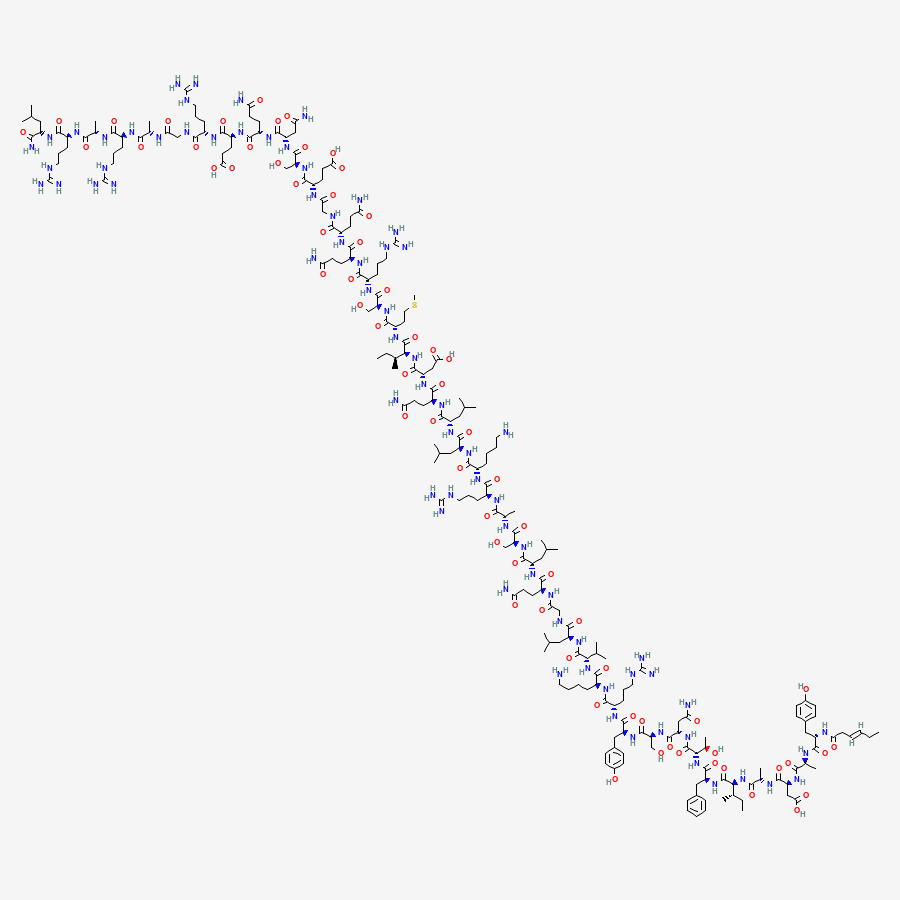
As the approved drug Egrifta, this genuinely works to reduce a specific type of belly fat in people with HIV — that's backed by strong evidence. It trims deep belly fat without moving the number on the scale — its own label says it is not for weight loss. In people without HIV it has been tested only in a few small trials.
Tesamorelin before and after: do peptides for fat loss work? Belly fat −15%, weight the same
Tesamorelin (Egrifta) is a daily injection approved only for excess belly fat in adults with HIV. In its main trial, 412 adults, 26 weeks, deep belly fat fell 15% and rose 5% on placebo — while body weight stayed the same. The label says it is not for weight loss, the fat returns after stopping, and outside HIV there is one small fat-loss trial of 60 adults.
- What it is
- An FDA-approved GHRH analog (Egrifta) that reduces visceral abdominal fat specifically in people with HIV-associated lipodystrophy.
- Evidence
- Strong for the approved indication: two replicated Phase 3 RCTs (over 800 patients combined) plus a systematic review of 10 placebo-controlled trials. Outside HIV there are only three small randomized trials: 60 adults with abdominal obesity and low growth hormone (deep belly fat fell over 12 months), 152 older adults (thinking tests, 20 weeks) and 53 adults with type 2 diabetes (blood sugar safety, 12 weeks).
- Studied dose
- 2 mg subcutaneous once daily of the original formulation in every pivotal trial. The current product, Egrifta WR, delivers the same exposure from 1.28 mg once daily. No other schedule has been through a comparable trial.
- Safety
- Generally well tolerated over 52 weeks of trial data, with injection-site reactions and GH-related joint or fluid symptoms the main issues. Visceral fat loss reverses within months of stopping — this is a maintenance therapy, not a cure.
What human trials actually show
Randomized, placebo-controlled human trials only. Animal data never appears in this section — it cannot raise a grade, and it is noted separately below.
- 01The New England Journal of Medicine2007— Pivotal Phase 3 trial: visceral fat and lipids
- Design
- Randomized, double-blind, placebo-controlled, multicenter
- Dose
- 2 mg subcutaneous once daily
- Duration
- 26 weeks
412 HIV-infected patients with abdominal fat accumulation on antiretroviral therapy
Visceral adipose tissue decreased 15.2% with tesamorelin versus an increase of 5.0% with placebo (P<0.001). Triglycerides and total-to-HDL cholesterol ratio also improved significantly. IGF-1 rose 81% versus a 5% fall on placebo. Adverse events were similar between groups, though more tesamorelin patients withdrew due to an adverse event.
doi:10.1056/NEJMoa072375 - 02Journal of Acquired Immune Deficiency Syndromes2010— Second pivotal Phase 3 trial, with 12-month extension
- Design
- Randomized, double-blind, placebo-controlled, with a blinded re-randomized extension phase
- Dose
- 2 mg subcutaneous once daily
- Duration
- 6-month efficacy phase, 12-month total
404 HIV-infected patients with excess abdominal fat
Visceral fat decreased 10.9% at 6 months versus 0.6% with placebo (P<0.0001), with body-image ratings and waist-to-hip ratio also improving. Patients who continued treatment maintained an 18% visceral-fat reduction at 12 months; those who switched to placebo rapidly regained the fat they had lost.
doi:10.1097/QAI.0b013e3181cbdaff - 03AIDS2008— Long-term safety extension
- Design
- Randomized, double-blind extension of the pivotal trials, with re-randomization at week 26
- Dose
- 2 mg subcutaneous once daily
- Duration
- Additional 26 weeks (52 weeks total)
410 HIV-infected patients continuing from the primary 26-week trials
The visceral-fat reduction was sustained at roughly 18% through 52 weeks of continuous treatment without clinically significant worsening of glucose parameters. Discontinuing tesamorelin led to fat reaccumulation, establishing that the drug's effect requires ongoing treatment rather than producing a lasting change.
doi:10.1097/QAD.0b013e32830a5058 - 04AIDS2005— Original dose-ranging trial
- Design
- Randomized, double-blind, placebo-controlled, dose-ranging
- Dose
- 1 mg or 2 mg subcutaneous once daily, versus placebo
- Duration
- 12 weeks
61 HIV-infected patients with abdominal fat accumulation
Established the dose-response relationship that led to the 2 mg dose used in every later pivotal trial: IGF-1 rose 65% and trunk fat fell significantly more at 2 mg than at 1 mg, without a significant change in glucose.
doi:10.1097/01.aids.0000180099.35146.30 - 05The Journal of Clinical Endocrinology & Metabolism2012— People without HIV: abdominal obesity with low growth hormone
- Design
- Randomized, double-blind, placebo-controlled
- Dose
- 2 mg subcutaneous once daily
- Duration
- 12 months
60 adults with abdominal obesity and reduced growth hormone secretion, without HIV
Visceral fat area fell by 16 cm² with tesamorelin and rose by 19 cm² with placebo (difference 35 cm², P=0.003). Triglycerides, C-reactive protein and carotid artery wall thickness also improved; fat under the skin and blood sugar did not change. A single-centre trial of 60 people — the only randomized fat-loss trial outside HIV.
doi:10.1210/jc.2012-2794 - 06Archives of Neurology2012— People without HIV: thinking and memory in older adults
- Design
- Randomized, double-blind, placebo-controlled
- Dose
- 1 mg subcutaneous once daily
- Duration
- 20 weeks
152 adults aged 55 to 87, 66 of them with mild cognitive impairment; 137 completed
A favorable effect on a composite of thinking tests (P=0.03), mainly executive function. Percent body fat fell by 7.4%. Mild adverse events were reported by 68% on tesamorelin and 36% on placebo. The authors called for longer trials; none has been published.
doi:10.1001/archneurol.2012.1970 - 07PLoS One2017— People without HIV: safety in type 2 diabetes
- Design
- Randomized, placebo-controlled, multicenter
- Dose
- 1 mg or 2 mg subcutaneous once daily, versus placebo
- Duration
- 12 weeks
53 adults with type 2 diabetes
No significant difference in insulin response, fasting glucose or HbA1c between groups at 12 weeks; total and non-HDL cholesterol fell slightly on 2 mg. A short safety trial, not a test of fat loss.
doi:10.1371/journal.pone.0179538 - 08HIV Medicine2011— Systematic review of GH-axis treatments for HIV lipodystrophy
- Design
- Systematic review and analysis of placebo-controlled RCTs
- Dose
- Varied by drug; tesamorelin trials used 2 mg subcutaneous daily
- Duration
- n/a (review)
10 RCTs totaling 1,511 patients across all GH-axis drugs studied for this indication
Across the pooled evidence base, GH-axis treatments — tesamorelin foremost among them — significantly reduced visceral fat and increased lean body mass compared with placebo, confirming the pivotal trials were not an isolated result.
doi:10.1111/j.1468-1293.2010.00906.x
The strong evidence above is specific to one population: people with HIV on antiretroviral therapy who have developed visceral fat accumulation. Outside HIV — the population most longevity clinics actually prescribe it to — there are three small randomized trials: 60 adults with abdominal obesity and low growth hormone, 152 older adults tested on thinking and memory, and 53 adults with type 2 diabetes. None is large, none ran longer than 12 months, and none tested muscle gain or showed weight loss. In the pivotal HIV trials body weight did not change (−0.4 kg against 0.0 kg with placebo over 26 weeks in the first trial), which is why the label says the drug is not for weight loss management. The effect also does not persist: every trial that measured what happens after stopping found visceral fat reaccumulates within months, meaning tesamorelin functions as an ongoing maintenance therapy rather than a fix, with no trial following patients for the many years a genuine anti-aging user would take it. Long-term cancer or cardiovascular risk from sustained IGF-1 elevation has not been directly studied over more than about a year.
Grade A — established. For its actual FDA-approved indication — reducing visceral fat in HIV-associated lipodystrophy — tesamorelin has genuinely strong evidence: two pivotal, multicenter, placebo-controlled Phase 3 trials totaling over 800 patients, replicated findings, functional and body-image outcomes (not just biomarkers), and a published safety extension out to 52 weeks. That earns the top grade for that specific claim. It does not carry over to the off-label use most visitors are actually curious about — general fat loss, muscle gain, or anti-aging in people without HIV. There the evidence is three small randomized trials (60, 152 and 53 people), none of them large or long enough to support routine use, and none showing weight loss. Read the grade as 'A for HIV-associated lipodystrophy,' not 'A for anti-aging.' How we grade evidence.
Side effects & safety
- Reported in trials
- Injection-site reactions (redness, itching, or bruising) are the most common issue. Joint pain (arthralgia), peripheral swelling, and headache — recognized effects of raising GH and IGF-1 — occurred more often than with placebo, and were the leading reasons some patients withdrew.
- Glucose and diabetes risk
- Growth hormone axis stimulation can worsen insulin resistance. The pivotal trials found no clinically meaningful change in glucose measures over 52 weeks, but tesamorelin's US label carries a warning about glucose intolerance and is not recommended for people with poorly controlled diabetes.
- The honest caveat
- This is a strong safety and efficacy record for HIV-associated lipodystrophy specifically. It has not been established for long-term, off-label anti-aging use in people without HIV, at unknown treatment durations, which is a materially different risk calculation.
Interactions with medications
The section most longevity sites skip. If you take prescription medication, read this before anything else on the page.
Tesamorelin raises IGF-1 and can reduce insulin sensitivity. The FDA label specifically advises monitoring blood glucose, and dose adjustment of diabetes medication may be needed.
Oral estrogens have been shown to blunt tesamorelin's effect on IGF-1 and visceral fat reduction in trial subgroup analyses. This is a specific, documented interaction — not a general caution.
Tesamorelin is a growth hormone secretagogue and is prohibited under the World Anti-Doping Agency's list (class S2), regardless of the medical justification for prescribing it.
Is Tesamorelin legal where you live?
Regulatory status is tracked per market and reviewed on the date shown. Where a compound is not authorised, this site does not link to sellers.
FDA-approved as Egrifta (2010) and its successor formulations Egrifta SV and Egrifta WR (approved March 2025), specifically for reduction of excess abdominal fat in adults with HIV-associated lipodystrophy. Prescribing for any other purpose, including general anti-aging or fat loss, is off-label.
Source: US Food and Drug Administration
No UK marketing authorisation exists for tesamorelin. It is not available through the NHS or licensed UK pharmacies for any indication.
Source: MHRA
The manufacturer withdrew its EU marketing authorisation application for Egrifta (tesamorelin) in 2012 after the CHMP indicated the submitted data did not support a positive benefit-risk balance, citing insufficient long-term safety data. No EU marketing authorisation has been granted since.
Source: European Medicines Agency (CHMP)
Le fabricant a retiré sa demande d'autorisation de mise sur le marché de l'Egrifta (tésamoréline) dans l'UE en 2012, le CHMP ayant estimé que le rapport bénéfice-risque n'était pas suffisamment établi. Aucune autorisation n'a été délivrée depuis.
Source: ANSM / Agence européenne des médicaments
El fabricante retiró su solicitud de autorización de comercialización de Egrifta (tesamorelina) en la UE en 2012, tras la opinión del CHMP de que los datos no respaldaban una relación beneficio-riesgo positiva. No se ha concedido autorización desde entonces.
Source: AEMPS / Agencia Europea de Medicamentos
Der Hersteller zog den Zulassungsantrag für Egrifta (Tesamorelin) in der EU 2012 zurück, nachdem der CHMP ein positives Nutzen-Risiko-Verhältnis auf Basis der vorgelegten Daten verneint hatte. Seitdem besteht keine Zulassung.
Source: BfArM / Europäische Arzneimittel-Agentur
We found no evidence of a MOHAP-registered tesamorelin product. Use, where it occurs, would be through a licensed clinic under physician supervision rather than over the counter; we could not independently verify a specific MOHAP position.
Source: UAE Ministry of Health and Prevention (MOHAP)
We found no evidence of an SFDA-registered tesamorelin product. No legitimate consumer or over-the-counter route to the compound was identified.
Source: Saudi Food and Drug Authority (SFDA)
L'azienda produttrice ha ritirato la domanda di autorizzazione all'immissione in commercio per Egrifta (tesamorelina) nell'UE nel 2012, dopo che il CHMP aveva ritenuto insufficienti i dati sul rapporto beneficio-rischio. Nessuna autorizzazione è stata concessa da allora.
Source: Ministero della Salute / Agenzia europea per i medicinali
De fabrikant trok de aanvraag voor een EU-handelsvergunning voor Egrifta (tesamoreline) in 2012 in, nadat het CHMP had geoordeeld dat de gegevens geen positieve baten-risicoverhouding onderbouwden. Sindsdien is geen vergunning verleend.
Source: CBG-MEB / Europees Geneesmiddelenbureau
Não identificamos registro de tesamorelina (Egrifta) na Anvisa. Não existe via legal de comercialização como medicamento ou suplemento identificada para este mercado.
Source: Agência Nacional de Vigilância Sanitária (ANVISA)
Dosing & timing
The pivotal Phase 3 trials used 2 mg a day of the original formulation; the current product, Egrifta WR (approved March 2025), gives the same exposure from 1.28 mg a day, and the two formulations are not interchangeable. Reconstituted from powder and injected into the abdomen, rotating sites to avoid lipohypertrophy.
Clinics prescribing tesamorelin for general fat loss or anti-aging in people without HIV are using the approved dose in a population tested only in small trials of up to 12 months — there is no trial establishing an effective or safe protocol for that use case specifically.
Every trial that stopped tesamorelin saw visceral fat return within a few months. The approved use is a maintenance therapy, not a short course with a lasting effect.
Questions people actually ask
Is tesamorelin FDA-approved?
Yes — as Egrifta, approved in 2010 specifically to reduce excess visceral abdominal fat in adults with HIV-associated lipodystrophy. An improved, easier-to-mix formulation (Egrifta SV, later Egrifta WR) has since been approved for the same indication. It is not FDA-approved for general fat loss, bodybuilding, or anti-aging use in people without HIV — that is off-label prescribing.
Does tesamorelin actually increase growth hormone in humans?
Yes, substantially and reliably — IGF-1 rose 65-108% above placebo across the pivotal trials. This is one of the most consistently replicated pharmacodynamic findings for any peptide on this site.
Is tesamorelin approved in Europe?
No. The manufacturer withdrew its EU marketing authorization application for Egrifta in 2012 after the European Medicines Agency's CHMP indicated it could not conclude on a positive benefit-risk balance, citing insufficient long-term safety data. Tesamorelin is not licensed for sale in the EU or UK.
What's the difference between tesamorelin and sermorelin?
Both are GHRH analogs that prompt the pituitary to release its own GH, but tesamorelin uses the full 44-amino-acid GHRH sequence with a stabilizing modification, while sermorelin uses a shorter 29-amino-acid fragment. Tesamorelin has a current, actively marketed FDA approval (Egrifta) with large trials behind it; sermorelin's FDA approval was for a different, now-discontinued product.
Does tesamorelin work for weight loss or muscle gain in people without HIV?
Not for weight loss: in the trials behind its approval, body weight did not change (−0.4 kg on the drug against 0.0 kg on placebo over 26 weeks), and the US label says it is not indicated for weight loss management. Outside HIV, one randomized trial in 60 adults with abdominal obesity and low growth hormone found less deep belly fat after 12 months, with no change in the fat under the skin. No randomized trial has tested muscle gain in people without HIV.
Tesamorelin before and after: what changes?
Deep belly fat, not the scale. In the first pivotal trial (412 adults with HIV and excess belly fat, 26 weeks) the fat around the organs fell 15.2% on tesamorelin and rose 5.0% on placebo, while body weight stayed the same. In the second trial, people who switched to placebo after six months rapidly lost the improvement — the effect lasts only while the injections continue.
How to choose safe peptides for fat loss?
Start with what has an approval and a label. Tesamorelin is the only growth-hormone-releasing peptide the FDA has approved for reducing fat, and only for excess belly fat in adults with HIV and lipodystrophy; it needs a prescription and blood sugar and IGF-1 checks. For losing weight, the peptides with large trials are the GLP-1 medicines (semaglutide, tirzepatide). Vials sold online for research use have no checked dose or purity and are not a safe choice.
Which peptides are best for muscle gain and fat loss?
For fat loss, the GLP-1 medicines have the largest trials. Tesamorelin reduces deep belly fat and, in HIV trials pooled in a 2026 meta-analysis, added about 1.4 kg of lean mass — but body weight did not change and the benefit faded after stopping. No peptide has a large randomized trial showing muscle gain in healthy adults.
Peptides for fat loss and muscle preservation protocol: is there a proven one?
No protocol combining peptides for fat loss and muscle preservation has been tested in a randomized trial. What has been tested is single drugs at their label dose: tesamorelin once daily for belly fat in HIV, and GLP-1 medicines for weight loss, where resistance training and enough protein are the tested ways to keep muscle.