Best longevity peptides for skin health and wrinkle reduction.

See more of CureMed in your Google results.
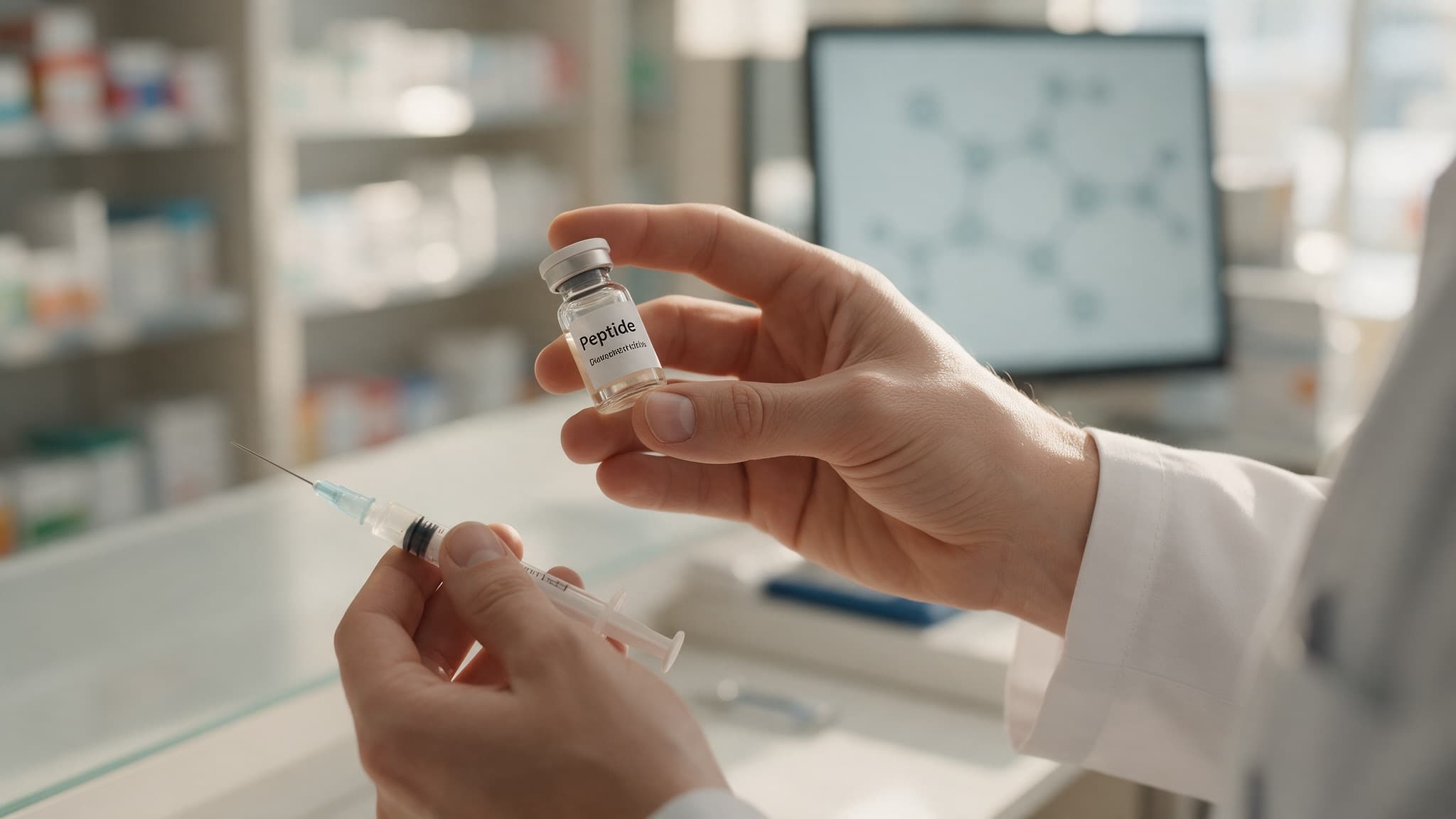
For skin, the peptides with human trials are creams: Matrixyl first (93 women, 12 weeks, tested by Procter & Gamble, which sells it in Olay), then Argireline, then peptide blends, then copper peptide (GHK-Cu), then collagen supplements — small trials, modest improvements, mostly company-run. None comes close to retinoids and sunscreen, which have far more and larger trials. Injecting peptides for skin has no evidence and adds risk. Use peptides as a third step after sunscreen and a retinoid, not instead of them.
Ranked on human evidence for skin appearance and wrinkle reduction, the best peptides are all topical: palmitoyl pentapeptide-4 (Matrixyl) first, on the largest placebo-controlled trial of any skin peptide — 93 women, 12 weeks, run by Procter & Gamble; acetyl hexapeptide-8 (Argireline) second, with one randomised four-week trial in 60 people and effects far smaller than the 'topical botox' claim; palmitoyl tripeptide and tetrapeptide combinations third, mostly manufacturer studies; GHK-Cu (copper peptide) fourth, because a 2026 systematic review found only two randomised trials and the one indexed on PubMed, in 13 patients, measured no wrinkle benefit; and oral collagen peptides fifth, where a 2025 meta-analysis of 23 trials found an effect only in the company-funded ones. Every one of them ranks below retinoids and daily sunscreen: tretinoin has a 251-person, 24-week randomised trial and a Cochrane review behind it, and daily sunscreen cut skin ageing by 24% over 4.5 years in a 903-person randomised trial. Injectable GHK-Cu and epitalon sold for 'skin rejuvenation' have no human skin trial by that route and rank last. Peptides are a reasonable third line in a skincare routine; they are not the first.
- Skin is the one tissue where peptides have human trials, and the trials are small, short and often manufacturer-funded — real evidence, modest effects.
- Matrixyl ranks first among peptides on the largest placebo-controlled trial (93 women, 12 weeks, maker-run); copper peptide (GHK-Cu) is the most talked-about and has the thinnest randomised evidence.
- Argireline's 'topical botox' claim is the largest gap between marketing and measured effect on this list.
- Retinoids and sunscreen outrank every peptide: decades of randomised trials on photoageing, fine lines and — for sunscreen — skin cancer.
- Injecting a peptide for skin adds the grey-market sourcing risk to a claim that has no trial by that route.
CureMed ranks on published human evidence, and screens drug interactions first.
Peptide serum vs retinol: which peptides are most effective in anti-aging skincare?
A peptide serum does not replace a retinoid. The best-tested skin peptide, Matrixyl, improved fine lines a little in 93 women over 12 weeks; copper peptide has only two randomised trials in people. Daily sunscreen cut skin ageing by 24% over 4.5 years, and tretinoin improved sun-damaged skin in 79% of users in 24 weeks. Sunscreen first, retinoid second, peptides third.
Skin peptides ranked on human evidence
Ranked on: controlled human trials on skin appearance — wrinkle depth, elasticity, hydration, wound healing — weighted for independence from the manufacturer and for size. The non-peptide comparators are included so the scale is honest.
| # | Option | Verdict | Grade |
|---|---|---|---|
| 1 | Sunscreen, daily (comparator) | The best-evidenced skin-ageing intervention there is | GRADE AEstablished |
| 2 | Topical retinoids (comparator) | Decades of randomised trials on photoageing | GRADE AEstablished |
| 3 | Palmitoyl pentapeptide-4 (Matrixyl) | The largest placebo-controlled peptide trial — run by the maker of Olay | GRADE CEarly |
| 4 | Acetyl hexapeptide-8 (Argireline) | One randomised trial; large marketing claim | GRADE CEarly |
| 5 | Palmitoyl tripeptide and tetrapeptide combinations | Manufacturer studies; consistent small effects | GRADE CEarly |
| 6 | GHK-Cu (copper peptide), topical | The most talked-about skin peptide, with the thinnest randomised evidence | GRADE CEarly |
| 7 | Oral collagen peptides | Works in company-funded trials; not in independent ones | GRADE CEarly |
| 8 | Carnosine and other 'anti-glycation' peptides | Mechanism in the dish; no skin-appearance trial | GRADE DInsufficient or unsafe |
| 9 | Injectable GHK-Cu, epitalon or 'skin peptides' by injection | No skin trial by this route; grey-market risk added | GRADE DInsufficient or unsafe |
- 01
Sunscreen, daily (comparator)
GRADE AEstablishedThe best-evidenced skin-ageing intervention there isIn a randomised trial of 903 adults under 55 in Nambour, Australia, the group told to use broad-spectrum sunscreen every day showed no detectable increase in skin ageing after 4.5 years — 24% less ageing than the group that used it when they felt like it (Hughes et al., Ann Intern Med 2013). Sunscreen also reduces skin-cancer incidence in trials. Nothing on the peptide list approaches this evidence. Included so the peptides are graded against the right benchmark.
- 02
Topical retinoids (comparator)
GRADE AEstablishedDecades of randomised trials on photoageingIn a randomised, double-blind trial of 251 people, 79% of those on tretinoin 0.05% cream improved over 24 weeks against 48% on the plain cream, with fewer fine wrinkles and changes confirmed under the microscope (Weinstein et al., Arch Dermatol 1991). A Cochrane review of 30 trials calls the evidence that tretinoin improves sun-damaged skin conclusive. Expect redness and peeling early. The second benchmark every peptide sits below.
- 03
Palmitoyl pentapeptide-4 (Matrixyl)
GRADE CEarlyThe largest placebo-controlled peptide trial — run by the maker of OlayThe best trial of any skin peptide: 93 women aged 35 to 55 used a moisturiser on one half of the face and the same moisturiser with 3 ppm palmitoyl pentapeptide on the other for 12 weeks, double-blind. Fine lines and wrinkles improved significantly on the peptide side by image analysis and expert grading (Robinson et al., Int J Cosmet Sci 2005). The trial was run by Procter & Gamble, which sells the ingredient in Olay, and the effect was modest. Grade C: a real, small effect, shown once at this size, by an interested party.
- 04
Acetyl hexapeptide-8 (Argireline)
GRADE CEarlyOne randomised trial; large marketing claimSold as 'topical botox'. In the one randomised, placebo-controlled trial on PubMed, 60 people applied Argireline or placebo around the eyes twice a day for four weeks (3:1); graders rated wrinkles improved in 48.9% of the Argireline group and none of the placebo group, and skin-roughness measures fell (Wang et al., Am J Clin Dermatol 2013). That is a short, small trial of fine lines around the eyes — a fraction of what neuromodulator injections achieve. Safe, and mildly useful for its actual effect.
- 05
Palmitoyl tripeptide and tetrapeptide combinations
GRADE CEarlyManufacturer studies; consistent small effectsBlended signal peptides marketed under various trade names, with manufacturer-run trials showing small improvements in wrinkles and firmness. Plausible, modest, and rarely independently replicated.
- 06
GHK-Cu (copper peptide), topical
GRADE CEarlyThe most talked-about skin peptide, with the thinnest randomised evidenceA systematic review in Aesthetic Surgery Journal (2026) searched to March 2026 and found 20 studies of GHK-Cu: 18 in cells or animals and two randomised trials in people. The one indexed on PubMed followed 13 patients after laser resurfacing and found no measured improvement in wrinkles or skin quality — only higher patient satisfaction (Miller et al., Arch Facial Plast Surg 2006). The other reported less wrinkle volume against a control cream. Long cosmetic safety record; the laboratory case is strong and the human proof is not there yet.
- 07
Oral collagen peptides
GRADE CEarlyWorks in company-funded trials; not in independent onesA 2025 meta-analysis in The American Journal of Medicine pooled 23 randomised trials with 1,474 participants. Taken together they showed better hydration, elasticity and wrinkles — but the trials not funded by companies showed no effect on any of the three, and neither did the high-quality trials. The authors' conclusion: no clinical evidence to support collagen supplements for skin ageing (Myung and Park, 2025). Harmless, and unproven once the funding is taken out.
- 08
Carnosine and other 'anti-glycation' peptides
GRADE DInsufficient or unsafeMechanism in the dish; no skin-appearance trialCarnosine reduces glycation in vitro; no controlled human trial shows a skin-appearance outcome. Sold on a mechanism.
- 09
Injectable GHK-Cu, epitalon or 'skin peptides' by injection
GRADE DInsufficient or unsafeNo skin trial by this route; grey-market risk addedInjecting a peptide for skin rejuvenation has no human trial by that route for any of the peptides sold this way, and adds unverified purity, sterility and dose to a claim with no evidence. The topical version of GHK-Cu has two small trials; the injectable has none.
Where peptides belong in a skin routine
Ordered by evidence, not by price
| Line | Intervention | Evidence | What to expect |
|---|---|---|---|
| First | Daily broad-spectrum sunscreen | Randomised trial on skin ageing; trials on skin cancer | Less new photoageing; the largest effect available |
| Second | A topical retinoid at night | Decades of randomised trials | Fewer fine lines, better texture over months; expect irritation early |
| Third | A peptide serum — Matrixyl (palmitoyl pentapeptide) first | One 93-woman, 12-week placebo-controlled trial | Modest improvement in fine lines by about twelve weeks |
| Optional | Oral collagen peptides | 23 trials; no effect in the independent ones | Little, once company-funded trials are set aside |
| Optional | Argireline for expression lines | Small trials | A mild softening, far short of injectables |
| Not | Injectable 'skin' peptides | None by this route | Risk without evidence |
Frequently asked questions
What is the best peptide for skin and wrinkles?
On trial evidence, palmitoyl pentapeptide-4 (Matrixyl): 93 women, 12 weeks, placebo-controlled, with a modest improvement in fine lines — in a trial run by Procter & Gamble. Copper peptide (GHK-Cu) is better known but has only two randomised trials, and the one on PubMed (13 patients) measured no wrinkle benefit. Both rank below daily sunscreen and a topical retinoid.
Which peptides are most effective in anti-aging skincare?
Counting only randomised trials in people: Matrixyl (palmitoyl pentapeptide-4) first — 93 women, 12 weeks, fewer fine lines than the same moisturiser without it; Argireline second — 60 people, four weeks, around the eyes; copper peptide (GHK-Cu) behind both, with two randomised trials and no measured wrinkle benefit in the one indexed on PubMed. All three effects are modest and most trials were run by the companies that sell them.
Can peptide serums replace traditional anti-aging products?
No. The traditional products have far stronger proof: daily sunscreen cut skin ageing by 24% over 4.5 years in a 903-person randomised trial, and tretinoin improved sun-damaged skin in 79% of users against 48% on plain cream in a 251-person, 24-week trial. The best peptide trial is 93 women for 12 weeks. A peptide serum is a third step after sunscreen and a retinoid — or an option for skin that cannot tolerate a retinoid — not a replacement.
How long do peptide skincare products take to work?
About 12 weeks in the best trial: 93 women using palmitoyl pentapeptide (Matrixyl) twice a day saw a modest improvement in fine lines by week 12. The one randomised Argireline trial measured at four weeks. If nothing has changed after three months of daily use, the product is unlikely to start working later.
Does Argireline really work like botox?
No. In one randomised four-week trial in 60 people it improved fine lines around the eyes in 48.9% of users against none on placebo — a real but small effect, and a fraction of what neuromodulator injections achieve. The 'topical botox' claim is the largest gap between marketing and measured effect among skin peptides. It is safe and mildly useful for its actual effect.
Do collagen peptide supplements improve skin?
Only in company-funded trials. A 2025 meta-analysis of 23 randomised trials (1,474 people) found better hydration, elasticity and wrinkles overall, but no effect in the trials that were not company-funded and none in the high-quality trials. The authors concluded there is no clinical evidence to support collagen supplements for skin ageing.
Is injecting GHK-Cu or epitalon good for skin?
No trial supports it. Topical GHK-Cu has two small randomised trials on skin; injectable GHK-Cu and epitalon sold for 'skin rejuvenation' have no human skin trial by that route, and injecting adds unverified purity, sterility and dose from grey-market vendors. The route is the difference, and it ranks last.
Should I use a peptide serum instead of a retinoid?
No — as well as, and after. Retinoids have decades of randomised trials on fine lines and photodamage; peptide serums have small, short trials showing modest effects. A peptide is a reasonable third line behind sunscreen and a retinoid, and a sensible option for skin that cannot tolerate a retinoid, but not a substitute for one.
Why do skin peptides rank higher than other longevity peptides on this site?
Because they have been tested in people. Almost every injectable peptide sold for repair, energy or longevity has no completed human trial; the topical skin peptides have several — small, short and often manufacturer-funded, but real. Modest evidence measured in humans outranks strong claims measured in rodents.
Keep reading
- Best longevity skincare routine to slow visible aging
The full routine, with retinoids and sunscreen graded on the same scale.
- Skincare, graded
Every skincare intervention on the site by evidence tier.
- Best longevity peptides for anti-aging and cellular repair
Why the peptide with the best repair evidence is a face cream.
- GHK-Cu
The compound page, with the trials.
More in Peptides
- Peptides and therapies commonly used to extend lifespan.
GLP-1 peptides rank highest for longevity, backed by outcome trials — growth hormone peptides, BPC-157, and NAD+ infusions rank far lower on human evidence.
- Which longevity peptides are best for energy and recovery?
BPC-157, TB-500, MOTS-c, CJC-1295, ipamorelin, sermorelin and tesamorelin ranked on human trials for energy and recovery — most have none in humans.
- What are the safest and best longevity peptides?
Approved peptides tesamorelin and PT-141 rank safest with Phase 3 trial data; unregulated injectables like BPC-157 and TB-500 have no human trials at all.
- Best longevity peptides for anti-aging and cellular repair.
GHK-Cu applied to skin is the only peptide with a measured repair effect in human trials; every other anti-ageing peptide has just animal or cell data.
- Which longevity peptides work best for lifespan extension?
No longevity peptide has human lifespan-extension evidence; ranked on animal data for epitalon, MOTS-c, SS-31, humanin and the GH-axis peptides.
- Best longevity peptides for beginners to start with.
Topical GHK-Cu ranks first for beginners — over the counter, human-trial evidence, no injection — well ahead of unregulated injectables like BPC-157.