TB-500 (Thymosin Beta-4): evidence, dosing, safety & interactions
Thymosin beta-4 (Tβ4) / synthetic fragment sold as "TB-500"
Also sold or labeled as: TB500, Tβ4, Thymosin β4, TB4, BT10 (as part of a BPC-157 + TB-500 blend)
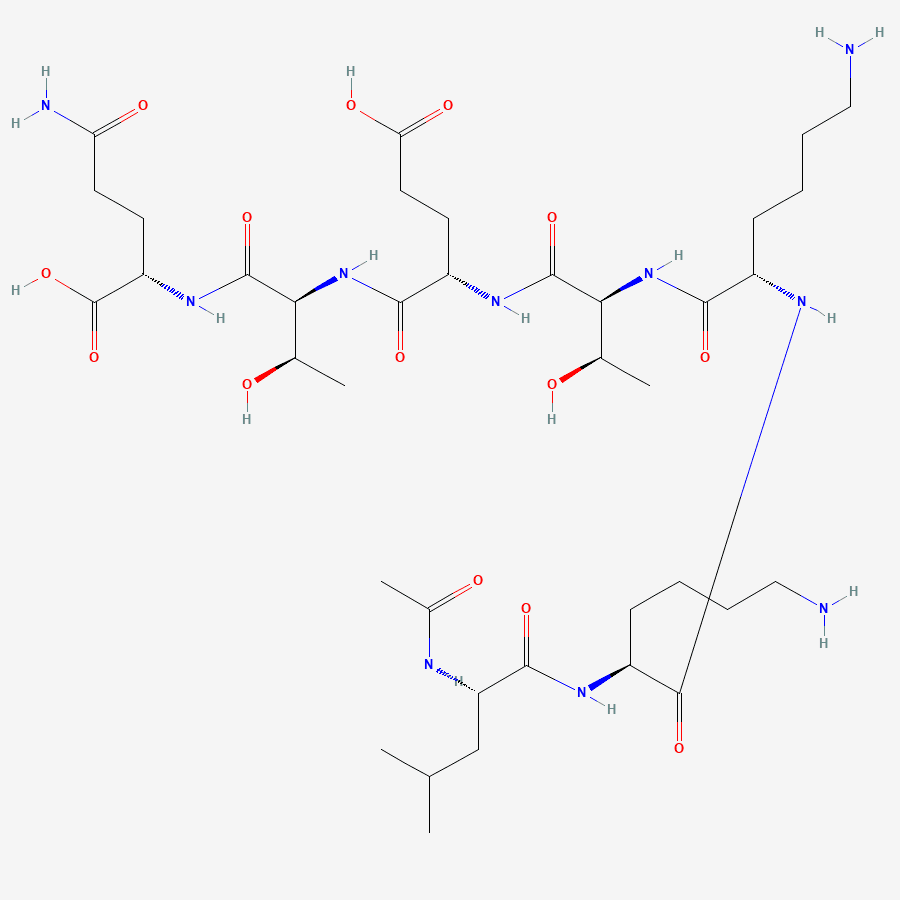
This is a lab-made version of a natural protein fragment, sold online as a shot for healing tendons and muscles, often together with BPC-157. There's no solid human evidence it works, and it isn't approved as a medicine.
- What it is
- A synthetic copy of thymosin beta-4, an actin-regulating protein involved in cell migration and wound repair, sold as an unregulated injectable peptide.
- Evidence
- Real Phase 2 human trials exist — but for topical use on venous stasis ulcers and for eye drops in severe dry eye disease. No controlled trial has tested injectable Tβ4 for tendon, ligament or muscle injury in athletes or healthy adults.
- Studied dose
- Topical formulations of 0.01%–0.03% (skin) or 0.1% (eye drops) in the actual trials. The injectable doses sold online as "TB-500" have never been tested in a controlled human study.
- Safety
- Topical Tβ4 was well tolerated in small trials. Injectable, systemic use has no published controlled human safety data, and what is sold online is unregulated research-grade material.
What human trials actually show
Randomized, placebo-controlled human trials only. Animal data never appears in this section — it cannot raise a grade, and it is noted separately below.
- 01Annals of the New York Academy of Sciences2010— Topical thymosin beta-4 for venous stasis ulcers
- Design
- Double-blind, placebo-controlled, dose-escalation, multicenter Phase 2 trial
- Dose
- Topical Tβ4 at escalating concentrations, including 0.03%, applied to the ulcer
- Duration
- Up to 3 months of treatment
73 patients with venous stasis ulcers, enrolled at 8 European sites
The 0.03% topical dose was associated with faster wound closure, with complete healing achieved within 3 months in about 25% of patients — mainly those with smaller or milder ulcers. Safety was comparable to placebo. This is a real, positive controlled human result, but it is topical treatment of a chronic vascular wound, not an injectable used for athletic tendon or muscle injury.
doi:10.1111/j.1749-6632.2010.05490.x - 02Cornea2015— Thymosin beta-4 eye drops for severe dry eye disease
- Design
- Multicenter, randomized, double-masked, placebo-controlled Phase 2 trial
- Dose
- Thymosin beta-4 eye drops (RGN-259), 0.1%, six times daily
- Duration
- 28 days of treatment with 28-day follow-up
9 patients with severe dry eye disease (including graft-versus-host disease) at 2 US sites
Statistically significant improvement in both patient-reported ocular discomfort and objective corneal staining compared with vehicle control, with the treated group showing a 35% reduction in discomfort and a 59% reduction in corneal staining at day 56. Safe and well tolerated. This is a real positive human trial — of a topical eye-drop formulation for a specific eye disease, unrelated to injury recovery.
doi:10.1097/ICO.0000000000000379 - 03The American Journal of Sports Medicine2026— Scoping review of peptide supplements marketed for musculoskeletal recovery
- Design
- Systematic scoping review following PRISMA guidelines
- Dose
- Varied across the included studies; not a trial of a single dose
- Duration
- n/a — literature review
All published animal and human studies of six peptides marketed for musculoskeletal recovery, including TB-500/thymosin beta-4, BPC-157, CJC-1295, MK-677, ipamorelin and GHK-Cu
67% of identified publications on these peptides used preclinical animal models only. Human clinical data were limited, heterogeneous, and mostly lacked robust controls. The reviewers concluded that the claimed musculoskeletal-recovery and performance benefits of these gray-market peptide supplements, including TB-500, remain unsubstantiated by current human trials, and flagged documented cardiovascular and metabolic risks associated with the broader category.
doi:10.1177/03635465261464420
There is a real disconnect between the molecule that has been studied and the product that is sold. The developer of thymosin beta-4 ran legitimate, published, controlled human trials — but only for topical use, and only for chronic dermal ulcers, severe dry eye, and (per earlier planned work) epidermolysis bullosa wounds. No completed controlled human trial has tested injectable thymosin beta-4 for tendon, ligament or muscle injury recovery in athletes or otherwise healthy adults, which is the entire premise it is marketed on today as "TB-500." A 2026 scoping review in a leading sports medicine journal confirmed this gap directly, finding human data on TB-500 for musculoskeletal recovery too scarce and poorly controlled to support the claims made for it. Everything sold as an injectable "TB-500" research peptide is also unregulated: no pharmaceutical-grade formulation, no established injectable dose, and no verified purity or sterility standard.
Grade D — insufficient or unsafe. No completed controlled human trial has tested injectable thymosin beta-4 for injury recovery in athletes or healthy adults — the use case it is actually marketed for online. The real controlled human data that exists is for a completely different route (topical) and completely different conditions (chronic dermal ulcers, severe dry eye) studied by the original pharmaceutical developer, not the compound as sold today. How we grade evidence.
Side effects & safety
- Reported with topical/eye-drop use in trials
- Well tolerated in the small controlled trials of topical skin application and eye drops, with no serious treatment-related adverse events reported at the doses studied.
- Injectable, systemic use
- No controlled human trial has assessed the safety of injectable thymosin beta-4 at the doses used online. Reports online of injection-site reactions and other effects are anecdotal, not systematically studied.
- Product risk
- Because no approved injectable formulation exists, what is sold online is unregulated research-grade or compounded material of unverified purity, sterility and concentration — for an injectable product, that alone is a material risk independent of the peptide's own biology.
- The honest caveat
- "TB-500 has real human trials behind it" is technically true and commonly used to sell the product — but those trials tested a topical formulation for chronic wounds and dry eye, not an injectable for sports injury recovery. Citing one to justify the other is a bait-and-switch on the evidence.
Interactions with medications
The section most longevity sites skip. If you take prescription medication, read this before anything else on the page.
No human interaction data exist for injectable thymosin beta-4 at any dose. Nobody has studied how it behaves alongside other medications.
Thymosin beta-4 promotes angiogenesis and cell migration in preclinical work. Combined with a blood thinner, the interaction is unstudied in humans and theoretically relevant — avoid combining without medical supervision.
Thymosin beta-4 and related peptide fragments fall under classes of substances prohibited by the World Anti-Doping Agency. A tested athlete using it risks a sanction regardless of the underlying health question.
Is TB-500 (Thymosin Beta-4) legal where you live?
Regulatory status is tracked per market and reviewed on the date shown. Where a compound is not authorised, this site does not link to sellers.
Not an approved drug for any use and not lawfully sold as a dietary supplement. No FDA-approved injectable thymosin beta-4 product exists; what circulates online is unregulated research-grade material.
Source: US Food and Drug Administration
No marketing authorisation as a medicine and not permitted as a food supplement. Products reaching UK buyers as "TB-500" are unlicensed.
Source: MHRA
No marketing authorisation in the EU and no novel-food authorisation. There is no lawful consumer route of supply for injectable thymosin beta-4.
Source: European Medicines Agency
Aucune autorisation de mise sur le marché et aucun statut de nouvel aliment. Il n'existe aucune voie légale d'approvisionnement pour le TB-500 injectable.
Source: European Commission / EFSA
Sin autorización de comercialización ni condición de nuevo alimento. No existe una vía legal de suministro para el TB-500 inyectable.
Source: European Commission / EFSA
Germany applies the EU position: no authorised medicinal product and no permitted supplement use for injectable thymosin beta-4.
Source: BfArM / European Medicines Agency
Not an approved medicine and not sold as a supplement in the UAE. We found no verified MOHAP-published position specific to TB-500/thymosin beta-4, but no legitimate consumer or over-the-counter route to the compound exists either way.
Source: UAE Ministry of Health and Prevention (MOHAP)
Not SFDA-registered in any category. We could not independently verify a specific SFDA-published position on TB-500, but no legitimate consumer or clinical route to the compound was found.
Source: Saudi Food and Drug Authority (SFDA)
Non è un farmaco autorizzato né un integratore alimentare consentito, come nel resto dell'UE. Come per altri peptidi non approvati, la vendita o cessione al di fuori dei canali farmaceutici autorizzati può rientrare nella Legge 376/2000 sulla tutela sanitaria delle attività sportive per gli sportivi tesserati, data la sovrapposizione con le sostanze proibite dalla WADA.
Source: Ministero della Salute / Legge 376/2000 antidoping
Geen goedgekeurd geneesmiddel en niet toegestaan als voedingssupplement, zoals elders in de EU. Producten die als 'niet voor menselijk gebruik' worden verkocht, bewegen zich mogelijk in een juridische grijze zone, maar toediening aan mensen blijft niet goedgekeurd en niet zonder risico.
Source: CBG-MEB / IGJ (Geneesmiddelenwet)
A Anvisa nomeou publicamente o TB-500 (junto com BPC-157, GHK-Cu, CJC-1295 e Ipamorelina) como peptídeo sem registro em nenhuma categoria — não é medicamento, suplemento alimentar nem cosmético aprovado — e alertou que produtos vendidos como peptídeos injetáveis nas redes sociais são irregulares.
Source: Agência Nacional de Vigilância Sanitária (ANVISA)
Dosing & timing
The positive Phase 2 dermal-ulcer trial used topical concentrations up to 0.03%, applied directly to the wound under medical supervision — not an injection.
The dry-eye Phase 2 trial used a 0.1% ophthalmic solution dosed six times a day for 28 days — a different formulation, route and indication entirely.
Protocols circulating online (commonly cited as roughly 2–2.5 mg injected once or twice weekly) come from anecdote and animal extrapolation, not any human trial.
Questions people actually ask
Does TB-500 heal tendons and injuries?
No completed controlled human trial has tested that claim. The real human trials behind thymosin beta-4 studied topical use for chronic skin ulcers and eye drops for dry eye disease — not injections for tendon, ligament or muscle injury in athletes. A 2026 sports-medicine review concluded the musculoskeletal-recovery claims are unsubstantiated by current human data.
Is TB-500 the same thing that was tested in the published trials?
It's the same underlying molecule, thymosin beta-4, but not the same product or use. The trials tested a standardised topical gel or eye-drop formulation under medical supervision. What is sold as injectable "TB-500" is unregulated research-grade material at a different route, dose and indication than anything a trial has shown works.
Is TB-500 legal?
It is not an approved medicine anywhere for injury recovery or any injectable use, and it is not lawfully sold as a dietary supplement. Brazil's health regulator (Anvisa) has publicly named TB-500 among peptides sold online with no registration in any category — not a medicine, supplement or cosmetic. It is also captured by World Anti-Doping Agency prohibitions in competitive sport.
Is TB-500 safe?
Unknown for the way it is actually used. Topical Tβ4 was well tolerated in small trials, but no controlled human trial has assessed injectable, systemic use at the doses sold online, and no pharmaceutical-grade injectable formulation exists — so material quality is an added risk on top of the unstudied biology.
Is TB-500 the same as BPC-157?
No — they are different peptides, often sold and stacked together for the same injury-recovery marketing. BPC-157 is a synthetic gastric-protein fragment with essentially no controlled human data at all. TB-500 (thymosin beta-4) does have real controlled human trials, but for topical wound and eye conditions, not for the injectable athletic-recovery use both are marketed for.