CJC-1295: evidence, dosing, safety & interactions
Modified GHRH(1-29) analog, with or without a Drug Affinity Complex (DAC)
Also sold or labeled as: CJC-1295 with DAC, CJC-1295 without DAC, Mod GRF 1-29, DAC:GRF
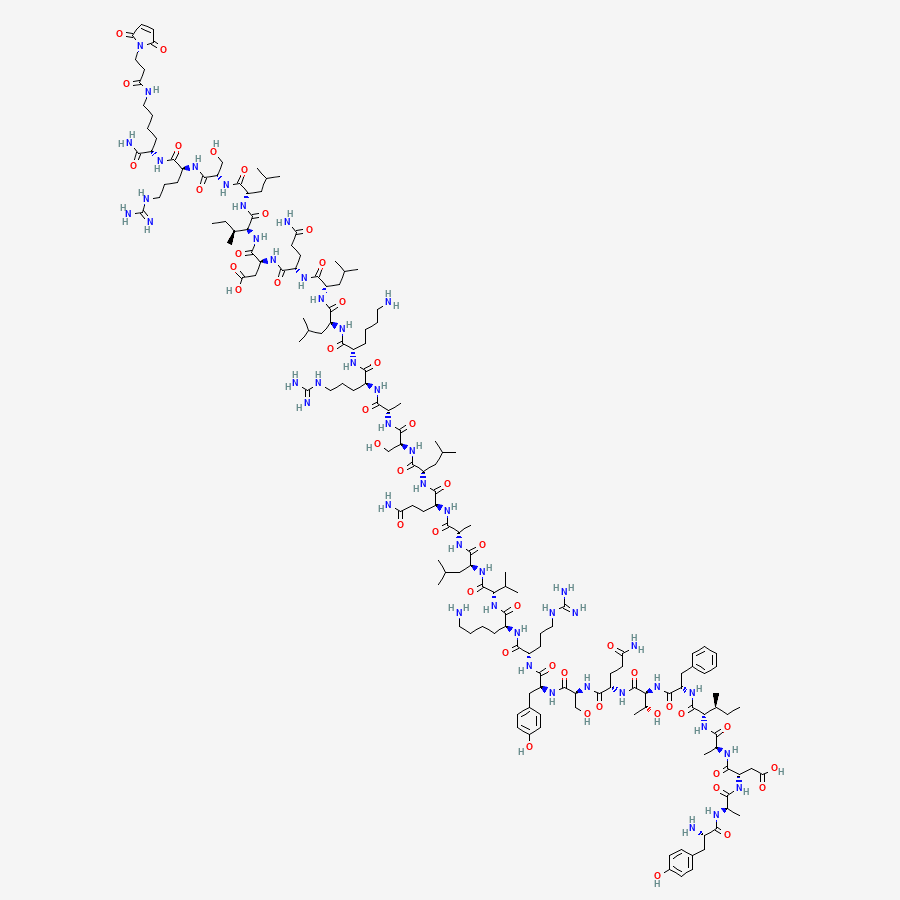
This is a lab-made substance meant to make your body produce more growth hormone. It isn't an approved medicine — it's sold as a research chemical, not for people to use — and there's no solid proof it's safe.
- What it is
- A long-acting GHRH analog, sold as two different products — with DAC (long-acting) and without DAC (short-acting) — that raise growth hormone by different duration profiles.
- Evidence
- Two small human PK trials exist for the DAC form only, showing it reliably raises GH and IGF-1 for up to 11 days per dose. No trial of any kind — human or otherwise therapeutic — exists for the no-DAC form, and no trial has tested either form for a health outcome.
- Studied dose
- 30–90 mcg/kg subcutaneous, single or biweekly injections in the DAC-form trials. No published human dosing data exists for the no-DAC form; doses sold online are not derived from any study.
- Safety
- No serious adverse reactions were reported in the short trials that exist, but the DAC form's defining feature — sustained, days-long GH and IGF-1 elevation from a single dose — is also its main safety concern: once injected, the effect cannot be reversed or titrated down.
What human trials actually show
Randomized, placebo-controlled human trials only. Animal data never appears in this section — it cannot raise a grade, and it is noted separately below.
- 01The Journal of Clinical Endocrinology & Metabolism2006— Pharmacokinetics, pharmacodynamics and safety of CJC-1295 (DAC form)
- Design
- Two randomized, placebo-controlled, double-blind, ascending-dose trials
- Dose
- Single ascending subcutaneous doses, then two or three weekly or biweekly doses, of CJC-1295 with DAC
- Duration
- 28 days (single-dose study) and 49 days (repeat-dose study)
Healthy adults aged 21–61, across two investigational sites
A single injection produced dose-dependent GH increases of 2- to 10-fold lasting 6 or more days, and IGF-1 increases of 1.5- to 3-fold lasting 9–11 days. With repeat dosing, IGF-1 stayed above baseline for up to 28 days. No serious adverse reactions were reported. This is the pharmacokinetic basis for the drug's defining 'long-acting' claim.
doi:10.1210/jc.2005-1536 - 02The Journal of Clinical Endocrinology & Metabolism2006— Effect on natural GH pulsatility
- Design
- Controlled physiology study with overnight sampling
- Dose
- Single subcutaneous dose of 60 or 90 mcg/kg CJC-1295 with DAC
- Duration
- 12-hour overnight sampling, 1 week after injection
Healthy men aged 20–40
CJC-1295 raised the baseline (trough) GH level 7.5-fold and overall mean GH secretion 46%, while preserving the body's normal pulsatile GH release pattern rather than flattening it — a specific pharmacological finding about how the DAC form works, not evidence of a health benefit.
doi:10.1210/jc.2006-1702 - 03Growth Hormone & IGF Research2009— Serum protein changes after CJC-1295 (DAC form) exposure
- Design
- Exploratory proteomic analysis of banked trial samples
- Dose
- Single injection of CJC-1295 with DAC (same protocol as above)
- Duration
- Samples taken before and 1 week after injection
11 healthy young men from the trial above
Identified several serum proteins whose levels shifted after CJC-1295 exposure, proposed as candidate biomarkers of GH/IGF-1 activity for anti-doping detection purposes. This is a biomarker-discovery exercise, not a clinical or safety finding relevant to a longevity user.
doi:10.1016/j.ghir.2009.03.001
No trial — of any duration, in any population — has tested CJC-1295 for a health outcome: not muscle mass, not fat loss, not sleep, not longevity, not any disease. The two human trials that exist ran for 28 and 49 days, in healthy volunteers, measuring only hormone levels and short-term tolerability; the company developing the drug did not continue into efficacy trials or seek regulatory approval. The no-DAC, short-acting version sold online as 'CJC-1295' or 'Mod GRF 1-29' has never been given to a human in a published study at all — everything claimed about it is extrapolated from the different, DAC-bound molecule, or from animal data. Long-term safety of repeated, sustained IGF-1 elevation — the DAC form's specific risk, given IGF-1's link to cell proliferation — has not been studied beyond seven weeks in any human trial.
Grade D — insufficient or unsafe. CJC-1295 (specifically the DAC, long-acting form) does have completed human studies — two small, sponsor-funded pharmacokinetic trials from the mid-2000s confirming it raises GH and IGF-1 for days at a time. But neither tested any therapeutic outcome, neither ran longer than 49 days, the drug's own commercial developer never advanced it to an efficacy trial or sought approval, and the short-acting no-DAC version sold online today has no human study of any kind. Confirmed pharmacodynamics in healthy volunteers is not evidence of benefit for any condition, longevity included. How we grade evidence.
Side effects & safety
- Reported in the short human trials (DAC form)
- No serious adverse reactions were reported over 28–49 days of monitoring. This reflects a very short observation window in a small, healthy sample — not a characterized safety profile.
- The DAC-specific concern
- Because the DAC form binds to circulating albumin and releases slowly, a single injection raises GH and IGF-1 for six to eleven days and cannot be stopped or reduced once given. Reports circulating in user communities describe unpredictable, sustained elevations with the DAC form specifically — a mechanism-consistent concern that has not been formally studied but is a real structural feature of the molecule, not a rumor.
- No-DAC form
- Sold as the shorter-acting, more frequently dosed alternative specifically because users and sellers believe it avoids the DAC form's sustained-elevation profile. That belief has never been tested in a human trial — there is no published safety data for the no-DAC form at all.
Interactions with medications
The section most longevity sites skip. If you take prescription medication, read this before anything else on the page.
No human interaction data exists for CJC-1295 in either form. Nobody can tell you how it behaves alongside a medication you take, because that study has not been done.
Sustained GH/IGF-1 elevation, especially from the DAC form, is mechanistically expected to reduce insulin sensitivity, consistent with what is seen with other GH-axis drugs. This has not been directly studied for CJC-1295 but follows from its known pharmacology.
CJC-1295 is a growth hormone-releasing factor and is prohibited under the World Anti-Doping Agency's list (class S2). The proteomic biomarker work above exists specifically because anti-doping labs need to detect it.
Is CJC-1295 legal where you live?
Regulatory status is tracked per market and reviewed on the date shown. Where a compound is not authorised, this site does not link to sellers.
Not an FDA-approved drug for any indication and not lawfully marketed as a dietary supplement. The FDA has specifically reviewed CJC-1295 as a candidate for its list of bulk substances presenting significant safety risks in compounding, citing limited clinical data and reports of adverse cardiovascular effects; its status on that list has been actively under review. Regardless of the compounding-list outcome, no approved product exists.
Source: US Food and Drug Administration
No marketing authorisation as a medicine and not permitted as a food supplement. Any product reaching UK buyers is unlicensed.
Source: MHRA
No marketing authorisation in the EU and no novel-food authorisation. There is no lawful consumer route of supply.
Source: European Medicines Agency
Aucune autorisation de mise sur le marché et aucun statut de nouvel aliment. Il n'existe aucune voie légale d'approvisionnement.
Source: European Commission / ANSM
Sin autorización de comercialización ni condición de nuevo alimento. No existe una vía legal de suministro.
Source: European Commission / AEMPS
Germany applies the EU position: no authorised medicinal product and no permitted supplement use.
Source: BfArM / European Medicines Agency
Not an approved medicine and not sold as a supplement in the UAE. Any access would run through a licensed clinic under physician supervision at most; personal import of an unregistered injectable peptide carries real customs and legal risk.
Source: UAE Ministry of Health and Prevention (MOHAP)
Not SFDA-registered in any category. No legitimate consumer or clinical route to the compound was identified.
Source: Saudi Food and Drug Authority (SFDA)
Non è un farmaco autorizzato né un integratore alimentare consentito, come nel resto dell'UE. La WADA classifica CJC-1295 tra le sostanze proibite (S2), il che lo colloca anche nell'ambito della Legge 376/2000 sulla tutela sanitaria delle attività sportive per chi lo distribuisce fuori dai canali farmaceutici autorizzati.
Source: Ministero della Salute / Legge 376/2000 antidoping
Geen goedgekeurd geneesmiddel en niet toegestaan als voedingssupplement, zoals elders in de EU. Producten die worden verkocht als 'alleen voor onderzoek' vallen buiten de definitie van geneesmiddel onder de Geneesmiddelenwet, wat de verkoop in de praktijk niet altijd doet handhaven — toediening aan mensen blijft echter niet goedgekeurd.
Source: CBG-MEB / IGJ (Geneesmiddelenwet)
A Anvisa nomeou publicamente o CJC-1295 (junto com BPC-157, TB-500, GHK-Cu e Ipamorelina) como peptídeo sem registro em nenhuma categoria, alertando que produtos vendidos como peptídeos injetáveis nas redes sociais são irregulares.
Source: Agência Nacional de Vigilância Sanitária (ANVISA)
Dosing & timing
The ascending and repeat doses used in the two published human trials, given as single injections or spaced one to two weeks apart, reflecting the DAC form's multi-day duration of action.
Doses circulating online for the short-acting, no-DAC version (commonly daily or twice-daily subcutaneous injections) are not derived from any published human study — they are extrapolated from its expected short half-life and from sermorelin dosing by analogy.
As an unregulated research chemical, purity, concentration, and even which variant (DAC or no-DAC) a given vial actually contains are not independently verified before sale.
Questions people actually ask
Is CJC-1295 legal?
It is not an FDA-approved drug for any use and is not lawfully sold as a dietary supplement or for human consumption — it is marketed as a 'research chemical, not for human use,' which is itself a sign it has not been through safety review. The FDA has also specifically reviewed both CJC-1295 and ipamorelin for its list of bulk substances presenting significant safety risks in compounding, citing limited clinical data.
Does CJC-1295 actually increase growth hormone in humans?
For the DAC (long-acting) form, yes — two published trials confirm dose-dependent GH and IGF-1 increases lasting up to 11 days per dose. For the no-DAC (short-acting) form sold online, there is no published human data confirming this at all; it is assumed by analogy to the DAC form and to sermorelin, not demonstrated directly.
What's the difference between CJC-1295 with and without DAC?
The DAC (Drug Affinity Complex) is a chemical group that binds the peptide to circulating albumin, extending its half-life from minutes to roughly 6-8 days — meaning one injection produces sustained GH elevation for a week or more that cannot be adjusted once given. The no-DAC version lacks this modification and clears quickly, similar to sermorelin, requiring more frequent dosing. Treating them as interchangeable is a meaningful safety error, since only the DAC form has ever been tested in a human trial.
Is CJC-1295 the same as sermorelin?
They work the same way — both are GHRH analogs — but sermorelin was an actual FDA-approved drug (now discontinued commercially) with a real diagnostic and pediatric-treatment history. CJC-1295 has never been approved for any use in any country and has a much thinner human evidence base limited to short pharmacokinetic studies.
Can I combine CJC-1295 with ipamorelin?
This is a widely marketed 'stack' online, on the theory that a GHRH analog and a ghrelin-receptor agonist raise GH through complementary pathways. No published human trial has tested the combination for safety or effect — the theoretical rationale has not been verified in people.