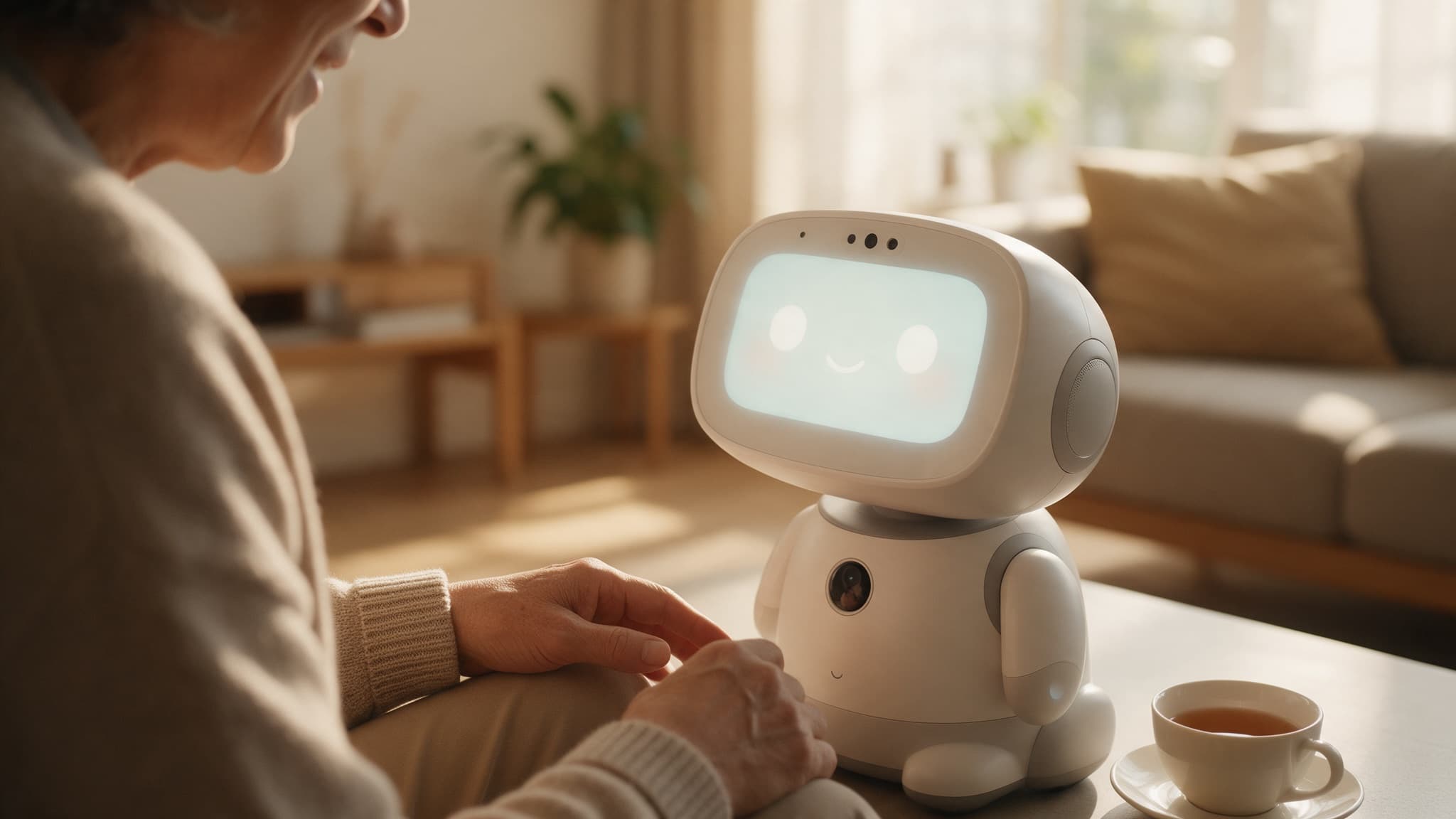
Smart longevity care robots with fall detection sensors.

See more of CureMed in your Google results.
Fall detection finds someone after they have fallen; fall prevention stops the fall, and only prevention has evidence — balance exercise, hearing aids, cataract surgery and fixing home hazards cut falls by a quarter to a third in randomised trials. No fall-detection device of any kind is regulator-cleared and no robot's accuracy in real homes is published. The best set-up is a pendant alarm with a monitoring centre plus a prevention programme; smartwatch fall detection helps those who wear one; radar presence sensing is plausible but unproven; camera robots are capable in the lab and disliked at home; and robots sold on fall detection alone offer nothing that prevents a fall.
Fall detection finds a person after they are on the floor; fall prevention keeps them off it, and only one of the two has evidence. No fall-detection device — robot, wearable or camera — is cleared by any regulator as a fall-detection or fall-risk device, real-home accuracy for robot vision is unpublished, and meanwhile balance and functional exercise has high-certainty evidence from 108 randomised trials for 23% fewer falls, hearing aids cut falls by 27% over three years, cataract surgery by about a third, and targeted home hazard reduction by 38% in people at elevated risk. Ranked on what they deliver: a pendant alarm with a monitoring centre plus a prevention programme first, because the pendant is the tolerated, staffed safety net and the programme is the only thing that reduces falls; wearable fall detection with automatic alerting (smartwatch features) second, useful for people who will wear the watch, with false alerts and misses and no clearance; radar-based presence sensing that detects a long time on the floor third, private and plausible, unvalidated; mobile robots with camera fall detection fourth, capable in a lab, unknown in a home, and disliked by the people they watch; and 'smart care robots' whose fall detection is the headline feature and whose prevention offer is nothing last. The site's tech section makes the point that matters: US age-adjusted fall deaths rose 21% between 2018 and 2024, after the prevention evidence was published, because delivery failed — and a detection robot is one more way to not deliver it.
- Detection and prevention are different products; only prevention has trial evidence, and it is strong.
- No fall-detection device is regulator-cleared, and no robot's real-home accuracy is published.
- A pendant with a monitoring centre is the safety net that is tolerated, staffed and cheap.
- Wearable fall detection helps people who wear the device and alerts with real false-positive and miss rates.
- Fall deaths rose while the prevention evidence sat unused; the gap is delivery, not sensors.
CureMed ranks on published human evidence, and screens drug interactions first.
Fall technology ranked against the evidence
Ranked on: whether the option reduces falls (prevention evidence), whether it reliably detects them (validation and clearance), whether it is tolerated for years, and whether a staffed response exists.
| # | Option | Verdict | Grade |
|---|---|---|---|
| 1 | Pendant alarm with a monitoring centre, plus a prevention programme | The tolerated safety net and the only thing that cuts falls | GRADE AEstablished |
| 2 | Wearable fall detection with automatic alerts (smartwatch features) | Useful when worn; false alerts and misses; uncleared | GRADE BPromising |
| 3 | Radar presence sensing for 'long time on the floor' | Private and plausible; unvalidated | GRADE CEarly |
| 4 | Mobile robot with camera fall detection | Lab-capable; home-unknown; disliked by the watched | GRADE CEarly |
| 5 | 'Smart care robot' sold on fall detection alone | Detection as the headline; prevention absent | GRADE DInsufficient or unsafe |
- 01
Pendant alarm with a monitoring centre, plus a prevention programme
GRADE AEstablishedThe tolerated safety net and the only thing that cuts fallsA worn button connected to a 24-hour monitoring centre is the established, staffed way to summon help, tolerated for years; some pendants add automatic fall detection with the same limits as wearables. Paired with a physiotherapist-led balance and strength programme, hearing and vision correction and targeted home hazard reduction, it is the only combination on this list that both reduces falls and responds to them.
- 02
Wearable fall detection with automatic alerts (smartwatch features)
GRADE BPromisingUseful when worn; false alerts and misses; unclearedApple Watch, Pixel and Galaxy Watch fall detection with automatic emergency calling. Genuinely helpful for people who wear the watch, with documented false alerts from vigorous activity and misses of soft falls, and no clearance as a fall-detection device. Depends on the watch being worn and charged, which in frailty and dementia is the failure point.
- 03
Radar presence sensing for 'long time on the floor'
GRADE CEarlyPrivate and plausible; unvalidatedRadar in a bedside unit or robot detecting that a person is at floor level and not moving for a set time. Avoids cameras, so it is tolerated; the accuracy in real homes with pets, furniture and a person deliberately on the floor is unpublished. A reasonable check-in trigger, not a validated detector.
- 04
Mobile robot with camera fall detection
GRADE CEarlyLab-capable; home-unknown; disliked by the watchedPatrolling robots using computer vision to detect a fallen person and start a video call. Works in demos; no published real-home accuracy; uncleared; and many older adults refuse to be watched by a camera on wheels, which ends the monitoring. A check-in device for households that accept it.
- 05
'Smart care robot' sold on fall detection alone
GRADE DInsufficient or unsafeDetection as the headline; prevention absentRobots whose marketing leads with fall detection and offers nothing that reduces falls — no exercise programme, no hearing or vision prompt, no home assessment, no medication review. Detection with unknown accuracy, sold in place of prevention with proven effect. The tech section's delivery gap, packaged.
What reduces falls, what detects them, and what a family should buy
Fall interventions and detection options compared
| Option | Reduces falls? | Evidence | Detects falls? | Cleared? |
|---|---|---|---|---|
| Balance and functional exercise (physiotherapist-led) | Yes — 23% fewer falls | 108 RCTs, 23,407 participants, high certainty | No | n/a |
| Hearing aids, properly fitted and worn | Yes — 27% fewer falls over 3 years | Trial and cohort data | No | Yes (device) |
| Cataract surgery when indicated | Yes — ~34% lower fall rate | RCT | No | n/a |
| Home hazard reduction, targeted | Yes — 38% fewer falls at elevated risk | High certainty (no effect if untargeted) | No | n/a |
| Medication review and deprescribing | Yes — falls-risk drugs reduced | Trial evidence for reviews | No | n/a |
| Pendant alarm with monitoring centre | No | Established service | Button; some auto-detect | As a device |
| Smartwatch fall detection | No | Company data; case reports | Partly; false alerts and misses | Not as a fall device |
| Radar presence sensing | No | Feasibility | 'On the floor a long time' | No |
| Camera robot | No | None in homes | Unknown accuracy | No |
Frequently asked questions
Which smart care robots have the best fall detection sensors?
None is validated or cleared: no regulator has cleared any device — robot, wearable or camera — as a fall-detection or fall-risk device, and no robot's real-home accuracy is published. Ranked on what they deliver: a pendant alarm with a monitoring centre plus a prevention programme first; smartwatch fall detection second; radar presence sensing third; camera-based robots fourth; robots sold on fall detection alone last.
What actually reduces falls in older adults?
Balance and functional exercise (23% fewer falls across 108 randomised trials, high certainty, more when a physiotherapist delivers it), properly fitted and worn hearing aids (27% fewer falls over three years), cataract surgery when indicated (about a third fewer), home hazard reduction targeted at people already at elevated risk (38% fewer), and medication review to remove falls-risk drugs. No detection device reduces falls.
Is smartwatch fall detection reliable?
It helps people who wear the watch and has summoned help in documented cases, with false alerts from vigorous activity and misses of soft or slow falls; it is not cleared as a fall-detection device. Its main failure is the watch not being worn or charged, which is common in frailty and dementia.
Why did fall deaths rise if the prevention evidence exists?
Delivery. The US age-adjusted fall death rate rose 21% between 2018 and 2024, from 64.7 to 78.4 per 100,000 older adults, after Cochrane published high-certainty evidence on what prevents falls. Exercise programmes, hearing correction and home assessments are under-delivered; detection devices are over-sold. The gap is not a shortage of sensors.
Should I buy a robot with fall detection for a parent?
Not for fall detection. Buy a pendant alarm with a monitoring centre for the safety net and invest in prevention — exercise, hearing, vision, home hazards, a medication review. If your parent would enjoy a companion robot, buy it for company, and if they genuinely consent to a check-in camera, treat any robot's fall detection as that and nothing more.
Which medicines cause falls?
Benzodiazepines and other sedatives, sleeping tablets, sedating antihistamines, anticholinergics (including some bladder and antidepressant drugs), opioids, and blood-pressure treatment that is too aggressive for the person's current state, plus alcohol with any of them. A pharmacist's review reduces these, and the falls with them; it is the fall-prevention intervention most often missed.
Keep reading
- Longevity technology
The fall-prevention evidence and the fall-death trend.
- Which robot sensors are best for long-term elderly care?
The sensors that change care decisions.
- Best longevity workout routine for healthy aging adults
The balance and strength programme with the evidence.
- Free stack check
The falls-risk medicines, reviewed.
More in Wearables & devices
- Best snoring solutions, ranked by evidence.
Mandibular advancement devices have real randomised-trial evidence for snoring and mild-to-moderate apnea; positional therapy and nasal strips rank below them.
- Which longevity tech robots offer the most accurate sensors?
Longevity robots are ranked on sensor accuracy against clinical references: validated peripherals beat camera-based fall detection and contactless vitals.
- Best longevity robots with advanced biometric monitoring sensors.
Care-programme telepresence robots rank first for biometric monitoring — validated sensors and a staffed nurse response — ahead of unvalidated consumer devices.
- How to choose longevity robots with reliable health sensors?
Choosing a longevity robot means checking each sensor's validation: attached validated devices pass; built-in contactless vitals and fall detection fail.
- High-end longevity tech robots featuring AI health sensors.
A higher price buys mobility, build quality and voice, not a validated health sensor. Enterprise telepresence robots are the only class with outcome evidence.
- What are the top-rated longevity robots for seniors?
Companion robots like ElliQ rank first for seniors, with sustained daily use and loneliness gains; PARO's best trial matched only a switched-off toy.