Best longevity robots with advanced biometric monitoring sensors.

See more of CureMed in your Google results.
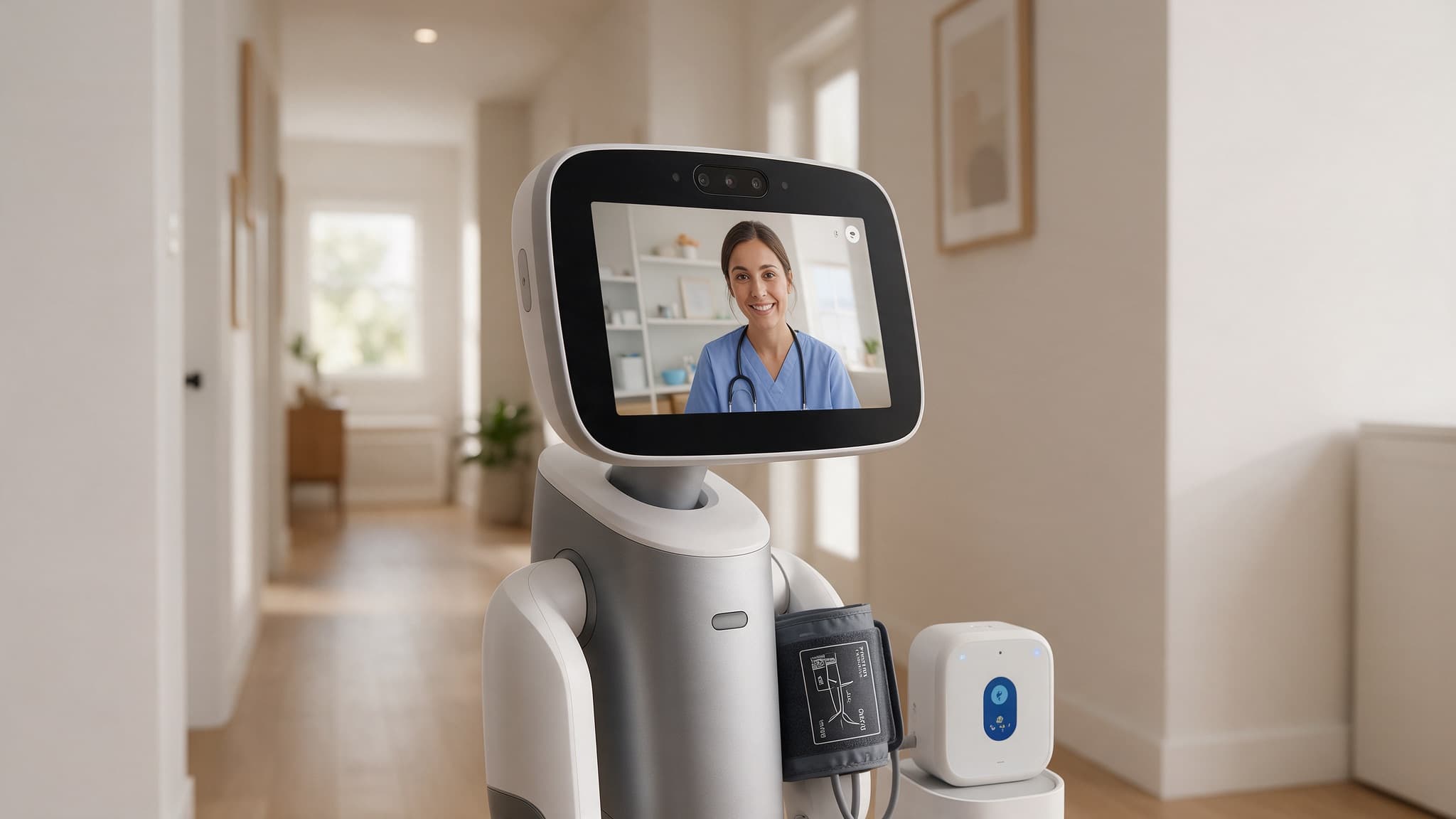
A robot that monitors your biometrics is judged like any remote-monitoring system: does it use validated sensors, does a person respond, and has the combination been shown to help. Robots used inside care programmes as hubs for validated cuffs, oximeters, scales and glucose meters rank first; hospital and care-home monitoring robots second; companion robots that prompt check-ins and relay them to family third; autonomous robots that measure vitals contactlessly fourth; and consumer biometric robots with built-in radar or camera sensing last, because their readings are estimates no clinician can act on.
Biometric monitoring by a robot has to meet the same three tests as any remote monitoring — a validated sensor, a staffed response, and evidence that the combination changes an outcome — and robots that pass them are the ones embedded in a care programme rather than sold to a household. Ranked on that: care-programme telepresence robots first, used by home-care and hospital-at-home services as the video-and-relay hub for validated cuffs, oximeters, scales and glucose meters, with a nurse or pharmacist on the other end; hospital and care-home monitoring robots second, which take vitals on rounds with clinical-grade attached devices inside an institution's response system; home companion robots with health check-ins third — ElliQ-style prompts to take a reading or report how you feel, relayed to family, useful for engagement and unvalidated for outcomes; autonomous vitals robots that approach and measure with contactless sensing fourth, technically impressive and unvalidated against references in the people they are meant for; and consumer biometric robots with built-in radar or camera vital signs last, whose 'advanced sensors' produce estimates no clinician can act on. Advanced, in a sensor, means validated; a robot carrying an ordinary cuff to a nurse is more advanced than one estimating your pulse through a jumper.
- A robot monitor is a remote-monitoring programme with wheels; it is judged on the programme.
- The validated sensors are attached devices; the robot's own biometric sensing is mostly unvalidated.
- Care-programme and institutional robots pass all three tests; household robots pass at most one.
- Companion robots' health check-ins are engagement tools with honest limits.
- No robot has shown that its monitoring changes admissions, falls or mortality; the site's tech section has looked.
CureMed grades this on human trial evidence; animal data never raises a grade.
Biometric-monitoring robots, ranked
Ranked on: validation of the sensors that produce clinical numbers; presence of a staffed response with authority to act; outcome evidence for the programme the robot serves; and honesty of the biometric claims.
| # | Option | Verdict | Grade |
|---|---|---|---|
| 1 | Care-programme telepresence robot | Validated attached devices; a nurse on the other end | GRADE AEstablished |
| 2 | Hospital and care-home monitoring robot | Clinical-grade attachments inside an institution's response | GRADE AEstablished |
| 3 | Home companion robot with health check-ins | Prompts and relays; engagement, not monitoring | GRADE BPromising |
| 4 | Autonomous vitals robot with contactless sensing | Impressive; unvalidated in the people it is for | GRADE CEarly |
| 5 | Consumer biometric robot | 'Advanced sensors' producing numbers nobody can act on | GRADE DInsufficient or unsafe |
- 01
Care-programme telepresence robot
GRADE AEstablishedValidated attached devices; a nurse on the other endTelepresence platforms deployed by home-care and hospital-at-home services as the hub for validated cuffs, oximeters, scales and glucose meters, with video consultation and readings relayed into the programme's response system. The monitoring evidence belongs to the programme (hypertension titration, heart-failure and COPD monitoring); the robot adds presence and convenience. Passes all three tests.
- 02
Hospital and care-home monitoring robot
GRADE AEstablishedClinical-grade attachments inside an institution's responseRobots that round wards or care homes taking vitals with attached clinical devices, logging to the record and alerting staff. The sensors are clinical grade, the response is institutional, and the evidence is that of the early-warning system it feeds. Value is staff time; the biometrics are ordinary and correct.
- 03
Home companion robot with health check-ins
GRADE BPromisingPrompts and relays; engagement, not monitoringElliQ-style companions that ask how you slept, prompt a blood-pressure reading on a connected cuff, and relay answers and readings to family or a care coordinator. The cuff reading is valid; the response is a family member. Engagement and loneliness data exist; outcome evidence does not. Honest about its limits, which is why it ranks above the class below.
- 04
Autonomous vitals robot with contactless sensing
GRADE CEarlyImpressive; unvalidated in the people it is forResearch and early commercial robots that approach a person and estimate heart rate, breathing and temperature from a distance. Feasibility studies exist; validation against references in older adults at home, and clearance for any clinical claim, do not. A demonstration, not a monitor.
- 05
Consumer biometric robot
GRADE DInsufficient or unsafe'Advanced sensors' producing numbers nobody can act onHousehold robots marketed with built-in radar or camera heart rate, breathing, 'stress' and sometimes blood pressure. Unvalidated, uncleared, and unconnected to any response. The number appears on an app and changes nothing, which is the tech section's pattern in its purest form.
The three tests any biometric monitor must pass
Robot classes against the monitoring tests
| Class | Validated sensor? | Staffed response? | Outcome evidence? | Grade |
|---|---|---|---|---|
| Care-programme telepresence robot | Yes (attached devices) | Yes (nurse/pharmacist) | Yes (programme's) | A |
| Hospital / care-home monitoring robot | Yes (clinical grade) | Yes (institutional) | Yes (early-warning system's) | A |
| Companion robot with check-ins | Yes if cuff attached | Family, informal | No | B |
| Autonomous contactless vitals robot | No (feasibility only) | Varies | No | C |
| Consumer biometric robot | No | No | No | D |
| For comparison: validated cuff + phone + pharmacist titration | Yes | Yes | Yes (RCTs) | A |
Frequently asked questions
What are the best longevity robots with advanced biometric monitoring sensors?
Ranked on validated sensors, staffed response and outcome evidence: care-programme telepresence robots serving as hubs for validated cuffs, oximeters, scales and glucose meters first; hospital and care-home monitoring robots second; home companion robots with health check-ins third; autonomous contactless vitals robots fourth; consumer biometric robots with built-in radar or camera sensing last.
Can a robot monitor vital signs accurately at home?
Only through validated attached devices — a cuff, an oximeter, a scale, a glucose meter — whose readings the robot relays. Built-in contactless sensing of heart rate, breathing or blood pressure is research-grade, unvalidated in older adults at home, and not cleared for clinical claims. The robot can carry a monitor; it is not one.
Does robot monitoring reduce hospital admissions or falls?
No robot has shown that. Remote-monitoring programmes with validated devices and a staffed same-day response reduce blood pressure, HbA1c and, in well-run heart-failure programmes, admissions; a robot used inside such a programme inherits that evidence. Standalone robot monitoring has no outcome trials, consistent with the tech section's finding across ageing technology.
Are companion robots useful for health monitoring?
For prompting and relaying, yes: a companion can remind someone to take a cuff reading and pass the result to family or a coordinator, and engagement data are positive. It is not a monitor — the response is informal and there is no outcome evidence — and it should be chosen for company with monitoring as a side benefit.
What is the cheapest system that passes every monitoring test?
A validated upper-arm cuff, a phone app that logs readings, and a pharmacist or nurse who titrates under protocol; for heart failure, a connected scale with a nurse responding to weight gain. Randomised trials support both. They cost a small fraction of any robot and are what a good robot programme is built on.
What should a robot's biometric claim be checked against?
For each measurement: a published validation against a clinical reference in a population like the intended user, and regulatory clearance for the claim. Attached devices on validated-device lists pass; contactless heart rate, breathing and blood pressure from consumer robots do not. If the vendor cannot name the validation study, the sensor is a demonstration.
Keep reading
- Best AI health system for remote patient monitoring programs.
The monitoring standard robots are held to.
- Which longevity tech robots offer the most accurate sensors?
Sensor by sensor.
- Longevity technology
The trial record for ageing technology.
- Free stack check
The pharmacist at the other end.
More in Wearables & devices
- Best snoring solutions, ranked by evidence.
Mandibular advancement devices have real randomised-trial evidence for snoring and mild-to-moderate apnea; positional therapy and nasal strips rank below them.
- Which longevity tech robots offer the most accurate sensors?
Longevity robots are ranked on sensor accuracy against clinical references: validated peripherals beat camera-based fall detection and contactless vitals.
- How to choose longevity robots with reliable health sensors?
Choosing a longevity robot means checking each sensor's validation: attached validated devices pass; built-in contactless vitals and fall detection fail.
- High-end longevity tech robots featuring AI health sensors.
A higher price buys mobility, build quality and voice, not a validated health sensor. Enterprise telepresence robots are the only class with outcome evidence.
- What are the top-rated longevity robots for seniors?
Companion robots like ElliQ rank first for seniors, with sustained daily use and loneliness gains; PARO's best trial matched only a switched-off toy.
- Premium longevity robots with continuous vital sign sensors.
Continuous vital signs come from validated wearables, not robots — robots that relay wearable data rank highest, ahead of radar- and camera-based sensors.