Best longevity workout routine for healthy aging adults.

See more of CureMed in your Google results.
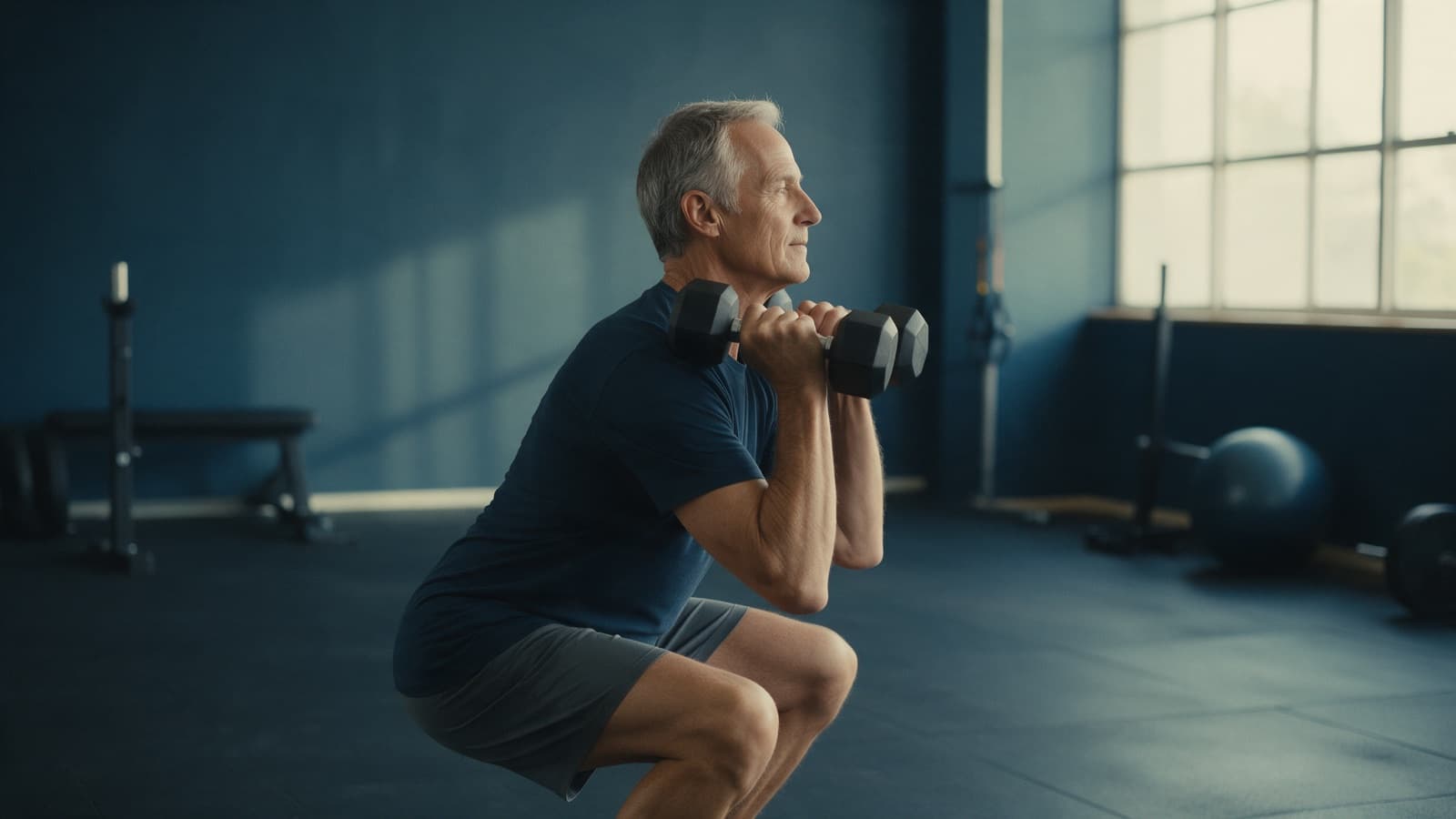
Two things about your fitness predict how long you live: how well your heart and lungs work, and how strong you are. This is a weekly routine that improves both, built only on what exercise research has actually shown in people, with the reasoning behind each part.
The evidence supports a weekly routine with four components: 150–300 minutes of moderate aerobic work (mostly easy, conversational pace), one harder interval session to raise VO₂max, two full-body resistance sessions to preserve strength and muscle, and a few minutes of balance work for anyone over sixty. Cardiorespiratory fitness and muscle strength each predict mortality independently in large cohorts; the routine is built to raise both. No supplement, peptide or device has evidence approaching it.
- Cardiorespiratory fitness (VO₂max) is among the strongest predictors of mortality in large cohorts, and moving from the bottom fifth to average carries a larger benefit than any single risk-factor treatment.
- Grip and leg strength predict mortality independently of aerobic fitness. Resistance training two or more times a week is associated with lower all-cause mortality and has randomised evidence for function and bone in older adults.
- Most aerobic volume should be easy. The high-intensity session raises VO₂max efficiently; the easy volume builds the base and is what people actually sustain.
- Balance and power training reduce falls in older adults in randomised trials — the intervention with the most direct evidence for preventing the injury that most often ends independence.
- Consistency outranks optimisation. The routine that survives a bad month beats the perfect routine abandoned in week three.
Graded by CureMed against human clinical evidence, and reviewed by CureMed Labs.
The weekly routine
Four components, five to six sessions
| Component | Weekly dose | What it builds | Evidence |
|---|---|---|---|
| Easy aerobic base (zone 2) | 150–300 min, in sessions of 30–60 min, at a pace you can hold a conversation | Cardiorespiratory fitness, mitochondrial capacity, the volume you can sustain for decades | Guideline threshold from large cohorts; dose-response continues above it |
| One hard session | Once a week: 4 × 4 min at hard effort with 3 min easy between, or similar | VO₂max — the fitness measure most tightly linked to mortality | Randomised trials show interval work raises VO₂max faster than easy work alone, including in older adults |
| Resistance training | Two full-body sessions: squat, hinge, push, pull, carry; 2–3 sets of 6–12 reps, last reps hard | Muscle mass, strength, bone density, insulin sensitivity | Two or more sessions weekly linked to lower mortality in cohorts; RCTs for function and bone in older adults |
| Balance and power (over 60) | 5–10 min, 2–3 times a week: single-leg stands, step-ups, fast sit-to-stand | Fall prevention, reaction speed | Randomised trials show balance and strength programmes reduce falls in older adults |
The proportions matter more than the details. Roughly four-fifths of aerobic time should be easy, because that is what builds the base and what people keep doing; the single hard session does most of the VO₂max work on its own. Resistance training needs to be genuinely hard in the last repetitions of each set to stimulate muscle — comfortable sets maintain, they do not build.
Why each part is there
Ranked on: the strength of the link between the training quality and mortality or independence in human studies, and the strength of randomised evidence that training changes it. Ordered by how much of the benefit each component carries.
| # | Option | Verdict | Grade |
|---|---|---|---|
| 1 | Aerobic fitness | The largest effect in the literature | GRADE AEstablished |
| 2 | Strength and muscle mass | Independent of fitness; declines fastest | GRADE AEstablished |
| 3 | Balance and power | Prevents the injury that ends independence | GRADE AEstablished |
| 4 | Flexibility and mobility | Useful; not a mortality predictor | GRADE CEarly |
| 5 | Steps and daily movement | Real, but absorbed by the above | GRADE BPromising |
Measured VO₂max is one of the strongest predictors of all-cause mortality ever recorded in cohort studies, and the relationship has no upper plateau. It is also highly trainable: adults in their sixties and seventies raise VO₂max substantially with a few months of structured training. The easy-volume-plus-one-hard-session structure is what the training literature supports for sustained improvement.
- 02
Strength and muscle mass
GRADE AEstablishedIndependent of fitness; declines fastestGrip and leg strength predict mortality independently of aerobic fitness, and adults lose muscle at an accelerating rate after fifty unless they load it. Resistance training is the only intervention shown in randomised trials to reverse that loss in older adults, and it improves bone density, glucose control and function alongside. Two sessions a week is the dose the cohort data supports; the exercises are the basic patterns, not machines.
- 03
Balance and power
GRADE AEstablishedPrevents the injury that ends independenceFalls are the leading cause of injury death in adults over sixty-five, and hip fracture carries a mortality that rivals many cancers. Balance and strength programmes reduce falls in randomised trials — the most direct outcome evidence on this page. Power, the ability to move fast, is lost earlier than strength and matters for catching a stumble; fast sit-to-stands and step-ups train it.
- 04
Flexibility and mobility
GRADE CEarlyUseful; not a mortality predictorMobility work supports the other components and helps with pain and joint function, but has no independent link to mortality. It belongs in the warm-up and in the balance session, not as a session of its own.
- 05
Steps and daily movement
GRADE BPromisingReal, but absorbed by the aboveDaily step counts are associated with lower mortality up to roughly 8,000–10,000 steps in cohort studies, with most of the benefit in the first few thousand. Structured training captures most of this; the remaining value is in not sitting for hours between sessions.
Starting, progressing and adapting
If you are starting from little
- Weeks 1–4: three easy aerobic sessions of 20–30 minutes and two short resistance sessions with bodyweight or light loads. No hard session yet.
- Weeks 5–8: extend easy sessions toward 45 minutes; add the hard session at a moderate version — 4 × 2 minutes — and progress load in the resistance sessions.
- From week 9: the full routine. Increase one variable at a time — duration, then intensity, then load — by no more than about ten per cent a week.
Adjustments that the evidence supports
- Over seventy: keep everything, reduce the hard session to what can be done with control, and give balance work equal billing with strength.
- Joint pain: swap running for cycling, rowing or incline walking — the fitness effect is the same; the joint load is not.
- Limited time: the two resistance sessions and the one hard session are the highest-value hours. Easy volume can be shortened before they can.
- On medication: beta-blockers cap heart rate, so use perceived effort rather than heart-rate zones; statins occasionally cause muscle symptoms worth reporting; blood-pressure medicines can cause dizziness on standing after hard sets.
Frequently asked questions
What is the best exercise for longevity?
Not one exercise but two qualities: cardiorespiratory fitness, which predicts mortality more strongly than almost any other measure, and muscle strength, which predicts it independently. The routine that raises both — mostly easy aerobic work, one hard interval session, and two resistance sessions a week — is the best-evidenced combination.
How many days a week should older adults exercise?
Four to six, combining sessions where practical: two resistance sessions, three to four aerobic sessions of which one is hard, and short balance work folded into the strength days for anyone over sixty. The guidelines' 150 minutes of moderate aerobic activity is a floor, not a target.
Is strength training or cardio more important after 50?
Both, and the evidence says they are not interchangeable. Aerobic fitness has the larger association with mortality; strength predicts it independently and is what declines fastest after fifty without loading. A routine that does one and skips the other leaves roughly half the benefit unclaimed.
What is zone 2 training and why does it matter for longevity?
Easy aerobic effort at which you can still hold a conversation. It builds the aerobic base and mitochondrial capacity, is sustainable for decades, and should make up most of your weekly aerobic time. The single harder session each week does most of the VO₂max work; zone 2 is what makes it possible to keep training.
Can I start strength training in my 60s or 70s?
Yes, and it is the group with the most to gain. Randomised trials in adults in their seventies and eighties show substantial gains in strength, muscle and function within a few months of resistance training. Start with bodyweight or light loads, progress gradually, and add balance work from the first week.
How does exercise compare with longevity supplements?
There is no comparison. Exercise has cohort evidence in hundreds of thousands of people and randomised trials for function, fitness, strength and falls; no supplement has been shown to extend human lifespan or approach the effect sizes seen for fitness and strength. Supplements are, at best, an addition to a routine like this — never a substitute.
Keep reading
- Which daily habits offer the best longevity benefits?
Fitness and strength are two of seven; here is where they rank.
- Which longevity routines actually extend healthspan and energy?
Why this routine outranks every product sold for energy.
- VO₂ max testing for longevity
How the fitness measure behind this routine is tested.
- Best longevity diet plan for maximum lifespan extension
The protein target that makes the resistance work count.
- A longevity protocol built only on what the evidence supports
Training, diet, sleep and testing sequenced into one plan.
- Which blood tests are best for tracking longevity?
The markers that move when this routine is working.
More in Protocols & lifestyle
- How can I extend life through daily habits?
Not smoking is the single biggest driver of a longer life, followed by physical activity, diet quality, sleep and social connection — ranked here by evidence.
- What are the most effective ways to extend life?
Quitting smoking is the most effective way to extend life, ranked ahead of blood pressure control, vaccination, diet, exercise, and cancer screening.
- What longevity routines actually help extend life expectancy?
Consistent sleep and wake times, structured aerobic-plus-resistance exercise and medication adherence rank above cold exposure, fasting and saunas.
- Which diet changes best extend life and vitality?
A plant-forward whole-food diet ranks first for extending life and vitality, backed by PREDIMED trial evidence for fewer cardiovascular events.
- Evidence based strategies to extend life and healthspan.
A complete evidence-based strategy spans four domains: lifestyle habits rank first with the largest evidence base, then risk factors, screening and function.
- Longevity plan to extend life with minimal lifestyle changes.
Ranked by return on effort: one-time actions like vaccination, screening and quitting smoking beat ongoing habits for a minimal-effort longevity plan.