How to choose longevity robots with reliable health sensors?

See more of CureMed in your Google results.
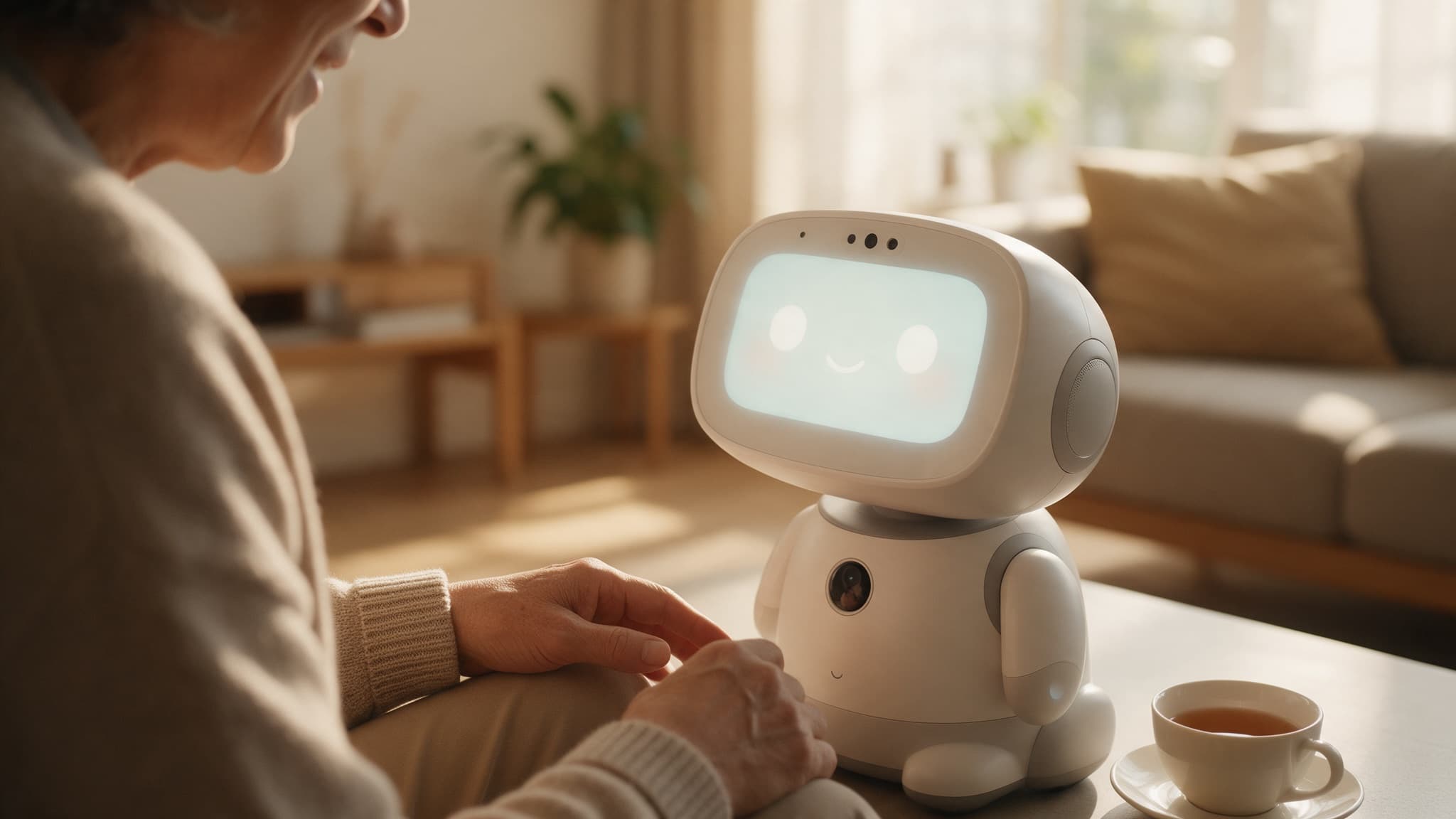
To choose a longevity robot with reliable health sensors, decide what you actually need it for (company, reminders, video calls, relaying readings — never a safety net), then for each sensor ask for the study that validated it in older people and the regulatory clearance; attached medical devices pass, built-in contactless vital signs and camera fall detection do not. Then ask who receives the readings and what they can do, test the failure modes like false alarms and wifi outages, and compare the price with the non-robot way of doing the same job. Usually the companion robot survives on charm and the monitoring is best done with a validated cuff and a phone.
Choose a longevity robot with reliable health sensors by asking five questions in order, ranked by how much each eliminates. First, decide the job — company, reminders, video presence, relaying readings, or a safety net — because a robot excellent at company is not a monitor and no robot is a safety net. Second, for every health sensor the robot claims, ask for the validation study against a clinical reference in older adults and the regulatory clearance for the claim; attached validated devices pass, built-in contactless vital signs fail, and camera fall detection is uncleared everywhere. Third, ask who receives a reading or alert and what they are authorised to do, because a number relayed to nobody is decoration; a care programme with a nurse passes, a family app is informal, and an in-app trend is nothing. Fourth, test the failure modes — a false fall alert at 3 a.m., a missed one, a wifi outage, a person who cannot hear the robot — and ask how each is handled. Fifth, price the robot against the non-robot alternative that does the job — a companion robot against a daily call and a day centre, a monitoring robot against a validated cuff and a phone, a reminder robot against a blister pack — and buy the robot only where it wins. Applied honestly the method keeps a companion robot for someone who would enjoy one, keeps the validated devices for monitoring, and removes the built-in sensors from the decision entirely.
- Define the job first; 'health sensors' describes several different products and one of them does not exist.
- Every sensor claim needs a validation study and a clearance; ask for both by name.
- Who responds to the reading decides whether the sensor matters at all.
- The failure modes — false alerts, missed alerts, outages, hearing — are where robots fail people in practice.
- Price against the non-robot alternative; the alternative usually wins on the sensors and loses only on charm.
Graded by CureMed against human clinical evidence, and reviewed by CureMed Labs.
The five steps, ranked by how much each eliminates
Ranked on: how much of the market each step removes from consideration for a given person, and how much harm skipping it allows.
| # | Option | Verdict | Grade |
|---|---|---|---|
| 1 | 1. Decide the job | Company, reminders, presence, relay — or the safety net that does not exist | GRADE AEstablished |
| 2 | 2. Verify every sensor claim | Validation study plus clearance, or it is a demo | GRADE AEstablished |
| 3 | 3. Ask who responds | A number nobody acts on is decoration | GRADE AEstablished |
| 4 | 4. Test the failure modes | Where robots fail people in practice | GRADE BPromising |
| 5 | 5. Price against the non-robot alternative | The alternative usually wins on sensors and loses on charm | GRADE BPromising |
- 01
1. Decide the job
GRADE AEstablishedCompany, reminders, presence, relay — or the safety net that does not existWrite down what the robot must do. Company and engagement: companion robots do this and have engagement data. Reminders: a blister pack and an alarm do this better. Video presence: a tablet does this. Relaying validated readings: a phone does this. A safety net that catches every fall: no device, robot or wearable, is cleared or validated for it. Most buyers want the last one, which eliminates the premise.
- 02
2. Verify every sensor claim
GRADE AEstablishedValidation study plus clearance, or it is a demoFor each claimed measurement, ask the vendor to name the study validating it against a clinical reference in older adults and the regulatory clearance for the claim. Attached devices on validated-device lists pass. Built-in contactless heart rate, breathing, 'stress' and blood pressure fail. Camera or radar fall detection is uncleared everywhere. A vendor who answers with 'medical-grade' has answered.
- 03
3. Ask who responds
GRADE AEstablishedA number nobody acts on is decorationWhere does a reading or alert go, how fast, and what is the recipient authorised to do? A care programme with a nurse or pharmacist who can titrate or dispatch: yes. A family app: informal, and someone must be awake. A trend line in the robot's app: nothing. The response, not the sensor, decides whether monitoring means anything.
- 04
4. Test the failure modes
GRADE BPromisingWhere robots fail people in practiceA false fall alert at 3 a.m. and who it wakes; a missed fall and what the person does then; a wifi or power outage; a person with hearing loss who cannot hear the robot; a robot stuck behind a door. Ask how each is handled and whether there is a non-robot fallback — a pendant alarm, a daily call, a neighbour.
- 05
5. Price against the non-robot alternative
GRADE BPromisingThe alternative usually wins on sensors and loses on charmCompanion robot versus a daily call plus a day centre; monitoring robot versus a validated cuff, a scale and a phone in a care programme; reminder robot versus a pharmacist's blister pack. Buy the robot where it wins, which is usually company for someone who would enjoy it. The sensors should not be in the decision by this point.
Questions that expose an unvalidated sensor
What to ask about each sensor, and what the answers mean
| Question | Reliable answer | Unreliable answer |
|---|---|---|
| Which study validated this measurement against a clinical reference in older adults? | A named study, with numbers | 'Extensively tested' / 'medical-grade' |
| What regulatory clearance covers this claim? | A clearance number for the attached device | 'Compliant' / 'certified' with no number |
| Is fall detection cleared as a fall-risk or fall-detection device? | 'No — no such device is cleared; it is a check-in feature' | 'Yes' (it is not, anywhere) |
| Is the blood pressure from a cuff? | 'Yes, a validated upper-arm cuff' | 'Contactless' |
| Who receives alerts and what can they do? | A staffed programme with protocols | 'Family members via the app' |
| What happens during an outage or if the robot is stuck? | A fallback pendant or call schedule | Silence |
| Can you show outcome data — falls, admissions, adherence? | Programme-level data, or an honest 'engagement only' | Testimonials |
Frequently asked questions
How do I choose a longevity robot with reliable health sensors?
In five steps: decide the job (company, reminders, presence, relaying readings — never a safety net); verify each sensor with a validation study and a regulatory clearance; ask who receives readings and what they can do; test the failure modes (false alerts, missed alerts, outages, hearing); and price the robot against the non-robot alternative. The method usually keeps a companion robot for company and assigns monitoring to validated devices and a care programme.
Which robot health sensors are reliable?
The validated devices a robot attaches to or relays: upper-arm cuffs, pulse oximeters, scales and glucose meters on validated-device lists with regulatory clearance. Built-in contactless heart rate, breathing, 'stress' and blood-pressure sensing, and camera or radar fall detection, are not validated in older adults at home and are not cleared for clinical claims.
Is any robot cleared for fall detection?
No. No regulator has cleared any device — robot or wearable — as a fall-risk or fall-detection device. Robot fall detection is a check-in feature with unknown real-world accuracy; the interventions with high-certainty evidence for fewer falls are balance exercise, hearing aids, cataract surgery and targeted home hazard reduction.
Who should receive readings from a monitoring robot?
A staffed care programme with protocols and authority to act — a nurse or pharmacist who can titrate, call or dispatch — for anything clinical. A family app is an informal fallback that depends on someone being awake and knowing what to do. A reading that goes only to the robot's own app changes nothing.
Is a companion robot worth buying for an older relative?
If they would enjoy one, yes, for company: engagement and loneliness data are positive and the sensors do what they claim. Buy it for that reason, not for its health features, and pair it with what actually preserves independence — exercise, hearing, vision, a safe home — and with validated devices if monitoring is needed.
What is the non-robot alternative for each job?
Company: a daily call, a day centre, a befriending service. Reminders: a pharmacist's blister pack with an alarm. Video presence: a tablet on a stand. Monitoring: a validated cuff, scale and phone inside a care programme with a nurse or pharmacist. Safety: a pendant alarm with a monitoring centre plus fall prevention. Each is cheaper and, on the sensors, more reliable.
Keep reading
- Longevity technology
What actually keeps older people independent, ranked by evidence.
- Which longevity tech robots offer the most accurate sensors?
The sensor classes graded.
- Best longevity robots with advanced biometric monitoring sensors.
The monitoring tests a robot must pass.
- Free stack check
The blister pack and the medication review.
More in Wearables & devices
- Best snoring solutions, ranked by evidence.
Mandibular advancement devices have real randomised-trial evidence for snoring and mild-to-moderate apnea; positional therapy and nasal strips rank below them.
- Which longevity tech robots offer the most accurate sensors?
Longevity robots are ranked on sensor accuracy against clinical references: validated peripherals beat camera-based fall detection and contactless vitals.
- Best longevity robots with advanced biometric monitoring sensors.
Care-programme telepresence robots rank first for biometric monitoring — validated sensors and a staffed nurse response — ahead of unvalidated consumer devices.
- High-end longevity tech robots featuring AI health sensors.
A higher price buys mobility, build quality and voice, not a validated health sensor. Enterprise telepresence robots are the only class with outcome evidence.
- What are the top-rated longevity robots for seniors?
Companion robots like ElliQ rank first for seniors, with sustained daily use and loneliness gains; PARO's best trial matched only a switched-off toy.
- Premium longevity robots with continuous vital sign sensors.
Continuous vital signs come from validated wearables, not robots — robots that relay wearable data rank highest, ahead of radar- and camera-based sensors.