High-end longevity tech robots featuring AI health sensors.

See more of CureMed in your Google results.
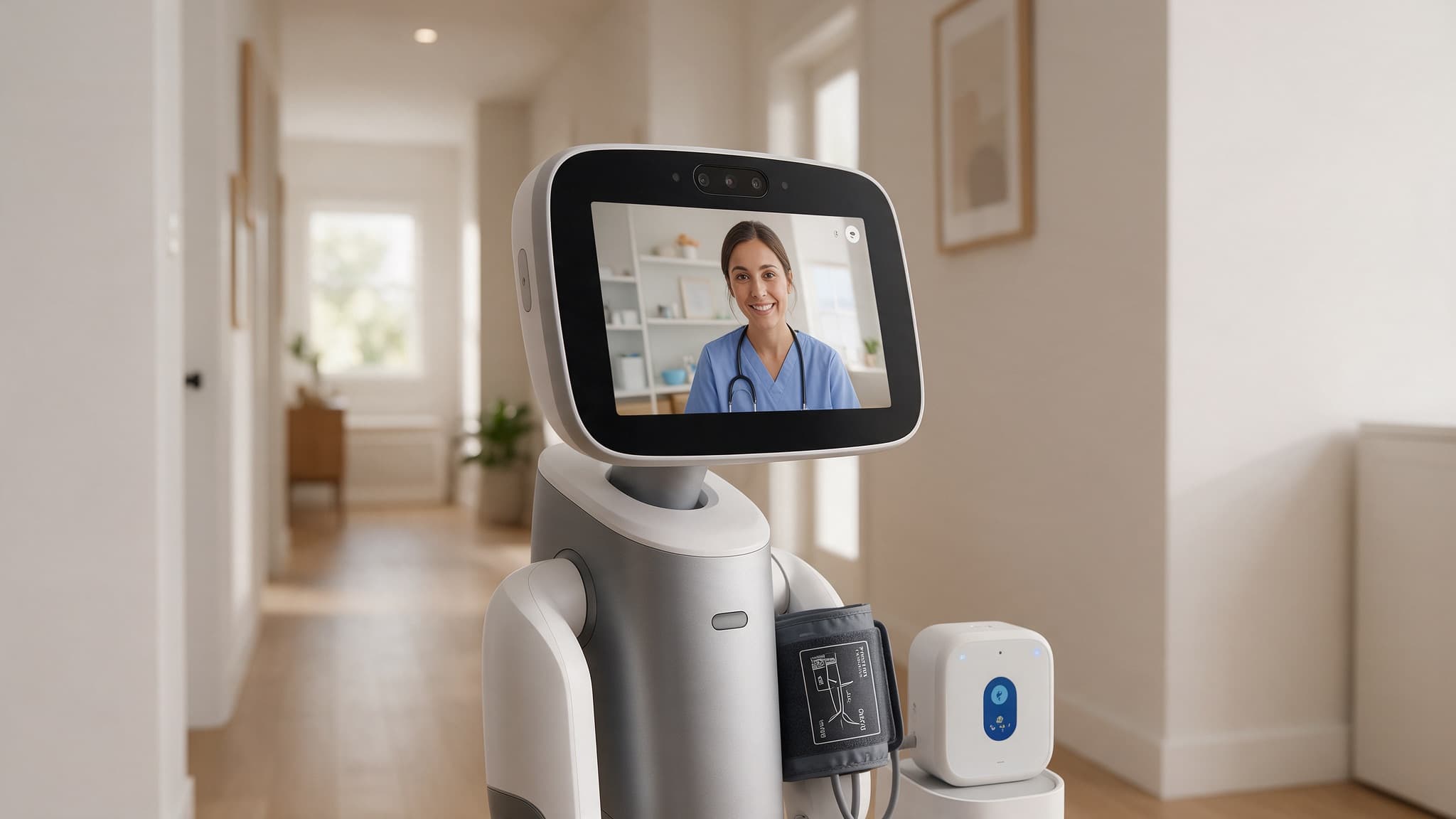
An expensive longevity robot buys better mobility, build quality, voice and battery — not a more validated health sensor, since the validated ones are the same attached cuff and oximeter at any price. Enterprise telepresence robots used inside care programmes rank first because the premium buys reliability and a staffed response; premium companions like ElliQ, Lovot and Aibo second, because people keep talking to them and their health claims are honest; assistive and mobility robots third, because they genuinely change what a disabled person can do; luxury home robots with contactless vitals fourth; and humanoid 'AI doctor' robots with a chatbot and unvalidated sensors last.
In longevity robots a high price buys mobility, build quality, a better voice and a longer battery — and almost never a more validated health sensor, because the validated sensors are the same attached cuff and oximeter at every price. Ranked on what the premium genuinely delivers: enterprise telepresence and care-programme robots first, where the price buys reliability, institutional integration and a staffed response behind validated devices, which is the only configuration with outcome evidence; premium social companions second — ElliQ, and the Lovot and Aibo class of emotional robots — where the premium buys a robot people keep talking to, with engagement and loneliness data and honest health claims; research-grade assistive and mobility robots third — exoskeleton-style walking assistance, transfer aids, robotic feeding — where the price buys genuine function for specific disabilities and the evidence is small trials; luxury home robots with contactless AI vitals fourth, where the premium buys radar and cameras producing estimates no clinician accepts; and imported 'AI doctor' robots last, humanoids with a tablet face, a chatbot and unvalidated sensors, at the highest prices in the category. The high-end robot worth its price is the one whose premium goes to presence and function rather than to sensors it cannot validate.
- Price buys mobility, build and voice; validation of health sensors does not scale with price.
- Enterprise care-programme robots are the only high-end class with outcome evidence, and it belongs to the programme.
- Premium companions earn their price on engagement and honesty, not on health claims.
- Assistive robots deliver real function for real disabilities; they are the high-end class that changes what a person can do.
- 'AI doctor' humanoids are the most expensive way to run a chatbot next to an unvalidated sensor.
CureMed ranks on published human evidence, and screens drug interactions first.
High-end longevity robots ranked on what the premium buys
Ranked on: whether the price premium delivers something with evidence or function — a staffed programme, sustained engagement, physical assistance — or delivers sensors that remain unvalidated at any price.
| # | Option | Verdict | Grade |
|---|---|---|---|
| 1 | Enterprise telepresence and care-programme robots | The premium buys reliability and a staffed response | GRADE AEstablished |
| 2 | Premium social companions (ElliQ; Lovot and Aibo class) | People keep talking to them; claims stay honest | GRADE BPromising |
| 3 | Assistive and mobility robots | Real function for real disability | GRADE BPromising |
| 4 | Luxury home robots with contactless AI vitals | The premium buys sensors no clinician accepts | GRADE CEarly |
| 5 | Imported 'AI doctor' humanoid robots | A chatbot with a face beside an unvalidated sensor | GRADE DInsufficient or unsafe |
- 01
Enterprise telepresence and care-programme robots
GRADE AEstablishedThe premium buys reliability and a staffed responseInstitution-grade telepresence platforms deployed by hospital-at-home, home-care and care-home operators: robust navigation, integration with the record, validated attached devices, and a nurse or pharmacist on the other end. Expensive because they are fleet hardware with support contracts; the only high-end class in a configuration with outcome evidence, which belongs to the programme.
- 02
Premium social companions (ElliQ; Lovot and Aibo class)
GRADE BPromisingPeople keep talking to them; claims stay honestElliQ's proactive conversation and check-ins with reported engagement and loneliness-score changes in deployments; Lovot and Aibo as emotional companions with no health claims at all. The premium buys the voice, the warmth and the retention that cheaper companions lose in weeks. No outcome evidence for health; honest about it.
- 03
Assistive and mobility robots
GRADE BPromisingReal function for real disabilityWearable walking-assist devices, robotic transfer and lifting aids, feeding robots for people with limited arm function. High prices for genuine capability; small trials and case series rather than large RCTs. The high-end class that changes what a person can physically do, prescribed through rehabilitation services rather than bought from a brochure.
- 04
Luxury home robots with contactless AI vitals
GRADE CEarlyThe premium buys sensors no clinician acceptsMobile home robots with premium finishes, radar and camera-based heart rate, breathing, 'stress' and sleep sensing, activity and fall detection, and an app. Unvalidated in the target population, uncleared for any clinical claim, no response layer. The motors and the design are excellent; the health layer is a demonstration.
- 05
Imported 'AI doctor' humanoid robots
GRADE DInsufficient or unsafeA chatbot with a face beside an unvalidated sensorHumanoid robots marketed as home health assistants: a tablet face running a large-language-model 'doctor', built-in vital-sign estimation, sometimes a blood-pressure claim. The chatbot is unregulated, the sensors unvalidated, the price the highest in the category, and the safety profile of a chatbot advising an older adult on medicines is the concern the site's AI section describes.
Frequently asked questions
What are the best high-end longevity tech robots with AI health sensors?
Ranked on what the premium buys: enterprise telepresence and care-programme robots first, where it buys reliability and a staffed response behind validated devices; premium social companions (ElliQ, Lovot, Aibo class) second, for sustained engagement with honest claims; assistive and mobility robots third, for real function; luxury home robots with contactless vitals fourth; humanoid 'AI doctor' robots last.
Do expensive robots have more accurate health sensors?
No. Price improves navigation, build, battery, voice and physical assistance. The validated health sensors are attached devices — the same cuff and oximeter at every price — and contactless vital-sign sensing and fall detection remain unvalidated and uncleared regardless of what the robot costs.
Is a premium companion robot worth it?
For someone who would talk to it, often yes: the premium buys the voice, warmth and proactive conversation that keep people engaged for months where cheaper companions are abandoned in weeks, and ElliQ deployments report engagement and loneliness-score changes. Buy it for company; its health claims are modest and should stay that way.
Are assistive robots for walking or transfers worth the price?
For specific disabilities, they can change what a person can physically do — walking assistance, safe transfers, independent eating — and that is genuine function, supported by small trials. They are prescribed and fitted through rehabilitation services rather than bought from a brochure, and their value is in the capability, not in any sensor.
What is wrong with humanoid 'AI doctor' robots?
They combine an unregulated large-language-model 'doctor' that can give confident, wrong medical advice with unvalidated built-in vital-sign sensors and, sometimes, a contactless blood-pressure claim, at the highest prices in the category. An older adult asking one about their medicines is the scenario the site's AI section warns about. Nothing in the package has evidence.
Where should the money go instead for an older relative's independence?
To the interventions with high-certainty evidence: a physiotherapist-led balance and strength programme, properly fitted hearing aids, cataract surgery when indicated, and home hazard reduction for someone at fall risk. Then a care programme with validated devices if monitoring is needed, a companion robot if they would enjoy one, and a pharmacist's medication review, which is free.
Keep reading
- Longevity technology
What the evidence supports for staying independent.
- How to choose longevity robots with reliable health sensors?
The five-step method at any price.
- Luxury longevity clinics with full wellness and diagnostics.
The same premium question, for clinics.
- Free stack check
The medicines question, answered by a person.
More in Wearables & devices
- Best snoring solutions, ranked by evidence.
Mandibular advancement devices have real randomised-trial evidence for snoring and mild-to-moderate apnea; positional therapy and nasal strips rank below them.
- Which longevity tech robots offer the most accurate sensors?
Longevity robots are ranked on sensor accuracy against clinical references: validated peripherals beat camera-based fall detection and contactless vitals.
- Best longevity robots with advanced biometric monitoring sensors.
Care-programme telepresence robots rank first for biometric monitoring — validated sensors and a staffed nurse response — ahead of unvalidated consumer devices.
- How to choose longevity robots with reliable health sensors?
Choosing a longevity robot means checking each sensor's validation: attached validated devices pass; built-in contactless vitals and fall detection fail.
- What are the top-rated longevity robots for seniors?
Companion robots like ElliQ rank first for seniors, with sustained daily use and loneliness gains; PARO's best trial matched only a switched-off toy.
- Premium longevity robots with continuous vital sign sensors.
Continuous vital signs come from validated wearables, not robots — robots that relay wearable data rank highest, ahead of radar- and camera-based sensors.