Best snoring solutions, ranked by evidence.
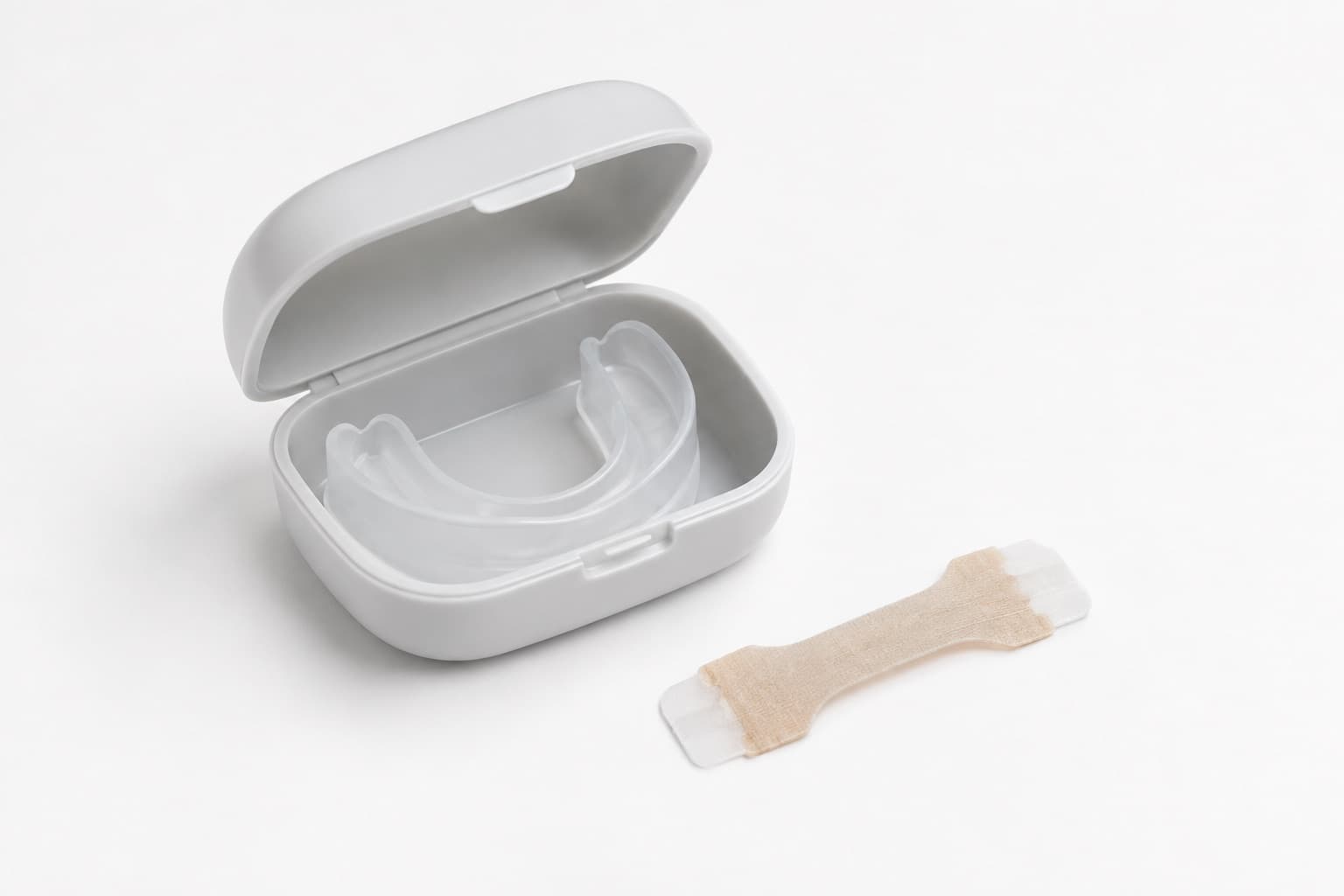
If snoring is the whole problem, a mandibular device has the best evidence behind it. If you or a partner have noticed pauses in breathing or gasping, that's a sleep-apnea question a device alone won't answer — see a clinician first. This guide ranks what's sold for snoring by what's actually been tested in people.
Mandibular advancement devices — mouthpieces that hold the jaw slightly forward — have the strongest evidence of any over-the-counter snoring solution, backed by randomised trials for both snoring and mild-to-moderate obstructive sleep apnea, though CPAP remains more effective for reducing breathing-pause severity when it's tolerated. Positional therapy, which trains people away from sleeping on their back, has real randomised trial evidence for people whose snoring is specifically worse lying supine, with the caveat that roughly half stop using it within six months. Nasal strips and internal nasal dilators help a narrower group — people whose snoring comes from nasal congestion — and do not meaningfully reduce sleep apnea itself. Chin straps, mouth-taping and 'smart' anti-snore gadgets have thin or no trial evidence behind them. None of this replaces a sleep study when snoring comes with witnessed breathing pauses, gasping, or daytime sleepiness severe enough to matter.
- Mandibular advancement devices (MADs) have the most consistent randomised trial evidence of any OTC snoring solution — a 2026 meta-analysis of 8 trials found a large, significant reduction in breathing-pause severity versus sham devices.
- MADs are less effective than CPAP at reducing breathing-pause counts, but a separate 2026 analysis found people actually use them more consistently — real-world adherence, not just lab efficacy, is part of the evidence picture.
- Positional therapy has a genuine randomised trial behind it for people whose snoring or apnea is worse on their back, cutting breathing-pause severity roughly in half at two months — but close to half of users stop using the device within six months.
- Nasal strips and internal nasal dilators have real trials showing they don't meaningfully change sleep apnea severity, and only modestly help snoring caused specifically by nasal congestion.
- Chin straps, mouth-taping and electronic 'smart' anti-snore wearables all have thin, preliminary, or entirely absent trial evidence — despite heavy marketing, especially on social media.

Mandibular advancement device (oral appliance)
The best-evidenced non-CPAP option, for snoring and mild-to-moderate apnea
See the full rankingThe ranking
Ranked on: the strength of controlled human trial evidence for reducing snoring or breathing-pause severity versus sham or no treatment. This ranks devices, not diagnoses — it is not a substitute for a sleep study when apnea is suspected. No commercial relationship influences the order.
| # | Option | Verdict | Grade |
|---|---|---|---|
| 1 | Mandibular advancement device (oral appliance) | The best-evidenced non-CPAP option, for snoring and mild-to-moderate apnea | GRADE AEstablished |
| 2 | Positional therapy | Real trial evidence for back-sleepers — if you keep using it | GRADE BPromising |
| 3 | Nasal dilators (internal and external strips) | Helps nasal-based snoring; does nothing for sleep apnea itself | GRADE CEarly |
| 4 | Chin straps and mouth-taping | Thin evidence, and a real safety question for undiagnosed apnea | GRADE DInsufficient or unsafe |
| 5 | Anti-snore pillows | No dedicated trial evidence | GRADE DInsufficient or unsafe |
| 6 | Electronic 'smart' anti-snore wearables | No evidence beyond the specific trained devices already covered | GRADE DInsufficient or unsafe |
- 01
Mandibular advancement device (oral appliance)
GRADE AEstablishedThe best-evidenced non-CPAP option, for snoring and mild-to-moderate apneaA 2026 meta-analysis of 8 randomised trials (642 people) found mandibular advancement devices produced a large, significant reduction in breathing-pause severity compared with sham devices. CPAP still outperforms MADs on raw breathing-pause reduction — a separate meta-analysis found CPAP meaningfully more effective by that specific measure — but a 2026 analysis of 14 trials (over 1,100 people) found MAD users stuck with treatment more consistently than CPAP users, with comparable blood-pressure benefit despite the smaller effect on breathing pauses. That combination — real efficacy plus real-world adherence — is why oral appliances are standard second-line therapy in sleep medicine, not just a consumer gadget. A dentist-fitted custom device generally fits and performs better than an OTC boil-and-bite version, at higher cost.
- 02
Positional therapy
GRADE BPromisingReal trial evidence for back-sleepers — if you keep using itA randomised trial of 101 people found a vibrating positional-training device reduced breathing-pause severity from 18 to 10 events per hour by two months, cutting time spent sleeping on the back from 47% to 17% — a real, clinically meaningful effect specifically for people whose snoring or apnea is worse lying on their back. The catch: about half of users had stopped using the device by six months, a well-documented adherence problem with this category. The trial-tested devices are specialised vibrational trainers; simpler back-worn positional aids work on the same avoid-supine-sleep principle, though most haven't been tested in their own dedicated trials the way the vibrational device has.
- 03
Nasal dilators (internal and external strips)
GRADE CEarlyHelps nasal-based snoring; does nothing for sleep apnea itselfA systematic review of 14 studies (147 people) found nasal strips and internal dilators produced no significant change in breathing-pause severity or blood oxygen levels overall — one older trial is titled, plainly, 'Nasal strips without effect on obstructive sleep apnea and snoring.' A subgroup analysis found internal dilators gave a modest apnea-index improvement where external strips showed essentially none. Where they do help is a narrower case: reducing snoring intensity in people whose airway resistance is nasal, not throat-based, and who don't have sleep apnea. Useful for the right person; not a sleep-apnea treatment.
- 04
Chin straps and mouth-taping
GRADE DInsufficient or unsafeThin evidence, and a real safety question for undiagnosed apneaA 2024 scoping review found only nine relevant studies existed at all, concluding there is 'little consensus' on mouth-taping's benefits despite its popularity on social media. The few small preliminary studies that exist are uncontrolled or bundle mouth-taping with other interventions, making it impossible to credit the tape itself. Beyond weak evidence, there's a real safety concern: taping the mouth shut in someone who actually needs to breathe through it — due to nasal obstruction or undiagnosed apnea — can make their breathing worse, not better.
- 05
Anti-snore pillows
GRADE DInsufficient or unsafeNo dedicated trial evidenceMarketed on ergonomic positioning claims rather than controlled trial data. No randomised evidence was found testing a specific anti-snore pillow design against a standard pillow for snoring or breathing-pause severity. A pillow that happens to discourage back-sleeping may share some logic with positional therapy, but that's a mechanism argument, not a tested result for this product category.
- 06
Electronic 'smart' anti-snore wearables
GRADE DInsufficient or unsafeNo evidence beyond the specific trained devices already coveredConsumer wearables that buzz or vibrate to prompt a position change are, in concept, doing what the trial-tested positional-therapy device does — but no dedicated trial evidence was found for the generic consumer gadgets sold under this label. If a positional-training device is what you're after, the one with actual randomised trial data behind it is the safer bet than an unverified 'smart' equivalent.

Figuring out what's actually causing it
What to try, matched to what's actually happening
| Situation | Reasonable first step | Detail |
|---|---|---|
| Snore mainly on your back, otherwise fine | Positional therapy | Cheapest, best-fit evidence for positional snoring specifically — but plan for the real drop-off in use after a few months. |
| Snore with a stuffy or congested nose | Nasal dilator strip, plus treat the congestion itself | Helps the narrow case it's actually evidenced for; won't touch throat-based snoring or apnea. |
| Snore regardless of position; partner reports pauses in breathing | A sleep evaluation before any device | This may be obstructive sleep apnea, not simple snoring — a device treats the symptom, a sleep study identifies the actual problem. |
| Simple snoring confirmed, no diagnosed apnea | Mandibular advancement device | The best-evidenced OTC option, OTC boil-and-bite or dentist-fitted. |
| Confirmed moderate-to-severe sleep apnea | CPAP first; MAD if CPAP isn't tolerated | CPAP remains more effective at reducing breathing-pause severity — the mandibular device is the fallback, not the first choice, when CPAP works and is tolerated. |
What a pharmacist would add
- Witnessed pauses in breathing, gasping, or choking during sleep are reasons to get a sleep study, not to buy a device first — untreated moderate-to-severe sleep apnea carries real cardiovascular risk no OTC product addresses.
- CPAP remains the most effective treatment for moderate-to-severe obstructive sleep apnea by a clear margin. A mandibular device is the option for people who can't tolerate CPAP, not a substitute when CPAP is appropriate and working.
- Alcohol and sedating sleep aids — including several covered in our companion sleep-aids guide — relax the throat further and can worsen both snoring and undiagnosed apnea. Don't stack a sedative on top of unevaluated snoring.
- A dentist-fitted, custom mandibular device generally outperforms an OTC boil-and-bite version on fit and comfort, at meaningfully higher cost — worth it if the OTC version doesn't fit well.
- Weight loss, cutting evening alcohol, and side-sleeping are free, evidence-supported first steps that belong before any device purchase, not after.
Frequently asked questions
What actually works for snoring?
Mandibular advancement devices have the strongest randomised trial evidence of any OTC option, for both snoring and mild-to-moderate sleep apnea. Positional therapy has real evidence too, specifically for people whose snoring is worse lying on their back.
Do nasal strips help with sleep apnea?
No — a systematic review of 14 studies found no significant effect on breathing-pause severity or oxygen levels. Nasal strips and internal dilators help a narrower case: snoring caused by nasal congestion in people without sleep apnea.
Is a mandibular advancement device as good as CPAP?
Not on raw breathing-pause reduction — CPAP is more effective there. But real-world evidence shows people use mandibular devices more consistently, with comparable blood-pressure benefit despite the smaller effect, which is why they're the standard fallback when CPAP isn't tolerated.
Do anti-snoring chin straps or mouth tape work?
The evidence is thin — a 2024 scoping review found only nine relevant studies and concluded there's little consensus on benefit. There's also a real safety concern: taping the mouth shut can be harmful for someone who actually needs it open due to nasal obstruction or undiagnosed apnea.
How do I know if it's just snoring or actually sleep apnea?
Witnessed pauses in breathing, gasping or choking sounds during sleep, and daytime sleepiness severe enough to affect driving or work, are signs it may be sleep apnea rather than simple snoring — that combination is worth a sleep evaluation before trying any device.
Are 'smart' anti-snoring wearables worth it?
The concept — vibrating to prompt a position change — is the same mechanism behind a specific trial-tested positional-therapy device, but no dedicated trial evidence exists for the generic consumer gadgets sold under this label. The device with actual randomised trial data behind it is the safer bet.
Keep reading
- Best sleep aids, ranked by evidence
A different problem with different evidence — what actually helps insomnia and jet lag.
- Ask a health consultant
Get your situation checked against the evidence before buying a device, free.
- Free stack check
Screen any sedating sleep aid against snoring or undiagnosed apnea risk.
More in Wearables & devices
- Which longevity tech robots offer the most accurate sensors?
Longevity robots are ranked on sensor accuracy against clinical references: validated peripherals beat camera-based fall detection and contactless vitals.
- Best longevity robots with advanced biometric monitoring sensors.
Care-programme telepresence robots rank first for biometric monitoring — validated sensors and a staffed nurse response — ahead of unvalidated consumer devices.
- How to choose longevity robots with reliable health sensors?
Choosing a longevity robot means checking each sensor's validation: attached validated devices pass; built-in contactless vitals and fall detection fail.
- High-end longevity tech robots featuring AI health sensors.
A higher price buys mobility, build quality and voice, not a validated health sensor. Enterprise telepresence robots are the only class with outcome evidence.
- What are the top-rated longevity robots for seniors?
Companion robots like ElliQ rank first for seniors, with sustained daily use and loneliness gains; PARO's best trial matched only a switched-off toy.
- Premium longevity robots with continuous vital sign sensors.
Continuous vital signs come from validated wearables, not robots — robots that relay wearable data rank highest, ahead of radar- and camera-based sensors.