What are the top doctor-recommended longevity peptides?

See more of CureMed in your Google results.
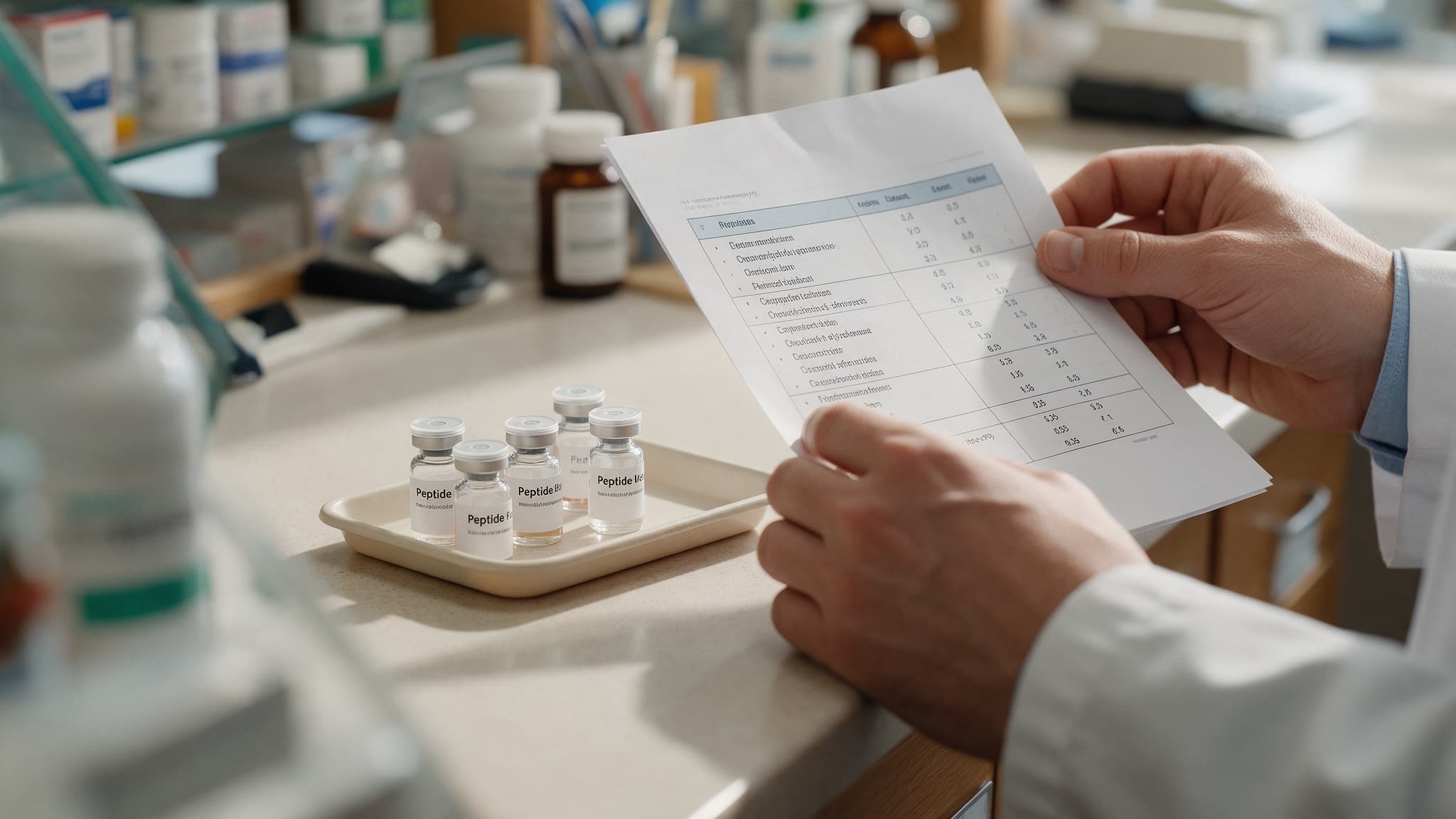
'Doctor-recommended' can mean a medicine prescribed within official guidelines, a doctor's judgement to use an approved drug off-label with proper monitoring, or a longevity clinic selling something from its menu. The peptides doctors recommend within guidelines — tesamorelin and PT-141 — are for specific conditions, not ageing. Sermorelin is sometimes prescribed off-label with blood tests. The peptides most often 'recommended' at clinics — BPC-157, TB-500, CJC/ipamorelin — have no human trials and usually no legal compounding route. No guideline recommends any peptide for longevity.
'Doctor-recommended' covers three different things, and the peptides rank by which one applies: recommended within guidelines for an approved indication — tesamorelin for HIV-associated abdominal fat and bremelanotide (PT-141) for a specific sexual-desire disorder — is the strongest; recommended off-label by a clinician who runs baseline and follow-up tests, on a known pharmacology with thin ageing evidence — sermorelin, and tesamorelin used outside its indication — is the middle; and recommended on a longevity-clinic menu, where the recommending clinician also sells the product and the peptide has no human trial and no lawful compounding route — BPC-157, TB-500, CJC-1295/ipamorelin, MOTS-c, epitalon — is the weakest, and the most common. Thymosin alpha-1 and SS-31 have physician-led trials for specific diseases and are not lawfully available for ageing. No peptide is recommended by any medical guideline for longevity, because none has the evidence a guideline would require.
- A recommendation is only as strong as what it rests on: a guideline, a monitored off-label judgement, or a clinic's price list are three different things wearing the same phrase.
- The only peptides doctors recommend within guidelines are approved for conditions that are not ageing.
- Off-label prescribing of sermorelin and tesamorelin for anti-ageing exists and is lawful; the evidence for the ageing use is thin, and the monitoring is what makes it defensible.
- Clinic-menu peptides are 'doctor-recommended' in the sense that a doctor sells them; most cannot be lawfully compounded from bulk in the US and have no human trial.
- No medical guideline anywhere recommends a peptide for longevity.
This assessment is CureMed's, reviewed by the PharmD-led team at CureMed Labs.
Doctor-recommended peptides, ranked by what the recommendation rests on
Ranked on: the basis of the recommendation — guideline-backed prescribing, monitored off-label judgement, or a commercial clinic menu — combined with the evidence grade of the peptide itself and whether a lawful, quality-controlled route exists.
| # | Option | Verdict | Grade |
|---|---|---|---|
| 1 | Tesamorelin, prescribed within its indication | Guideline-backed; approved; Phase 3 evidence | GRADE AEstablished |
| 2 | Bremelanotide (PT-141), prescribed within its indication | Guideline-backed for a narrow condition | GRADE BPromising |
| 3 | Sermorelin, prescribed off-label with monitoring | Clinical judgement on a known pharmacology; thin ageing evidence | GRADE BPromising |
| 4 | Tesamorelin, prescribed off-label for anti-ageing | Approved drug, unstudied use, monitored | GRADE BPromising |
| 5 | Thymosin alpha-1 and SS-31 | Physician-led trials for diseases; not available for ageing | GRADE CEarly |
| 6 | GHK-Cu, topical | Dermatologist-recommended for skin; no systemic claim | GRADE CEarly |
| 7 | CJC-1295 / ipamorelin | Clinic-menu recommendation; regulatory citations; no lawful bulk compounding | GRADE DInsufficient or unsafe |
| 8 | BPC-157 and TB-500 | Clinic-menu recommendation; no human trial; no lawful route | GRADE DInsufficient or unsafe |
| 9 | MOTS-c, epitalon, AOD-9604, melanotan II | Menu items; no evidence, failed trial, or documented harm | GRADE DInsufficient or unsafe |
- 01
Tesamorelin, prescribed within its indication
GRADE AEstablishedGuideline-backed; approved; Phase 3 evidenceRecommended by treatment guidelines for reducing abdominal fat in HIV-associated lipodystrophy, with trial evidence and a monitored safety profile. This is what a doctor recommendation means at its strongest — and it is for a condition, not for ageing. The same drug prescribed off-label for a healthy adult's belly fat drops to the middle tier.
- 02
Bremelanotide (PT-141), prescribed within its indication
GRADE BPromisingGuideline-backed for a narrow conditionApproved and prescribed for hypoactive sexual desire disorder in premenopausal women, with known side effects. A physician recommendation within a guideline; no longevity claim. Included because clinics list it beside the longevity peptides.
- 03
Sermorelin, prescribed off-label with monitoring
GRADE BPromisingClinical judgement on a known pharmacology; thin ageing evidenceAn approved diagnostic agent that some physicians prescribe off-label for growth-hormone support in older adults, with baseline and follow-up IGF-1 and glucose. Lawful, monitored, and resting on small, old evidence for any ageing benefit. The monitoring is what makes the recommendation defensible; the evidence is what keeps it at B.
- 04
Tesamorelin, prescribed off-label for anti-ageing
GRADE BPromisingApproved drug, unstudied use, monitoredThe same molecule as the top of the list, used in a population it was not tested in. A clinician who prescribes it this way with glucose and IGF-1 monitoring is extrapolating from real data; the extrapolation is the weakness. Ranked B here to separate the use from the indication.
- 05
Thymosin alpha-1 and SS-31
GRADE CEarlyPhysician-led trials for diseases; not available for ageingBoth are in genuine physician-led clinical programmes — thymosin alpha-1 as an immune modulator in specific diseases, SS-31 in rare mitochondrial disorders. Doctors recommend them inside those trials and indications. Neither is lawfully available for anti-ageing; anything sold under the names for longevity is outside that programme.
Dermatologists do recommend copper-peptide products for skin, on small trials and a cosmetic safety record. It is the one peptide with a routine, low-stakes physician recommendation — for skin appearance, which is its scope.
- 07
CJC-1295 / ipamorelin
GRADE DInsufficient or unsafeClinic-menu recommendation; regulatory citations; no lawful bulk compoundingThe most common 'doctor-recommended' anti-ageing peptide at longevity clinics, and one FDA has excluded from compounding with cited adverse reactions. Recommended by clinicians who sell it; not recommended by any guideline; no ageing benefit shown against placebo.
- 08
BPC-157 and TB-500
GRADE DInsufficient or unsafeClinic-menu recommendation; no human trial; no lawful routeRecommended at clinics for recovery and healing on rodent data, with no completed human trial and no lawful route to compound from bulk in the US. A doctor's recommendation does not add evidence to a peptide that has none.
- 09
MOTS-c, epitalon, AOD-9604, melanotan II
GRADE DInsufficient or unsafeMenu items; no evidence, failed trial, or documented harmPresent on clinic menus; absent from any guideline, any completed human ageing trial and any lawful compounding list. Melanotan II carries documented harms and regulatory warnings.
Three kinds of 'doctor-recommended'
What stands behind the phrase
| Kind of recommendation | What it rests on | Peptides | What to ask |
|---|---|---|---|
| Guideline-backed prescribing | An approved indication, trial evidence, professional guidelines | Tesamorelin (HIV lipodystrophy), bremelanotide (HSDD) | Do I have the indication? |
| Monitored off-label judgement | An approved drug, a clinician's assessment, baseline and follow-up tests | Sermorelin; tesamorelin outside its indication | What are you measuring, and what result would make you stop? |
| Clinic-menu recommendation | A price list; often rodent data; the recommender profits from the sale | BPC-157, TB-500, CJC-1295/ipamorelin, MOTS-c, epitalon | Which pharmacy compounds this, from what source, and is that lawful? |
| Trial-based recommendation | Enrolment in a physician-led clinical trial | Thymosin alpha-1, SS-31 | Is this inside the trial, or sold under its name? |
Frequently asked questions
What are the top doctor-recommended longevity peptides?
Ranked by what the recommendation rests on: tesamorelin and bremelanotide (PT-141) are recommended within guidelines for approved conditions that are not ageing; sermorelin and off-label tesamorelin are prescribed by some clinicians with monitoring on thin ageing evidence; BPC-157, TB-500, CJC-1295/ipamorelin, MOTS-c and epitalon are recommended on longevity-clinic menus by clinicians who sell them, with no human trial and usually no lawful compounding route. No guideline recommends any peptide for longevity.
Do doctors prescribe peptides for anti-ageing?
Some do, off-label — most often sermorelin or tesamorelin, which are approved drugs with known pharmacology, ideally with baseline and follow-up IGF-1 and glucose. That is a lawful clinical judgement on thin evidence. Longevity clinics also 'prescribe' peptides such as BPC-157 or CJC-1295 that have no human trial and, in the US, no lawful route to be compounded from bulk; a prescription does not change the evidence or the legality.
Is a peptide safer because a doctor recommended it?
Only if the recommendation comes with what a doctor adds: an indication, a known pharmacology, a baseline, follow-up tests and a lawful pharmacy source. A clinic-menu recommendation for a research-chemical peptide with no human trial adds none of those; the vial is the same vial. Ask what is being measured and who supplies the product.
Which peptides are approved medicines?
Tesamorelin (for HIV-associated abdominal fat), bremelanotide/PT-141 (for a sexual-desire disorder in premenopausal women) and sermorelin (as a diagnostic agent) are approved products with prescription routes. Thymosin alpha-1 is approved in some countries for specific indications. BPC-157, TB-500, CJC-1295, ipamorelin, MOTS-c, epitalon, AOD-9604 and melanotan II are not approved anywhere for anything.
Why is there a conflict of interest at longevity clinics?
Because the clinician recommending the peptide often sells it, the same structural conflict as a supplement company publishing its own research. It does not make the recommendation wrong, but it means the recommendation should be weighed against the evidence rather than substituted for it. Ask whether the prescriber profits, whether the prescription can be filled elsewhere, and which pharmacy compounds it on what lawful basis.
Does any medical guideline recommend peptides for longevity?
No. Guidelines require randomised trials in the relevant population with a clinical outcome, and no peptide has one for ageing, healthspan or lifespan. The peptides with guideline support are recommended for specific diseases. Doctors recommending peptides for longevity are acting on judgement, extrapolation or commerce.
Keep reading
- Peptide therapy at longevity clinics
What clinics sell, what they can lawfully compound, and the questions to ask.
- What are the safest and best longevity peptides?
The safety ranking with regulatory status.
- Longevity health clinics
The full evidence ledger on clinic menus, including compounded peptides.
- How to choose the best longevity clinic package?
Unbundling a package — including the peptide line.
More in Peptides
- Best longevity peptides for skin health and wrinkle reduction.
Matrixyl has the largest placebo-controlled trial (93 women, 12 weeks); copper peptide has thinner proof. Both rank below sunscreen and retinoids.
- Peptides and therapies commonly used to extend lifespan.
GLP-1 peptides rank highest for longevity, backed by outcome trials — growth hormone peptides, BPC-157, and NAD+ infusions rank far lower on human evidence.
- Which longevity peptides are best for energy and recovery?
BPC-157, TB-500, MOTS-c, CJC-1295, ipamorelin, sermorelin and tesamorelin ranked on human trials for energy and recovery — most have none in humans.
- What are the safest and best longevity peptides?
Approved peptides tesamorelin and PT-141 rank safest with Phase 3 trial data; unregulated injectables like BPC-157 and TB-500 have no human trials at all.
- Best longevity peptides for anti-aging and cellular repair.
GHK-Cu applied to skin is the only peptide with a measured repair effect in human trials; every other anti-ageing peptide has just animal or cell data.
- Which longevity peptides work best for lifespan extension?
No longevity peptide has human lifespan-extension evidence; ranked on animal data for epitalon, MOTS-c, SS-31, humanin and the GH-axis peptides.