PT-141 (Bremelanotide): evidence, dosing, safety & interactions
Bremelanotide acetate; FDA-approved brand: Vyleesi
Also sold or labeled as: PT141, Bremelanotide, Vyleesi
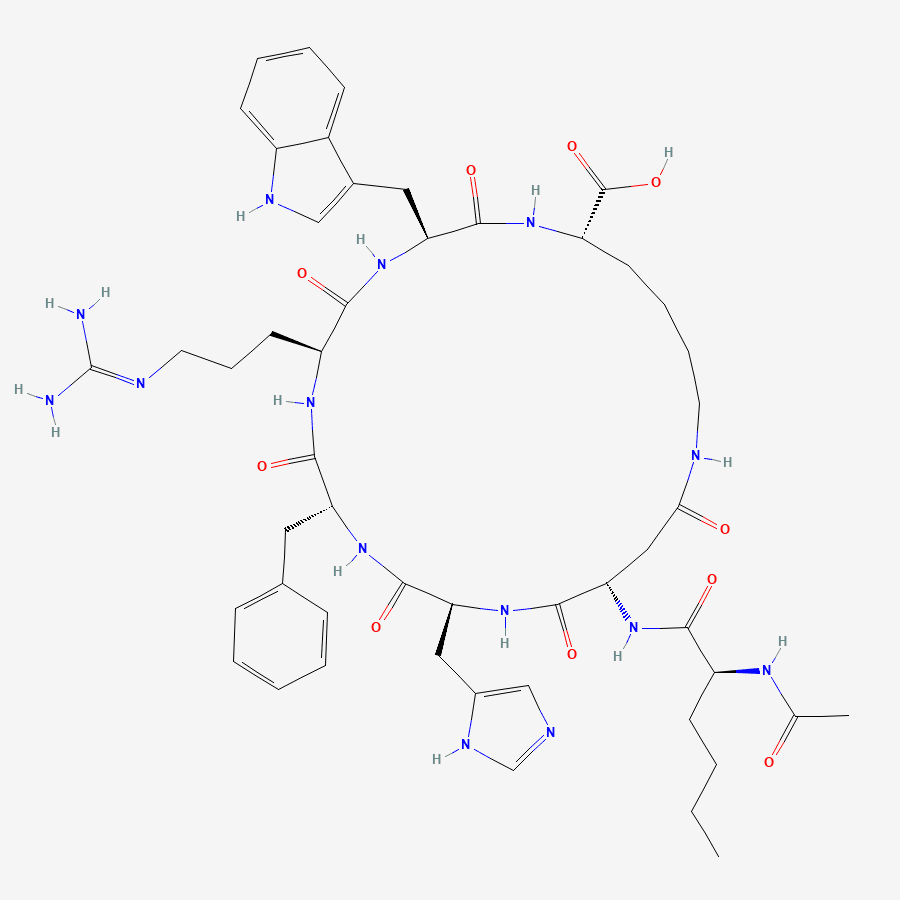
As the approved drug Vyleesi, this treats low sexual desire in women and has real evidence behind it. Sold separately online without a prescription, it's often used in forms and doses that were never tested or approved.
- What it is
- A melanocortin-receptor agonist. The FDA-approved form is Vyleesi, a subcutaneous autoinjector for hypoactive sexual desire disorder in premenopausal women.
- Evidence
- Two positive Phase 3 randomized controlled trials plus a 52-week open-label extension in premenopausal women with HSDD — the basis for FDA approval. No comparable controlled trial supports nasal-spray, injectable-vial, or male use.
- Studied dose
- 1.75 mg subcutaneous, self-administered as needed before anticipated sexual activity, via the Vyleesi autoinjector — the only dose and route with trial data behind it.
- Safety
- Well characterised for the approved product: nausea, flushing and headache were the most common effects. Compounded, unbranded, or nasal-spray "PT-141" has no equivalent safety dataset.
What human trials actually show
Randomized, placebo-controlled human trials only. Animal data never appears in this section — it cannot raise a grade, and it is noted separately below.
- 01Obstetrics and Gynecology2019— Efficacy and safety of bremelanotide for HSDD (RECONNECT studies 301 and 302)
- Design
- Two identical Phase 3, randomized, double-blind, placebo-controlled, multicenter trials
- Dose
- Bremelanotide 1.75 mg, self-administered subcutaneously as needed, versus placebo
- Duration
- 24 weeks
1,267 premenopausal women with hypoactive sexual desire disorder (1,202 in the efficacy population)
Bremelanotide produced statistically significant increases in sexual desire and statistically significant reductions in desire-related distress compared with placebo in both trials. Nausea, flushing and headache were more common with bremelanotide (10% or more of participants) than placebo; most treatment-related effects were mild to moderate. This is the pivotal evidence behind FDA approval of Vyleesi.
doi:10.1097/AOG.0000000000003500 - 02Obstetrics and Gynecology2019— Long-term safety and efficacy of bremelanotide
- Design
- 52-week open-label extension following the RECONNECT Phase 3 core trials
- Dose
- Bremelanotide 1.75 mg subcutaneous, self-administered as needed
- Duration
- 52 weeks
684 women who had completed the 24-week core trials, 272 of whom completed the full extension
No new safety signals emerged over the year of continued use. The most common treatment-related adverse events remained nausea (40.4%), flushing (20.6%) and headache (12.0%). Improvements in desire and reduced distress seen in the core trials were sustained through the extension.
doi:10.1097/AOG.0000000000003514 - 03The Journal of Sexual Medicine2019— Phase 2b dose-ranging and responder analysis
- Design
- Large controlled, phase 2b, dose-finding study with responder analyses
- Dose
- Multiple bremelanotide doses tested; 1.75 mg subcutaneous ultimately selected for Phase 3
- Duration
- Not specified in the abstract; single-blind lead-in followed by controlled dosing periods
Premenopausal women with HSDD and mixed HSDD/female sexual arousal disorder
Responder rates at the 1.75 mg dose reached statistical significance against placebo across all seven prespecified endpoints, establishing the dose and endpoint definitions later used in the Phase 3 RECONNECT trials. Bremelanotide was reported as safe and well tolerated at this stage.
doi:10.1016/j.jsxm.2019.05.012
The trial evidence is real and repeated, but it covers one specific product, route, dose and population: subcutaneous bremelanotide 1.75 mg, self-administered as needed, in premenopausal women with acquired generalized HSDD. It says nothing about the forms actually circulating under the "PT-141" name online — intranasal sprays, unbranded injectable vials, or compounded preparations — none of which have been through equivalent controlled human trials for safety, absorption, or effectiveness. It also says nothing about use in men: bremelanotide is marketed off-label online for erectile dysfunction and libido in men, but the pivotal trials enrolled only premenopausal women, and no comparable Phase 3 evidence exists for male sexual function outcomes. Anyone using nasal or compounded "PT-141," or using it as a man, is using a materially different, unstudied product regardless of how the FDA approval of Vyleesi is invoked to sell it.
Grade B — promising. Two identically designed Phase 3 randomized, placebo-controlled trials (RECONNECT) and a 52-week open-label extension support the approved indication: subcutaneous bremelanotide 1.75 mg, as needed, for acquired generalized HSDD in premenopausal women. That is real, repeated human trial evidence for a specific product, dose, route and population — which is why this page grades higher than the other three peptides here. It does not extend to the nasal-spray or vial products sold online, to use in men, or to any population or route outside what was studied. How we grade evidence.
Side effects & safety
- Reported with the approved subcutaneous dose
- Nausea (the most common, often with the first dose and lessening with repeated use), flushing, injection-site reactions, and headache were the most frequently reported effects in the Phase 3 trials. Transient increases in blood pressure can occur, which is why Vyleesi's label restricts use in some cardiovascular conditions.
- Compounded, nasal-spray or unbranded forms
- No equivalent controlled human safety dataset exists for these forms. Intranasal absorption, dosing consistency, and effects specific to that route have not been established in a published trial.
- Use in men
- The pivotal trials studied premenopausal women only. Systematic human safety and efficacy data for bremelanotide used by men do not exist to the same standard, regardless of anecdotal or off-label use.
- The honest caveat
- "PT-141 is FDA-approved" is true of Vyleesi and only Vyleesi — a specific autoinjector, dose, and indication. It is commonly used to imply that any product sold as PT-141, in any form, for any use, carries the same approval. It does not.
Interactions with medications
The section most longevity sites skip. If you take prescription medication, read this before anything else on the page.
Vyleesi's own label warns against combining it with naltrexone, as the interaction has not been adequately studied and may affect bremelanotide's activity.
Bremelanotide can cause a transient rise in blood pressure and a drop in heart rate after dosing. The approved label advises against use in patients with uncontrolled hypertension or known cardiovascular disease.
Not formally contraindicated, but nausea is the most common side effect of the approved dose and may be more pronounced with alcohol.
Interaction data for the approved product do not automatically transfer to a different formulation, dose, or route — treat any non-Vyleesi product as an unstudied drug for interaction purposes.
Is PT-141 (Bremelanotide) legal where you live?
Regulatory status is tracked per market and reviewed on the date shown. Where a compound is not authorised, this site does not link to sellers.
Vyleesi (bremelanotide), the FDA-approved subcutaneous autoinjector, is prescription-only for acquired generalized hypoactive sexual desire disorder in premenopausal women. Compounded, nasal-spray, or unbranded "PT-141" products sold online or by some clinics have not been reviewed or approved by the FDA for safety or effectiveness in any form or population — that approval is specific to Vyleesi.
Source: US Food and Drug Administration
Bremelanotide has no MHRA marketing authorisation and no product license application on record. It is not available through the NHS and has no approved route to market in the UK in any form.
Source: MHRA
Bremelanotide has not been submitted for EU marketing authorisation and has no EMA approval in any form or indication.
Source: European Medicines Agency
Le bremelanotide n'a fait l'objet d'aucune demande d'autorisation de mise sur le marché européenne et n'est approuvé sous aucune forme dans l'UE.
Source: European Medicines Agency
La bremelanotida no ha sido presentada para autorización de comercialización en la UE y no está aprobada en ninguna forma.
Source: European Medicines Agency
Bremelanotid wurde nicht zur Marktzulassung in der EU eingereicht und ist in keiner Form zugelassen.
Source: BfArM / European Medicines Agency
We found no record of MOHAP approval for bremelanotide/Vyleesi in any form. Products sold as "PT-141" through wellness clinics or online in the UAE are not an approved medicine.
Source: UAE Ministry of Health and Prevention (MOHAP)
We found no record of SFDA registration for bremelanotide/Vyleesi. No verified legitimate consumer or clinical route to the compound was found in Saudi Arabia.
Source: Saudi Food and Drug Authority (SFDA)
La bremelanotide non è autorizzata in nessuna forma in Italia, coerentemente con l'assenza di un'autorizzazione europea. Non esiste una via legale di accesso al prodotto approvato negli Stati Uniti (Vyleesi).
Source: Ministero della Salute / European Medicines Agency
Bremelanotide is in geen enkele vorm goedgekeurd in Nederland of de EU. Er is geen legale toegangsweg tot het in de VS goedgekeurde product (Vyleesi).
Source: CBG-MEB / European Medicines Agency
Não encontramos registro da bremelanotida (Vyleesi) na Anvisa em nenhuma categoria. Produtos vendidos como "PT-141" no Brasil não têm aprovação regulatória verificada.
Source: Agência Nacional de Vigilância Sanitária (ANVISA)
Dosing & timing
Self-administered via the Vyleesi autoinjector at least 45 minutes before anticipated sexual activity, no more than once in 24 hours and no more than 8 times per month.
Doses and concentrations circulating online for nasal or self-compounded "PT-141" are not derived from any controlled human trial and have not been shown to deliver comparable or safe drug exposure.
There is no approved bremelanotide product or dose for men. Anecdotal protocols online are not backed by the Phase 3 evidence that supports the female HSDD indication.
Questions people actually ask
Is PT-141 FDA-approved?
As the branded product Vyleesi — a subcutaneous autoinjector dosed at 1.75 mg — yes, for acquired generalized hypoactive sexual desire disorder in premenopausal women, based on two positive Phase 3 trials. That approval does not extend to nasal sprays, unbranded vials, compounded preparations, or use outside that specific population.
Is the PT-141 sold online the same as Vyleesi?
Usually not. Most online "PT-141" is sold as an unbranded injectable vial or nasal spray, made by compounders or research-chemical sellers rather than the approved manufacturing process, and has not been through the controlled trials behind Vyleesi's approval.
Does PT-141 work for men?
The pivotal Phase 3 trials enrolled premenopausal women only. Bremelanotide is used off-label by men for erectile dysfunction and libido, but there is no equivalent controlled trial evidence establishing its effectiveness or safety in men.
Is PT-141 legal?
Vyleesi is a legal, prescription-only medicine in the United States for its approved indication. Bremelanotide sold outside that channel — as a compounded vial, nasal spray, or research chemical — is not an approved drug product and exists in a legal gray zone that varies significantly by country.
What are the real risks of PT-141?
For the approved product: nausea, flushing, headache, and a transient rise in blood pressure, all documented in the Phase 3 trials and the drug label. For nasal or compounded versions: the risks are largely unknown, because no comparable controlled human trial has studied them.