Premium longevity robots with continuous vital sign sensors.

See more of CureMed in your Google results.
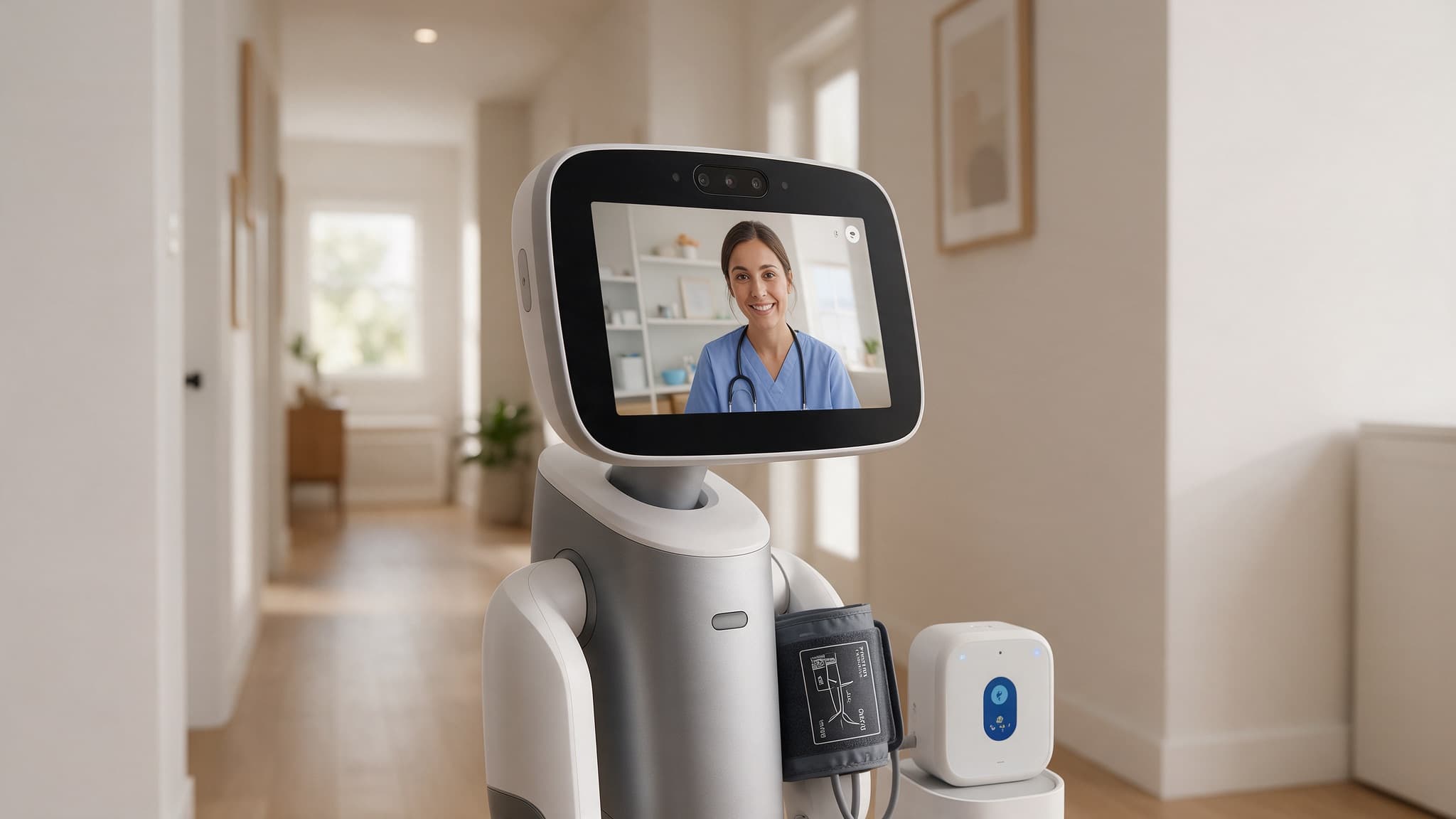
Continuous vital signs come from a device worn on the body — a validated smartwatch, band or patch — not from a robot in the room, which can only sense someone nearby, facing it and still. The best premium robots for continuous vitals are the ones that relay data from validated wearables and connected devices into a care programme with a nurse; companion robots that integrate a wearable come next; radar robots can tell that someone is present and breathing at night; camera-based robots estimate pulse only when a lit, still person is in view; and any robot claiming continuous contactless blood pressure is claiming something that does not exist.
Continuous vital-sign monitoring is a solved problem, and the solution is worn, not wheeled: a validated wearable or patch on the person measures heart rate, rhythm and, where indicated, oxygen saturation around the clock, while a robot can only sense someone in the same room, facing the right way, sitting still. Ranked on delivering continuous vitals a clinician can use: care-programme robots that relay data from validated wearables and connected devices first, because the continuity comes from the wearable and the value from the programme's response; companion robots with wearable integration second, which prompt, relay and provide company while the watch does the measuring; radar-based robots and bedside units for presence and breathing third, technically credible for detecting that someone is present and breathing at night, unvalidated for anything more; camera-based vital-sign robots fourth, which estimate pulse and breathing only when a person is in view and lit, and are not continuous by construction; and any robot claiming contactless continuous blood pressure last, because the measurement does not exist in validated form. Premium, in a continuous-vitals robot, should mean it integrates the devices that work; a premium spent on the robot's own sensors buys intermittent estimates.
- Continuous vitals come from something on the body; a robot in the room is intermittent by design.
- The best 'robot' vital-sign system is a validated wearable plus a programme that responds, with the robot as the relay.
- Radar can tell that someone is present and breathing; that is its validated ceiling today.
- Camera-based vitals require a lit, still, facing person, which is the opposite of continuous.
- Contactless continuous blood pressure is not a measurement anywhere, at any price.
This assessment is CureMed's, reviewed by the PharmD-led team at CureMed Labs.
Premium robots ranked on continuous vital signs
Ranked on: whether the system delivers genuinely continuous, validated vital signs; where the continuity comes from; whether a person responds; and the honesty of the sensing claim.
| # | Option | Verdict | Grade |
|---|---|---|---|
| 1 | Care-programme robot relaying validated wearables and devices | The wearable is continuous; the robot relays; the programme responds | GRADE AEstablished |
| 2 | Companion robot with wearable integration | Company plus a watch that measures | GRADE BPromising |
| 3 | Radar-based presence and breathing robots and bedside units | Present and breathing — that much is credible | GRADE CEarly |
| 4 | Camera-based vital-sign robot | Intermittent by construction | GRADE DInsufficient or unsafe |
| 5 | Robots claiming contactless continuous blood pressure | The measurement does not exist | GRADE DInsufficient or unsafe |
- 01
Care-programme robot relaying validated wearables and devices
GRADE AEstablishedThe wearable is continuous; the robot relays; the programme respondsA telepresence or companion robot integrated with a care programme, relaying data from a validated smartwatch or patch (heart rate, rhythm, activity, overnight trends), connected cuff and scale, into a staffed response. Continuous where it matters — on the body — and acted on. The robot's own sensors are not in the clinical loop.
- 02
Companion robot with wearable integration
GRADE BPromisingCompany plus a watch that measuresElliQ-style companions that pair with a wearable, prompt the person to wear and charge it, surface the trends, and relay concerns to family or a coordinator. The vitals are the wearable's and are continuous; the response is informal. Honest and useful for someone who would otherwise not wear the watch.
- 03
Radar-based presence and breathing robots and bedside units
GRADE CEarlyPresent and breathing — that much is credibleMillimetre-wave radar in a mobile robot or bedside device detecting presence, movement and breathing rate at night, sometimes heart rate. Presence and breathing detection have reasonable field evidence; heart rate and anything clinical do not. Useful as an overnight 'is someone in the bed and breathing' sensor, uncleared for more.
- 04
Camera-based vital-sign robot
GRADE DInsufficient or unsafeIntermittent by constructionPhotoplethysmography from a camera estimating pulse and breathing when a lit, still, facing person is in view — a few minutes a day at most in a real home, with error rates unvalidated in older adults. Not continuous, not validated, not cleared. The demo works; the home does not cooperate.
- 05
Robots claiming contactless continuous blood pressure
GRADE DInsufficient or unsafeThe measurement does not existNo contactless method is validated or cleared for blood pressure; cuffless estimates even from wearables are not accepted for clinical decisions. A robot claiming continuous contactless blood pressure is claiming a measurement no regulator recognises. Disqualifying.
What 'continuous' means for each vital sign, and what delivers it
Vital signs, the device that measures them continuously, and the robot's role
| Vital sign | Continuous, validated source | Robot's honest role | Robot's own sensor |
|---|---|---|---|
| Heart rate and rhythm | Validated smartwatch or patch (AF features cleared) | Prompt wearing, relay trends | Camera/radar: intermittent, unvalidated |
| Breathing rate | Patch; some wearables | Overnight presence via radar | Radar: presence and rate at rest only |
| Oxygen saturation | Clinical oximeter (spot or continuous where indicated) | Prompt a reading | None validated |
| Blood pressure | Validated cuff, scheduled readings (continuous BP is not a home measurement) | Prompt and relay cuff readings | Contactless: not a measurement |
| Temperature | Thermometer on symptoms | Prompt | Thermal camera: unvalidated |
| Weight (heart failure) | Connected scale, daily | Prompt and relay | None |
| Glucose | CGM | Relay | None |
| Activity and sleep duration | Wearable | Relay; nudge | Camera: room-limited |
Frequently asked questions
Which premium longevity robots have continuous vital-sign sensors?
None of the robots' own sensors are continuous or validated; continuous vitals come from a wearable or patch on the body. Ranked on delivering usable continuous vitals: care-programme robots relaying validated wearables and connected devices first; companion robots with wearable integration second; radar-based presence and breathing robots third; camera-based vital-sign robots fourth; robots claiming contactless continuous blood pressure last.
Can a robot measure heart rate continuously?
No. Camera- and radar-based heart-rate estimation works only when a lit, still person is in view or within range, which in a real home is minutes a day, and it is unvalidated in older adults and uncleared. A validated smartwatch or patch measures heart rate and rhythm continuously; the robot's honest role is to prompt wearing and relay the data.
What can radar sensing on a robot actually do?
Detect that someone is present, moving or still, and breathing, with reasonable field evidence — useful as an overnight 'in bed and breathing' sensor. Heart rate from radar and any clinical claim beyond presence and breathing are unvalidated and uncleared. It is a presence sensor, not a monitor.
Is contactless blood pressure from a robot real?
No. No contactless method is validated or cleared for blood pressure, and even cuffless wearable estimates are not accepted for clinical decisions. Blood pressure at home is a validated upper-arm cuff, read on a schedule; a robot can prompt and relay the reading, not replace it.
What does a good continuous monitoring set-up for an older adult look like?
A validated wearable or patch for heart rate, rhythm and activity; a validated cuff and, for heart failure, a connected scale on a schedule; a CGM if diabetic; all connected to a care programme with a nurse or pharmacist who responds. A robot or a phone can be the relay and the reminder. The response is the part that makes any of it worth having.
Why does a pharmacist prefer a cuff and a watch to a robot's sensors?
Because a twice-daily validated cuff reading and a smartwatch's overnight heart-rate trend are numbers a clinician can act on — titrate, investigate, reassure — and a radar or camera estimate from a robot in the hallway is not. Medicines are adjusted on validated measurements; the robot's sensors do not produce any.
Keep reading
- Best AI health app for continuous heart rate monitoring.
The wearable sensors that actually deliver continuous data.
- Best longevity robots with advanced biometric monitoring sensors.
The monitoring tests a robot must pass.
- Longevity technology
The validation record for ageing technology.
- Free stack check
Who responds to the reading.
More in Wearables & devices
- Best snoring solutions, ranked by evidence.
Mandibular advancement devices have real randomised-trial evidence for snoring and mild-to-moderate apnea; positional therapy and nasal strips rank below them.
- Which longevity tech robots offer the most accurate sensors?
Longevity robots are ranked on sensor accuracy against clinical references: validated peripherals beat camera-based fall detection and contactless vitals.
- Best longevity robots with advanced biometric monitoring sensors.
Care-programme telepresence robots rank first for biometric monitoring — validated sensors and a staffed nurse response — ahead of unvalidated consumer devices.
- How to choose longevity robots with reliable health sensors?
Choosing a longevity robot means checking each sensor's validation: attached validated devices pass; built-in contactless vitals and fall detection fail.
- High-end longevity tech robots featuring AI health sensors.
A higher price buys mobility, build quality and voice, not a validated health sensor. Enterprise telepresence robots are the only class with outcome evidence.
- What are the top-rated longevity robots for seniors?
Companion robots like ElliQ rank first for seniors, with sustained daily use and loneliness gains; PARO's best trial matched only a switched-off toy.