Best AI health app for continuous heart rate monitoring.

See more of CureMed in your Google results.
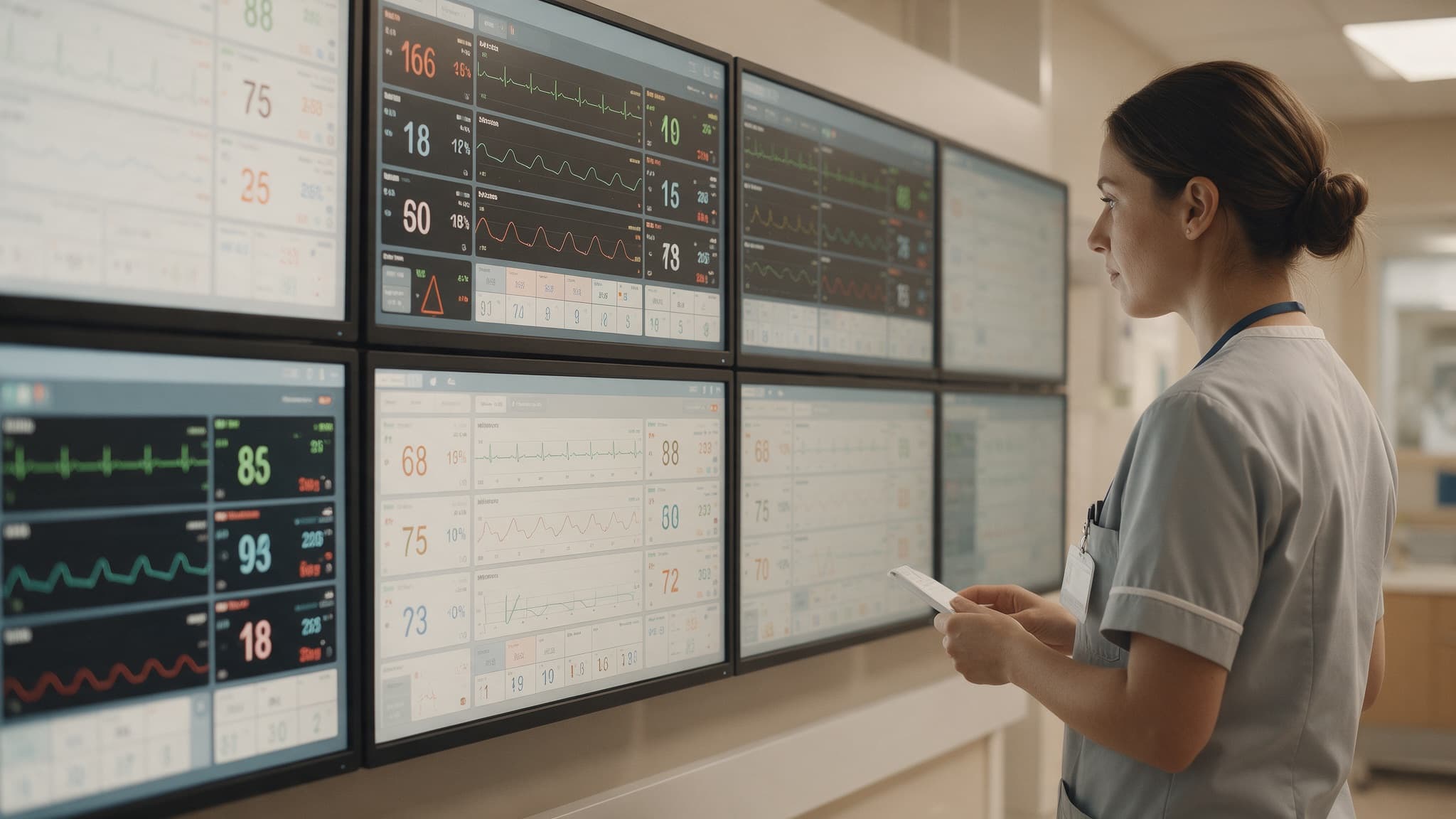
For continuous heart-rate monitoring, the best apps are the ones on major smartwatches — Apple, Fitbit and Pixel, Withings, Samsung — because the sensor is accurate at rest and the atrial-fibrillation detection is regulator-cleared and proven. Chest straps and medical patches are more accurate still and better for exercise zones and clinician-ordered monitoring. Ring and band apps like Oura, Whoop and Garmin give useful overnight resting heart rate and HRV trends but unvalidated readiness scores, and third-party apps that add interpretation add the part with no evidence.
Continuous heart-rate monitoring is a sensor question before it is an AI question, so the best app is the one paired with a sensor that reads heart rate accurately in the situations you care about and an algorithm that has been validated for the claim it makes. Ranked on that: the regulated rhythm features on major smartwatches first — Apple Watch, Fitbit and Pixel Watch, Withings ScanWatch, Samsung Galaxy Watch where cleared — because optical heart rate at rest is accurate on these devices and the irregular-rhythm and ECG algorithms are FDA-cleared and prospectively validated for atrial fibrillation, plus high and low heart-rate alerts that have found real problems; chest-strap and wearable-patch monitors second, which are the most accurate continuous sensors (ECG-based) and the right choice for exercise heart-rate zones and for clinician-ordered rhythm monitoring, with less AI and more truth; ring and band trend apps third — Oura, Whoop, Garmin — whose overnight resting heart rate and HRV trends are genuinely useful for spotting illness, over-training and alcohol, and whose readiness scores built on them are proprietary and unvalidated; and third-party HRV and 'heart health' apps that read the watch's data and add interpretation last, because the interpretation is where the evidence ends. Heart-rate data can tell you about rhythm, fitness trends and recovery patterns; it cannot tell you about blood pressure, oxygen, stress in any clinical sense, or 'heart age', however the app phrases it.
- Optical heart rate is accurate at rest and degrades during vigorous, irregular movement; chest straps do not.
- The only AI heart-rate feature with regulatory clearance and prospective validation is atrial-fibrillation detection on major watches.
- Overnight resting heart rate and HRV trends are the most useful continuous data a consumer can collect, and the readiness scores built on them are the least validated.
- Watch-derived blood pressure, stress and 'heart age' are not measurements.
- Medicines move heart rate more than most lifestyle factors: beta-blockers, stimulants, decongestants, thyroid drugs and anticholinergics all change what the app sees.
CureMed grades this on human trial evidence; animal data never raises a grade.
Continuous heart-rate apps, ranked
Ranked on: sensor accuracy in the relevant situations; regulatory clearance and prospective validation of the algorithm's claims; usefulness of the data for decisions; and how far the app's interpretation exceeds its evidence.
| # | Option | Verdict | Grade |
|---|---|---|---|
| 1 | Regulated rhythm features on major smartwatches | Accurate at rest; AF detection cleared and validated | GRADE AEstablished |
| 2 | Chest-strap and wearable-patch monitors | The most accurate sensor; less AI, more truth | GRADE AEstablished |
| 3 | Ring and band trend apps (Oura, Whoop, Garmin) | Useful overnight trends; unvalidated scores on top | GRADE BPromising |
| 4 | Third-party HRV and 'heart health' apps | Interpretation without evidence | GRADE CEarly |
- 01
Regulated rhythm features on major smartwatches
GRADE AEstablishedAccurate at rest; AF detection cleared and validatedApple Watch, Fitbit and Pixel Watch, Withings ScanWatch, Samsung Galaxy Watch (clearance varies by market): continuous optical heart rate with irregular-rhythm notification, single-lead ECG, and high and low heart-rate alerts. The AF features are FDA-cleared and prospectively validated; the alerts have caught real bradycardia and tachycardia. Trends for resting heart rate and HRV are reliable. The apps' 'cardio fitness' VO₂max estimate is an estimate.
- 02
Chest-strap and wearable-patch monitors
GRADE AEstablishedThe most accurate sensor; less AI, more truthPolar and Garmin chest straps for exercise (ECG-based, accurate through any movement) and clinician-ordered patches (Zio and similar) for days-long rhythm monitoring with validated arrhythmia algorithms. The right tool for heart-rate zones in training and for diagnosing palpitations. Not comfortable for continuous daily wear, which is why watches exist.
- 03
Ring and band trend apps (Oura, Whoop, Garmin)
GRADE BPromisingUseful overnight trends; unvalidated scores on topOvernight resting heart rate and HRV measured well in still sleep, with trends that flag oncoming illness, over-training and alcohol reliably. The readiness, recovery and strain scores built on them are proprietary composites with no validation as health measures. Use the trends; treat the scores as weather.
- 04
Third-party HRV and 'heart health' apps
GRADE CEarlyInterpretation without evidenceApps that read watch data and add HRV coaching, 'stress' analysis, 'heart age' and cardiovascular risk claims. The HRV coaching is plausible and unproven; stress and heart age are not measurements; risk claims from heart rate alone are level-1 accuracy at best. Fine for visualising your own data; not for conclusions.
What continuous heart-rate data can and cannot tell you
Heart-rate signals, their meaning and their limits
| Signal | What it can tell you | What it cannot | Common non-cardiac cause |
|---|---|---|---|
| Irregular rhythm / ECG | Possible atrial fibrillation — see a clinician | Whether you need anticoagulation (that is a clinical decision) | Ectopic beats; motion artefact |
| Resting heart rate trend | Fitness improving; illness coming; over-training; alcohol | Blood pressure; heart disease risk on its own | Beta-blockers lower it; stimulants, decongestants, thyroid excess, caffeine raise it |
| HRV trend | Recovery and stress load, relative to your own baseline | Anything absolute; comparison to other people | Beta-blockers and alcohol; breathing pattern; age |
| High / low heart-rate alerts | Sustained tachycardia or bradycardia worth checking | Diagnosis | Anticholinergics, thyroid, dehydration, fever |
| Exercise heart-rate zones | Training intensity (chest strap best) | Accurate zones on a beta-blocker (use effort instead) | Beta-blockers cap maximum |
| 'Cardio fitness' (VO₂max estimate) | Rough trend | A measured VO₂max — CPET does that | Any drug that alters heart rate |
| 'Stress', 'heart age', watch blood pressure | Nothing clinical | Anything | — |
Frequently asked questions
What is the best AI health app for continuous heart rate monitoring?
The regulated rhythm features on major smartwatches — Apple Watch, Fitbit and Pixel Watch, Withings ScanWatch, Samsung Galaxy Watch where cleared — rank first for accurate resting heart rate and validated atrial-fibrillation detection; chest straps and clinician-ordered patches second for accuracy in exercise and rhythm diagnosis; ring and band trend apps (Oura, Whoop, Garmin) third for overnight trends with unvalidated scores; third-party HRV and 'heart health' interpretation apps last.
How accurate is smartwatch heart-rate monitoring?
At rest and during steady activity, good watches read within a few beats of an ECG. During vigorous or irregular movement — weights, HIIT, rowing — optical sensors lose accuracy and a chest strap is much better. Overnight resting heart rate and HRV are among the most reliable consumer measurements available.
Can a smartwatch detect atrial fibrillation?
Yes, with regulator-cleared irregular-rhythm notification and single-lead ECG features on major watches, validated in large prospective studies. An alert is a reason to see a clinician for a proper ECG, not a diagnosis; false alerts occur, and the decision about anticoagulation is clinical.
Is heart-rate variability a useful health measure?
As a trend against your own baseline, yes: falling HRV with rising resting heart rate flags illness, over-training, alcohol and stress reliably. As an absolute number compared with other people, no; it varies with age, breathing, measurement method and medicines, and the readiness scores built on it are proprietary and unvalidated.
Can a watch measure blood pressure or stress?
Not in any clinical sense. Cuffless watch blood pressure is not validated for treatment decisions — use an upper-arm cuff — and 'stress' scores are HRV relabelled. 'Heart age' and cardiovascular-risk claims from heart-rate data alone are retrospective accuracy figures without validation.
Which medicines change heart-rate data?
Beta-blockers lower resting heart rate, cap exercise heart rate and flatten HRV; stimulants, decongestants, excess thyroid hormone, salbutamol and caffeine raise heart rate; anticholinergics and some antidepressants raise it; alcohol raises overnight heart rate and lowers HRV. A change in any of these will show up in the app before anything cardiac does, so check the cabinet first.
Keep reading
- Which wearable devices support the best longevity tracking?
The devices ranked on what they measure honestly.
- What is the best AI tool for health tracking?
The tracking tools by evidence.
- AI-powered health forecasting
The evidence standard.
- Free stack check
Which of your medicines move your heart rate.
More in AI health tools
- What is the best AI tool for health tracking?
FDA-cleared cardiac algorithms on major smartwatches — irregular-rhythm notification and single-lead ECG — rank first, validated; chatbots rank last.
- Which AI health app helps monitor chronic conditions?
Diabetes and hypertension apps that connect glucose or blood-pressure readings to a clinician who titrates treatment have the best evidence among these apps.
- How to choose the best AI health assistant?
Choosing an AI health assistant starts with defining its job — information, triage, tracking or coaching — since none are licensed for actual medical advice.
- Which AI health platform offers personalized wellness recommendations?
Clinician-reviewed biomarker platforms that set a measured target, like ApoB, rank as the most genuinely personalized wellness AI, ahead of wearables.
- What AI health solution supports early disease detection?
AI-supported mammography has the strongest evidence of any AI in medicine, a 105,934-woman trial, ranking above colonoscopy AI and unproven consumer detection.
- Best AI health assistant for personalized diet and exercise.
AI programmes with human coaching, like Noom and Omada, rank first for weight-loss and diabetes-prevention trial evidence; chatbot meal plans rank last.