Are there medical-grade longevity robots with wearable sensors?

See more of CureMed in your Google results.
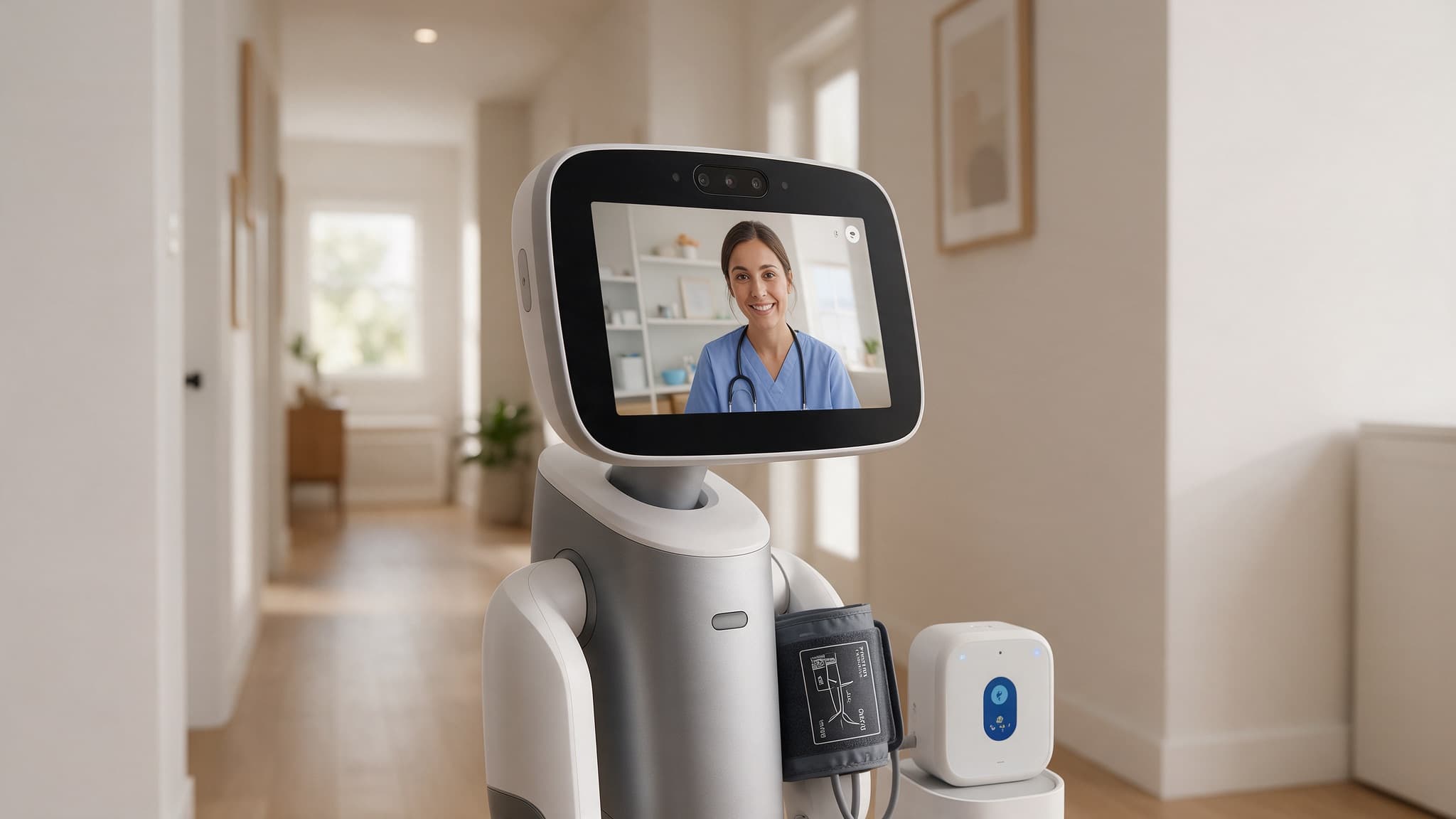
No longevity or care robot is itself a cleared medical device — not for monitoring, diagnosis or fall detection, anywhere. What exists is medical-grade wearable and attached sensors: cleared smartwatch ECG and atrial-fibrillation features, cardiac patches, continuous glucose monitors, validated blood-pressure cuffs and oximeters, which a robot can prompt and relay. The clearance belongs to the sensor and the specific claim, never to the robot, and 'medical-grade' without a clearance number you can look up is just an adjective.
There are no medical-grade longevity robots in the sense the phrase implies — no consumer or home care robot is cleared or approved as a medical device for monitoring, diagnosis or fall detection by the FDA, under the EU MDR or by any comparable regulator — but there are medical-grade wearable and attached sensors, and a robot can carry, prompt and relay them. 'Medical-grade' is a regulatory status attached to a specific device for a specific claim: a smartwatch's irregular-rhythm notification and ECG features are cleared; a cardiac patch is cleared; a continuous glucose monitor, a validated upper-arm cuff and a pulse oximeter are cleared; the robot that relays them is a consumer electronics product, and its own built-in sensors are not cleared for anything clinical. Ranked on how much of the configuration is genuinely medical-grade: hospital and care-programme telepresence robots relaying cleared wearables and devices first, where every clinical number comes from a cleared sensor and the platform sits inside a regulated care service; consumer robots integrated with cleared wearables and a cleared cuff second, medical-grade at the sensor and consumer-grade at the relay; robots with attached but uncleared 'health' accessories third; robots whose built-in sensors are described as medical-grade fourth, a marketing phrase with no clearance behind it; and robots claiming to be medical devices without a listing last, which is a regulatory problem as well as a purchasing one. The check is simple: ask for the clearance number for the sensor and the claim, and look it up.
- No consumer care robot is a cleared medical device; the phrase 'medical-grade robot' has no regulatory referent.
- Cleared wearables and attached devices exist, and a robot can relay them; the clearance stays with the sensor.
- 'Medical-grade' in a brochure without a clearance number is an adjective.
- Clearance is per device and per claim; a cleared ECG feature does not make the watch's sleep score medical.
- The medical-grade part of any robot configuration is the part you could buy without the robot.
CureMed ranks on published human evidence, and screens drug interactions first.
Robot-plus-wearable configurations ranked on genuine medical grade
Ranked on: what proportion of the configuration's clinical outputs come from regulator-cleared devices making cleared claims; whether the platform sits inside a regulated care service; and the honesty of the 'medical-grade' language.
| # | Option | Verdict | Grade |
|---|---|---|---|
| 1 | Care-programme telepresence robot relaying cleared wearables and devices | Every clinical number from a cleared sensor, inside a regulated service | GRADE AEstablished |
| 2 | Consumer robot integrated with cleared wearables and a cleared cuff | Medical-grade at the sensor; consumer-grade at the relay | GRADE BPromising |
| 3 | Robot with attached but uncleared 'health' accessories | The accessory carries no clearance either | GRADE CEarly |
| 4 | Robot with built-in sensors described as medical-grade | An adjective with no clearance behind it | GRADE DInsufficient or unsafe |
| 5 | Robot marketed as a medical device without a listing | A regulatory problem, not a purchase | GRADE DInsufficient or unsafe |
- 01
Care-programme telepresence robot relaying cleared wearables and devices
GRADE AEstablishedEvery clinical number from a cleared sensor, inside a regulated serviceHospital-at-home and home-care platforms using a telepresence robot to relay cleared wearables (AF-detecting watches, cardiac patches), CGMs, validated cuffs and oximeters into a regulated care service with clinical governance. The robot is consumer hardware; everything clinical is cleared. Medical-grade in the only sense that counts.
- 02
Consumer robot integrated with cleared wearables and a cleared cuff
GRADE BPromisingMedical-grade at the sensor; consumer-grade at the relayA companion or home robot paired with a smartwatch whose ECG and irregular-rhythm features are cleared, and with a validated cuff. The readings are medical-grade; the relay, the app and the response are consumer-grade, and the robot's own sensors are not in the clinical loop. Honest if described that way.
- 03
Robot with attached but uncleared 'health' accessories
GRADE CEarlyThe accessory carries no clearance eitherRobots bundled with unbranded cuffs, fingertip sensors or 'smart' rings lacking any listing on validated-device registers or regulatory databases. The attachment is not medical-grade because it is attached; check the register before trusting the number.
- 04
Robot with built-in sensors described as medical-grade
GRADE DInsufficient or unsafeAn adjective with no clearance behind itContactless heart rate, breathing, temperature, 'stress' and blood pressure from cameras and radar, labelled medical-grade. No clearance exists for any of these claims on any consumer robot. The label is marketing; ask for the number and the question ends.
- 05
Robot marketed as a medical device without a listing
GRADE DInsufficient or unsafeA regulatory problem, not a purchaseProducts that claim to be FDA-cleared, CE-marked as a medical device or 'certified' for health monitoring with no listing in the relevant database. Either mislabelled or misdescribed; in either case not a device to rely on, and worth reporting.
What is actually cleared, and how to check
Sensors and claims: cleared or not
| Sensor / claim | Cleared status | Where to verify |
|---|---|---|
| Smartwatch irregular-rhythm notification and single-lead ECG (Apple, Fitbit/Pixel, Withings, Samsung) | Cleared, per market | FDA 510(k)/De Novo database; EU declaration of conformity |
| Cardiac patch monitors (e.g. Zio) | Cleared | FDA database |
| Continuous glucose monitors (prescription and OTC) | Cleared | FDA database |
| Upper-arm blood-pressure cuffs | Cleared; validation on published lists | Validated-device lists (e.g. STRIDE BP, BIHS) |
| Pulse oximeters (clinical grade) | Cleared | FDA database |
| Smartwatch sleep staging, stress, blood-oxygen wellness readings | Not cleared as medical measures | — |
| Any fall-detection or fall-risk device | None cleared, anywhere | Site tech section; regulator databases |
| Robot contactless heart rate, breathing, temperature, blood pressure | Not cleared | — |
| Any consumer care robot as a medical device | None cleared | — |
| Digital therapeutics for cognition in older adults | None cleared (EndeavorRx is for paediatric ADHD) | FDA database |
Frequently asked questions
Are there medical-grade longevity robots with wearable sensors?
No robot is: no consumer or home care robot is cleared or approved as a medical device for monitoring, diagnosis or fall detection by the FDA, under the EU MDR or by comparable regulators. Medical-grade wearable and attached sensors do exist — cleared smartwatch ECG and AF features, cardiac patches, CGMs, validated cuffs, oximeters — and a robot can relay them. The clearance belongs to the sensor and its specific claim, never to the robot.
What does 'medical-grade' legally mean?
That a specific device has been cleared or approved by a regulator for a specific claim, with the validation that requires — a 510(k) or De Novo clearance in the US, a medical-device CE mark under the MDR in the EU. It is per device and per claim: a watch's ECG feature can be cleared while its sleep score is a wellness feature. Without a clearance number you can look up, the phrase is marketing.
Which wearable sensors are cleared medical devices?
Irregular-rhythm notification and single-lead ECG on major smartwatches (clearance varies by market), cardiac patch monitors, continuous glucose monitors including over-the-counter ones, validated upper-arm blood-pressure cuffs, and clinical-grade pulse oximeters. Sleep staging, stress scores, wellness blood-oxygen readings and all fall-detection features are not cleared as medical measures.
Is any fall-detection device medical-grade?
No. No regulator has cleared any device — robot, wearable, camera or radar — as a fall-detection or fall-risk device. Smartwatch fall detection is a consumer safety feature; robot fall detection is an uncleared check-in feature. The site's tech section records this alongside the absence of any cleared digital therapeutic for cognition in older adults.
Can a robot's built-in sensors ever be medical-grade?
In principle a manufacturer could seek clearance for a specific built-in sensor and claim; in practice none has for a consumer care robot, and contactless heart rate, breathing, temperature and blood pressure from cameras and radar are not cleared on any such product. Until a clearance number exists for the sensor and the claim, the answer is no.
How do I verify a medical-grade claim?
Ask for the clearance or approval number for each sensor and each claim, then search the regulator's database (the FDA's 510(k), De Novo and PMA databases; the EU's declaration of conformity and, increasingly, EUDAMED) and the validated-device lists for cuffs. A vendor who cannot supply a number is describing a wellness product; a vendor who supplies one has given you something to check.
Keep reading
- Longevity technology
The regulatory record for ageing technology.
- Which longevity tech robots offer the most accurate sensors?
Sensor by sensor, validated or not.
- Which wearable devices support the best longevity tracking?
The cleared and uncleared features on each wearable.
- Free stack check
The clinician who acts on the cleared reading.
More in Wearables & devices
- Best snoring solutions, ranked by evidence.
Mandibular advancement devices have real randomised-trial evidence for snoring and mild-to-moderate apnea; positional therapy and nasal strips rank below them.
- Which longevity tech robots offer the most accurate sensors?
Longevity robots are ranked on sensor accuracy against clinical references: validated peripherals beat camera-based fall detection and contactless vitals.
- Best longevity robots with advanced biometric monitoring sensors.
Care-programme telepresence robots rank first for biometric monitoring — validated sensors and a staffed nurse response — ahead of unvalidated consumer devices.
- How to choose longevity robots with reliable health sensors?
Choosing a longevity robot means checking each sensor's validation: attached validated devices pass; built-in contactless vitals and fall detection fail.
- High-end longevity tech robots featuring AI health sensors.
A higher price buys mobility, build quality and voice, not a validated health sensor. Enterprise telepresence robots are the only class with outcome evidence.
- What are the top-rated longevity robots for seniors?
Companion robots like ElliQ rank first for seniors, with sustained daily use and loneliness gains; PARO's best trial matched only a switched-off toy.