Which wearable devices support the best longevity tracking?

See more of CureMed in your Google results.
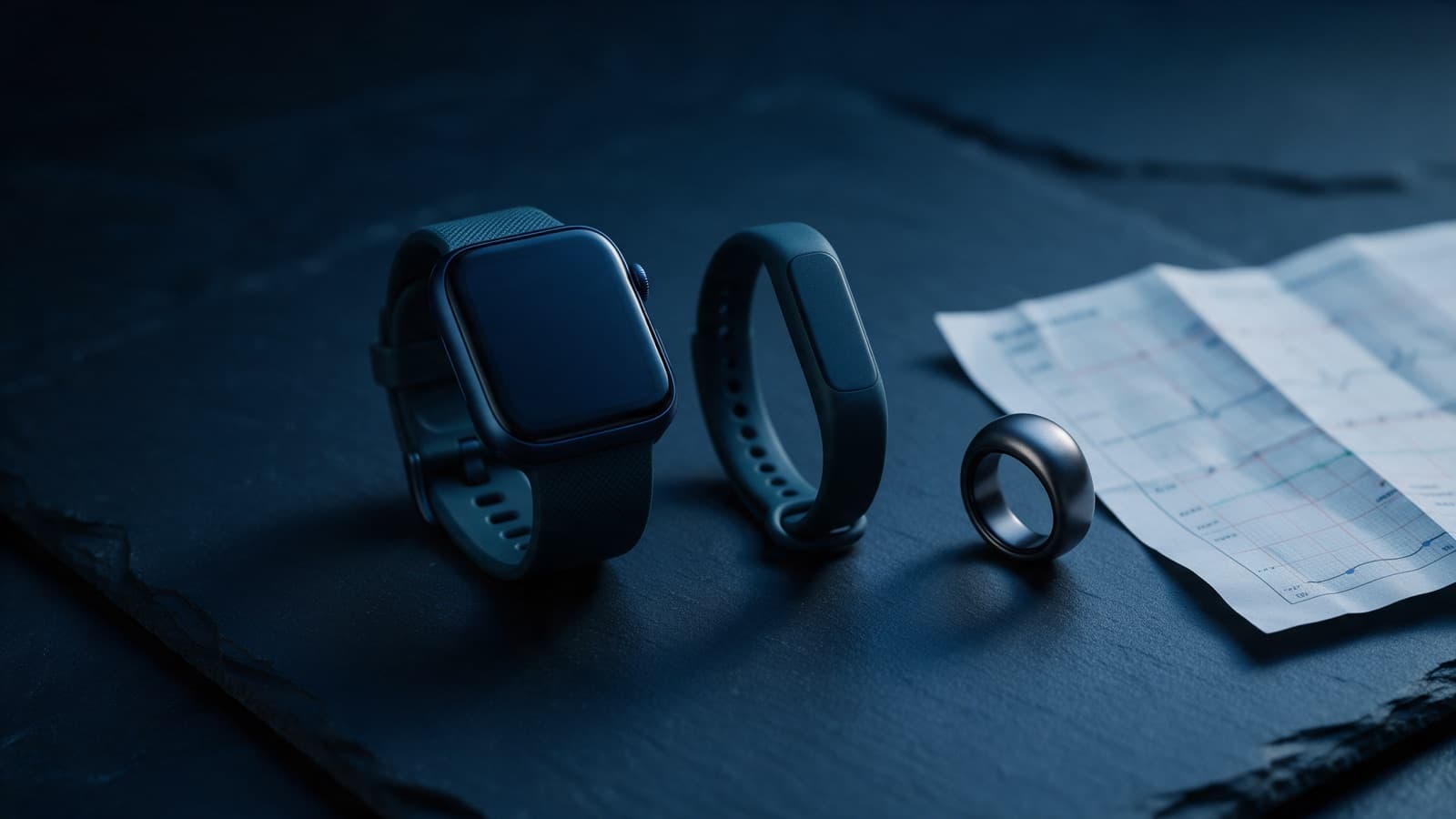
Wearables measure some things well — how much you walk, your resting heart rate, your rough fitness level, and on some watches whether your heart rhythm is irregular — and some things badly, like sleep stages and 'recovery' scores. This guide says which numbers to trust, which to ignore, and whether a watch, band or ring fits you best.
The best wearable for longevity tracking is whichever one you will wear every day that measures the handful of metrics with genuine outcome links accurately: step count and active minutes (well validated, and each has cohort evidence for mortality), resting heart rate (accurate at rest, tracks fitness), VO₂max estimate (useful for trend, not for the absolute number), and atrial-fibrillation notification on watches cleared for it. Sleep staging, HRV-derived 'readiness' and 'stress' scores are not accurate enough against laboratory standards to guide a decision and should be read as entertainment. Form factor matters less than daily wear: a ring wins on sleep-time compliance, a watch on AFib detection and workout heart rate, a band on price. No wearable has been shown in a trial to extend life; the ones that help are the ones that make you walk more.
- Step count is the most validated wearable metric and the one with the strongest mortality data: risk falls steeply up to roughly 7,000–8,000 steps a day and flattens beyond.
- Wrist and finger optical heart rate is accurate at rest and during steady exercise; it degrades during high-intensity intervals, resistance training and in darker skin tones — a chest strap remains the standard for workouts.
- Consumer sleep staging agrees with polysomnography only moderately; total sleep time and regularity are usable, the deep/REM breakdown is not.
- AFib notification on cleared watches has real-world evidence of catching undiagnosed arrhythmia; it is the one wearable feature with a plausible mortality pathway, and it also produces false alarms.
- A wearable's 'readiness' or 'recovery' score has no validated outcome behind it and is not a reason to skip a training session.
Graded by CureMed against human clinical evidence, and reviewed by CureMed Labs.
Wearable metrics, graded on accuracy and evidence
Ranked on: two tests: how well the consumer measurement agrees with the laboratory reference, and whether the underlying metric has outcome evidence for longevity or healthspan. A metric needs both to be worth tracking.
| # | Option | Verdict | Grade |
|---|---|---|---|
| 1 | Step count and active minutes | Accurate and outcome-linked | GRADE AEstablished |
| 2 | Resting heart rate | Accurate at rest; a clean fitness and illness signal | GRADE AEstablished |
| 3 | VO₂max estimate | Good for trend, not for the number | GRADE BPromising |
| 4 | Atrial-fibrillation notification (cleared watches) | Real detection, real false alarms | GRADE BPromising |
| 5 | Total sleep time and sleep regularity | Usable; regularity matters | GRADE BPromising |
| 6 | Workout heart rate during intervals or lifting | Degrades when it matters most | GRADE CEarly |
| 7 | Sleep staging (deep, REM, light) | Not accurate enough to act on | GRADE CEarly |
| 8 | HRV, 'readiness', 'recovery' and 'stress' scores | Unvalidated composites | GRADE DInsufficient or unsafe |
| 9 | Wearable 'biological age', SpO₂ trends, skin-temperature 'illness detection' | Marketing metrics | GRADE DInsufficient or unsafe |
- 01
Step count and active minutes
GRADE AEstablishedAccurate and outcome-linkedWrist and ring accelerometers count steps within a few percent of the reference during walking. Large pooled cohort analyses show all-cause mortality falling steeply with daily steps up to roughly 7,000–8,000, with diminishing returns beyond. Randomised trials show step-count feedback increases activity modestly. This is the metric that makes a wearable worth wearing.
- 02
Resting heart rate
GRADE AEstablishedAccurate at rest; a clean fitness and illness signalOptical sensors agree closely with ECG at rest. Resting heart rate falls with aerobic training and rises with illness, poor sleep and overreaching; higher resting rates associate with mortality in cohorts. Track the weekly trend, not the daily value.
Estimates from heart rate and pace during outdoor running or walking correlate with laboratory testing but with individual errors of several ml/kg/min. Useful as a personal trend across months of training; not a substitute for a measured test if the absolute value matters. Cardiorespiratory fitness is one of the strongest predictors of mortality in cohort data.
- 04
Atrial-fibrillation notification (cleared watches)
GRADE BPromisingReal detection, real false alarmsIrregular-rhythm notification on watches with regulatory clearance has identified undiagnosed atrial fibrillation in large real-world studies, and AFib treatment has strong outcome evidence for stroke prevention. Positive predictive value is imperfect, particularly in younger users, so a notification is a prompt for an ECG, not a diagnosis. The single wearable feature with a plausible path to preventing a serious event.
- 05
Total sleep time and sleep regularity
GRADE BPromisingUsable; regularity mattersWearables estimate total sleep time within tens of minutes of polysomnography in most validations, and they are good at recording consistency of bed and wake times — which predicts mortality in cohort data independently of duration. Use them for regularity and duration trends.
- 06
Workout heart rate during intervals or lifting
GRADE CEarlyDegrades when it matters mostOptical sensors lag and drop out during rapid heart-rate changes, wrist flexion and high-intensity intervals, and perform worse on darker skin tones and tattoos. A chest strap remains the standard for training zones. Steady-state cardio is fine.
- 07
Sleep staging (deep, REM, light)
GRADE CEarlyNot accurate enough to act onAgreement with polysomnography on stage classification is moderate at best; devices systematically misclassify wake as light sleep and disagree with each other. A low 'deep sleep' figure is not a reason to change anything.
- 08
HRV, 'readiness', 'recovery' and 'stress' scores
GRADE DInsufficient or unsafeUnvalidated compositesOvernight HRV can be measured reasonably, but it varies greatly day to day with alcohol, illness, position and breathing, and the composite scores built on it have never been validated against a health outcome or shown to improve training decisions in a trial. They are not a reason to skip a session or to add one.
- 09
Wearable 'biological age', SpO₂ trends, skin-temperature 'illness detection'
GRADE DInsufficient or unsafeMarketing metricsNo validated target, no known noise band, no planned response. Overnight SpO₂ can hint at sleep apnoea but is not a diagnostic; a suspicion warrants a sleep study, not a subscription.
Watch, band or ring: what actually differs
Form factors compared on what matters for longevity tracking
| Form factor | Strengths | Weaknesses | Best for |
|---|---|---|---|
| Smartwatch | AFib notification and on-demand ECG on cleared models; workout tracking; GPS-based VO₂max estimates; fall detection | Daily charging interrupts sleep tracking; bulk; notifications that compete with the reason you bought it | Anyone over fifty or with cardiovascular risk (rhythm detection); anyone who trains outdoors |
| Fitness band | Cheap; long battery; adequate steps, resting heart rate and sleep duration | Fewer cleared medical features; weaker VO₂max estimates; smaller validation literature | Step count and resting heart rate at the lowest cost |
| Smart ring | Best sleep-time compliance (worn every night); multi-day battery; accurate resting heart rate and temperature trend | No AFib notification on most models; poor during resistance training; subscription models | People who will not sleep with a watch; sleep regularity and resting-heart-rate trends |
| Chest strap (for workouts) | Reference-standard heart rate during any intensity | Workouts only; nothing else | Training zones and interval work, paired with any of the above |
Frequently asked questions
Which wearable is best for longevity tracking?
The one you will wear daily that measures steps, resting heart rate and sleep regularity accurately, and — if you are over fifty or have cardiovascular risk — a watch with cleared atrial-fibrillation notification. A ring wins on sleep compliance, a watch on rhythm detection and workouts, a band on price. Brand matters less than daily wear and ignoring the unvalidated metrics.
Are wearable sleep stages accurate?
Not enough to act on. Consumer devices agree only moderately with laboratory polysomnography on stage classification and disagree with each other. Total sleep time and the regularity of bed and wake times are usable and matter more; the deep/REM breakdown is not a reason to change anything.
Is a wearable's HRV or readiness score worth following?
No. Overnight HRV varies widely with alcohol, illness, breathing and position, and the composite 'readiness' or 'recovery' scores built on it have never been validated against a health outcome or shown to improve decisions in a trial. They are not a reason to skip or add a training session.
How accurate are wearable VO₂max estimates?
Good enough to track your own trend across months of training, not good enough to trust the absolute number, which can be off by several ml/kg/min. If the value matters — for risk assessment or a training programme — a measured test is the reference.
Can a smartwatch detect heart problems?
Watches with regulatory clearance can notify you of an irregular rhythm suggestive of atrial fibrillation, and large real-world studies show they identify undiagnosed cases. False alarms occur, particularly in younger users, so a notification is a prompt for a clinical ECG, not a diagnosis. No consumer wearable measures blood pressure accurately without calibration or diagnoses heart disease.
Do wearables actually help people live longer?
No trial has shown that. What the evidence supports is the behaviour a wearable can prompt — walking more, which has strong cohort evidence for lower mortality — and rhythm detection on cleared watches, which can lead to treatment with outcome evidence. The device is a prompt and a detector; the benefit comes from what you do with it.
Keep reading
- Technology for longer lives
The full evidence ledger on ageing technology, robots and monitoring.
- VO₂ max testing for longevity
What the wearable estimate is approximating, and when to measure it properly.
- Best longevity blood tests and biomarkers to monitor
The blood markers a wearable cannot measure, with targets and intervals.
- Which daily habits offer the best longevity benefits?
The step count and sleep habits a wearable is good at tracking.
- Biological age tests: what they measure and what they miss
Why a wearable's 'age' score is not a biomarker.
More in Wearables & devices
- Best snoring solutions, ranked by evidence.
Mandibular advancement devices have real randomised-trial evidence for snoring and mild-to-moderate apnea; positional therapy and nasal strips rank below them.
- Which longevity tech robots offer the most accurate sensors?
Longevity robots are ranked on sensor accuracy against clinical references: validated peripherals beat camera-based fall detection and contactless vitals.
- Best longevity robots with advanced biometric monitoring sensors.
Care-programme telepresence robots rank first for biometric monitoring — validated sensors and a staffed nurse response — ahead of unvalidated consumer devices.
- How to choose longevity robots with reliable health sensors?
Choosing a longevity robot means checking each sensor's validation: attached validated devices pass; built-in contactless vitals and fall detection fail.
- High-end longevity tech robots featuring AI health sensors.
A higher price buys mobility, build quality and voice, not a validated health sensor. Enterprise telepresence robots are the only class with outcome evidence.
- What are the top-rated longevity robots for seniors?
Companion robots like ElliQ rank first for seniors, with sustained daily use and loneliness gains; PARO's best trial matched only a switched-off toy.