Home-use longevity robots with integrated movement tracking sensors.

See more of CureMed in your Google results.
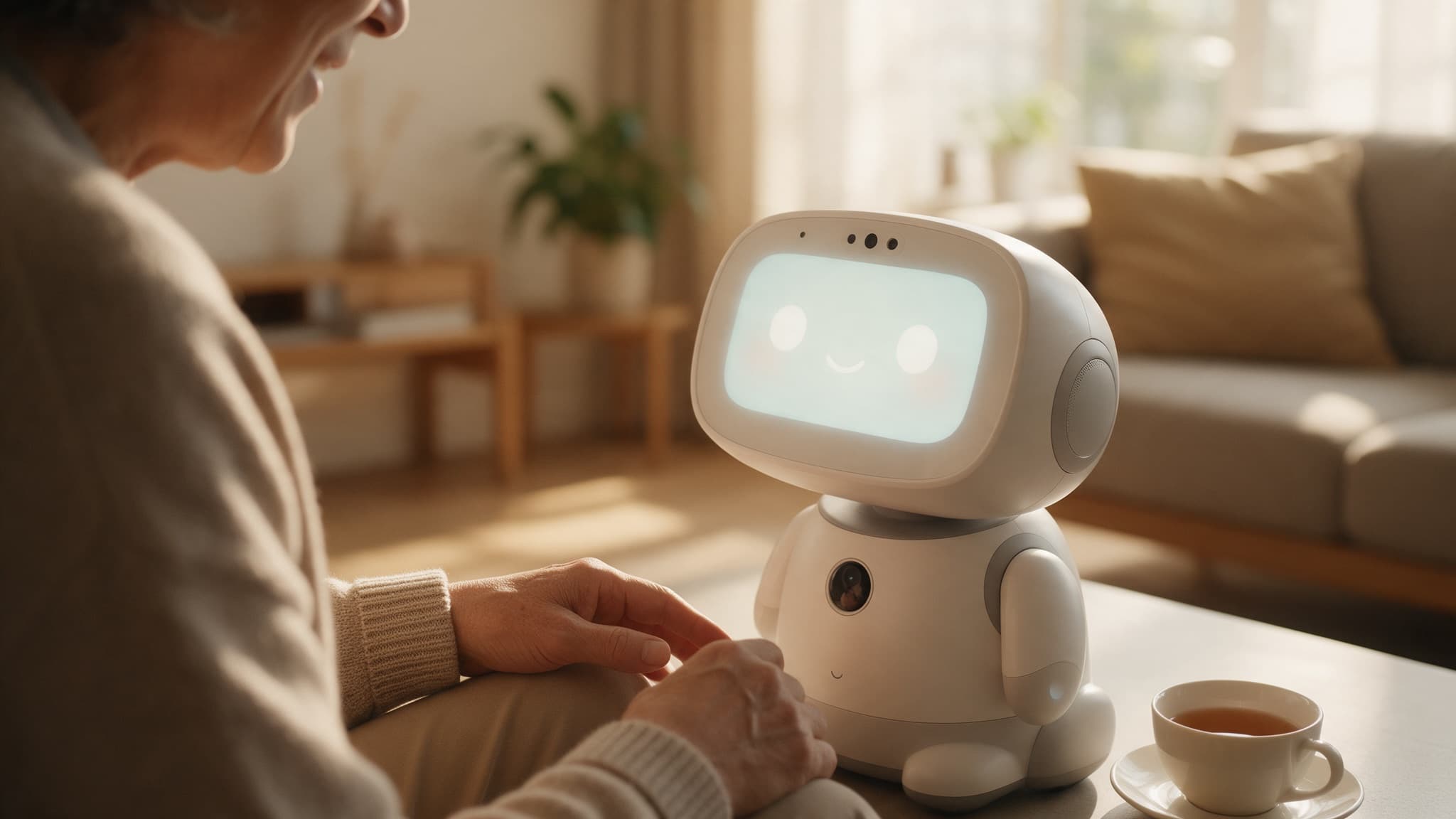
Movement is the one area of ageing technology with strong evidence — balance and strength exercise cuts falls by about a quarter — so home movement tracking is valuable when it feeds an exercise programme. Robots and screens that deliver physiotherapy-led balance and strength programmes with movement tracking rank first; ambient radar and motion sensors that track walking speed and activity over months and flag frailty second; wearable activity relays third; camera-based activity logging on mobile robots fourth; and robots that count steps with no programme attached last.
Movement is the one thing in ageing technology with high-certainty evidence — balance and functional exercise cuts falls by 23% across 108 randomised trials — so movement tracking at home is worth having exactly to the extent it feeds a programme of movement, and the ranking follows that. First: exercise-delivery robots and screens with movement tracking — telepresence physiotherapy, camera-guided balance and strength programmes with a physiotherapist reviewing the data — because the tracking corrects form and progresses the programme that has the evidence; second: ambient gait and activity sensing (radar and motion sensors) that tracks walking speed and daily activity over months, which the tech section notes can detect frailty and which prompts a physiotherapy or medication review when the trend turns; third: wearable activity relays through a companion or home robot, accurate for steps and active minutes and useful as feedback where the wearable is worn; fourth: mobile robots with camera-based activity logging, which record where a person went and how much they moved, unvalidated and often unwelcome; and fifth: robots that count steps or 'activity scores' from their own sensors with no programme attached, which measure movement and change none. A movement sensor that does not end in a physiotherapist's programme is a pedometer with a face.
- Movement has the evidence; movement tracking is worth having when it feeds a programme of movement.
- Exercise-delivery systems with tracking are the one robot class whose sensors serve an intervention with high-certainty evidence.
- Ambient gait sensing detects frailty trends; it is the most useful passive movement signal and it prompts a referral, not a diagnosis.
- Camera activity logging is information-rich and tolerated by few.
- A step count that goes nowhere is the commonest movement 'tracking' on the market.
CureMed ranks on published human evidence, and screens drug interactions first.
Home movement-tracking robots and sensors, ranked
Ranked on: whether the movement data feed an intervention with evidence (exercise, physiotherapy, medication review); validation of the signal; tolerance over time; and what changes because the movement was tracked.
| # | Option | Verdict | Grade |
|---|---|---|---|
| 1 | Exercise-delivery robots and screens with movement tracking | The sensor serves the intervention with high-certainty evidence | GRADE AEstablished |
| 2 | Ambient gait and activity sensing | Frailty trends over months; prompts a referral | GRADE BPromising |
| 3 | Wearable activity relays through a robot | Accurate steps and minutes, where worn | GRADE BPromising |
| 4 | Mobile robot with camera activity logging | Rich data; low tolerance; no validation | GRADE CEarly |
| 5 | Robot step counter with no programme | Movement measured; nothing changed | GRADE DInsufficient or unsafe |
- 01
Exercise-delivery robots and screens with movement tracking
GRADE AEstablishedThe sensor serves the intervention with high-certainty evidenceTelepresence physiotherapy, camera-guided balance and strength programmes, and exercise robots or screens that track form, count repetitions and report to a physiotherapist who progresses the programme. Balance and functional exercise reduces falls by 23% (108 RCTs, high certainty), more when a health professional delivers it; the tracking is how the professional delivers it remotely. The one class where the robot's sensors matter.
- 02
Ambient gait and activity sensing
GRADE BPromisingFrailty trends over months; prompts a referralRadar gait analysis and motion sensors measuring walking speed, transitions and daily activity, unobtrusively, over months. The tech section's finding: ambient sensing can detect frailty, though not cognitive status. A falling gait speed or activity trend is a validated prompt for a physiotherapy referral and a medication review. Passive, tolerated, useful.
- 03
Wearable activity relays through a robot
GRADE BPromisingAccurate steps and minutes, where wornA companion or home robot surfacing a wearable's step count, active minutes and sedentary time, with nudges. Step counts and active minutes are measured well; the feedback raises activity modestly. Depends on the wearable being worn, and adds nothing the phone app did not, except a friendlier messenger.
- 04
Mobile robot with camera activity logging
GRADE CEarlyRich data; low tolerance; no validationPatrolling robots logging where a person went, how long they sat, whether they used the kitchen. Informative in principle, unvalidated against any outcome, and unwelcome to many older adults who do not wish to be followed by a camera. Useful only where a person has genuinely consented to it.
- 05
Robot step counter with no programme
GRADE DInsufficient or unsafeMovement measured; nothing changedRobots reporting an 'activity score' or step estimate from their own sensors — less accurate than a wearable, room-limited — with no exercise programme, physiotherapist or review attached. The tech section's pattern in its simplest form: performs on its own instrument, changes no endpoint.
What movement data should change
Movement signals and the action each should trigger
| Signal | What it predicts | Action with evidence | Who acts |
|---|---|---|---|
| Walking speed falling over months | Frailty, hospitalisation, mortality | Physiotherapy referral; balance and strength programme; medication review | Physiotherapist; pharmacist |
| Sit-to-stand time rising | Lower-limb weakness; fall risk | Resistance training; protein and creatine | Physiotherapist; dietitian |
| Daily activity dropping | Decline, depression, illness, over-sedation | Check mood, infection, new medicines; re-engage | GP; pharmacist |
| Balance and sway worsening | Falls | Balance exercise; vision and hearing check; home hazards | Physiotherapist; optometrist; audiologist |
| Night-time movement rising | Delirium, infection, badly timed diuretics | Clinical review; diuretic and sedative timing | Nurse; pharmacist |
| Exercise repetitions and form | Programme adherence and progression | Progress the programme | Physiotherapist |
| Step count alone | Activity level | Encouragement | Anyone; modest effect |
Frequently asked questions
What are the best home-use longevity robots with movement tracking sensors?
Ranked on whether the tracking feeds an intervention with evidence: exercise-delivery robots and screens that track movement for a physiotherapist-led balance and strength programme first; ambient radar and motion sensing that tracks gait speed and activity trends and prompts referral second; wearable activity relays through a companion robot third; mobile robots with camera activity logging fourth; robots reporting a step count with no programme attached last.
Does tracking movement help older adults stay independent?
Only when it leads to movement. Balance and functional exercise reduces falls by 23% across 108 randomised trials with high certainty, more when a physiotherapist delivers it; movement tracking that lets a physiotherapist deliver and progress that programme remotely serves the evidence. Tracking that ends in an app score has no outcome evidence.
Can ambient sensors detect frailty?
Yes, as a trend: radar gait analysis and motion sensing can detect falling walking speed and activity over months, which the site's tech section confirms while noting they cannot distinguish healthy cognition from mild impairment. The right response to the trend is a physiotherapy referral and a medication review, not a diagnosis.
Is a robot's own activity tracking accurate?
Less accurate than a wearable and limited to the rooms the robot is in. A smartwatch or band measures steps and active minutes well all day; a robot estimates them when the person is nearby. If the goal is a step count, the wearable wins; if the goal is a programme, neither matters without the physiotherapist.
Are camera-based activity logs useful for elderly care?
Rarely in practice: they are information-rich, unvalidated against any outcome, and unwelcome to many older adults, who cover or unplug the camera. Where a person has genuinely consented for a specific reason they can support check-ins; as a routine monitoring backbone they fail on tolerance.
What is the commonest reversible cause of an older person slowing down?
A medicine. New or increased sedatives, sleeping tablets, sedating antihistamines, anticholinergics, opioids and over-treated blood pressure all slow gait and reduce activity within weeks, and movement sensors pick the change up before anyone asks why. A pharmacist's review is the first step when the walking speed drops.
Keep reading
- Longevity technology
The exercise evidence and the ambient-sensing findings.
- How can strength training help extend lifespan safely?
The programme the tracking should feed.
- Smart longevity care robots with fall detection sensors.
Detection versus prevention.
- Free stack check
The medicine that slowed the walk.
More in Wearables & devices
- Best snoring solutions, ranked by evidence.
Mandibular advancement devices have real randomised-trial evidence for snoring and mild-to-moderate apnea; positional therapy and nasal strips rank below them.
- Which longevity tech robots offer the most accurate sensors?
Longevity robots are ranked on sensor accuracy against clinical references: validated peripherals beat camera-based fall detection and contactless vitals.
- Best longevity robots with advanced biometric monitoring sensors.
Care-programme telepresence robots rank first for biometric monitoring — validated sensors and a staffed nurse response — ahead of unvalidated consumer devices.
- How to choose longevity robots with reliable health sensors?
Choosing a longevity robot means checking each sensor's validation: attached validated devices pass; built-in contactless vitals and fall detection fail.
- High-end longevity tech robots featuring AI health sensors.
A higher price buys mobility, build quality and voice, not a validated health sensor. Enterprise telepresence robots are the only class with outcome evidence.
- What are the top-rated longevity robots for seniors?
Companion robots like ElliQ rank first for seniors, with sustained daily use and loneliness gains; PARO's best trial matched only a switched-off toy.