Best sleep aids, ranked by evidence.
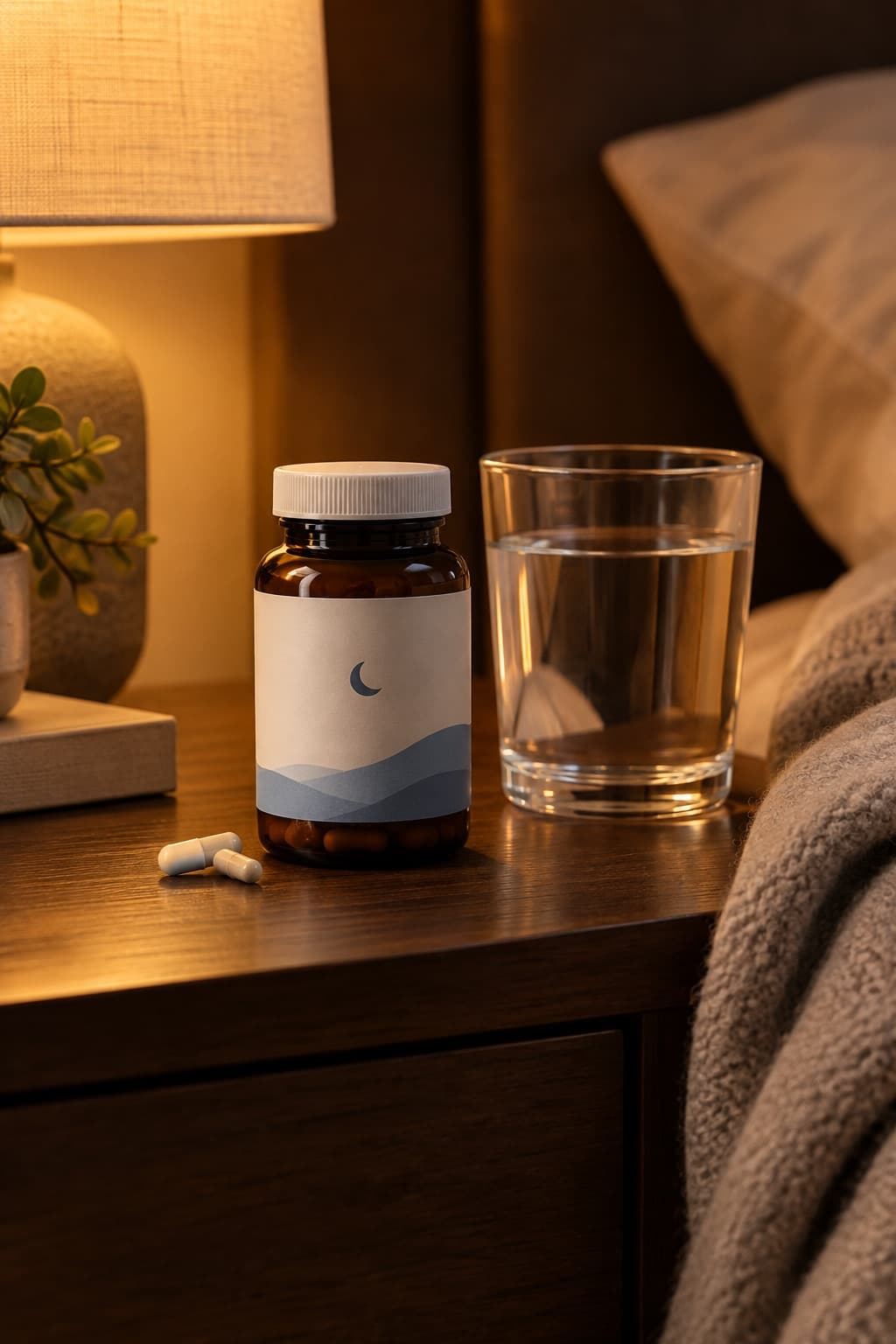
If you only try one thing, melatonin has the most evidence behind it — especially for jet lag, less so for everyday insomnia. This guide ranks the popular sleep aids by what has actually been tested in people, and explains when a supplement isn't the right tool at all.
Melatonin has the most human trial evidence of any over-the-counter sleep aid — a modest effect on falling asleep faster for everyday insomnia, and a strong, well-established effect for resetting your body clock after crossing time zones. A second tier — glycine and weighted blankets — has smaller but real randomised trials behind it. Magnesium is popular but the evidence for sleep specifically is thin and inconsistent, according to the most recent systematic reviews. Valerian root, standalone L-theanine and isolated CBD have all been tested and have not held up: the best current evidence does not show a meaningful effect for any of them. None of this replaces a proper work-up if trouble sleeping has lasted more than a few months, or if snoring and breathing pauses are part of the picture.
- Melatonin's strongest, most consistent evidence is for jet lag — a Cochrane review found it 'remarkably effective' for resetting sleep after crossing five or more time zones. For everyday insomnia, meta-analyses show a real but modest effect: falling asleep about seven minutes faster on average.
- Glycine (about 3g before bed) and weighted blankets both have genuine randomised human trials showing improved subjective sleep quality, though each evidence base is still small.
- Magnesium is one of the most recommended 'natural' sleep aids online, but the most recent systematic review of 12 randomised trials found the evidence does not support using it routinely for insomnia.
- Valerian root and standalone L-theanine have real trial histories but have not shown a consistent benefit over placebo in the best current syntheses.
- Isolated CBD specifically — as opposed to products combining CBD with THC — showed no significant effect on sleep quality in a 2025 meta-analysis of six randomised trials.

Melatonin (0.5–5mg)
Modest for everyday insomnia; strong for jet lag specifically
See the full rankingThe ranking
Ranked on: the strength of controlled human trial evidence for improving sleep onset, duration or quality, at doses available in real products. No commercial relationship influences the order.
| # | Option | Verdict | Grade |
|---|---|---|---|
| 1 | Melatonin (0.5–5mg) | Modest for everyday insomnia; strong for jet lag specifically | GRADE BPromising |
| 2 | Weighted blanket | Real trials, modest and uneven effect | GRADE BPromising |
| 3 | Glycine (3g before bed) | A real, if narrow, human trial signal | GRADE CEarly |
| 4 | Magnesium (glycinate, 200mg) | Thin, inconsistent evidence despite the popularity | GRADE CEarly |
| 5 | Valerian root | Real trial history; doesn't hold up | GRADE DInsufficient or unsafe |
| 6 | L-theanine (standalone) | Almost never tested alone; weak by itself | GRADE DInsufficient or unsafe |
| 7 | CBD (isolated) | Tested and found wanting | GRADE DInsufficient or unsafe |
- 01
Melatonin (0.5–5mg)
GRADE BPromisingModest for everyday insomnia; strong for jet lag specificallyA meta-analysis of 19 randomised trials (over 1,600 people) found melatonin reduced the time it takes to fall asleep by about seven minutes on average and modestly increased total sleep time — real, but not dramatic, for everyday insomnia. Its best-documented use is different: a Cochrane review of 10 trials found melatonin 'remarkably effective' for jet lag after crossing five or more time zones, with a number-needed-to-treat of about two. Lower doses (0.5–3mg) work about as well as higher ones in most trials — more isn't better, and timing relative to your target bedtime matters more than dose.
- 02
Weighted blanket
GRADE BPromisingReal trials, modest and uneven effectA 2024 randomised trial across three hospitals (102 people) found a weighted blanket produced significantly greater improvement in sleep-quality scores than a normal blanket after one month. A separate 2024 meta-analysis of eight trials in psychiatric patients found a clear reduction in anxiety and a positive, though less consistent, signal for insomnia severity specifically. The effect is real but modest and most evidence comes from people with anxiety-linked or psychiatric sleep problems, not simple insomnia in otherwise healthy adults.
- 03
Glycine (3g before bed)
GRADE CEarlyA real, if narrow, human trial signalHuman trials of 3g oral glycine before bed have shown improved subjective sleep quality and reduced next-day fatigue and sleepiness in partially sleep-restricted adults. It's a genuine, mechanistically plausible finding — but the trial base is small and concentrated in one research group, which is why it lands below melatonin and the weighted-blanket evidence rather than above it.
- 04
Magnesium (glycinate, 200mg)
GRADE CEarlyThin, inconsistent evidence despite the popularityMagnesium is one of the most recommended 'natural' sleep aids online, but the most recent systematic review — 12 randomised trials — concluded the current evidence does not support magnesium as a routine insomnia treatment, rating certainty low to very low. One newer trial of magnesium bisglycinate (250mg, 155 people) found a small, borderline-significant improvement on a standard insomnia scale. Reasonable to try if you're also managing a real deficiency; not something to expect a reliable sleep effect from on its own.
- 05
Valerian root
GRADE DInsufficient or unsafeReal trial history; doesn't hold upA 2020 systematic review and meta-analysis covering nearly 7,000 people across 60 studies found inconsistent results, partly attributed to wide variation in extract quality between products. A 2023 umbrella review of insomnia treatments went further, concluding valerian did not significantly improve sleep outcomes. It has decades of use behind it, but the best current synthesis of the evidence doesn't support it.
- 06
L-theanine (standalone)
GRADE DInsufficient or unsafeAlmost never tested alone; weak by itselfMost recent human trials pair L-theanine with something else — walnut peptide, chamomile, or other amino acids — rather than testing it alone against placebo in a well-powered trial. No strong standalone-theanine insomnia trial exists in the current literature. It may be doing something as part of a combination product; there isn't good evidence it does much by itself.
- 07
CBD (isolated)
GRADE DInsufficient or unsafeTested and found wantingA 2025 meta-analysis of six randomised cannabinoid trials (over 1,000 people) found cannabinoids overall improved sleep quality — but when isolated to CBD-only products specifically, the effect was not statistically significant. Products combining CBD with THC performed better in the same analysis, which is a different regulatory and legal category entirely. If a gummy is marketed as CBD-only for sleep, the best current evidence doesn't back the claim.


What to actually try, and when
Matching the aid to the actual problem
| Situation | Reasonable first try | Detail |
|---|---|---|
| Jet lag / shifting your schedule | Melatonin, low dose (0.5–3mg) | Timed close to your target bedtime in the new time zone — this is melatonin's strongest evidence base by a wide margin. |
| Occasional trouble falling asleep | Melatonin or glycine | Melatonin 30–60 minutes before bed, or 3g glycine — both have real, if modest, human trial support. |
| Anxious, racing-mind nights | Weighted blanket | Best-evidenced for anxiety-linked sleep difficulty specifically, not generic insomnia. |
| Confirmed low magnesium, or muscle cramping at night | Magnesium glycinate | Reasonable to correct a real deficiency; don't expect a reliable standalone sleep effect. |
| Trouble sleeping most nights for 3+ months | A clinician, not another supplement | This meets the clinical definition of insomnia disorder — cognitive behavioural therapy for insomnia (CBT-I) has stronger, more durable evidence than anything on this page. |
| Snoring, gasping, or witnessed breathing pauses | A sleep evaluation, not a sedating supplement | This is a sleep apnea question, not an insomnia one — see our snoring guide, and don't add a sedative on top of undiagnosed apnea. |
What a pharmacist would add
- Melatonin can interact with blood thinners and blood pressure medication, and adds to drowsiness from other sedatives — check your full list before combining anything.
- Trouble sleeping most nights for three months or more meets the clinical definition of insomnia disorder. CBT-I (cognitive behavioural therapy for insomnia) has stronger, longer-lasting evidence than any supplement here — it's the first call worth making, not another product.
- Snoring, gasping, or witnessed pauses in breathing during sleep point to possible sleep apnea, not simple insomnia. No sleep aid on this page treats apnea, and sedating supplements can make undiagnosed apnea more dangerous, not less.
- Supplements aren't regulated as tightly as medications — the labelled dose of melatonin and the actual content of the capsule can differ meaningfully between brands. Buy from a manufacturer with a track record.
- If daytime sleepiness is severe enough to affect driving or work, that's worth a same-week conversation with a clinician, not a next supplement to try.
Frequently asked questions
What is the best over-the-counter sleep aid?
Melatonin has the most consistent human trial evidence of the options sold over the counter — modest for everyday insomnia, strong for jet lag specifically. Glycine (about 3g before bed) and weighted blankets are a reasonable second tier with smaller but real trial support.
Does melatonin actually work for insomnia?
Yes, but modestly — meta-analyses show it reduces time to fall asleep by around seven minutes on average and slightly increases total sleep time. Its much stronger, better-established effect is for jet lag, where a Cochrane review found it 'remarkably effective.'
Is magnesium good for sleep?
The evidence is thinner than its popularity suggests. The most recent systematic review of 12 randomised trials concluded magnesium isn't supported as a routine insomnia treatment, though it may help if you're correcting an actual deficiency.
Do weighted blankets really help you sleep?
There's real randomised trial evidence, particularly for anxiety-linked sleep problems — a 2024 trial found meaningfully better sleep-quality scores after a month compared with a normal blanket. The effect is genuine but modest, not a cure for insomnia generally.
Is CBD good for sleep?
The best current evidence says no, at least for CBD alone — a 2025 meta-analysis found isolated CBD products had no significant effect on sleep quality, while products combining CBD with THC performed better in the same analysis.
When should I see a doctor instead of trying another sleep supplement?
If trouble sleeping has lasted three months or more most nights, that meets the definition of insomnia disorder and responds best to CBT-I, not another pill. Separately, snoring, gasping or witnessed breathing pauses are signs of possible sleep apnea, which needs a sleep evaluation rather than a sedating supplement.
Keep reading
- Best snoring solutions, ranked by evidence
A different problem with different evidence — what actually helps snoring and mild sleep apnea.
- Ask a health consultant
Get your sleep routine and medications checked against the evidence, free.
- Free stack check
Screen a sleep aid against any medication or supplement you already take.
More in Supplements
- Taurine and longevity: what the human evidence actually shows
The study that made taurine famous extended lifespan in mice, not humans. What the actual human trials show, the dose studied, and who should be careful.
- Creatine and aging: the best-documented compound in longevity
Creatine has more human trials than any other longevity supplement, at a fraction of the price. What's proven for aging, the dose, and who should be careful.
- Which science-backed supplements can safely extend life?
Correcting vitamin D deficiency ranks first among supplements safely backed by human evidence; NMN, resveratrol and most others lack human trials.
- Best anti aging supplements to extend life naturally.
Correcting a real vitamin D or B12 deficiency ranks first, well studied and safe; omega-3, creatine and collagen follow, while NMN and resveratrol lack it.
- Complete supplement stack designed to extend lifespan effectively.
Correcting deficiencies, omega-3 in specific groups, creatine, fibre and protein make up the only stack with genuine human evidence for extending lifespan.
- Best longevity supplements for cellular health and repair
Only creatine, omega-3, NAD⁺ precursors, urolithin A, CoQ10 and glycine-plus-NAC show a measured repair effect in human trials; the rest is animal data.