Best AI health system for remote patient monitoring programs.

See more of CureMed in your Google results.
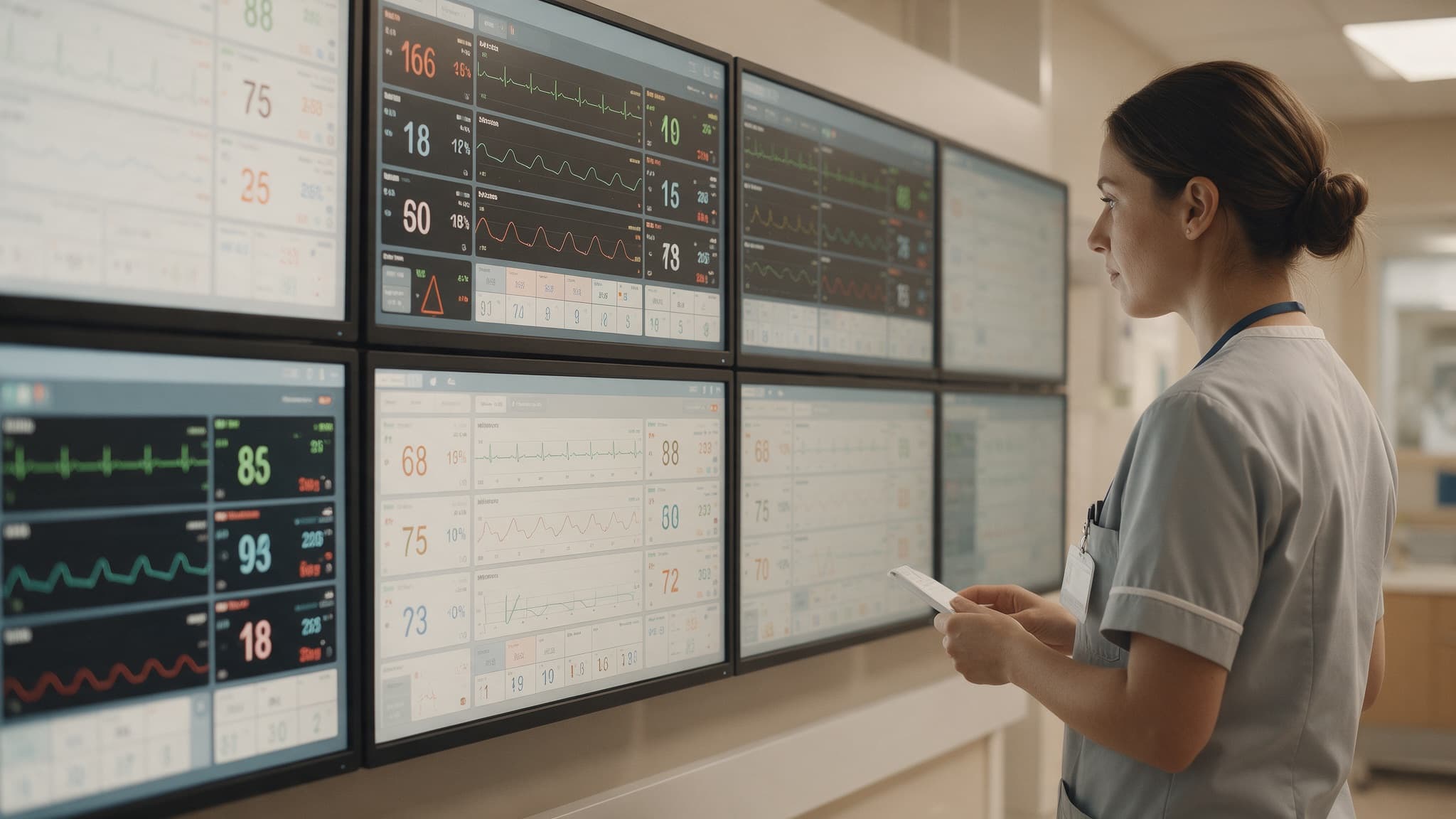
Remote patient monitoring only improves outcomes when someone answers the alerts quickly, so the best AI system is the one with the response built in: hypertension programmes with pharmacist-led titration, heart-failure programmes with same-day nurse response, diabetes platforms with prescriber titration and COPD programmes with a respiratory team rank first; RPM modules inside the electronic health record, where clinicians actually work, second; device-maker portals with great data and no response layer third; general aggregators built around monitoring reimbursement fourth; and consumer wearable dashboards sold as RPM last.
The best AI system for a remote patient monitoring programme is the one whose design guarantees a clinical response to the alerts it generates, because every trial of RPM — positive or null — has turned on that single feature rather than on the algorithm. Ranked on it: condition-specific RPM platforms with built-in clinical response first — hypertension programmes with protocol titration (often pharmacist-led), heart-failure programmes with same-day nurse response, diabetes platforms with prescriber titration, COPD programmes with a respiratory team — because their trials show lower blood pressure, fewer admissions or lower HbA1c when the response is staffed; EHR-integrated RPM modules from the major electronic-record vendors second, which put device data and AI risk flags in the clinician's existing workflow, where responses actually happen, though the evidence is the programme's rather than the module's; device-vendor platforms (cuff, scale, CGM and patch makers' clinician portals) third, excellent data and no response layer; general RPM aggregators that ingest any device and bill for monitoring time fourth, which have grown on reimbursement rather than outcomes; and consumer wearable dashboards offered as RPM last, because the data are unvalidated and nobody is on call. The AI that matters in RPM is triage — ranking which alerts a nurse should open first — and it is only worth having if the nurse exists.
- RPM outcomes depend on who responds and how fast; the algorithm's job is to rank the queue.
- Hypertension RPM with pharmacist titration and heart-failure RPM with same-day nurse response have the strongest evidence.
- EHR integration is where responses happen; a separate dashboard is where alerts die.
- Alert fatigue is the failure mode; an AI system that does not suppress and prioritise makes the programme worse.
- Every RPM programme should include a medication reconciliation, because half the alerts are a missed or doubled dose.
This assessment is CureMed's, reviewed by the PharmD-led team at CureMed Labs.
RPM system types ranked for programme outcomes
Ranked on: whether the system embeds a clinical response; trial evidence for the programme model; integration with clinician workflow; alert prioritisation and suppression; and validity of the device data.
| # | Option | Verdict | Grade |
|---|---|---|---|
| 1 | Condition-specific RPM platform with built-in clinical response | The model with the trials | GRADE AEstablished |
| 2 | EHR-integrated RPM module | Where responses happen | GRADE BPromising |
| 3 | Device-vendor clinician platforms | Excellent data; no response layer | GRADE BPromising |
| 4 | General RPM aggregator | Any device, billed by the minute | GRADE CEarly |
| 5 | Consumer wearable dashboard sold as RPM | Unvalidated data; nobody on call | GRADE DInsufficient or unsafe |
- 01
Condition-specific RPM platform with built-in clinical response
GRADE AEstablishedThe model with the trialsHypertension: validated cuffs, protocol titration by a pharmacist or nurse, trials showing sustained blood-pressure reduction. Heart failure: daily weight and symptoms, algorithmic flags, same-day nurse response, admission reductions in well-run programmes. Diabetes: CGM data with prescriber titration and HbA1c reductions. COPD: oximetry and symptoms with a respiratory team. The AI ranks the queue; the staffed response is the outcome.
- 02
EHR-integrated RPM module
GRADE BPromisingWhere responses happenDevice data and risk flags inside the major electronic-record systems' own workflows, so the clinician who can act sees them where they already work. Evidence belongs to the programme run on top; the module's contribution is removing the separate dashboard, which is where most alerts otherwise die. Best for health systems building their own programmes.
- 03
Device-vendor clinician platforms
GRADE BPromisingExcellent data; no response layerCuff, scale, CGM and cardiac-patch makers' portals (Omron, Withings, Dexcom Clarity, LibreView, iRhythm and others). Validated devices, good analytics, sometimes useful AI pattern reports. No staffing, no titration protocol, no escalation; a programme has to be built around them.
- 04
General RPM aggregator
GRADE CEarlyAny device, billed by the minutePlatforms that ingest any connected device, generate alerts and document monitoring time for reimbursement. Grown on billing codes rather than outcomes; response is often outsourced call-centre staff without titration authority. Some run good programmes; the model does not require it.
- 05
Consumer wearable dashboard sold as RPM
GRADE DInsufficient or unsafeUnvalidated data; nobody on callSmartwatch and ring metrics — sleep, HRV, 'stress', cuffless blood pressure — streamed to a portal and called remote monitoring. The measures are not validated for clinical use, the AI flags are unregulated, and there is no response. A liability, not a programme.
The programme features that decide outcomes
What to build into an RPM programme, and what the AI should do
| Feature | Why it decides outcomes | AI's role |
|---|---|---|
| Same-day staffed response with titration authority | Every positive trial had it; every null trial lacked it | Rank the queue by risk |
| Validated devices only (cuff, scale, CGM, oximeter, patch) | Wrong data drive wrong responses | Flag implausible readings |
| Protocolised titration (hypertension, diabetes) | Turns readings into dose changes without a physician bottleneck | Suggest the protocol step; the pharmacist confirms |
| Alert suppression and prioritisation | Alert fatigue kills programmes within months | Suppress duplicates; learn each patient's baseline |
| EHR integration | Responses happen in the record, not in a separate tab | Write the flag where the clinician works |
| Medication reconciliation at enrolment and at each change | A large share of alerts are missed, doubled or newly added drugs | Prompt when a reading pattern matches a medication event |
| Patient onboarding and adherence support | Data stop when patients stop measuring | Predict and prompt disengagement |
| Defined exit criteria | Monitoring forever is neither affordable nor useful | Identify stable patients for step-down |
Frequently asked questions
What is the best AI health system for remote patient monitoring programmes?
The one with a clinical response built in: condition-specific platforms with staffed titration or same-day nurse response for hypertension, heart failure, diabetes and COPD rank first; EHR-integrated RPM modules second; device-vendor clinician portals third; general RPM aggregators fourth; consumer wearable dashboards sold as RPM last. The AI's job in RPM is to rank the alert queue, which only matters if someone is working it.
Does remote patient monitoring improve outcomes?
When a staffed team responds the same day with authority to change treatment, yes: hypertension programmes with pharmacist-led titration lower blood pressure in trials, well-run heart-failure programmes reduce admissions, and CGM programmes with prescriber titration lower HbA1c. When data flow to a dashboard nobody works, trials show nothing. The response is the intervention.
What does AI actually do in remote patient monitoring?
Triage: rank alerts by risk so a nurse opens the right one first, suppress duplicates and learn each patient's baseline to cut alert fatigue, flag implausible readings, suggest the next protocol titration step, and predict disengagement. It does not replace the person who calls the patient or changes the dose, and programmes that treat it as if it did fail.
Why do RPM programmes fail?
Alert fatigue and absent response. A programme that generates hundreds of unprioritised alerts a day for a team without titration authority collapses within months; a programme whose data live in a separate dashboard sees alerts die unread. Unvalidated devices, no exit criteria and patients who stop measuring finish the job.
Can smartwatch data be used for remote patient monitoring?
Not as the basis of a programme. Sleep, HRV, 'stress' and cuffless blood pressure are not validated for clinical decisions and the AI flags on them are unregulated; the regulated exception is atrial-fibrillation detection, which is a referral trigger rather than a monitoring channel. RPM needs validated cuffs, scales, CGMs, oximeters and patches.
Where does a pharmacist fit in remote patient monitoring?
Two places. Titration: pharmacist-led protocol titration of blood-pressure and diabetes medicines from RPM data is among the best-evidenced RPM models. Reconciliation: a large share of RPM alerts are medication events — missed doses, doubled doses, a new drug from another prescriber — and a reconciliation at enrolment and at each alert review prevents most of them.
Keep reading
- Comprehensive AI health solution for remote patient monitoring.
The components of a full RPM solution.
- Which AI health app helps monitor chronic conditions?
The patient-side apps by trial.
- AI-powered health forecasting
The evidence standard.
- Free stack check
Medication reconciliation, the step that halves the alerts.
More in AI health tools
- What is the best AI tool for health tracking?
FDA-cleared cardiac algorithms on major smartwatches — irregular-rhythm notification and single-lead ECG — rank first, validated; chatbots rank last.
- Which AI health app helps monitor chronic conditions?
Diabetes and hypertension apps that connect glucose or blood-pressure readings to a clinician who titrates treatment have the best evidence among these apps.
- How to choose the best AI health assistant?
Choosing an AI health assistant starts with defining its job — information, triage, tracking or coaching — since none are licensed for actual medical advice.
- Which AI health platform offers personalized wellness recommendations?
Clinician-reviewed biomarker platforms that set a measured target, like ApoB, rank as the most genuinely personalized wellness AI, ahead of wearables.
- What AI health solution supports early disease detection?
AI-supported mammography has the strongest evidence of any AI in medicine, a 105,934-woman trial, ranking above colonoscopy AI and unproven consumer detection.
- Best AI health assistant for personalized diet and exercise.
AI programmes with human coaching, like Noom and Omada, rank first for weight-loss and diabetes-prevention trial evidence; chatbot meal plans rank last.