Best clinically studied longevity peptides for healthy aging.

See more of CureMed in your Google results.
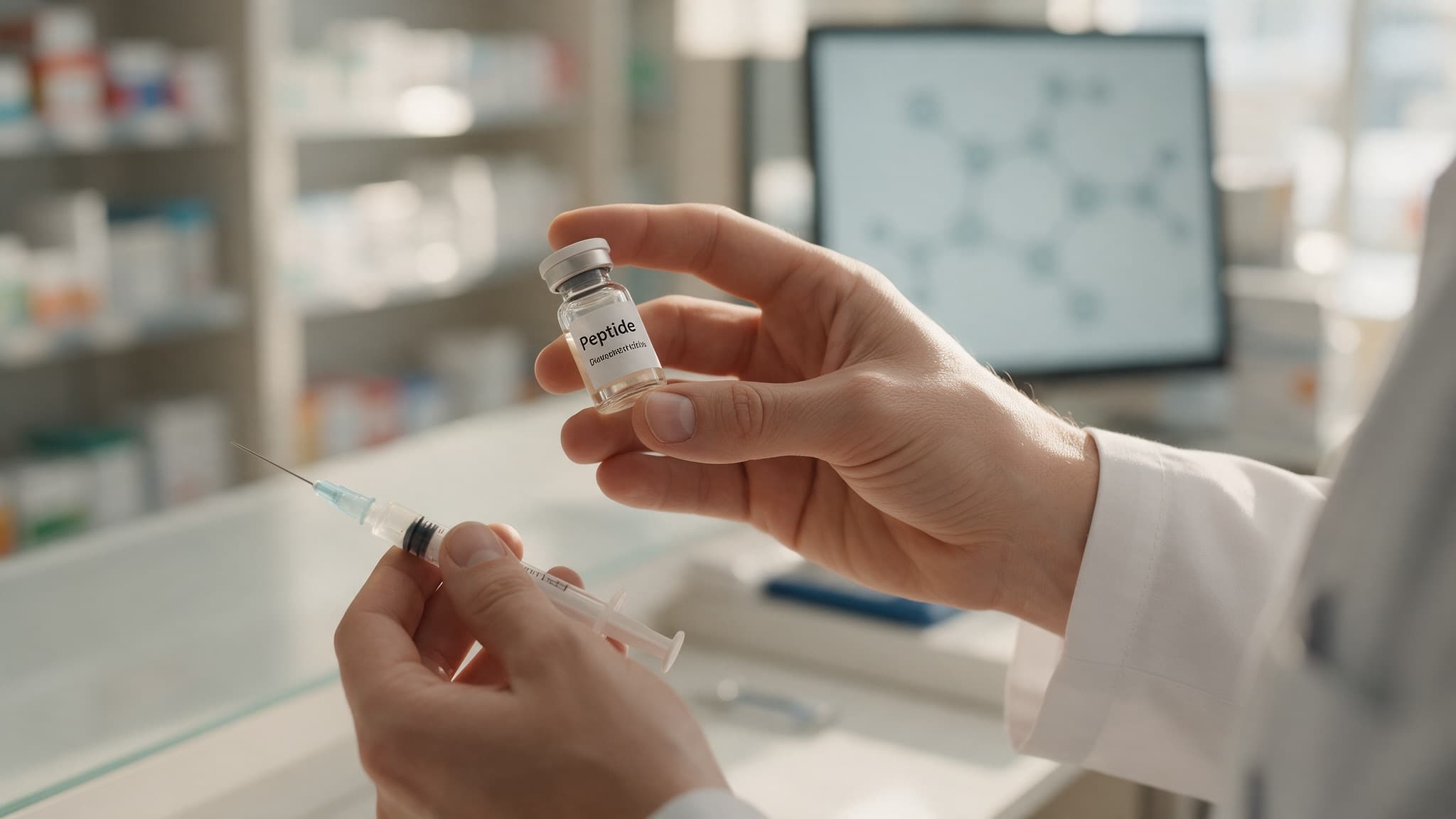
Only a few peptides have actually been through proper human trials: tesamorelin and PT-141 (large trials, for specific conditions), SS-31 and thymosin alpha-1 (trials in particular diseases), copper peptide GHK-Cu (small skin trials), sermorelin and DSIP (older, small studies) and AOD-9604 (a trial that failed). The most-marketed peptides — BPC-157, TB-500, CJC/ipamorelin, epitalon, MOTS-c — have no completed human trial at all. None has been tested in healthy people for ageing.
Ranked strictly on completed human trials — how many, how large, how long, and what they measured — the clinically studied longevity peptides are: tesamorelin (multiple Phase 3 trials, hundreds of participants, visceral fat in HIV lipodystrophy; a later trial on liver fat); bremelanotide/PT-141 (Phase 3, sexual desire disorder); SS-31/elamipretide (Phase 2 and 3 in Barth syndrome and mitochondrial myopathy, mixed results); thymosin alpha-1 (trials in hepatitis, sepsis and oncology); GHK-Cu (small vehicle-controlled skin trials); sermorelin (older trials in growth-hormone deficiency and a few small ageing studies); DSIP (1980s sleep trials that disagree); AOD-9604 (a Phase 2b obesity trial that failed). Below that line — BPC-157, TB-500, MOTS-c, CJC-1295, ipamorelin, epitalon — there is no completed human trial for the use they are sold for. And above the whole list sits the fact that none of the trials was in healthy ageing adults with an ageing outcome: 'clinically studied' is true for the top eight, and 'for healthy ageing' is true for none.
- 'Clinically studied' is verifiable: a registered, completed human trial with a population, a dose and an outcome. Most peptide marketing fails the check.
- The most-studied peptides were studied for diseases — HIV lipodystrophy, sexual dysfunction, mitochondrial disorders — not for healthy ageing.
- GHK-Cu is the only peptide whose human trials measured something an ageing consumer is buying it for, and they are small and cosmetic.
- A failed trial is still a trial: AOD-9604 has more human data than BPC-157, and the data say it does not work.
- The peptides most often described as 'clinically studied' in marketing — BPC-157, TB-500 — have rodent studies and no completed human trial.
This assessment is CureMed's, reviewed by the PharmD-led team at CureMed Labs.
Peptides ranked by their human trial record
Ranked on: completed human trials: number, size, duration, design and the outcome measured, with the population named. Rodent, cell and unpublished data do not count. The line between C and D is whether any completed human trial exists for the use sold.
| # | Option | Verdict | Grade |
|---|---|---|---|
| 1 | Tesamorelin | Multiple Phase 3 trials; the best-studied peptide on the site | GRADE AEstablished |
| 2 | Bremelanotide (PT-141) | Phase 3 trials; narrow indication | GRADE BPromising |
| 3 | SS-31 (elamipretide) | Phase 2 and 3 trials in rare mitochondrial disease; mixed | GRADE CEarly |
| 4 | Thymosin alpha-1 | Trials in hepatitis, sepsis and oncology | GRADE CEarly |
| 5 | GHK-Cu (topical) | Small vehicle-controlled skin trials | GRADE CEarly |
| 6 | Sermorelin | Older trials in GH deficiency; a few small ageing studies | GRADE BPromising |
| 7 | DSIP | 1980s sleep trials that contradict each other | GRADE CEarly |
| 8 | AOD-9604 | A Phase 2b trial — which failed | GRADE DInsufficient or unsafe |
| 9 | BPC-157, TB-500, MOTS-c, CJC-1295, ipamorelin, epitalon, melanotan II | No completed human trial for the use sold | GRADE DInsufficient or unsafe |
Randomised, placebo-controlled Phase 3 trials with several hundred participants over 26 to 52 weeks measured visceral fat, lipids, glucose and adverse events in HIV-associated lipodystrophy; a later randomised trial measured liver fat. Approved on that evidence. Population: HIV patients with abdominal fat accumulation. Not healthy ageing adults.
Two randomised Phase 3 trials in premenopausal women with hypoactive sexual desire disorder measured desire and distress scores and adverse events over 24 weeks. Approved on that evidence. No ageing outcome; no ageing population.
- 03
SS-31 (elamipretide)
GRADE CEarlyPhase 2 and 3 trials in rare mitochondrial disease; mixedRandomised trials in Barth syndrome and primary mitochondrial myopathy measured six-minute walk distance, fatigue and cardiac parameters; results were mixed and one Phase 3 missed its primary endpoint. A real clinical programme with real data — for rare diseases, not ageing — and not available as a consumer product.
- 04
Thymosin alpha-1
GRADE CEarlyTrials in hepatitis, sepsis and oncologyRandomised trials as an immune modulator in chronic hepatitis B, severe sepsis and some cancers, with approvals in several countries for those uses. The 'immune ageing' claim extrapolates; no trial enrolled healthy older adults for an ageing outcome.
Several small controlled trials, typically dozens of participants over eight to twelve weeks, measured skin elasticity, fine lines and wound healing. The only peptide whose trials measured something an ageing consumer buys it for — and the outcomes are cosmetic and modest.
Trials from the 1990s in growth-hormone-deficient children and adults established its pharmacology and safety, and a few small studies in older adults measured GH and IGF-1 responses and body composition over weeks. Clinically studied, thinly, and not for an ageing outcome.
Small human trials in insomnia and related conditions from the 1980s, some positive, some null, none replicated with modern methods. Studied; inconclusive.
A randomised trial in obesity measured weight loss and found no benefit over placebo; the programme was abandoned. It has more human data than most peptides on this page, and the data are negative. Graded D on the evidence, ranked above the untested group because the trial exists.
- 09
BPC-157, TB-500, MOTS-c, CJC-1295, ipamorelin, epitalon, melanotan II
GRADE DInsufficient or unsafeNo completed human trial for the use soldRodent and cell data (BPC-157, TB-500, MOTS-c); pharmacokinetic or GH-response studies without a clinical outcome (CJC-1295, ipamorelin); unreplicated single-tradition reports (epitalon); or harm signals (melanotan II). 'Clinically studied' in the marketing for these means a study in something other than a human, or a human study of something other than the claim.
How to check a 'clinically studied' claim yourself
What the human trial record looks like, peptide by peptide
| Peptide | Completed human trials | Largest / longest | Population | Outcome measured | Healthy-ageing trial? |
|---|---|---|---|---|---|
| Tesamorelin | Several, Phase 3 | Hundreds; 52 weeks | HIV lipodystrophy | Visceral fat, lipids, glucose, safety | No |
| Bremelanotide | Two, Phase 3 | Hundreds; 24 weeks | Premenopausal women with HSDD | Desire and distress scores | No |
| SS-31 | Several, Phase 2–3 | Dozens to ~200 | Rare mitochondrial disease | Walk distance, fatigue, cardiac | No |
| Thymosin alpha-1 | Many | Hundreds | Hepatitis, sepsis, cancer | Disease-specific | No |
| GHK-Cu topical | Several, small | Dozens; 12 weeks | Adults with photoaged skin | Elasticity, wrinkles, healing | Cosmetic only |
| Sermorelin | Several, older | Dozens | GH deficiency; some older adults | GH/IGF-1, body composition | Small, surrogate |
| DSIP | A few, 1980s | Dozens | Insomnia | Sleep measures | No |
| AOD-9604 | One, Phase 2b | ~300; 24 weeks | Obesity | Weight — no benefit | No |
| BPC-157 / TB-500 / MOTS-c / CJC-1295 / ipamorelin / epitalon | None for the use sold | — | — | — | No |
Frequently asked questions
Which longevity peptides have actually been clinically studied?
Ranked by trial record: tesamorelin (multiple Phase 3 trials in HIV lipodystrophy), bremelanotide/PT-141 (Phase 3 in a sexual-desire disorder), SS-31 (Phase 2–3 in rare mitochondrial disease), thymosin alpha-1 (hepatitis, sepsis, oncology), GHK-Cu (small skin trials), sermorelin (older GH-deficiency trials and small ageing studies), DSIP (1980s sleep trials), and AOD-9604 (a failed obesity trial). BPC-157, TB-500, MOTS-c, CJC-1295, ipamorelin and epitalon have no completed human trial for the use they are sold for.
Has any peptide been clinically studied for healthy ageing?
No. The peptides with human trials were studied for diseases — HIV lipodystrophy, sexual dysfunction, mitochondrial disorders, hepatitis — or, for GHK-Cu, for cosmetic skin outcomes. No completed trial has enrolled healthy ageing adults and measured an ageing outcome. 'Clinically studied' is true of eight peptides; 'for healthy ageing' is true of none.
Is BPC-157 clinically studied?
Not in humans for any outcome it is sold for. It has three decades of rodent and cell studies and no completed human trial. Marketing that calls it 'clinically studied' or 'research-backed' is describing animal research.
What does a real peptide clinical trial look like?
A registered, randomised, placebo- or vehicle-controlled study in humans with a named population, a fixed dose, a stated duration and a pre-specified outcome — tesamorelin's Phase 3 trials, with several hundred HIV patients followed for a year on visceral fat and safety, are the model. Ask for the registration or publication and check the population and the outcome against the claim.
Why does AOD-9604 rank above BPC-157 if its trial failed?
Because the trial exists. AOD-9604 was tested in a randomised trial of around 300 people with obesity and did not beat placebo; that is negative evidence, which is still evidence. BPC-157 has no completed human trial, so there is nothing to grade. On 'clinically studied', a failed trial outranks no trial; on 'does it work', both are D.
Is GHK-Cu clinically studied for ageing?
For skin ageing, yes — several small vehicle-controlled trials over eight to twelve weeks measured elasticity, fine lines and wound healing with topical copper peptide. It is the only peptide whose human trials measured something an ageing consumer buys it for, and the outcomes are cosmetic and modest. Injectable GHK-Cu has no human trial.
Keep reading
- What are the safest and best longevity peptides?
Why the trial record and the safety record are the same record.
- What are the best clinically proven longevity supplements?
The same 'proven for what, in whom' test applied to supplements.
- How we grade evidence
The A–D scale and what each grade requires.
- Peptide therapy at longevity clinics
What clinics claim and what the trials support.
More in Peptides
- Best longevity peptides for skin health and wrinkle reduction.
Matrixyl has the largest placebo-controlled trial (93 women, 12 weeks); copper peptide has thinner proof. Both rank below sunscreen and retinoids.
- Peptides and therapies commonly used to extend lifespan.
GLP-1 peptides rank highest for longevity, backed by outcome trials — growth hormone peptides, BPC-157, and NAD+ infusions rank far lower on human evidence.
- Which longevity peptides are best for energy and recovery?
BPC-157, TB-500, MOTS-c, CJC-1295, ipamorelin, sermorelin and tesamorelin ranked on human trials for energy and recovery — most have none in humans.
- What are the safest and best longevity peptides?
Approved peptides tesamorelin and PT-141 rank safest with Phase 3 trial data; unregulated injectables like BPC-157 and TB-500 have no human trials at all.
- Best longevity peptides for anti-aging and cellular repair.
GHK-Cu applied to skin is the only peptide with a measured repair effect in human trials; every other anti-ageing peptide has just animal or cell data.
- Which longevity peptides work best for lifespan extension?
No longevity peptide has human lifespan-extension evidence; ranked on animal data for epitalon, MOTS-c, SS-31, humanin and the GH-axis peptides.