DSIP (Delta Sleep-Inducing Peptide): evidence, dosing, safety & interactions
Trp-Ala-Gly-Gly-Asp-Ala-Ser-Gly-Glu, a naturally occurring nonapeptide
Also sold or labeled as: Delta sleep-inducing peptide, DSIP, Deltaran
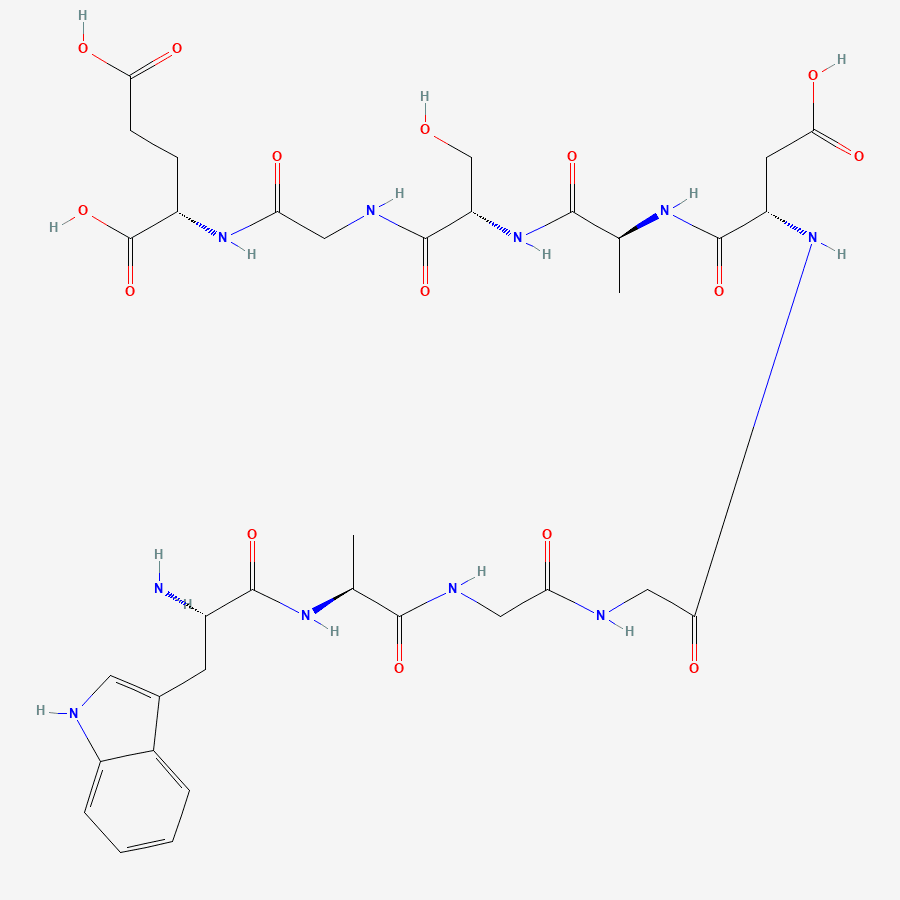
This is a small, naturally occurring substance once studied for helping people sleep. Some early human testing exists, but it was never approved as a sleep medicine and today's versions aren't regulated.
- What it is
- A small, naturally occurring peptide studied since the 1970s–80s for sleep and endocrine effects — never developed into an approved drug.
- Evidence
- Several small double-blind human trials exist, but they reach conflicting conclusions on whether DSIP improves sleep. A 2009 study found it paradoxically lightened anesthesia rather than deepening it.
- Studied dose
- Human trials used intravenous doses of 25–100 nmol/kg body weight in a clinical setting — not the intranasal or subcutaneous products sold online, which have never been tested at all.
- Safety
- Generally tolerated at studied IV doses in short trials, though one study found it increased heart rate and reduced heart-rate variability.
What human trials actually show
Randomized, placebo-controlled human trials only. Animal data never appears in this section — it cannot raise a grade, and it is noted separately below.
- 01European Neurology1987— Sleep and daytime function in chronic insomnia
- Design
- Placebo-controlled, double-blind
- Dose
- Intravenous DSIP, intermediate-term administration over 7 successive nights
- Duration
- 7 nights of treatment, with polysomnography at baseline, during, and after
14 middle-aged patients with chronic insomnia
DSIP substantially improved night sleep from the first dose, with sleep efficiency reaching normal-control levels; effects were maintained into the first post-treatment night, and daytime alertness and mental performance also improved significantly.
doi:10.1159/000116143 - 02Neuropsychobiology1992— Sleep quality in chronic insomnia
- Design
- Double-blind, matched-pairs, parallel-groups, placebo-controlled
- Dose
- 25 nmol/kg body weight, intravenous, given on 3 nights
- Duration
- 5 consecutive nights in a sleep laboratory
16 chronic insomniac patients
Objective polysomnography showed slightly higher sleep efficiency and shorter sleep latency with DSIP than placebo, but the effect was weak, and the authors concluded these statistically significant results could in part reflect an incidental change in the placebo group rather than a real drug effect. No improvement was found in subjective sleep quality. The paper concludes short-term DSIP treatment 'is not likely to be of major therapeutic benefit' for chronic insomnia.
doi:10.1159/000118919 - 03European Journal of Anaesthesiology2009— Effect on anesthetic depth as an adjunct to isoflurane
- Design
- Randomized, placebo-controlled
- Dose
- 25, 50, or 100 nmol/kg body weight, intravenous bolus
- Duration
- Single-dose administration, measured while awake and again under anesthesia
24 female patients (ASA I–II)
DSIP significantly increased heart rate, decreased heart-rate variability, and — contrary to the hypothesis that it would act as a natural hypnotic and deepen anesthesia — significantly reduced EEG delta rhythm and lightened (not deepened) measured anesthetic depth at the lowest dose tested.
doi:10.1097/EJA.0b013e32831c8644
Every human trial we could verify is small (11 to 24 subjects), and almost all are from the 1980s and 1990s with no meaningful follow-up research since. The two most directly comparable double-blind insomnia trials — 1987 and 1992 — reach different conclusions about whether DSIP even works for sleep, and the more recent (2009) mechanistic study found an effect that runs opposite to the compound's marketed purpose. Every controlled human trial used intravenous administration in a hospital or lab setting; there is no human data at all on the intranasal or subcutaneous routes actually sold online today, which is a real translation gap, not a minor detail. Reported effects on the HPA axis are also inconsistent across studies — some found DSIP reduced ACTH secretion, while one found no effect on CRH-stimulated ACTH or cortisol at all.
Grade C — early. DSIP has real double-blind, placebo-controlled human trials going back to the 1980s — this is not an internet-invented compound. But the two best-designed insomnia trials directly disagree: a 1987 study in 14 patients found improved objective sleep efficiency, while a similarly designed 1992 study in 16 patients found the effects were weak and likely incidental, concluding DSIP was 'not likely to be of major therapeutic benefit.' A 2009 trial found it paradoxically lightened rather than deepened anesthesia. No trial has meaningfully advanced this evidence base since the 1990s, and no formulation has ever been approved anywhere. How we grade evidence.
Side effects & safety
- Reported in controlled trials
- Generally tolerated at intravenous doses of 25–100 nmol/kg in short clinical studies. One 2009 trial found DSIP significantly increased heart rate and reduced heart-rate variability, and altered EEG symmetry between brain hemispheres.
- Product risk
- No controlled trial used the intranasal or subcutaneous forms sold online. Products sold this way have no purity, sterility, or dosing data behind them at all — a different and unstudied delivery method from anything in the human trial record.
- The honest caveat
- The existing double-blind trials do not even agree with each other on whether DSIP improves sleep, and one found it does the opposite of what would be expected — that is a stronger reason for caution than a simple absence of research.
Interactions with medications
The section most longevity sites skip. If you take prescription medication, read this before anything else on the page.
A controlled human trial found intravenous DSIP altered EEG, heart rate, and measured anesthetic depth during isoflurane anesthesia — a real, documented interaction with a commonly used anesthetic agent.
Human studies report inconsistent effects on ACTH and cortisol secretion — some found DSIP suppressed ACTH, one found no effect on CRH-stimulated ACTH/cortisol at all. This inconsistency itself is a reason for caution alongside corticosteroid or adrenal medications.
No controlled human data exists on combining DSIP with other hypnotics or sedatives.
Is DSIP (Delta Sleep-Inducing Peptide) legal where you live?
Regulatory status is tracked per market and reviewed on the date shown. Where a compound is not authorised, this site does not link to sellers.
Not an approved drug and not lawfully marketed as a dietary supplement. No DSIP formulation has ever completed FDA review for any indication.
Source: US Food and Drug Administration
No UK marketing authorisation as a medicine and no permitted route to sell it as a food supplement.
Source: MHRA
No EU marketing authorisation and no novel-food authorisation. There is no lawful consumer route of supply.
Source: European Medicines Agency
Germany applies the EU position: no authorised medicinal product and no permitted supplement use.
Source: BfArM / European Medicines Agency
Aucune autorisation de mise sur le marché et aucun statut de nouvel aliment. Il n'existe aucune voie légale d'approvisionnement.
Source: European Commission / ANSM
Sin autorización de comercialización ni condición de nuevo alimento. No existe una vía legal de suministro.
Source: Comisión Europea / AEMPS
Dosing & timing
This range appears consistently across multiple controlled human studies of hormone secretion, sleep, and anesthesia — all administered intravenously in a clinical or laboratory setting.
The two directly comparable double-blind insomnia trials used this general protocol and reached different conclusions about its benefit.
Every controlled human trial used intravenous administration. The forms actually sold to consumers today have never been studied in a controlled human trial at any dose.
Questions people actually ask
Is DSIP legal in the United States?
It is not an approved drug and is not lawfully marketed as a dietary supplement. No formulation of DSIP has ever received FDA approval for any use.
What does the human evidence actually show?
It shows real double-blind, placebo-controlled trials exist — which is more than many research peptides can claim — but they disagree with each other. A 1987 trial in 14 patients found improved sleep; a 1992 trial in 16 patients found the improvement was weak and probably not clinically meaningful. A 2009 trial found DSIP lightened rather than deepened anesthesia, the opposite of its 'natural hypnotic' branding.
Why hasn't DSIP been developed into an approved sleep drug if it was discovered in the 1970s?
The honest answer from the literature is that the effect was never reliably large or consistent enough across trials to justify further pharmaceutical development, and interest largely stalled after the 1990s. That fifty-year gap is itself informative.
Does DSIP sold online work the same way as the studies?
Unknown, and probably not directly comparable. Every controlled human trial used intravenous dosing in a clinical setting. Products sold today are typically intranasal or subcutaneous, a route that has never been tested in any published human trial.
Is DSIP safe?
At studied IV doses in short trials it was generally tolerated, though one study documented increased heart rate and altered EEG activity. Nothing is known about the safety of the unregulated intranasal or subcutaneous products actually sold, at the doses people are using them.