What are the best clinically proven longevity supplements?

See more of CureMed in your Google results.

Almost every supplement claims to be 'clinically proven'. Very few have actually completed a proper human trial showing a real health outcome — and even those are proven only for a specific effect in specific people. This guide lists which supplements genuinely have that evidence, and exactly what each one is proven to do.
'Clinically proven' is only meaningful with three qualifiers: proven for what outcome, in which population, at what dose. Judged that way, the supplements with a completed randomised trial on a clinical endpoint are few: creatine (strength and lean mass, healthy adults), omega-3 (cardiovascular events, mainly low-intake or high-risk populations), vitamin D (fractures and falls, deficient older adults), coenzyme Q10 (cardiovascular events, heart-failure patients only), and protein supplementation (muscle and function, older adults with resistance training). NAD⁺ precursors and urolithin A are clinically tested — real randomised trials — but on biomarkers and function over weeks, not on disease. Nothing is clinically proven to extend lifespan.
- Proof is specific. CoQ10 is clinically proven to reduce cardiovascular events — in heart failure. That is not proof it does anything in a healthy fifty-year-old.
- Creatine is the most thoroughly proven supplement on the shelf and is almost never sold as a longevity product, because it is cheap and generic.
- 'Clinically tested' and 'clinically proven' are different claims. NMN, NR and urolithin A have been tested in randomised trials; what they proved is a change in a marker or a function score over eight to twelve weeks.
- A trial in mice, a cohort correlation or an unpublished company study does not make a product clinically proven, whatever the label says.
- The interaction with your medication is not on any label and is checked by nobody unless you ask.
CureMed ranks on published human evidence, and screens drug interactions first.
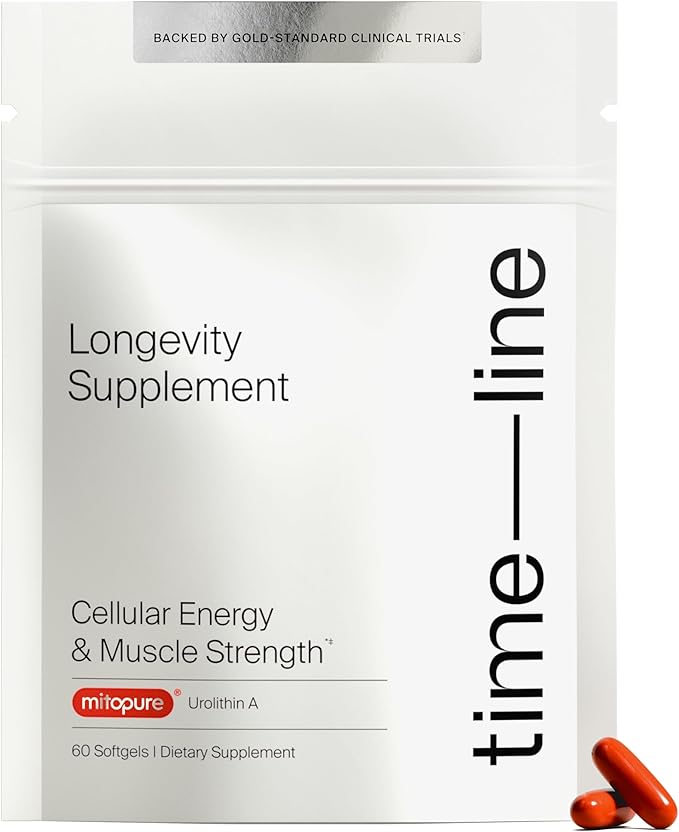
Urolithin A
Tested: mitochondrial markers and endurance
See the full rankingProven for what, in whom, at what dose
Supplements with a completed randomised trial on a clinical endpoint
| Supplement | Clinically proven for | In whom | Studied dose | Not shown |
|---|---|---|---|---|
| Creatine monohydrate | Strength, lean mass, performance; emerging cognitive benefit | Healthy adults across ages, including older adults with resistance training | 3–5 g daily | Lifespan; benefit without training is modest |
| Omega-3 (EPA/DHA) | Reduction in cardiovascular events; triglyceride lowering | Clearest in low-intake, high-risk or high-triglyceride populations | 1–4 g EPA+DHA daily depending on trial | Benefit in replete, low-risk people eating fish; several large trials in that group were null |
| Vitamin D | Fewer falls and fractures; correction of deficiency-related bone and muscle effects | Deficient older adults | 800–2,000 IU daily, guided by blood level | Cancer, cardiovascular or mortality benefit in replete adults — large trials were null |
| Coenzyme Q10 | Fewer major cardiovascular events and deaths | Patients with chronic heart failure | 100 mg three times daily (trial dose) | Any outcome in healthy adults; consistent relief of statin muscle symptoms |
| Protein supplementation | Muscle mass and physical function | Older adults, especially with resistance training or low intake | To reach 1.2–1.6 g/kg/day total | Benefit beyond adequate dietary protein |
| Calcium (with vitamin D) | Modest fracture reduction | Older adults with low intake, mainly institutionalised | 1,000–1,200 mg total daily including diet | Benefit in adults with adequate dietary calcium; cardiovascular safety debated |
Clinically tested, not clinically proven
The compounds below have completed randomised human trials — which puts them ahead of most of the shelf — but the trials measured a biomarker or a short-term function score, not a disease or an event. That is the difference between tested and proven, and it is the distinction the marketing for these products depends on blurring.
Ranked on: the quality of completed randomised human trials, with the honest statement of what each measured. None here has a clinical endpoint yet.
| # | Option | Verdict | Grade |
|---|---|---|---|
| 1 | NMN and NR (NAD⁺ precursors) | Tested: biomarkers and short-term function | GRADE BPromising |
| 2 | Urolithin A | Tested: mitochondrial markers and endurance | GRADE BPromising |
| 3 | Glycine + N-acetylcysteine | Tested: one small trial on oxidative stress | GRADE CEarly |
| 4 | Spermidine | Tested: largest trial was null | GRADE CEarly |
| 5 | Taurine | Tested: small surrogate trials | GRADE CEarly |
| 6 | Resveratrol, fisetin, quercetin, most 'senolytics' | Not clinically proven for any longevity claim | GRADE DInsufficient or unsafe |
Multiple randomised trials show reliable increases in blood NAD⁺ and, in some, improved walking distance or muscle insulin sensitivity over six to twelve weeks. No trial has measured a disease outcome or run longer than a few months, and results on insulin sensitivity conflict. Clinically tested; proven to raise a marker.
- 02
Urolithin A
GRADE BPromisingTested: mitochondrial markers and enduranceTwo randomised, placebo-controlled trials in adults showed improved mitochondrial gene-expression markers and, in one, muscle endurance over four months. Real human evidence for a mechanism; no clinical endpoint.
- 03
Glycine + N-acetylcysteine
GRADE CEarlyTested: one small trial on oxidative stressA small randomised trial in older adults found improved glutathione, oxidative-stress markers and gait speed over sixteen weeks. A promising single result that needs replication before it is anything more.
The largest randomised trial, of a wheat-germ extract for memory in older adults, found no benefit over placebo. The autophagy story remains a model-organism result.
Small, short human trials on blood pressure and exercise markers. The lifespan claim is from mice.
- 06
Resveratrol, fisetin, quercetin, most 'senolytics'
GRADE DInsufficient or unsafeNot clinically proven for any longevity claimHuman trials of resveratrol have repeatedly failed to reproduce its animal effects. Senolytic supplements have no published human trial showing senescent-cell clearance at supplement doses. 'Clinically proven' on these labels is describing a petri dish.

How to read a 'clinically proven' claim
- Ask for the trial. A product that is clinically proven can name the study, its size, its duration and its endpoint. One that cannot is using the phrase as decoration.
- Check the endpoint. 'Increased NAD⁺ by 40%' is a marker. 'Reduced cardiovascular events' is an endpoint. Only the second is proof of a health benefit.
- Check the population. Proven in heart-failure patients, deficient older adults or athletes does not mean proven in you.
- Check the dose and form. The study dose is often two to ten times the label dose; a different form (a different salt, a different fatty-acid ratio) may not behave the same.
- Check who paid. Industry-funded trials are not worthless, but independent replication is what turns a result into proof.
Frequently asked questions
Which longevity supplements are actually clinically proven?
For specific outcomes in specific people: creatine for strength and lean mass in adults; omega-3 for cardiovascular events in low-intake or high-risk groups; vitamin D for falls and fractures in deficient older adults; CoQ10 for cardiovascular events in heart failure; and protein supplementation for muscle and function in older adults. None is clinically proven to extend lifespan.
Is NMN clinically proven?
Clinically tested, not proven. Randomised trials reliably show it raises NAD⁺ and some show short-term functional gains, but no trial has measured a disease outcome or run longer than a few months. Proof of a raised marker is not proof of a health benefit.
What does 'clinically proven' actually require?
A completed randomised, placebo-controlled trial in humans reporting a clinical endpoint — a disease, an event or a measured loss of function — at the dose and in the population the product is sold to. A biomarker change, an animal study, a cohort correlation or an unpublished company study does not meet it.
Is CoQ10 clinically proven for longevity?
It is clinically proven to reduce major cardiovascular events in patients with chronic heart failure, in a randomised trial. It is not proven to do anything in healthy adults, and its evidence for statin muscle symptoms is inconsistent. Proof for one population does not transfer to another.
Why is creatine not marketed as a longevity supplement?
Because it is cheap, generic and impossible to differentiate. It has more randomised human trials than any other compound on this page, consistent effects on strength and muscle, and growing cognitive data in older adults — and it appears on almost no longevity list because there is no margin in it.
Are clinically proven supplements safe to take together?
Not automatically, and not with every medication. Proof of benefit in a trial says nothing about interactions with what you already take. Omega-3, vitamin D, CoQ10 and calcium each interact with common prescriptions. Screen the full list before starting.
Keep reading
- What are the best science-backed longevity supplements?
The five-question test for any supplement claim.
- The best longevity supplements, ranked by human evidence
The full shelf, ordered on the same standard.
- Best longevity supplements for cellular health and repair
Where the 'tested, not proven' compounds actually act.
- How we grade evidence
The A–D scale, and why a marker never earns an A.
- Free stack check
Screen proven and unproven supplements against your medication.
More in Supplements
- Best sleep aids, ranked by evidence.
Diphenhydramine stops working in about three nights. Melatonin is modest for insomnia, strong for jet lag. Every OTC sleep aid ranked on its human trials.
- The sleep stack on trial: magnesium threonate, theanine and apigenin against placebo
The Huberman-style sleep stack got its first placebo-controlled trial: in 103 healthy adults over two weeks it did no better than placebo on sleep.
- Creatine without exercise: what the new trial actually found
A 2026 trial reported 1.1 kg (2.4 lb) more lean mass on creatine with no exercise. It rests on 13 people per group, and a scan counts water as lean mass.
- The best vitamins for longevity, ranked by human trial evidence
Vitamin D if your level is low, B12 if you are at risk, magnesium for most. Graded only on human randomised trials, including the two that showed harm.
- Which OTC brands pharmacists recommend most — and where the evidence disagrees
Pharmacists name the same OTC brands every year. For immune support and joint health, the trials behind the two biggest sellers do not back how people use them.
- OTC cold and flu remedies, ranked by evidence
The FDA says the decongestant in most cold products does not work. Zinc works only above a dose most lozenges miss. Every OTC cold remedy ranked on its trials.