What are the best science-backed longevity supplements?

See more of CureMed in your Google results.
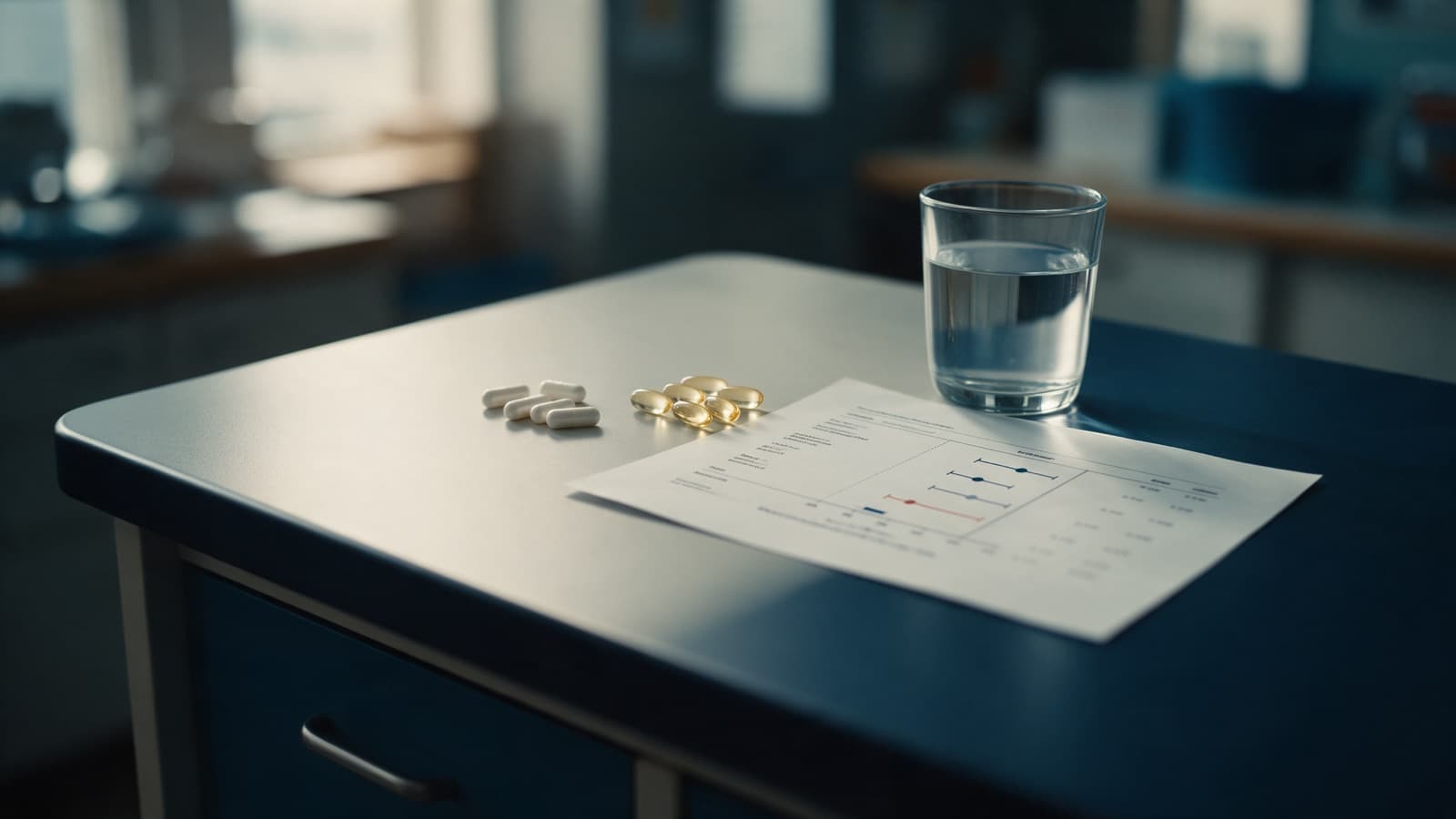
Almost every supplement calls itself 'science-backed'. This guide explains what that phrase should actually mean, gives you five questions to test any product against, and lists the few supplements that genuinely pass.
A supplement is science-backed only if a randomised human trial has shown it changes an outcome that matters, at the dose on the label, in people like you. Applied strictly, that test is passed by a short list: creatine monohydrate, omega-3 (EPA/DHA), vitamin D where a test shows deficiency, and adequate protein. A second tier — NAD⁺ precursors, urolithin A, CoQ10 in specific populations — has genuine human trials on biomarkers or narrow endpoints. Everything else sold as 'science-backed' is describing cells, mice, or an observational association.
- 'Science-backed' has no legal definition. A single rodent study, a cell-culture result or a population correlation all qualify under marketing usage. None of them is evidence that a capsule works in you.
- The five-question test — human? randomised? outcome that matters? same dose? people like me? — separates genuine evidence from borrowed evidence in under a minute.
- Only four interventions pass all five questions without caveats: creatine, omega-3, vitamin D correction of deficiency, and protein adequacy. None is glamorous, all are cheap.
- NMN, NR and urolithin A pass the first two questions and fail the third: their trials are real but short and measure biomarkers or function, not disease or lifespan.
- Nothing sold as a longevity supplement has extended human lifespan in a trial. Any product implying it is quoting an animal.
CureMed grades this on human trial evidence; animal data never raises a grade.

The five-question test for 'science-backed'
Any supplement claim can be checked against five questions. A product needs a 'yes' to all five before the evidence it cites actually applies to the capsule in your hand. Most fail at the first or third.
Five questions, and what a 'no' means
| Question | Why it matters | Where most products fail |
|---|---|---|
| 1. Was the study in humans? | Lifespan extension in mice, worms and flies has never once translated into a human lifespan result | Resveratrol, spermidine, fisetin, most 'senolytics' — the headline result is rodent |
| 2. Was it randomised and placebo-controlled? | Observational studies show that people who take a supplement differ from people who don't, not that the supplement did anything | Multivitamins, antioxidants, most 'blue zone' compounds |
| 3. Did it measure an outcome that matters? | Raising a blood marker is not the same as preventing a disease or improving function | NAD⁺ precursors (raise NAD⁺, no disease outcome), most 'cellular' products |
| 4. Was it the same dose and form as the product? | A product with a fraction of the trial dose does not inherit the trial's result | Curcumin, quercetin, many NMN products, most 'proprietary blends' |
| 5. Were the participants like you? | A benefit in deficient or ill people routinely disappears in healthy, replete ones | Vitamin D, omega-3, CoQ10 — real benefit in the right population, none in the wrong one |
What passes — and with which caveats
Ranked on: how many of the five questions a compound answers 'yes' to, on the best available human trials. Tier one passes all five; tier two passes the first two and stalls on outcomes; tier three fails at the first question. Commercial relationships play no part.
| # | Option | Verdict | Grade |
|---|---|---|---|
| 1 | Creatine monohydrate | Passes all five | GRADE AEstablished |
| 2 | Omega-3 (EPA/DHA) | Passes all five — in the right population | GRADE AEstablished |
| 3 | Vitamin D — where deficient | Passes all five, conditionally | GRADE BPromising |
| 4 | Protein adequacy | Passes all five; not a capsule | GRADE AEstablished |
| 5 | NAD⁺ precursors (NMN, NR) | Passes 1 and 2; fails 3 | GRADE BPromising |
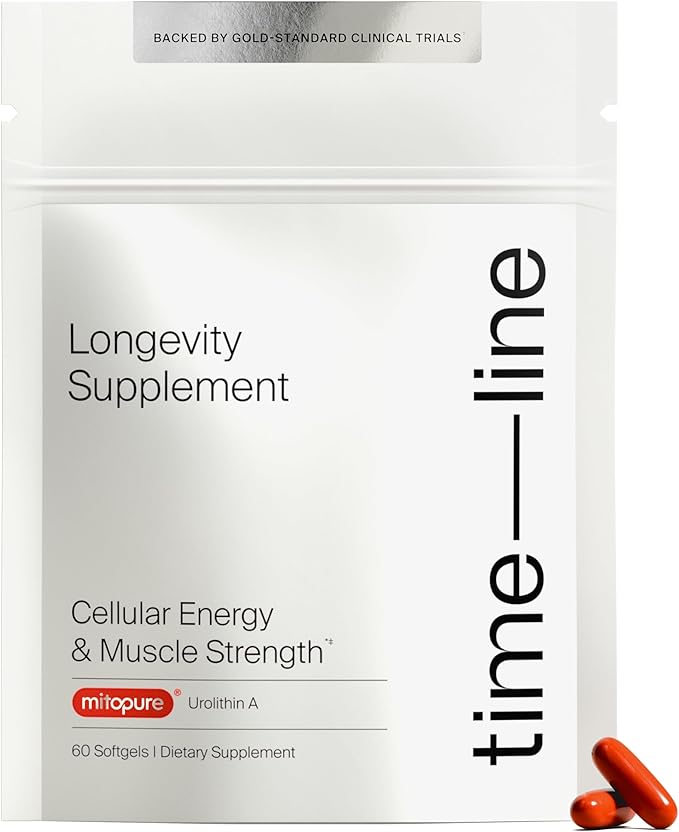
| 6 | Urolithin A | Passes 1 and 2; narrow on 3 | GRADE BPromising |
| 7 | Coenzyme Q10 | Passes all five — for heart failure only | GRADE BPromising |
| 8 | Taurine | Fails 1 for the headline claim | GRADE CEarly |
| 9 | Spermidine | Fails 3 in the largest human trial | GRADE CEarly |
| 10 | Resveratrol, fisetin, quercetin, 'senolytics' | Fails 1 | GRADE DInsufficient or unsafe |
- 01
Creatine monohydrate
GRADE AEstablishedPasses all fiveHundreds of randomised human trials across four decades, on strength, lean mass and increasingly cognition in older adults, at the same 3–5 g daily dose sold on every label, in populations that include healthy ageing adults. Preserving muscle is one of the better-supported routes to healthy ageing. It is the clearest case of a science-backed supplement on the market, and it is rarely marketed as one.
- 02
Omega-3 (EPA/DHA)
GRADE AEstablishedPasses all five — in the right populationLarge randomised trials on cardiovascular and inflammatory outcomes. The caveat is question five: benefit is clearest in people with low dietary intake and less impressive in those already eating oily fish. Dose matters, and many products fall below what the trials used.
- 03
Vitamin D — where deficient
GRADE BPromisingPasses all five, conditionallyCorrecting a measured deficiency has clear human benefit for bone and muscle. Supplementing replete people has repeatedly failed to show the benefits attributed to it. This is the textbook question-five case: test first, then treat what the test shows.
- 04
Protein adequacy
GRADE AEstablishedPasses all five; not a capsuleRoughly 1.2–1.6 g per kilogram per day in older adults, supported by randomised trials on muscle retention and function. It is the intervention most longevity stacks are built on top of and most people are not meeting. Whey or plant protein powders are the only 'supplement' form; food does the same job.
Randomised human trials, reliably raise NAD⁺, and have reported gains in walking distance and muscle insulin sensitivity. But no trial has run beyond about ten weeks or measured a disease outcome, and the trials disagree with each other. Genuine science; not yet an outcome.
- 06
Urolithin A
GRADE BPromisingPasses 1 and 2; narrow on 3Two randomised, placebo-controlled trials in adults showing improved mitochondrial gene markers and, in one, muscle endurance. Real human evidence on a mechanism almost nothing else in the 'mitochondrial' category has — measured over months on function, not ageing.
- 07
Coenzyme Q10
GRADE BPromisingPasses all five — for heart failure onlyOne randomised trial with a hard cardiovascular endpoint, in patients with chronic heart failure. That result is genuine and specific. For healthy adults seeking 'energy', question five fails: nobody has shown the benefit there.
The lifespan-extension result that made it famous was in mice. Human trials are small, short and measure surrogate markers. Cheap enough that the risk calculation is different, but not science-backed in the sense the marketing implies.
Autophagy induction is well demonstrated in model organisms. The largest randomised human trial, on memory in older adults, found no benefit over placebo. The observational mortality association cannot separate the compound from the diet that contains it.
Every headline result is from cells or rodents, often at doses no supplement label approaches. Resveratrol's human trials have repeatedly failed to reproduce its animal effects. No published human trial has shown that a fisetin or quercetin supplement clears senescent cells.




Why every 'science-backed' list disagrees with every other
- Different lists use different definitions of 'science'. One counts a mouse study; another counts only randomised human trials. They are not ranking the same thing, so they cannot agree.
- Most lists rank by mechanism plausibility — how good the biological story is — rather than by evidence. Resveratrol has a superb story and a failed trial record. Creatine has a boring story and a superb trial record.
- Commission shapes ordering. A ranking that carries affiliate links for expensive compounds and none for creatine has a reason to put creatine last, or omit it.
- Population substitution is invisible in a list. 'CoQ10 reduces cardiovascular events' is true in heart failure and unproven in everyone else; a list rarely says which.
Before you buy
Three checks that matter more than the ingredient
- Interactions: the most common real-world harm from supplements is a combination with a prescription, not the supplement alone. Omega-3, vitamin D at high doses and CoQ10 all interact with common medicines. Screen the stack first.
- Dose versus trial: read the label against the dose the cited trial used. A product below it has borrowed the study's credibility without its effect.
- Third-party testing: the category has a documented history of underdosed and mislabelled products, especially for expensive compounds. Ask for a batch-specific certificate of analysis.
Frequently asked questions
What does 'science-backed' actually mean for a supplement?
Legally, nothing — the phrase has no regulatory definition and can describe a single cell-culture result. It should mean a randomised, placebo-controlled human trial showing a change in an outcome that matters, at the dose on the label, in people like the buyer. Very few longevity supplements meet that standard.
Which longevity supplements have the strongest scientific evidence?
Creatine monohydrate, omega-3 (EPA/DHA), vitamin D where a blood test shows deficiency, and adequate protein intake. All have randomised human trials on meaningful outcomes at the doses commonly sold. None is marketed as a longevity supplement, which is why they are missing from most lists.
Is NMN science-backed?
Partly. It has randomised human trials — which most of the category lacks — and they reliably show it raises NAD⁺, with some gains in walking distance and muscle insulin sensitivity. What it does not have is any trial beyond about ten weeks or on a disease outcome. Real science, unproven benefit.
Has any supplement been proven to extend human lifespan?
No. No human trial has ever measured lifespan as an outcome for a supplement, and none has shown an extension. Products implying otherwise are describing results in mice, worms or flies, none of which has ever translated into a human lifespan result.
How can I check a supplement's evidence myself?
Ask five questions of the study it cites: was it in humans, was it randomised and placebo-controlled, did it measure an outcome that matters rather than a blood marker, did it use the same dose and form as the product, and were the participants like you. A 'no' to any of them means the evidence does not transfer to the capsule you are holding.
Are expensive longevity supplements more science-backed?
Usually the reverse. Two of the best-evidenced compounds, creatine and vitamin D, are among the cheapest available, while several premium products rest on preclinical data. Price tracks marketing and novelty far more reliably than it tracks trial evidence.
Keep reading
- The best longevity supplements, ranked by human evidence
The full shelf, ordered on the same standard.
- Best longevity supplements for cellular health and repair
Mitochondria, NAD⁺ and autophagy — what the human trials measured.
- What are the best clinically proven longevity supplements?
Proven for what, in whom, at what dose — the short list with clinical endpoints.
- NMN vs NR
Two NAD⁺ precursors, compared on human data.
- Best senolytic supplements
Why 'senescent-cell clearance' is still a mouse result.
- How we grade evidence
The A–D scale used across this site, and what each grade requires.
- Free stack check
Screen a supplement routine against your current medication first.
More in Supplements
- Best sleep aids, ranked by evidence.
Diphenhydramine stops working in about three nights. Melatonin is modest for insomnia, strong for jet lag. Every OTC sleep aid ranked on its human trials.
- The sleep stack on trial: magnesium threonate, theanine and apigenin against placebo
The Huberman-style sleep stack got its first placebo-controlled trial: in 103 healthy adults over two weeks it did no better than placebo on sleep.
- Creatine without exercise: what the new trial actually found
A 2026 trial reported 1.1 kg (2.4 lb) more lean mass on creatine with no exercise. It rests on 13 people per group, and a scan counts water as lean mass.
- The best vitamins for longevity, ranked by human trial evidence
Vitamin D if your level is low, B12 if you are at risk, magnesium for most. Graded only on human randomised trials, including the two that showed harm.
- Which OTC brands pharmacists recommend most — and where the evidence disagrees
Pharmacists name the same OTC brands every year. For immune support and joint health, the trials behind the two biggest sellers do not back how people use them.
- OTC cold and flu remedies, ranked by evidence
The FDA says the decongestant in most cold products does not work. Zinc works only above a dose most lozenges miss. Every OTC cold remedy ranked on its trials.