Taurine: evidence, dosing, safety & interactions
2-aminoethanesulfonic acid
Also sold or labeled as: L-taurine
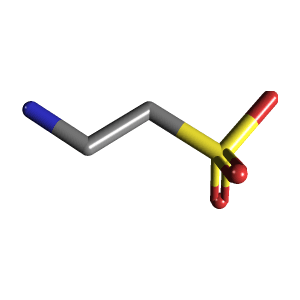
This is a natural substance your body makes and that's found in foods like meat and fish, important for your muscles, heart, and eyes. It's generally considered safe, though the evidence for anti-aging benefits specifically is still limited.
- What it is
- A conditionally essential amino acid, abundant in shellfish and meat, that the body also synthesises.
- Evidence
- Small human trials show reduced muscle soreness and blunted post-exercise arterial stiffness. The lifespan findings everyone cites were in mice.
- Studied dose
- Commonly 1–6 g/day; the trials below used 6 g/day for two weeks.
- Safety
- Well tolerated in short trials at these doses. No long-term human safety data at supplemental levels.
What human trials actually show
Randomized, placebo-controlled human trials only. Animal data never appears in this section — it cannot raise a grade, and it is noted separately below.
- 01Applied Physiology, Nutrition, and Metabolism2016— Post-exercise arterial stiffness
- Design
- Randomised, double-blind, placebo-controlled
- Dose
- 2.0 g three times daily (6 g/day)
- Duration
- 14 days before exercise, plus 4 days after
29 young healthy men
Arterial stiffness and a marker of oxidative stress both rose in the placebo group three to four days after eccentric exercise. Both increases were significantly blunted in the taurine group.
doi:10.1139/apnm-2015-0560 - 02Advances in Experimental Medicine and Biology2015— Delayed-onset muscle soreness
- Design
- Randomised controlled trial
- Dose
- Supplemental taurine
- Duration
- Around the exercise bout
Young men performing eccentric exercise
Taurine supplementation reduced delayed-onset muscle soreness after eccentric exercise compared with control.
doi:10.1007/978-3-319-15126-7_61
No human trial has tested taurine for lifespan, healthspan or any age-related disease outcome. The widely reported finding that taurine deficiency drives ageing, and that supplementation extends life, was demonstrated in mice — it has not been replicated in people. The human trials that do exist enrolled small numbers of young men over days to weeks and measured surrogate markers such as soreness and arterial stiffness, which is a long way from the claims made for it.
Grade C — early. The headline longevity findings are from mice. Human trials exist but are small, short, conducted mostly in young men, and measure surrogate markers rather than outcomes. How we grade evidence.
Side effects & safety
- Reported in trials
- Generally well tolerated at 6 g/day over short periods. Mild gastrointestinal upset is the most commonly reported complaint.
- Serious events
- None attributed to taurine in the small trials published to date.
- The honest caveat
- Trials ran for weeks in healthy young men. Nothing is known about years of supplementation, or about older adults — the population the longevity claims are aimed at.
Interactions with medications
The section most longevity sites skip. If you take prescription medication, read this before anything else on the page.
Taurine has modest blood-pressure-lowering effects in some trials. Additive lowering is plausible, so check home readings when starting.
Taurine may affect fluid balance and renal handling of lithium, a drug with a narrow therapeutic window. Do not combine without your prescriber's involvement.
Worth counting rather than a safety issue: a single energy drink can contain 1–2 g, which may already be a meaningful share of a supplemental dose.
Is Taurine legal where you live?
Regulatory status is tracked per market and reviewed on the date shown. Where a compound is not authorised, this site does not link to sellers.
Sold freely as a dietary supplement with no restriction, and widely used as an ingredient in energy drinks.
Source: US Food and Drug Administration
Permitted as a food supplement and as a food ingredient. No novel-food issue applies.
Source: UK Food Standards Agency
Autorisée comme ingrédient de complément alimentaire et dans les boissons énergisantes en France.
Source: European Commission / EFSA
Autorizada como ingrediente de complementos alimenticios y en bebidas energéticas en España.
Source: European Commission / EFSA
Authorised as a food supplement ingredient and permitted in energy drinks across the EU.
Source: European Commission / EFSA
Freely sold as an amino-acid dietary supplement (powder and capsules) through mainstream UAE retailers — Amazon.ae, noon.com, Dr Nutrition, Life Pharmacy — and used as a standard ingredient in energy drinks under the GCC Standardization Organization's GSO 1926 energy-drink standard, which the UAE follows. No restriction found.
Source: UAE Ministry of Health and Prevention (MOHAP) / GCC Standardization Organization (GSO)
Regulated as a standard energy-drink and supplement ingredient under the same GSO 1926 energy-drink standard; the SFDA has its own published review of the energy-drinks sector referencing this standard. We did not separately confirm individual Saudi retail listings the way we did for the UAE, so this rests on the shared regional standard and SFDA's own sector review rather than direct retail evidence.
Source: GCC Standardization Organization (GSO) / Saudi Food and Drug Authority (SFDA)
Liberamente venduta come integratore alimentare. Il Ministero della Salute la include tra gli 'altri nutrienti e sostanze ad effetto nutritivo o fisiologico' ammessi negli integratori, con una dose massima giornaliera raccomandata di 1.000 mg — una soglia nazionale specifica che non compare nell'elenco armonizzato UE, coerente con il contenuto tipico di una lattina di bevanda energetica.
Source: Ministero della Salute
Vrij verkrijgbaar als voedingssupplement en als ingrediënt in energiedranken, binnen hetzelfde EU-kader dat voor de andere lidstaten geldt. We vonden geen aanvullende, Nederland-specifieke maximumdosering bovenop de EU-geharmoniseerde regels — de NVWA-toezichtdocumentatie over voedingssupplementen noemt taurine niet als aandachtsstof.
Source: NVWA (Nederlandse Voedsel- en Warenautoriteit)
Amplamente vendida como suplemento alimentar e como ingrediente padrão em bebidas energéticas. A Anvisa regula especificamente a categoria 'bebida energética' (contendo taurina, cafeína, inositol e/ou glucuronolactona) e fixa limites de 400 mg de taurina por 100 ml e 350 mg de cafeína por litro, além de exigir advertências voltadas a grupos sensíveis à cafeína.
Source: Agência Nacional de Vigilância Sanitária (ANVISA)
Dosing & timing
The human trials cited here used 6 g/day. Most retail products supply 500–1,000 mg per capsule.
Trials dosed in divided amounts across the day. No evidence favours a particular time.
Taurine is inexpensive and highly soluble; powder is the cost-effective route at gram-level doses.
Cost: One of the cheapest compounds in the category — a studied dose typically costs a few dollars a month, which materially changes the risk-to-cost calculation compared with premium longevity products.
Questions people actually ask
Does taurine extend lifespan?
Not demonstrably in humans. The 2023 finding that drew attention showed taurine declines with age and that supplementation extended healthy lifespan in mice. No human trial has tested lifespan or age-related disease outcomes, so anyone citing that work as a human result is overstating it.
How much taurine should I take?
The human trials with positive results used 6 g/day in divided doses for around two weeks. Common supplement doses of 500–2,000 mg/day sit below what was studied, though the safety margin is wide and the cost difference small.
Is taurine safe to take every day?
It appears well tolerated at up to 6 g/day in short trials, and it is a compound the body already makes and obtains from food. Long-term supplementation has not been studied, so daily use over years is an assumption rather than a finding.
Do energy drinks give me enough taurine?
A typical energy drink contains 1–2 g, which is within the supplemental range — but it arrives alongside caffeine and sugar. If you are supplementing deliberately, the isolated compound is cheaper and cleaner.