What is the most accurate early disease detection method?

See more of CureMed in your Google results.
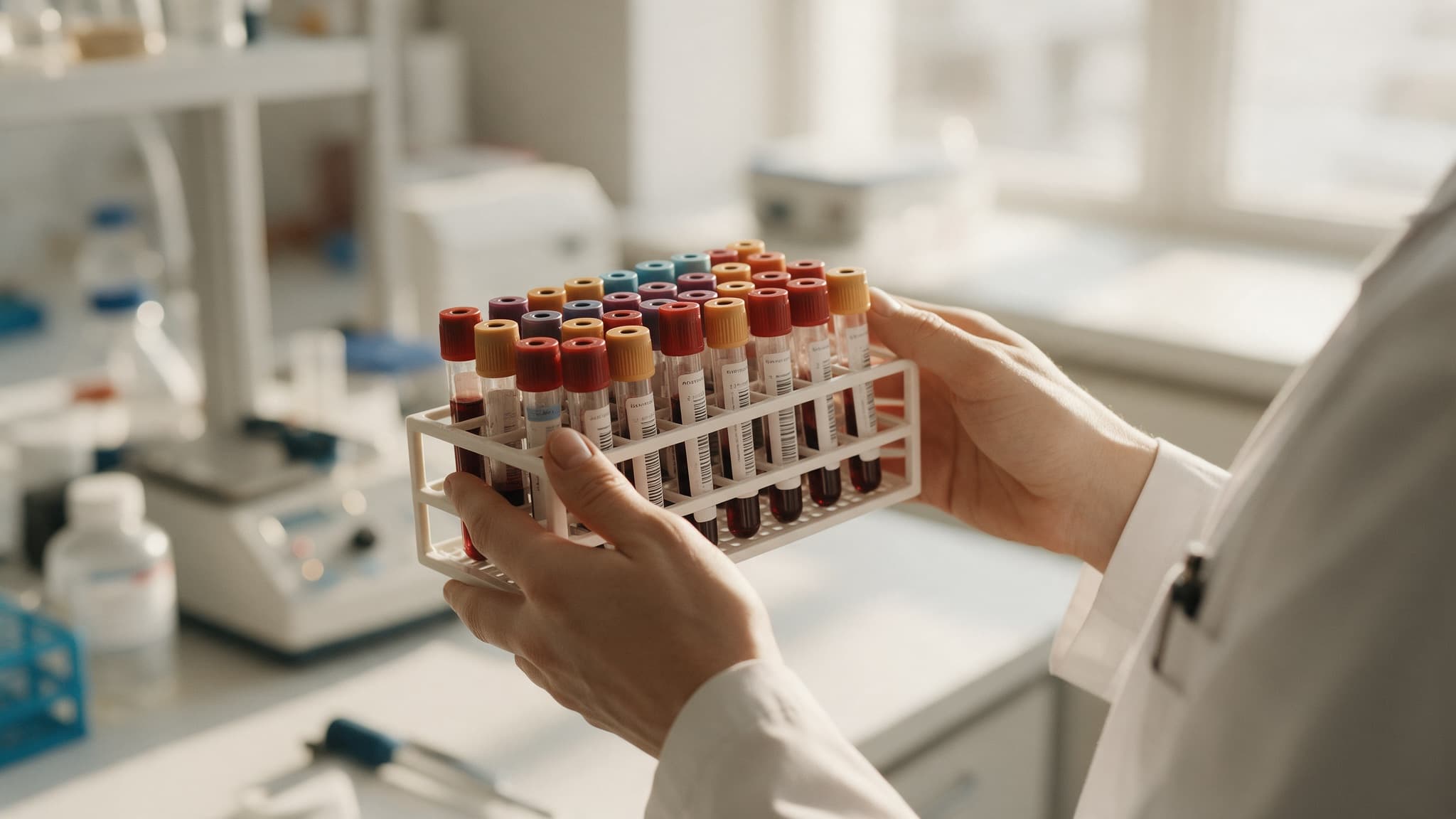
No single test is the most accurate for everything. For each disease the best test is one that reliably finds it early and leads to a treatment proven to help: colonoscopy for bowel cancer, low-dose CT for lung cancer in heavy smokers, coronary calcium and ApoB for heart disease, blood pressure, mammography, and new Alzheimer's blood tests in people with symptoms. The heavily marketed new tests — multi-cancer blood tests, whole-body MRI, genetic risk scores — are either not sensitive enough for early cancers or find too many things that are not disease.
The most accurate early disease detection method depends on the disease, and accuracy alone is not the right question: a test is only worth having if acting on its result has been shown to help. Ranked on accuracy and on that evidence together: screening colonoscopy for colorectal cancer (finds and removes precancerous polyps; randomised and cohort evidence of fewer deaths); low-dose CT for lung cancer in heavy smokers (randomised mortality reduction, with substantial overdiagnosis); coronary artery calcium scoring and ApoB for cardiovascular risk (highly reproducible measurements feeding treatments with randomised outcome data); blood pressure measurement (crude, cheap, and the most consequential screen there is); mammography in the recommended age range (moderate accuracy, mortality benefit debated but real); p-tau217 blood tests for Alzheimer's pathology in symptomatic people (excellent accuracy against PET, no treatment yet that changes the course enough to justify screening the well). Below them: multi-cancer blood tests such as Galleri (high specificity, but detects only about 17% of stage I cancers, and the only randomised trial missed its primary endpoint); whole-body MRI (finds something in roughly a third of healthy people, most of it not disease); polygenic risk scores and whole-genome sequencing in healthy adults (statistically valid, individually weak). The most accurate method for a given disease is the one that finds it early enough to treat and whose treatment has been shown to work — and for most diseases that is an old test, not a new one.
- Accuracy is sensitivity (finding disease) and specificity (not flagging health); a test can score well on one and fail on the other, and marketing quotes whichever is better.
- The best-evidenced screens are accurate and lead to a treatment with outcome data — colonoscopy, low-dose CT in smokers, ApoB and calcium scoring, blood pressure.
- Multi-cancer blood tests are specific but not sensitive for early-stage cancer: Galleri finds fewer than one in five stage I cancers.
- Whole-body MRI is 'accurate' in the sense of finding things — a third of healthy people have a finding — and that is the problem, not the benefit.
- The largest review of screening ever done found no test with an all-cause mortality benefit that excluded chance; accuracy is necessary and not sufficient.
CureMed ranks on published human evidence, and screens drug interactions first.
Early detection methods ranked on accuracy and evidence
Ranked on: sensitivity and specificity for early-stage disease in the population the test is offered to, combined with randomised or strong cohort evidence that acting on the result improves an outcome. A highly accurate test with no outcome evidence cannot rank above C; a test that failed its trial cannot rank above D.
| # | Option | Verdict | Grade |
|---|---|---|---|
| 1 | Screening colonoscopy | Finds and removes the precursor; evidence of fewer deaths | GRADE AEstablished |
| 2 | Low-dose CT for lung cancer in heavy smokers | Randomised mortality reduction; substantial overdiagnosis | GRADE AEstablished |
| 3 | ApoB and lipoprotein(a) | Reproducible measurements feeding a proven treatment | GRADE AEstablished |
| 4 | Coronary artery calcium scoring | Reproducible; reclassifies risk; feeds treatment with outcome data | GRADE AEstablished |
| 5 | Blood pressure measurement | Crude, cheap, and the most consequential screen there is | GRADE AEstablished |
| 6 | Mammography in the recommended age range | Moderate accuracy; a real but contested mortality benefit | GRADE BPromising |
| 7 | p-tau217 blood tests for Alzheimer's pathology | Excellent accuracy against PET — in symptomatic people | GRADE BPromising |
| 8 | Blood-based and stool-DNA colorectal tests (Shield, Cologuard Plus) | Approved; less sensitive than colonoscopy for precursors | GRADE BPromising |
| 9 | Multi-cancer early detection blood tests (Galleri) | Specific, not sensitive for early cancer; the trial missed | GRADE DInsufficient or unsafe |
| 10 | Whole-body MRI in asymptomatic adults | 'Accurate' at finding things; that is the problem | GRADE DInsufficient or unsafe |
| 11 | Polygenic risk scores and whole-genome sequencing in healthy adults | Statistically valid, individually weak | GRADE DInsufficient or unsafe |
- 01
Screening colonoscopy
GRADE AEstablishedFinds and removes the precursor; evidence of fewer deathsDirectly visualises the colon, detects most cancers and removes precancerous polyps in the same procedure, with cohort and randomised evidence of reduced colorectal-cancer mortality in screened populations. Invasive, with a small perforation risk, and adherence limits its real-world effect — which is why stool DNA and blood-based colorectal tests exist as less accurate, easier alternatives.
- 02
Low-dose CT for lung cancer in heavy smokers
GRADE AEstablishedRandomised mortality reduction; substantial overdiagnosisIn people with a heavy smoking history, annual low-dose CT reduced lung-cancer mortality in randomised trials. Sensitivity for early cancers is high; false positives are common, and around half of screen-detected cancers in the highest-quality trials were estimated to be overdiagnosed. Accurate and proven, in exactly one population.
- 03
ApoB and lipoprotein(a)
GRADE AEstablishedReproducible measurements feeding a proven treatmentNot screens for a disease but for its cause: ApoB is a highly reproducible measure of atherogenic particles and lipoprotein(a) a once-in-a-lifetime genetic risk marker, and lowering ApoB has randomised evidence for fewer events and deaths. The most 'accurate' early detection in the sense that matters — a measurement that reliably identifies who benefits from a treatment that works.
- 04
Coronary artery calcium scoring
GRADE AEstablishedReproducible; reclassifies risk; feeds treatment with outcome dataA low-dose CT that quantifies calcified plaque with high reproducibility, reclassifying cardiovascular risk in intermediate-risk adults and guiding statin decisions. It does not see soft plaque and it is not a test for everyone; used in the right population it is the most accurate widely available measure of established coronary disease.
- 05
Blood pressure measurement
GRADE AEstablishedCrude, cheap, and the most consequential screen there isA single reading is noisy; averaged home readings are accurate, and treating what they find reduces deaths in randomised trials. Ranked A despite its crudeness because no other early-detection method changes as many outcomes for as little.
- 06
Mammography in the recommended age range
GRADE BPromisingModerate accuracy; a real but contested mortality benefitSensitivity falls in dense breasts and specificity produces false positives and overdiagnosis; randomised trials show a reduction in breast-cancer mortality whose size is debated. Accurate enough and proven enough to be recommended, with harms that are quantified.
- 07
p-tau217 blood tests for Alzheimer's pathology
GRADE BPromisingExcellent accuracy against PET — in symptomatic peoplePlasma p-tau217 assays match amyloid PET closely and are approved for use in people with cognitive symptoms. In cognitively normal adults the same accuracy identifies pathology years before symptoms — with no treatment that changes the course enough to justify knowing. Accurate; not yet useful as a screen for the well.
- 08
Blood-based and stool-DNA colorectal tests (Shield, Cologuard Plus)
GRADE BPromisingApproved; less sensitive than colonoscopy for precursorsDetect most established cancers but a minority of advanced precancerous lesions, which is where colonoscopy earns its rank. Accurate enough to be approved and useful for people who will not have a colonoscopy; a positive result still leads to one.
- 09
Multi-cancer early detection blood tests (Galleri)
GRADE DInsufficient or unsafeSpecific, not sensitive for early cancer; the trial missedSpecificity is high, but sensitivity for stage I cancer is about 17% — a test sold for early detection that misses more than four in five cancers at the earliest stage. NHS-Galleri, the only randomised trial, missed its primary endpoint on late-stage cancer incidence; mortality data are years away. A false positive took a median 162 days to resolve in the PATHFINDER study.
- 10
Whole-body MRI in asymptomatic adults
GRADE DInsufficient or unsafe'Accurate' at finding things; that is the problemAround a third of healthy people have a critical or indeterminate finding, most of which is not disease, and no study shows a benefit from finding it. Non-contrast screening protocols are less sensitive than targeted diagnostic MRI for any specific condition. Radiology bodies oppose its use as a screen.
- 11
Polygenic risk scores and whole-genome sequencing in healthy adults
GRADE DInsufficient or unsafeStatistically valid, individually weakPolygenic scores shift population risk modestly and reclassify few individuals; whole-genome sequencing in the well yields mostly variants of uncertain significance. Neither has outcome evidence as a screen. Accurate at what they measure; not accurate at predicting what happens to you.
What accuracy means, and what it leaves out
Three questions every 'accurate' test has to answer
| Method | Sensitivity for early disease | Specificity (false positives) | Outcome evidence for acting on it | Verdict |
|---|---|---|---|---|
| Colonoscopy | High, including precursors | High | Fewer deaths | Accurate and proven |
| Low-dose CT, heavy smokers | High | Moderate — many false positives | Fewer lung-cancer deaths | Accurate and proven; overdiagnosis real |
| ApoB / Lp(a) / CAC | High for risk | High | Treatment reduces events and deaths | The model for what 'accurate' should mean |
| Blood pressure (home average) | High | High | Fewer deaths | Crude and decisive |
| Mammography | Moderate; lower in dense breasts | Moderate | Reduced breast-cancer mortality, size debated | Recommended, with quantified harms |
| p-tau217 | High for pathology | High | In symptomatic people only | Accurate; premature as a screen |
| Galleri (MCED) | ~17% at stage I | High | Randomised trial missed | Not sensitive where it matters |
| Whole-body MRI | Finds a third of people something | Low in practice | None | Finds too much, helps nobody shown |
| Polygenic scores | Weak individually | — | None | Population tool, not a personal one |
Frequently asked questions
What is the most accurate early disease detection method?
It depends on the disease, and accuracy alone is not enough — a test must also lead to a treatment shown to help. On both counts: colonoscopy for colorectal cancer, low-dose CT for lung cancer in heavy smokers, ApoB, lipoprotein(a) and coronary calcium scoring for cardiovascular risk, blood pressure, mammography in the recommended range, and p-tau217 blood tests for Alzheimer's pathology in symptomatic people. Multi-cancer blood tests, whole-body MRI and polygenic scores are less sensitive for early disease, find too much that is not disease, or lack outcome evidence.
How accurate are multi-cancer blood tests like Galleri?
Highly specific — few false positives — but not sensitive for early cancer: about 17% of stage I cancers are detected, meaning more than four in five are missed at the stage early detection is meant to catch. The only randomised trial, NHS-Galleri, missed its primary endpoint on late-stage cancer incidence, and mortality results are not expected for years. A false positive took a median 162 days to resolve in the PATHFINDER study.
Is whole-body MRI an accurate screening test?
It is accurate at finding things — around a third of healthy people have a critical or indeterminate finding — and that is its problem: most findings are not disease, the follow-up cascade has documented harms, and no study shows a benefit. Screening protocols are non-contrast and less sensitive than targeted diagnostic MRI for any particular condition. Radiology bodies oppose its use as a screen in asymptomatic people.
What does 'accurate' actually mean for a screening test?
Two things: sensitivity, the share of real disease the test finds, and specificity, the share of healthy people it correctly leaves alone. A test can be excellent at one and poor at the other, and marketing quotes whichever is better. Underneath both is whether acting on the result changes an outcome, which only a trial can show — and which most marketed tests have not.
Which early detection tests have the best evidence for saving lives?
Blood-pressure measurement and ApoB (through the treatments they lead to), colonoscopy, low-dose CT in heavy smokers, and mammography in the recommended age range. Each has randomised or strong cohort evidence of fewer deaths from the disease screened for. Even so, the largest systematic review of screening found no test with an all-cause mortality benefit whose confidence interval excluded chance.
Are the new Alzheimer's blood tests accurate?
Yes — plasma p-tau217 assays match amyloid PET closely and are approved for people with cognitive symptoms. In cognitively normal adults they identify pathology years before symptoms with the same accuracy, but no treatment yet changes the course enough to justify screening the well, so the accuracy is real and the use as a screen is premature.
Keep reading
- Early disease detection
The full section and evidence ledger, test by test.
- Which early disease detection tests are worth paying for?
The same tests ranked on value.
- Which blood tests are best for tracking longevity?
ApoB, Lp(a) and the cardiovascular markers in detail.
- How we grade evidence
Why a finding rate never earns an A.
More in Early disease detection
- What blood tests detect serious diseases at early stages?
ApoB, Lp(a), HbA1c and fasting insulin rank as the top blood tests for catching serious disease early — with multi-cancer blood tests not yet worth ordering.
- How to get comprehensive early disease detection at once?
A single morning can cover comprehensive early disease detection: a blood panel, key measurements, guideline cancer screens, and imaging with real evidence.
- Best early disease detection package for proactive health monitoring.
An annual evidence-based blood panel plus guideline cancer screens, assembled yourself for a few hundred a year, ranks first, ahead of paid subscriptions.
- Comprehensive early disease detection tests for full body screening.
Full-body screening ranked organ by organ: the best test for heart, metabolic, kidney, liver, thyroid, colon, breast and prostate beats one whole-body scan.
- Advanced early disease detection technology for high risk patients.
Advanced detection earns its place only where risk is high and defined: low-dose CT for smokers, breast MRI for BRCA carriers, ctDNA monitoring after cancer.
- Premium early disease detection program for preventive healthcare.
The best premium detection programmes buy physician time, follow-through, fitness testing, and coordinated screening — not whole-body MRI or blood tests.