Best regenerative medicine solution to speed up sports injury recovery.

See more of CureMed in your Google results.
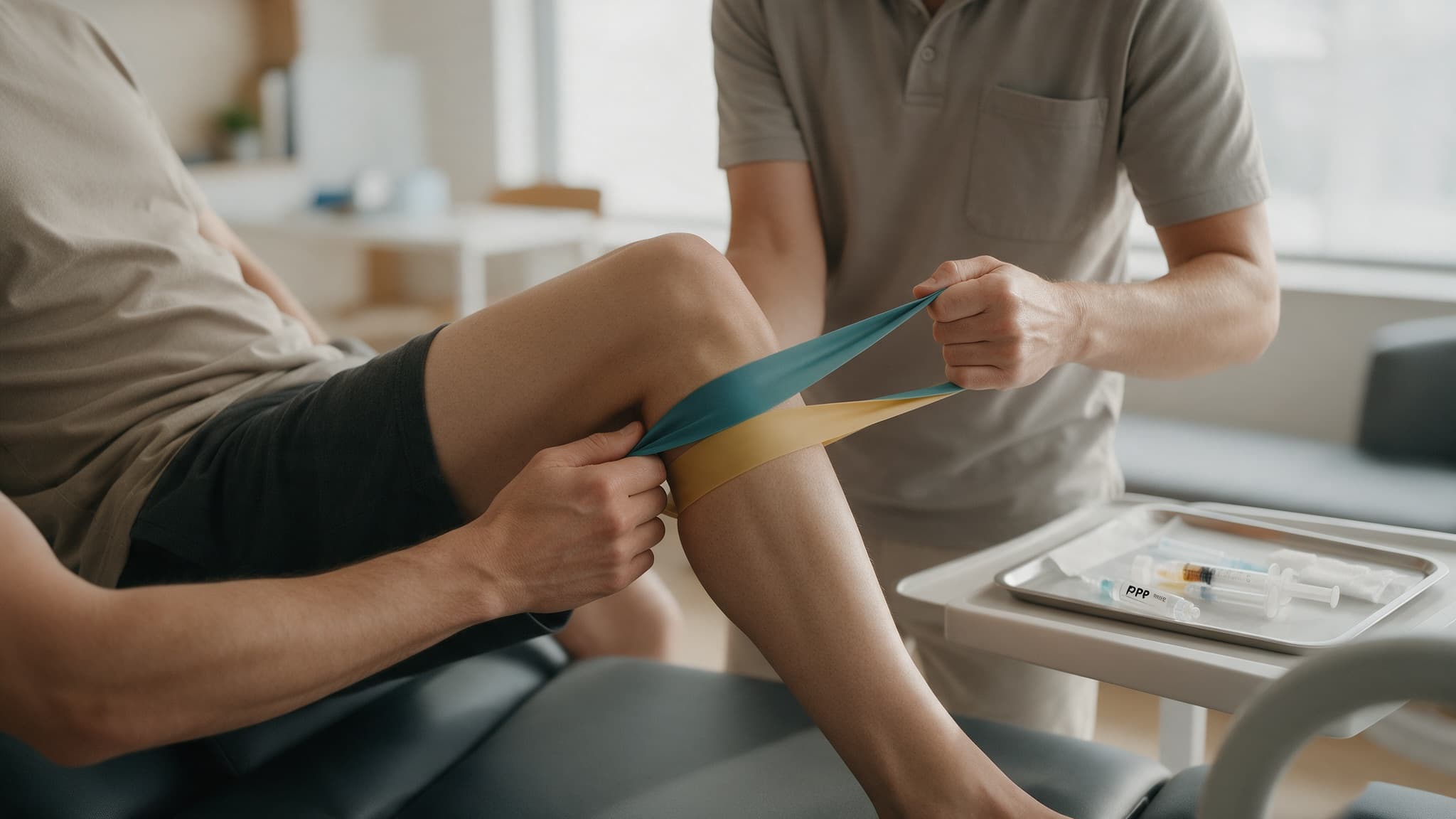
The fastest evidence-based way to recover from a sports injury is to start loading it early and progress by criteria, not by dates — that shortens return to play and lowers re-injury in trials. PRP does not speed hamstring recovery, adds nothing to ligament injuries, and helps only stalled tendon problems like tennis elbow. Blood-flow-restriction training rebuilds strength while you cannot load fully. Stem cells, exosomes, hyperbaric oxygen and the peptides athletes use have no trial evidence, and the peptides are banned.
The regenerative solution that speeds sports injury recovery most is early, progressive, criteria-based loading — the treatment with the strongest evidence for faster return to play and lower re-injury in muscle, tendon and ligament injuries — and the injectables rank below it by injury: PRP in acute hamstring strains did not shorten return to play in the well-run randomised trials; PRP in chronic tennis elbow and possibly the patellar tendon helps recovery that has stalled; PRP in acute ligament sprains and in ACL reconstruction added nothing; blood-flow-restriction training accelerates strength recovery when full loading is not yet possible; hyperbaric oxygen has no consistent evidence; stem-cell injections have no controlled evidence for any sports injury; and the peptides sold to athletes — BPC-157, TB-500 — have no human trials and are banned in competition. The honest answer is that recovery is sped up by loading earlier and more precisely, not by injecting something, and that the fastest-looking shortcut — a steroid or a rushed return — raises the re-injury rate that costs the most time of all.
- Return-to-play time is shortened by early, structured loading in randomised trials of muscle, tendon and ligament injury; that is the regenerative stimulus.
- PRP did not speed hamstring recovery in the best trials — the injury it is most often injected for in sport.
- Re-injury is the real time cost; criteria-based progression, not calendar-based, lowers it.
- Blood-flow-restriction training preserves and rebuilds strength during the weeks when full load is impossible — real, cheap, evidence-based.
- BPC-157 and TB-500 have no human trials, no lawful supply, and are prohibited in competition; they are the least evidenced and the most talked about.
CureMed ranks on published human evidence, and screens drug interactions first.
Sports injury recovery options, ranked
Ranked on: randomised evidence for shorter return to play and lower re-injury in the injury type each option is used for — muscle strain, tendinopathy, ligament sprain or reconstruction — weighted by safety and, for athletes, anti-doping status. An option with no controlled evidence for any sports injury cannot rank above D.
| # | Option | Verdict | Grade |
|---|---|---|---|
| 1 | Early, progressive, criteria-based loading | The regenerative stimulus; shortens return to play and lowers re-injury | GRADE AEstablished |
| 2 | Criteria-based return-to-play testing | Prevents the re-injury that costs the most time | GRADE AEstablished |
| 3 | Blood-flow-restriction training | Rebuilds strength when full load is impossible | GRADE BPromising |
| 4 | PRP — chronic tendinopathy that has stalled (tennis elbow; possibly patellar) | Helps recovery that loading alone has not moved | GRADE CEarly |
| 5 | PRP — acute hamstring and muscle strains | Did not shorten return to play in the best trials | GRADE DInsufficient or unsafe |
| 6 | PRP — ligament sprains and ACL reconstruction | Adds nothing | GRADE DInsufficient or unsafe |
| 7 | Shockwave — stalled insertional and calcific tendinopathies | Modest evidence where it has been trialled | GRADE CEarly |
| 8 | Corticosteroid injection — acute sports injury | Fast relief; slower tissue; higher re-injury | GRADE DInsufficient or unsafe |
| 9 | Hyperbaric oxygen, cryotherapy chambers, IV vitamin drips | No consistent evidence for faster recovery | GRADE DInsufficient or unsafe |
| 10 | Stem-cell injections and exosomes — any sports injury | No controlled evidence; unregulated | GRADE DInsufficient or unsafe |
| 11 | BPC-157, TB-500 and 'recovery peptides' | No human trials; no lawful supply; prohibited in competition | GRADE DInsufficient or unsafe |
- 01
Early, progressive, criteria-based loading
GRADE AEstablishedThe regenerative stimulus; shortens return to play and lowers re-injuryIn muscle strains, starting loading and lengthening exercises within days rather than weeks shortened return to play in randomised trials; in tendinopathy, loading is the treatment; after ligament injury and reconstruction, progressive rehabilitation with criteria-based rather than calendar-based progression reduces re-injury. Tissue regenerates in response to load. This is where the speed is.
- 02
Criteria-based return-to-play testing
GRADE AEstablishedPrevents the re-injury that costs the most timeReturning on strength symmetry, hop tests, sport-specific movement quality and pain-free loading rather than on a date reduces re-injury rates after hamstring, ACL and ankle injuries in cohorts and trials. A second injury costs more calendar than any injectable saves; the criteria are the fastest option over a season.
- 03
Blood-flow-restriction training
GRADE BPromisingRebuilds strength when full load is impossibleLow-load exercise with a limb cuff produces strength and muscle gains comparable to heavy training in randomised trials, which preserves and rebuilds strength during the weeks after injury or surgery when the tissue cannot take full load. Cheap, evidence-based, and genuinely speeds the strength component of recovery.
- 04
PRP — chronic tendinopathy that has stalled (tennis elbow; possibly patellar)
GRADE CEarlyHelps recovery that loading alone has not movedIn chronic lateral epicondylitis, PRP outperforms corticosteroid and sometimes needling at six to twelve months; small trials support it as an adjunct in patellar tendinopathy. A reasonable step for a stalled tendon after months of loading; not a way to shortcut the loading.
- 05
PRP — acute hamstring and muscle strains
GRADE DInsufficient or unsafeDid not shorten return to play in the best trialsWell-designed randomised trials of PRP injection for acute hamstring strains found no reduction in return-to-play time or re-injury compared with rehabilitation alone or saline. It is the injury PRP is most often injected for in sport, and the evidence says it does nothing for the calendar.
- 06
PRP — ligament sprains and ACL reconstruction
GRADE DInsufficient or unsafeAdds nothingTrials of PRP for ankle and knee ligament sprains and as an augment to ACL reconstruction show no improvement in healing, return to play or graft outcomes. Ligaments recover through rehabilitation.
- 07
Shockwave — stalled insertional and calcific tendinopathies
GRADE CEarlyModest evidence where it has been trialledModest benefit in chronic plantar fasciopathy, calcific shoulder and some insertional tendinopathies; not a treatment for acute injury. An adjunct for a stalled chronic problem.
- 08
Corticosteroid injection — acute sports injury
GRADE DInsufficient or unsafeFast relief; slower tissue; higher re-injuryRelieves pain for weeks and impairs tendon and muscle healing, with worse outcomes at six to twelve months in tendinopathy trials and a rupture risk in weight-bearing tendons. The shortcut that lengthens the season.
- 09
Hyperbaric oxygen, cryotherapy chambers, IV vitamin drips
GRADE DInsufficient or unsafeNo consistent evidence for faster recoveryHyperbaric oxygen has no consistent trial evidence for musculoskeletal recovery; whole-body cryotherapy has small trials on soreness and none on return to play; IV drips have nothing. Recovery theatre.
- 10
Stem-cell injections and exosomes — any sports injury
GRADE DInsufficient or unsafeNo controlled evidence; unregulatedNo randomised trial supports cell or exosome injection for any muscle, tendon or ligament injury; no product is approved; preparations are unregulated and the harm record is documented. Refuse.
- 11
BPC-157, TB-500 and 'recovery peptides'
GRADE DInsufficient or unsafeNo human trials; no lawful supply; prohibited in competitionThe most-discussed recovery products among athletes have rodent data only, no completed human trial for any injury, no lawful compounding route from bulk in the US, unverified purity — and are on the World Anti-Doping Agency's prohibited list. An athlete using them risks a ban for a product with no evidence.
What speeds recovery, injury by injury
Return to play, by tissue
| Injury | What shortens recovery (evidence) | What does not | What raises re-injury |
|---|---|---|---|
| Hamstring / muscle strain | Loading and lengthening from day 2–5; criteria-based progression; running re-introduction by symptoms | PRP; rest beyond a few days | Calendar-based return; skipping eccentric strength; steroid |
| Tendinopathy (patellar, Achilles, elbow) | Progressive heavy loading over months; shockwave for insertional; PRP for stalled elbow | Rest; PRP in the Achilles | Steroid; returning on pain relief rather than load tolerance |
| Ankle sprain | Early protected loading; balance and proprioception training; taping or brace on return | PRP; prolonged immobilisation | No balance training; early return without bracing |
| ACL injury / reconstruction | Prehabilitation; criteria-based rehab over 9–12 months; hop and strength symmetry before return | PRP; stem cells; rushed timelines | Return before 9 months or before symmetry; skipping quadriceps strength |
| Stress fracture | Load management; nutrition and energy availability; bone-health review | Injections of any kind | Returning before healing; unaddressed low energy availability |
| Post-surgical strength loss | Blood-flow-restriction training; progressive loading | Supplements; peptides | Deconditioning during protected phases |
Frequently asked questions
What is the best regenerative medicine to speed up sports injury recovery?
Early, progressive, criteria-based loading — it shortens return to play and lowers re-injury in randomised trials of muscle, tendon and ligament injuries, and it is the stimulus tissue regenerates to. Blood-flow-restriction training rebuilds strength while full load is impossible. PRP did not speed hamstring recovery, adds nothing to ligament injuries, and helps only stalled chronic tendons such as tennis elbow. Stem cells, exosomes, hyperbaric oxygen and recovery peptides have no trial evidence.
Does PRP speed up hamstring recovery?
No. Well-designed randomised trials of PRP for acute hamstring strains found no reduction in return-to-play time or re-injury compared with rehabilitation alone or saline injection. It is the sports injury PRP is most often used for, and the evidence says it does nothing for the calendar; early loading and criteria-based progression do.
Is BPC-157 good for sports injury recovery?
There is no human trial of BPC-157 for any injury — the data are in rodents — and it is prohibited by the World Anti-Doping Agency at all times, with tested athletes sanctioned for it. It cannot lawfully be compounded from bulk in the US and is sold as a research chemical with unverified purity. An athlete using it risks a ban for a product with no evidence.
What is blood-flow-restriction training and does it work?
Low-load exercise performed with a cuff restricting blood flow to the limb, which produces strength and muscle gains comparable to heavy training in randomised trials. After injury or surgery, when the tissue cannot take full load, it preserves and rebuilds strength during the protected weeks — one of the few genuinely evidence-based ways to speed the strength component of recovery.
Should an athlete have a steroid injection to get back faster?
Rarely. It relieves pain for weeks and impairs tendon and muscle healing, with worse outcomes at six to twelve months in tendinopathy trials and a rupture risk in weight-bearing tendons. The relief lets an athlete return before the tissue is ready, which is how the season is lost to re-injury. Only with a physician's specific reason, and only once.
How do I lower the risk of re-injury?
Return on criteria, not dates: strength symmetry, hop tests, sport-specific movement quality and pain-free loading, with balance training after ankle sprains, eccentric hamstring strength after strains, and nine to twelve months with symmetry testing after ACL reconstruction. Re-injury costs more time than any treatment saves, and criteria-based return is the strongest evidence-based protection against it.
Keep reading
- Best regenerative medicine options for tendon and ligament injuries
The tendons and ligaments, one by one.
- Which longevity peptides are best for energy and recovery?
BPC-157, TB-500 and the rest, graded on human trials.
- Regenerative medicine: what is approved, what is in trials, and what is only being sold
The full evidence ledger and harm record.
- Best longevity workout routine for healthy aging adults
The strength base that prevents the next injury.
More in Regenerative medicine
- Which regenerative medicine treatments work best for joint pain?
Exercise therapy beats every regenerative option for joint pain; GLP-1 drugs, PRP, and stem-cell injections rank next by evidence, not marketing.
- What is the most effective regenerative medicine for knees?
Exercise, weight loss and MACI rank above PRP, hyaluronic acid and cell injections on randomised evidence, split by osteoarthritis versus cartilage injury.
- Which regenerative medicine options help avoid joint replacement?
Exercise, weight loss, and semaglutide delay joint replacement more than any injection, ranking above osteotomy and MACI — stem-cell injections show no benefit.
- What regenerative medicine is best for chronic back pain?
Exercise and cognitive-behavioural approaches beat every injection for chronic back pain in trials, ranking above radiofrequency ablation and intradiscal PRP.
- Which regenerative medicine therapy is safest for arthritis patients?
PRP is the safest regenerative injection for arthritis, but exercise, weight loss, and topical NSAIDs rank safer still, and stem-cell injections rank last.
- Best regenerative medicine treatments for osteoarthritis relief without surgery.
Supervised exercise gives the largest, most durable relief for osteoarthritis without surgery, ahead of weight loss with semaglutide, topical NSAIDs and PRP.