Best longevity stack combining nutrition, sleep and exercise.

See more of CureMed in your Google results.
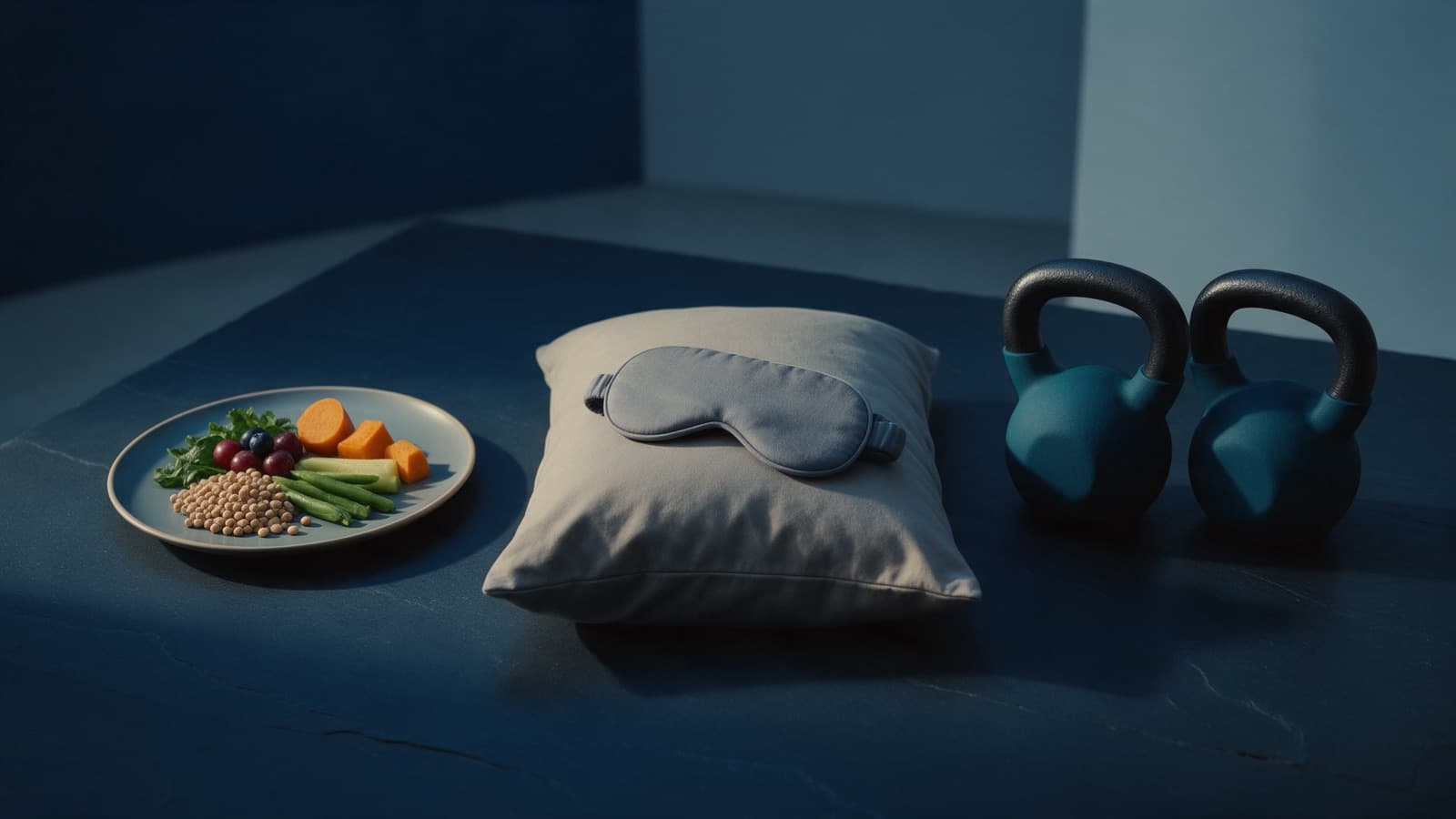
A 'longevity stack' usually means a pile of supplements. The version with real evidence is three habits — how you move, how you sleep and how you eat — set to specific targets and arranged so they help each other. This guide gives those targets, shows how the three interact, and lists the few supplements that genuinely add anything.
The best-evidenced longevity stack is three behaviours with specific targets, layered so each reinforces the others: exercise (150–300 minutes of mostly easy aerobic work plus two resistance sessions a week), sleep (seven to eight hours at a consistent wake time), and nutrition (a Mediterranean-pattern plate with 1.2–1.6 g/kg protein and minimal ultra-processed food). Each has cohort evidence in hundreds of thousands of people and randomised evidence for the outcomes that predict lifespan. Together they are associated with roughly a decade of additional life expectancy. A supplement layer — creatine, omega-3, vitamin D if deficient — adds a small, real margin on top; it cannot replace any of the three.
- The three inputs interact: exercise improves sleep depth, sleep regulates appetite and recovery, and protein turns resistance training into muscle. Doing two of the three captures less than two-thirds of the benefit.
- Exercise carries the largest single effect — cardiorespiratory fitness and strength each predict mortality independently — and is the input most people underdose.
- Sleep is the input most people cannot buy their way around: no supplement or wearable substitutes for a fixed wake time and seven to eight hours.
- Nutrition's evidence is for the pattern, not any ingredient. The Mediterranean structure has the only hard-outcome randomised trial; protein adequacy has the muscle-preservation trials.
- The supplement 'stack' sold alongside is worth a few per cent at most. Creatine, omega-3 and conditional vitamin D have human evidence; the rest is mostly mouse data at premium prices.
CureMed grades this on human trial evidence; animal data never raises a grade.
The three inputs and their targets
Targets from the evidence
| Input | Target | Evidence base | Most common shortfall |
|---|---|---|---|
| Exercise | 150–300 min/week easy aerobic; one hard interval session; two full-body resistance sessions; balance work over 60 | VO₂max and strength each predict mortality in large cohorts; RCTs for fitness, function, bone and falls | Skipping resistance training entirely; all aerobic work at one moderate intensity |
| Sleep | 7–8 hours; wake time fixed within 30 min, seven days a week; caffeine finished by early afternoon; screens out of the last 30 min | U-shaped mortality curve for duration; regularity predicts mortality as strongly in wearable-measured cohorts | Weekend drift of two hours or more; treating duration as the only variable |
| Nutrition | Mediterranean pattern; protein 1.2–1.6 g/kg spread across meals; ultra-processed food minimal; alcohol under ~100 g/week; calories at weight maintenance | Randomised trial for cardiovascular events; RCTs for protein and muscle; consistent cohorts for ultra-processed food and alcohol | Protein below 1 g/kg on plant-heavy or restriction plans; ultra-processed food supplying most calories |
Why they are a stack: the interactions
- Exercise → sleep: regular aerobic activity increases slow-wave sleep and reduces time to fall asleep in randomised trials. Training late in the evening can delay sleep in some people; morning or afternoon sessions avoid it.
- Sleep → nutrition: short sleep raises hunger hormones and next-day energy intake in controlled studies, and shifts preference toward energy-dense food. A fixed wake time is the cheapest appetite intervention available.
- Nutrition → exercise: protein at 1.2–1.6 g/kg is what converts resistance training into retained muscle in older adults; without it, the sessions maintain rather than build. Carbohydrate around harder sessions supports the intensity that raises VO₂max.
- Exercise → nutrition: fitness improves insulin sensitivity and appetite regulation, making the dietary pattern easier to hold. People who train adhere to diet better in trials than people who diet alone.
- Sleep → exercise: sleep restriction reduces strength output, reaction time and perceived effort tolerance; a bad week of sleep is the usual reason a good training week fails.
A weekly template
One way to fit the stack into a week
| Day | Exercise | Sleep anchor | Nutrition anchor |
|---|---|---|---|
| Mon | Resistance A (squat, push, pull, carry) + 10 min balance | Wake 06:30; lights out ~22:30 | Protein at breakfast; plate pattern |
| Tue | Easy aerobic 40–60 min | Same wake time | Fish or legumes at dinner |
| Wed | Hard session: 4 × 4 min intervals | Same; no caffeine after 14:00 | Carbohydrate before the session |
| Thu | Resistance B (hinge, push, pull, step-up) + balance | Same wake time | Protein at every meal |
| Fri | Easy aerobic 30–45 min | Same; screens off 30 min before bed | Alcohol, if any, counted here |
| Sat | Long easy aerobic 60–90 min, outdoors | Same wake time — no drift | Cook; ultra-processed minimal |
| Sun | Walk; mobility; rest | Same wake time | Plan and shop for the week |
The supplement layer — what genuinely adds to it
Ranked on: whether a supplement adds a measurable margin to a stack that already includes the three inputs above, on human trial evidence. Most of the shelf duplicates what the inputs deliver or rests on animal data.
| # | Option | Verdict | Grade |
|---|---|---|---|
| 1 | Creatine monohydrate | Adds to the resistance work | GRADE AEstablished |
| 2 | Omega-3 (EPA/DHA) | Fills the fish gap | GRADE AEstablished |
| 3 | Vitamin D — if a test shows deficiency | Conditional on the test | GRADE BPromising |
| 4 | Protein powder | Convenience, not a supplement | GRADE BPromising |
| 5 | NAD⁺ precursors, urolithin A, everything else | Optional experiment, screened first | GRADE CEarly |
- 01
Creatine monohydrate
GRADE AEstablishedAdds to the resistance work3–5 g daily, with decades of trials on strength and lean mass and growing cognitive data in older adults. It makes the resistance sessions count for slightly more; it does nothing without them.
- 02
Omega-3 (EPA/DHA)
GRADE AEstablishedFills the fish gapWorth taking if the nutrition input does not already include oily fish twice a week. The benefit is clearest in people with low intake, which is precisely the group not eating the fish.
- 03
Vitamin D — if a test shows deficiency
GRADE BPromisingConditional on the testCorrecting a deficiency helps bone and muscle; supplementing a replete person does not. The blood panel decides, not the season or the marketing.
- 04
Protein powder
GRADE BPromisingConvenience, not a supplementWhey or plant protein is the practical way to hit 1.2–1.6 g/kg for people who cannot do it from food. It is food in a tub; it earns its place on adherence, not evidence.
Human evidence on biomarkers, not outcomes; short trials; premium prices. Reasonable as a clear-eyed experiment once the three inputs are routine. Not a component of the stack, and every item needs an interaction check against your medication.
Frequently asked questions
What is the best longevity stack?
Three behaviours with targets, not a supplement bundle: exercise (mostly easy aerobic work plus two resistance sessions a week), sleep (seven to eight hours at a fixed wake time) and nutrition (Mediterranean pattern with 1.2–1.6 g/kg protein). Each has outcome evidence in large human studies, and they reinforce each other. A short supplement layer — creatine, omega-3, vitamin D if deficient — adds a small margin on top.
Which matters most: nutrition, sleep or exercise?
Exercise has the largest single effect — cardiorespiratory fitness and strength each predict mortality independently — but the point of a stack is that they interact. Poor sleep undermines training and drives overeating; low protein makes resistance work ineffective. Removing any one costs more than a third of the benefit.
How much sleep do I need for longevity?
Seven to eight hours, with the wake time held within about thirty minutes seven days a week. Both shorter and longer habitual sleep are associated with higher mortality, and regularity predicts mortality as strongly as duration in wearable-measured cohorts. Weekend drift is the most common way the sleep input fails.
Do I need supplements if I exercise, sleep and eat well?
Rarely, and briefly: creatine adds to the resistance work, omega-3 covers a fish gap, and vitamin D helps only if a test shows deficiency. Beyond those, supplements add a few per cent at most and need screening against your medication. They cannot substitute for any of the three inputs.
Can I do this stack in my 60s or 70s?
Yes, and the evidence is strongest there. Adults in their seventies raise VO₂max and strength substantially in randomised trials, protein needs rise with age, and sleep regularity matters more as sleep architecture changes. Add balance work to the exercise input from the start.
How is this different from a longevity protocol?
A protocol lists what to do; a stack explains why the pieces must be done together. This guide sets the targets and the interactions; the site's protocol guide sequences the same evidence into a week-by-week plan. They are the same evidence from two angles.
Keep reading
- Best longevity program combining nutrition, exercise and sleep
The same three pillars installed in twelve weeks, with pass conditions.
- How to build the best daily longevity protocol?
The stack, hour by hour, with a minimum version for bad days.
- Best longevity workout routine for healthy aging adults
The exercise input, session by session.
- Best longevity diet plan for maximum lifespan extension
The nutrition input, plate by plate.
- How to build the best longevity-focused lifestyle?
The order to install the three inputs so they last.
- The best longevity supplements, ranked by human evidence
The full supplement shelf, if you want to go beyond the short list.
- Free stack check
Screen the supplement layer against your medication.
More in Protocols & lifestyle
- How can I extend life through daily habits?
Not smoking is the single biggest driver of a longer life, followed by physical activity, diet quality, sleep and social connection — ranked here by evidence.
- What are the most effective ways to extend life?
Quitting smoking is the most effective way to extend life, ranked ahead of blood pressure control, vaccination, diet, exercise, and cancer screening.
- What longevity routines actually help extend life expectancy?
Consistent sleep and wake times, structured aerobic-plus-resistance exercise and medication adherence rank above cold exposure, fasting and saunas.
- Which diet changes best extend life and vitality?
A plant-forward whole-food diet ranks first for extending life and vitality, backed by PREDIMED trial evidence for fewer cardiovascular events.
- Evidence based strategies to extend life and healthspan.
A complete evidence-based strategy spans four domains: lifestyle habits rank first with the largest evidence base, then risk factors, screening and function.
- Longevity plan to extend life with minimal lifestyle changes.
Ranked by return on effort: one-time actions like vaccination, screening and quitting smoking beat ongoing habits for a minimal-effort longevity plan.