Which diet changes best extend life and vitality?

See more of CureMed in your Google results.
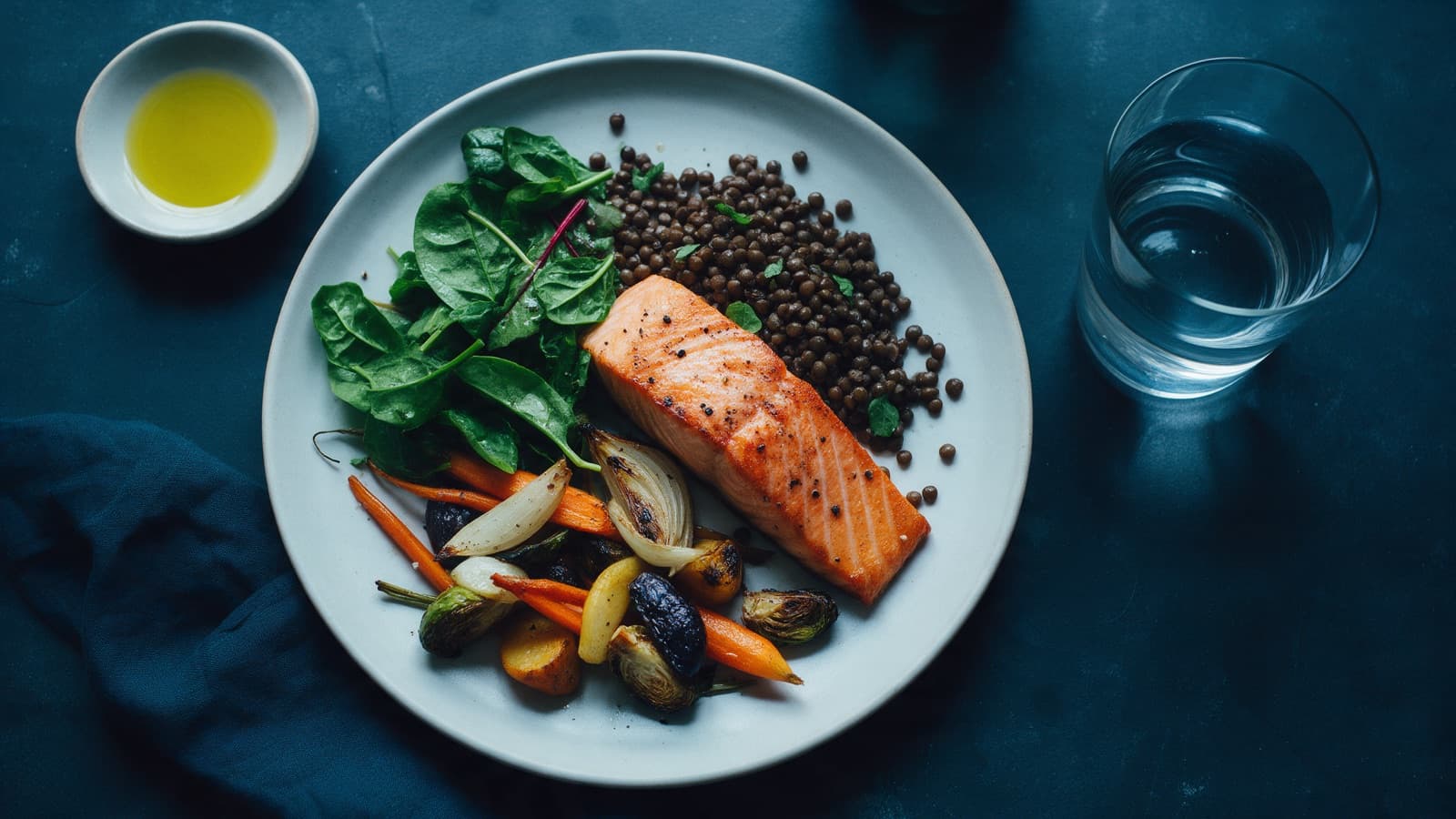
The diet changes with the strongest evidence for extending both life and daily vitality: shift toward a plant-forward, whole-food eating pattern (vegetables, legumes, whole grains, fish, olive oil); eat more fibre; swap saturated fat for unsaturated fat like olive oil and nuts; cut back on ultra-processed food and added sugar; make sure you get enough protein, especially as you get older; and drink less alcohol. Extreme calorie restriction, despite its popularity in longevity circles, has weaker human evidence and real downsides for most people.
Ranked on trial and cohort evidence for both lifespan and day-to-day vitality: shifting toward a plant-forward, whole-food dietary pattern first, since this is the change with randomised trial evidence (PREDIMED) for fewer cardiovascular events and the broadest support for improved energy and metabolic markers as a byproduct; increasing fibre intake second, consistently associated with lower cardiovascular and all-cause mortality in cohort studies and with more stable energy levels through better glucose regulation; replacing saturated fat with unsaturated fat (olive oil, nuts, fatty fish) third, with strong trial and mechanistic evidence for cardiovascular benefit; reducing ultra-processed food and added sugar fourth, associated with worse metabolic health and, in some prospective studies, higher mortality risk, though the evidence is less mature than for the changes above; ensuring adequate protein, particularly for older adults, fifth, since protein intake below common recommendations is linked to muscle loss that directly affects vitality and independence in later life; and reducing alcohol sixth, given that the evidence for any protective effect of moderate drinking has weakened and less is increasingly considered better for overall health. A common claim not on this list with strong support: extreme calorie restriction extends lifespan in some animal models, but human evidence is limited, comes with real trade-offs (fertility, bone density, cold intolerance), and is not the change with the best risk-adjusted evidence for most people.
- The dietary pattern change has the strongest trial evidence of anything on this list.
- Fibre has one of the most consistent mortality associations in nutritional epidemiology.
- Ultra-processed food's link to mortality is real but the evidence base is younger than for fat and fibre.
- Protein adequacy for vitality and muscle in older adults is often underrated relative to its evidence.
- Extreme calorie restriction has weaker human evidence and real trade-offs, despite its popularity in longevity discussion.
This assessment is CureMed's, reviewed by the PharmD-led team at CureMed Labs.
Diet changes ranked by evidence for lifespan and vitality
Ranked on: the strength and consistency of randomised trial and large cohort evidence for the change's effect on mortality, cardiovascular events, and metabolic or functional markers relevant to vitality.
| # | Option | Verdict | Grade |
|---|---|---|---|
| 1 | Shift toward a plant-forward, whole-food dietary pattern | The strongest trial evidence of any diet change on this list | GRADE AEstablished |
| 2 | Increase fibre intake | One of the most consistent mortality associations in nutrition research | GRADE AEstablished |
| 3 | Replace saturated fat with unsaturated fat | Strong trial and mechanistic evidence for cardiovascular benefit | GRADE AEstablished |
| 4 | Reduce ultra-processed food and added sugar | Real association with worse outcomes; a younger evidence base | GRADE BPromising |
| 5 | Ensure adequate protein, especially with age | Underrated for vitality and independence in older adults | GRADE BPromising |
| 6 | Reduce alcohol intake | The 'moderate drinking helps' claim has weakened | GRADE BPromising |
- 01
Shift toward a plant-forward, whole-food dietary pattern
GRADE AEstablishedThe strongest trial evidence of any diet change on this listA pattern built around vegetables, fruit, legumes, whole grains, fish, nuts and olive oil reduced major cardiovascular events in the randomised PREDIMED trial, a stronger evidence base than most single-nutrient claims, with broad support for improved metabolic markers and reported energy levels as well.
- 02
Increase fibre intake
GRADE AEstablishedOne of the most consistent mortality associations in nutrition researchCohort studies consistently associate higher fibre intake with lower cardiovascular and all-cause mortality, and fibre's role in slowing glucose absorption is linked to more stable energy levels through the day, a direct link between this change and reported vitality.
- 03
Replace saturated fat with unsaturated fat
GRADE AEstablishedStrong trial and mechanistic evidence for cardiovascular benefitTrials replacing saturated fat with unsaturated sources such as olive oil, nuts and fatty fish show improved cardiovascular risk markers and, in some trial designs, fewer events, consistent with the pattern-level evidence above.
- 04
Reduce ultra-processed food and added sugar
GRADE BPromisingReal association with worse outcomes; a younger evidence baseProspective cohort studies associate higher ultra-processed food intake with worse metabolic health and, in some analyses, higher mortality risk, though this research area is newer and less mechanistically settled than the evidence for dietary pattern, fibre and fat type above.
- 05
Ensure adequate protein, especially with age
GRADE BPromisingUnderrated for vitality and independence in older adultsProtein intake below common recommendations is linked to accelerated muscle loss, and muscle mass and strength are strong predictors of vitality, function and mortality risk in older adults, making this a change with clear relevance even though it is less discussed than fat and sugar.
- 06
Reduce alcohol intake
GRADE BPromisingThe 'moderate drinking helps' claim has weakenedBetter-controlled recent analyses attribute much of the apparent benefit of light drinking in older studies to confounding, and current guidance in most countries trends toward less being better for overall health, making reduction a reasonable change rather than a controversial one.
A popular claim with weaker evidence than its reputation
Extreme calorie restriction: claim versus evidence
| Claim | What the evidence actually shows | Trade-off |
|---|---|---|
| Extends lifespan | Robust in some animal models; human evidence limited and mostly on biomarkers, not lifespan | Requires sustained, significant calorie deficit |
| Improves metabolic health | Some short-term human studies show improved markers | Can be difficult to sustain and reverse quickly if stopped |
| No downsides | Documented trade-offs in human studies | Reduced bone density, fertility effects, cold intolerance reported in some cohorts |
| Applies to everyone | Most human data comes from highly motivated, monitored volunteers | Not representative of unsupervised, general-population attempts |
Frequently asked questions
Which diet changes best extend life and vitality?
Ranked by evidence: shifting toward a plant-forward whole-food dietary pattern, increasing fibre intake, replacing saturated fat with unsaturated fat, reducing ultra-processed food and added sugar, ensuring adequate protein especially with age, and reducing alcohol. The dietary pattern change has the strongest trial evidence of the group.
What is the single most evidence-backed diet change for longevity?
Shifting toward a plant-forward, whole-food eating pattern built around vegetables, legumes, whole grains, fish and olive oil, which reduced cardiovascular events in the randomised PREDIMED trial — a stronger evidence base than most single-nutrient or single-food claims.
How does fibre affect vitality specifically, not just lifespan?
Fibre slows glucose absorption, which is linked to more stable energy levels through the day rather than the spikes and crashes associated with refined carbohydrates, giving it a direct connection to day-to-day vitality alongside its cohort-study association with lower mortality.
Is protein intake important for longevity, not just muscle building?
Yes, particularly for older adults: intake below common recommendations is linked to accelerated muscle loss, and muscle mass and strength are among the stronger predictors of vitality, functional independence and mortality risk later in life, which is why adequate protein belongs on a longevity list, not only a fitness one.
Does extreme calorie restriction extend human life?
The evidence is much weaker than for the changes above: robust lifespan extension has been shown in some animal models, but human data is limited, mostly on biomarkers rather than actual lifespan, and comes with documented trade-offs including reduced bone density and fertility effects, so it is not the established strategy it is sometimes presented as.
Is cutting ultra-processed food as well-supported as cutting saturated fat?
The association between ultra-processed food and worse outcomes is real and consistent across prospective cohort studies, but the evidence base is younger and less mechanistically settled than the trial evidence for replacing saturated with unsaturated fat, which is why it ranks slightly lower here despite being a reasonable change to make.
Keep reading
- What are the best longevity supplements?
Where supplements fit alongside these dietary changes.
- Which science-backed supplements can safely extend life?
Fibre and omega-3 in more depth.
- Which eating patterns most reliably extend lifespan?
A pattern-level ranking to complement this list of specific changes.
- Free stack check
Check any supplement additions against your medicines.
More in Protocols & lifestyle
- How can I extend life through daily habits?
Not smoking is the single biggest driver of a longer life, followed by physical activity, diet quality, sleep and social connection — ranked here by evidence.
- What are the most effective ways to extend life?
Quitting smoking is the most effective way to extend life, ranked ahead of blood pressure control, vaccination, diet, exercise, and cancer screening.
- What longevity routines actually help extend life expectancy?
Consistent sleep and wake times, structured aerobic-plus-resistance exercise and medication adherence rank above cold exposure, fasting and saunas.
- Evidence based strategies to extend life and healthspan.
A complete evidence-based strategy spans four domains: lifestyle habits rank first with the largest evidence base, then risk factors, screening and function.
- Longevity plan to extend life with minimal lifestyle changes.
Ranked by return on effort: one-time actions like vaccination, screening and quitting smoking beat ongoing habits for a minimal-effort longevity plan.
- Holistic longevity program to extend life and wellness.
Physical health fundamentals rank first in a genuinely holistic longevity program; mental health and social connection carry mortality risk just as strong.