Best longevity diet plan for maximum healthy lifespan.

See more of CureMed in your Google results.
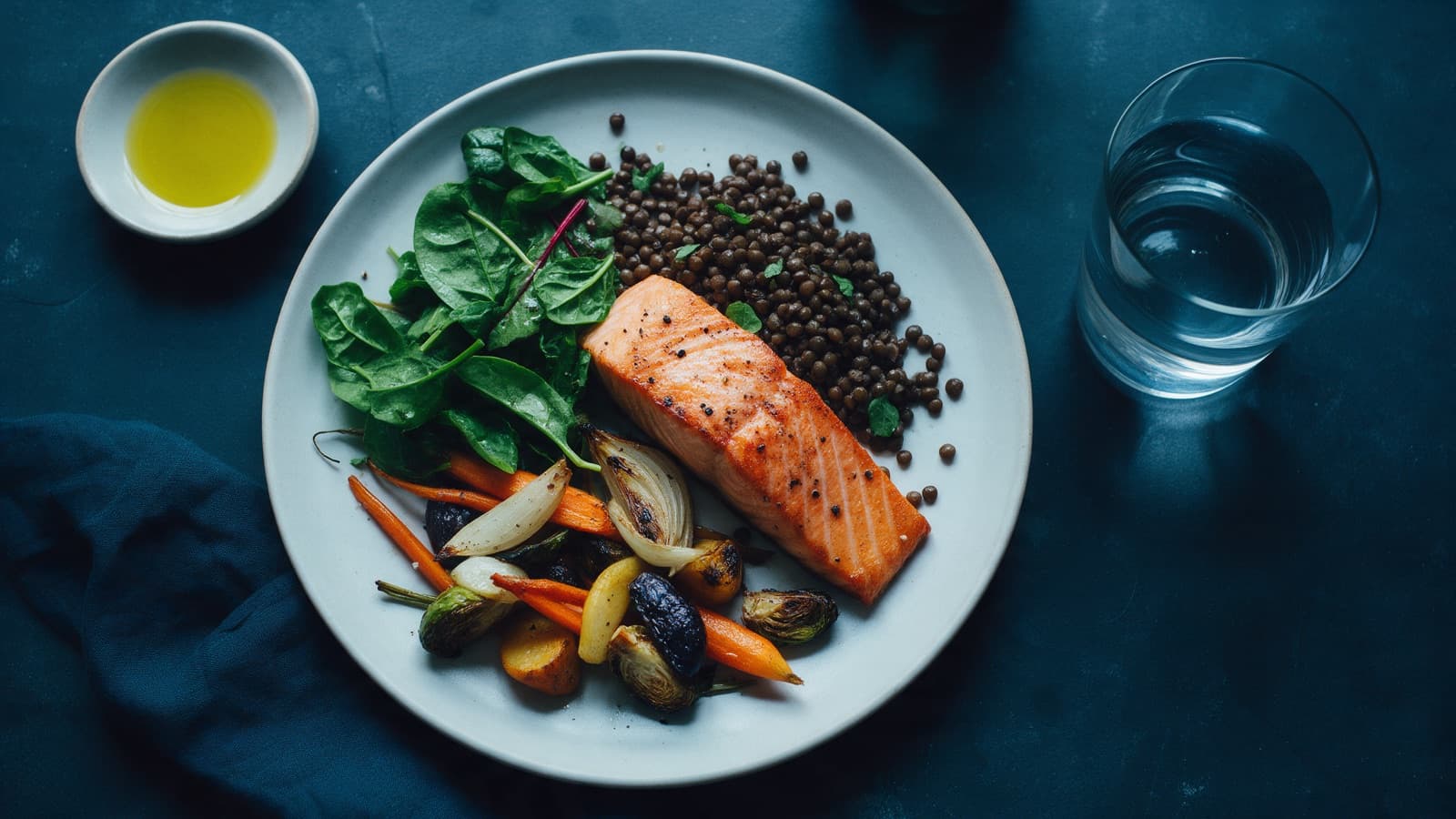
The best diet for staying healthy into old age is not the one that lowers a number the most — it is the one that keeps your muscles, bones, heart and brain working. That means enough protein at every meal, a Mediterranean-style plate, and attention to the few nutrients older adults run short of. This guide lays it out week by week.
A diet for maximum healthy lifespan is optimised for function in later life rather than for a biomarker: protein at 1.2–1.6 g/kg spread across meals to hold muscle and bone; a Mediterranean-style pattern — olive oil, legumes, fish, vegetables, nuts, whole grains — which has randomised evidence for fewer cardiovascular events and slower cognitive decline; enough calcium, vitamin D, B12 and fibre, the nutrients older adults most often run short of; and no sustained restriction that costs lean mass. Eat this from your forties, adjust the protein upward rather than downward with age, and test the few markers that tell you it is working.
- Muscle and bone are what a healthy lifespan is made of, and they are lost fastest on diets that undershoot protein — which most 'longevity' diets do.
- The Mediterranean pattern is the only dietary pattern with a randomised trial showing fewer strokes, heart attacks and deaths, plus slower cognitive decline. Everything else is cohort data or theory.
- Deficiencies, not excess, are the common dietary failure after sixty: B12, vitamin D, calcium, protein and fibre. A healthspan diet is built to prevent them.
- Fasting and calorie-restriction protocols have no healthspan outcome in humans and reliably cost lean mass; they are the wrong tool for the goal.
- Two markers say whether it is working: ApoB for the vessels and grip strength or sit-to-stand for the muscle.
CureMed ranks on published human evidence, and screens drug interactions first.
What a healthy lifespan needs from food
Four targets, and the evidence behind each
| Target | Why it defines healthspan | Dietary lever | Evidence |
|---|---|---|---|
| Muscle and bone | Sarcopenia and fracture are what end independence; both are diet-sensitive | Protein 1.2–1.6 g/kg/day, 25–40 g per meal; calcium 1,000–1,200 mg total; vitamin D to sufficiency | Randomised trials: protein plus resistance training preserves muscle and function in older adults; calcium-plus-D reduces fractures in deficient groups |
| Vessels | Stroke and heart disease are the leading causes of disability, not only of death | Mediterranean pattern; unsaturated over saturated fat; fibre 25–30 g | Randomised trial: Mediterranean diet with olive oil or nuts cut major cardiovascular events by roughly 30% |
| Brain | Cognitive decline is the healthspan outcome people fear most | Same pattern — fish, leafy greens, berries, olive oil, nuts | Randomised trial: Mediterranean diet slowed cognitive decline over four years; MIND-diet trial was null at three years |
| No deficiency | B12, vitamin D, iron and protein shortfalls are common after sixty and mimic ageing | Animal protein or fortified foods for B12; sun or supplement for D; test rather than guess | Deficiencies are common, testable and reversible; correction improves function where deficient |
The plan, week by week
- Every meal: a palm-to-two-palms of protein — fish, poultry, eggs, dairy, legumes with grains, tofu — so that the daily 1.2–1.6 g/kg arrives in three or four doses rather than one. A 70 kg adult needs roughly 85–110 g a day; a 40 g dinner and a 10 g breakfast does not add up.
- Every day: extra-virgin olive oil as the main fat; vegetables at two meals; a serving of legumes, nuts or seeds; whole grains rather than refined; fruit rather than juice.
- Two to three times a week: oily fish — salmon, sardines, mackerel — for EPA/DHA, which removes the need for an omega-3 supplement.
- Weekly: fermented dairy (yoghurt, kefir) or fortified alternatives for calcium and, if you eat no animal products, a B12 source you can name.
- Rarely: processed meat, sugar-sweetened drinks, refined snack foods. Not banned; not routine.
- Alcohol: the cohort data no longer support a protective dose. Less is better; none is fine.
- Water and salt: enough fluid to keep urine pale, particularly after seventy when thirst blunts; salt under 5 g where blood pressure is above target.
What works against a healthy lifespan
Ranked on: the human evidence that a dietary approach costs muscle, bone or function, or simply lacks any healthspan outcome after years of promotion.
| # | Option | Verdict | Grade |
|---|---|---|---|
| 1 | Sustained calorie restriction and fasting protocols | Wrong tool for this goal | GRADE DInsufficient or unsafe |
| 2 | Low-protein 'longevity' diets | Trades muscle for a mouse result | GRADE DInsufficient or unsafe |
| 3 | Very-low-carbohydrate diets long term | Weight tool; healthspan unproven, fibre lost | GRADE CEarly |
| 4 | Supplement stacks in place of food | Fixes deficiency, not diet | GRADE CEarly |
- 01
Sustained calorie restriction and fasting protocols
GRADE DInsufficient or unsafeWrong tool for this goalThe two-year CALERIE trial in non-obese adults improved markers and cost lean mass. Time-restricted eating matches ordinary restriction for weight and adds nothing at equal calories. No trial has measured a healthspan outcome, and every restriction protocol pushes protein toward the level that loses muscle. Weight loss where needed is done with protein and training held high, not with fasting.
- 02
Low-protein 'longevity' diets
GRADE DInsufficient or unsafeTrades muscle for a mouse resultProtein restriction extends lifespan in rodents. In humans, low intake after sixty-five is associated with more frailty and mortality, not less, and randomised trials show higher intake preserves function. The recommendation reverses with age.
- 03
Very-low-carbohydrate diets long term
GRADE CEarlyWeight tool; healthspan unproven, fibre lostEffective for weight and glucose in the short term; no healthspan or cardiovascular outcome trial; typically low in fibre and legumes, which the Mediterranean trial identified as protective. Fine as a weight-loss phase, weak as a lifetime plan.
Vitamin D, B12 and omega-3 have a place where intake or absorption is inadequate. Multivitamins and 'longevity' formulas have no outcome evidence in well-fed adults. A supplement corrects a measured shortfall; it does not substitute for the pattern.
Frequently asked questions
What is the best diet for a long and healthy life?
A Mediterranean-style pattern — olive oil, legumes, fish, vegetables, nuts and whole grains — with protein raised to 1.2–1.6 g/kg a day and spread across meals. The pattern has a randomised trial showing fewer cardiovascular events and slower cognitive decline; the protein target has randomised evidence for preserving muscle and function in older adults.
How much protein do older adults need for healthy ageing?
More than the standard 0.8 g/kg: 1.2 g/kg a day as a floor after sixty-five, and up to 1.6 g/kg with resistance training, delivered in 25–40 g doses at three or four meals. Ageing muscle responds less to small doses, so per-meal amount matters as much as the daily total. Normal kidneys handle this without difficulty.
Is intermittent fasting good for healthspan?
There is no human trial linking it to a healthspan outcome. At equal calories it matches ordinary restriction for weight and markers, and fasting windows make it harder to reach the protein intake that preserves muscle. For healthy ageing, protein and training held high matter more than when you eat.
What is the difference between a lifespan diet and a healthspan diet?
Largely emphasis. A lifespan-oriented plan leans on lowering ApoB and adiposity, where the mortality data are strongest. A healthspan plan adds equal weight to muscle, bone, cognition and the prevention of deficiency, because those determine function in later life. The plate is nearly the same; the protein target and the attitude to restriction differ.
Which nutrients do older adults most often run short of?
Protein, vitamin B12 (absorption falls with age and with metformin and acid-suppressing medicines), vitamin D, calcium, fibre and, in some, iron. These shortfalls mimic ageing — fatigue, weakness, low mood — and are found by a simple annual panel and reversed by diet or targeted supplementation.
Does the Mediterranean diet protect the brain?
One randomised trial found slower cognitive decline over about four years on a Mediterranean diet supplemented with olive oil or nuts, compared with a low-fat control. A later trial of the related MIND diet found no difference at three years. The evidence is encouraging but not settled; the cardiovascular benefit of the same pattern is better established.
Keep reading
- Best longevity diet plan for maximum lifespan extension
The companion plan, weighted toward ApoB and mortality data.
- Best longevity workout routine for healthy aging adults
The training that turns the protein into retained muscle.
- Which longevity routines actually extend healthspan and energy?
Healthspan measured in function, not markers.
- Best longevity blood tests and biomarkers to monitor
Targets and retest intervals for ApoB, B12, vitamin D and ferritin.
- Free stack check
Metformin and acid suppressants lower B12 — screen what you take.
More in Protocols & lifestyle
- How can I extend life through daily habits?
Not smoking is the single biggest driver of a longer life, followed by physical activity, diet quality, sleep and social connection — ranked here by evidence.
- What are the most effective ways to extend life?
Quitting smoking is the most effective way to extend life, ranked ahead of blood pressure control, vaccination, diet, exercise, and cancer screening.
- What longevity routines actually help extend life expectancy?
Consistent sleep and wake times, structured aerobic-plus-resistance exercise and medication adherence rank above cold exposure, fasting and saunas.
- Which diet changes best extend life and vitality?
A plant-forward whole-food diet ranks first for extending life and vitality, backed by PREDIMED trial evidence for fewer cardiovascular events.
- Evidence based strategies to extend life and healthspan.
A complete evidence-based strategy spans four domains: lifestyle habits rank first with the largest evidence base, then risk factors, screening and function.
- Longevity plan to extend life with minimal lifestyle changes.
Ranked by return on effort: one-time actions like vaccination, screening and quitting smoking beat ongoing habits for a minimal-effort longevity plan.