Spermidine: evidências, dosagem, segurança e interações
N-(3-Aminopropyl)butane-1,4-diamine
Também vendido ou rotulado como: Spermidine trihydrochloride, Wheat-germ extract spermidine
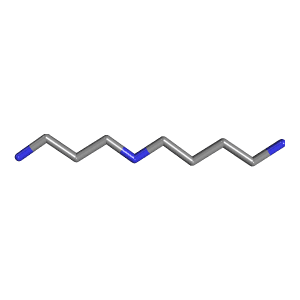
This is a natural substance found in foods like wheat germ and aged cheese, taken as a supplement to support your cells' natural cleanup process, which slows with age. Early evidence is promising but not yet conclusive.
- What it is
- A polyamine present in ordinary foods, taken as a concentrated wheat-germ extract supplement.
- Evidence
- One small, well-designed human trial (n=30) found a moderate improvement in memory performance versus placebo over three months. A companion safety trial in the same cohort found no safety signal.
- Studied dose
- 1.2 mg/day of spermidine, from a spermidine-rich wheat-germ extract, for three months.
- Safety
- No safety signal in the trial's vital signs, weight, or blood work at that dose, with compliance above 85%. Long-term human data does not exist.
O que os estudos em humanos realmente mostram
Apenas ensaios randomizados e controlados por placebo em humanos. Dados em animais nunca aparecem nesta seção — não podem elevar uma classificação e são indicados separadamente mais abaixo.
- 01Aging (Albany NY)2018— Safety and tolerability
- Desenho
- Preclinical mouse toxicity study plus a 3-month, randomized, placebo-controlled, double-blind Phase II human trial
- Dose
- 1.2 mg/day, from a spermidine-rich wheat-germ extract
- Duração
- 3 months (human arm); 28 days repeated-dose in mice
30 adults aged 60–80 with subjective cognitive decline
No differences between spermidine and placebo groups in vital signs, weight, clinical chemistry, hematology, or self-reported health status. Compliance exceeded 85%. The preclinical mouse study found no morbidity, behavioural change, or increase in tumours or fibrosis over 28 days.
doi:10.18632/aging.101354 - 02Cortex2018— Memory performance
- Desenho
- Randomized, placebo-controlled, double-blind, Phase IIa pilot trial (NCT02755246)
- Dose
- 1.2 mg/day, from a spermidine-rich wheat-germ extract
- Duração
- 3 months
30 adults aged 60–80 with subjective cognitive decline — the same cohort as the safety trial above
Memory performance on a mnemonic similarity task was moderately better in the spermidine group than placebo (Cohen's d = 0.77). Mnemonic discrimination ability also improved with a medium effect size (d = 0.79); the placebo group showed no comparable improvement. The authors describe this as a pilot result needing a larger follow-up trial to confirm.
doi:10.1016/j.cortex.2018.09.014
Both trials come from the same 30-person Berlin cohort of older adults with subjective cognitive decline — this is one pilot study reported twice (safety, then the memory outcome), not two independent replications. The authors themselves call it a pilot and say a larger Phase IIb trial is needed to confirm the effect. Nobody has tested spermidine for dementia incidence, cardiovascular outcomes, or lifespan in humans — the animal autophagy and lifespan literature that motivates interest in the compound has not been replicated with a hard human outcome. The studied dose, 1.2 mg/day, is also far below the multi-milligram or gram-level doses some retail products market themselves on, and those higher doses have not been tested in this trial population.
Grade B — promissor. A randomized human trial found a real effect on a functional endpoint (memory performance), not just a biomarker — but it comes from a single small pilot cohort measuring a surrogate outcome, not a hard clinical endpoint. Como classificamos as evidências.
Efeitos colaterais e segurança
- Reported in the trial
- No adverse safety signal versus placebo in vital signs, weight, blood chemistry, or hematology at 1.2 mg/day over three months, with compliance above 85%.
- Serious events
- None attributed to spermidine in the published trial or the preclinical mouse toxicity study.
- The honest caveat
- This is a three-month trial in 30 people at a low dose. It says nothing about years of use, about higher doses than 1.2 mg/day, or about people outside the 60–80 age range and cognitive-decline profile studied.
Interações com medicamentos
A seção que a maioria dos sites de longevidade ignora. Se você toma medicamento sob prescrição, leia isto antes de qualquer outra coisa nesta página.
Spermidine's proposed mechanism runs through autophagy, a pathway also affected by immunosuppressants. No human interaction data exists — flag it to the prescribing transplant team rather than assuming it is inert.
Polyamine metabolism intersects with pathways MAO inhibitors also affect. This is a theoretical, not demonstrated, concern — no clinical interaction has been reported, but it has also not been formally studied.
The human trial enrolled adults aged 60–80. No data exists in pregnancy or breastfeeding — avoid in the absence of any safety information for that population.
Spermidine é legal onde você vive?
O estatuto regulatório é acompanhado por mercado e revisto na data indicada. Quando um composto não está autorizado, este site não remete a vendedores.
Sold as a dietary supplement, typically as a wheat-germ extract standardised for spermidine content. This site does not sell or take affiliate revenue on spermidine products.
Fonte: US Food and Drug Administration
Sold as a food supplement, since it derives from wheat germ, a conventional food ingredient with a long history of use — unlike synthesised compounds facing novel-food review.
Fonte: UK Food Standards Agency
Wheat-germ-extract spermidine supplements are sold across the EU as food supplements, reflecting wheat germ's status as a conventional food rather than a novel ingredient.
Fonte: European Commission / EFSA
Vendue comme complément alimentaire à base d'extrait de germe de blé, un aliment traditionnel plutôt qu'un nouvel aliment.
Fonte: Commission européenne / EFSA
Se vende como complemento alimenticio a base de extracto de germen de trigo, un alimento tradicional y no un nuevo alimento.
Fonte: Comisión Europea / EFSA
Wird als Nahrungsergänzungsmittel auf Basis von Weizenkeimextrakt verkauft, einem herkömmlichen Lebensmittel und keinem neuartigen Lebensmittel.
Fonte: BVL / Europäische Kommission
Sold as a wheat-germ-extract dietary supplement through UAE retailers including Ubuy.ae and noon.com. This site does not sell or take affiliate revenue on spermidine products in any market. We found no reliable, independent source on Saudi Arabia's specific position, so no Saudi entry is included here rather than inferring one.
Fonte: UAE Ministry of Health and Prevention (MOHAP)
L'estratto di germe di grano ricco di spermidina è autorizzato come novel food in tutta l'UE dal regolamento di esecuzione (UE) 2020/443, che si applica direttamente in Italia senza bisogno di un recepimento nazionale distinto — una differenza sostanziale rispetto all'NMN, che non ha questa autorizzazione.
Fonte: Commissione europea / EFSA
Spermidinerijk tarwekiemextract is EU-breed toegelaten als nieuw voedingsmiddel via Uitvoeringsverordening (EU) 2020/443, die rechtstreeks van toepassing is in Nederland zonder aparte nationale goedkeuring — een wezenlijk verschil met NMN, dat deze toelating niet heeft.
Fonte: Europese Commissie / EFSA
Suplementos de espermidina à base de extrato de gérmen de trigo são vendidos abertamente por varejistas brasileiros (Amazon.com.br, Naturitas.com.br, Vitaminer.com.br, entre outros). Não conseguimos confirmar, na lista de constituintes autorizados da Anvisa (RDC nº 778/2023 e atos relacionados), uma entrada específica para espermidina ou extrato de gérmen de trigo — portanto isto reflete disponibilidade observada no varejo, não uma confirmação de registro específico da Anvisa.
Fonte: Agência Nacional de Vigilância Sanitária (ANVISA)
Dosagem e horário
This is the exact dose used in both the safety and the memory trials, from a specific spermidine-rich wheat-germ extract — not a rounded or typical commercial serving.
Many commercial spermidine supplements advertise several milligrams per serving. None of those higher doses were used in the trial reporting the memory benefit, so more is not established to mean better.
Both trials used an oral wheat-germ-derived extract standardised for spermidine content, taken daily with no reported timing requirement.
Custo: A dose matching the studied 1.2 mg/day is inexpensive relative to most compounds in this category, since it is derived from a common food source rather than a synthesised or patented ingredient.
Perguntas que as pessoas realmente fazem
Does spermidine actually improve memory in humans?
One small randomized trial (30 adults aged 60–80 with subjective cognitive decline) found a moderate improvement in memory performance over three months at 1.2 mg/day. It is a real, well-designed finding — and also a single pilot study that the authors themselves say needs a larger trial to confirm.
Is the memory trial and the safety trial the same study?
They report the same 30-person cohort and trial, published as two papers — one focused on safety and tolerability, the other on the memory outcome. Treat them as one data point, not two independent confirmations.
What dose of spermidine was actually studied?
1.2 mg/day, from a specific spermidine-rich wheat-germ extract, taken for three months. That is lower than what many commercial supplements advertise, and higher doses have not been tested in a comparable human trial.
Is spermidine safe for long-term daily use?
The three-month trial found no safety signal at 1.2 mg/day. Multi-year human safety data does not exist, so long-term daily use is an extrapolation from a short trial rather than an established fact.
Does spermidine extend lifespan?
Not shown in humans. The autophagy and lifespan-extension work motivating interest in spermidine comes from animal models. The human trials to date measured safety and memory performance over three months, not survival.