BPC-157: evidenze, dosaggio, sicurezza e interazioni
Body protection compound 157 (GEPPPGKPADDAGLV)
Venduto o etichettato anche come: BPC157, Pentadecapeptide BPC 157, PL 14736, BC10, BT10 (as part of a BPC-157 + TB-500 blend)
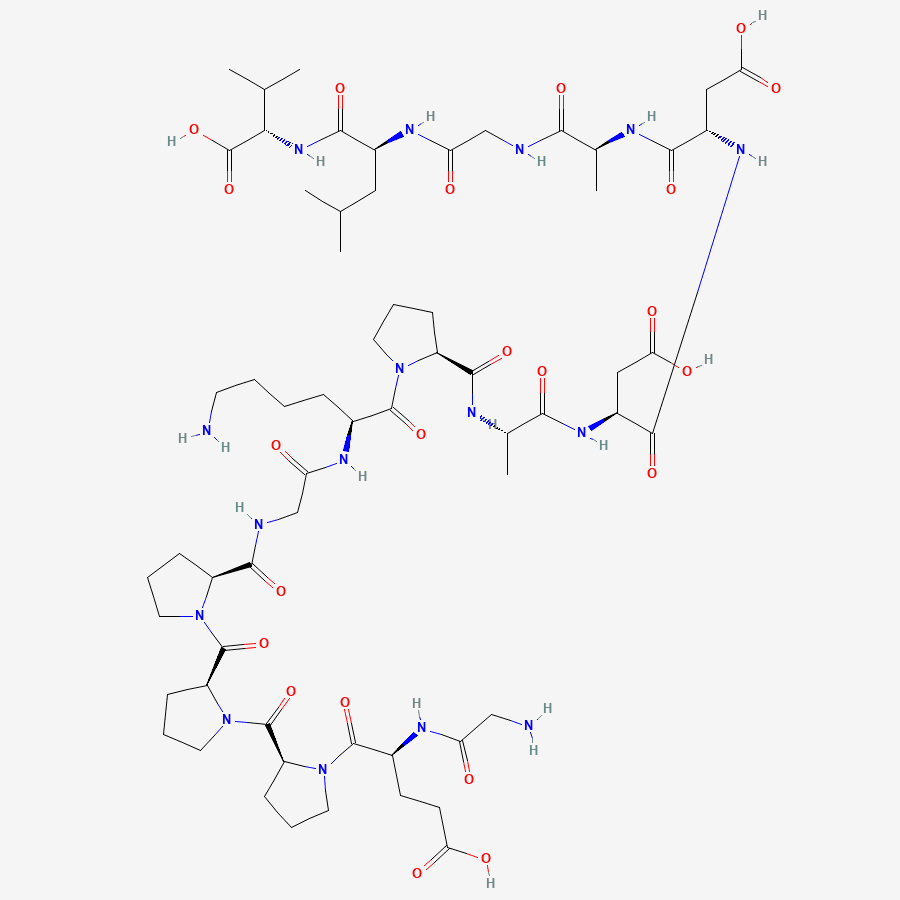
This is a man-made copy of a small piece of a stomach protein, sold online as a shot for healing injuries and gut problems. It's only been tested in animals — there's no real proof yet that it works or is safe in people.
- What it is
- A synthetic peptide fragment of a gastric protein, marketed for tendon, gut and soft-tissue repair.
- Evidence
- Consistent effects in rodents. In humans: no completed Phase II trial, no published controlled efficacy data, and fewer than 30 subjects in published studies. A 40-person uncontrolled gummy study finished in 2025 with no results posted; a 120-person placebo-controlled trial is recruiting.
- Studied dose
- No validated human dosing regimen exists. Doses circulating online are extrapolated from animal work.
- Safety
- Human safety is uncharacterised. Absence of reported harm in tiny pilot studies is not evidence of safety.
Cosa mostrano davvero gli studi sull'uomo
Solo trial randomizzati e controllati con placebo condotti sull'uomo. I dati sugli animali non compaiono mai in questa sezione: non possono innalzare una valutazione e vengono indicati separatamente più sotto.
- 01Pharmaceutics2026— Development status and human evidence
- Disegno
- Narrative review of the full literature and regulatory record
- Dose
- No standardised preparation used in any study
- Durata
- n/a
Reviews all published human exposure — fewer than 30 subjects in total
Despite thirty years of preclinical work, there is no approved formulation, no validated dosing regimen and no completed Phase II trial. All available human data come from three uncontrolled pilot studies, none using a standardised pharmaceutical preparation. Plasma half-life is under 30 minutes, which conflicts with the multi-day effects claimed for it.
doi:10.3390/pharmaceutics18050625 - 02Inflammopharmacology2006— Early inflammatory bowel disease programme
- Disegno
- Review of the original development programme
- Dose
- Not standardised
- Durata
- n/a
Animal models, with early-phase human tolerability work
Documents the compound's original development for inflammatory bowel disease and its cytoprotective effects across animal models. The programme did not progress to controlled efficacy trials, and the compound was never brought to market.
doi:10.1007/s10787-006-1531-7
Everything that makes BPC-157 sound compelling comes from rodents. No randomised controlled trial has tested it for tendon repair, gut healing, or any other marketed use in humans. There is also a mechanistic puzzle nobody has resolved: its plasma half-life is under 30 minutes, yet the effects attributed to it last days — a disconnect that undermines the dosing schedules sold online.
Grade D — insufficiente o non sicuro. Three decades of animal research and no published placebo-controlled human trial. Published human exposure totals fewer than 30 subjects across uncontrolled pilot studies; the first randomised injection trial (120 people, hamstring strain) is still recruiting, and no pharmaceutical-grade formulation exists. Come valutiamo le evidenze.
Effetti collaterali e sicurezza
- Reported in humans
- Too few people have been studied under controlled conditions to characterise a side-effect profile at all.
- Product risk
- Because no pharmaceutical-grade formulation exists, what is sold is compounded or research-grade material of variable purity, sterility and concentration. For an injectable, that is the dominant risk — independent of the peptide itself.
- The honest caveat
- "No reported side effects" is repeated widely and means almost nothing here: it reflects the near-total absence of controlled human study, not a demonstrated safety record.
Interazioni con i farmaci
La sezione che la maggior parte dei siti sulla longevità omette. Se assumete farmaci da prescrizione, leggete questa parte prima di qualsiasi altra cosa in questa pagina.
Interaction data in humans do not exist. Nobody can tell you how BPC-157 behaves alongside your medication, because the studies have not been done.
The peptide is claimed to promote angiogenesis and affect vascular function. Combined with a blood thinner this is unstudied and theoretically consequential — do not combine.
BPC-157 is prohibited under the World Anti-Doping Agency's list. A tested athlete taking it risks a sanction regardless of the health question.
BPC-157 è legale nel luogo in cui vivi?
Lo stato normativo viene monitorato per singolo mercato e verificato alla data indicata. Quando un composto non è autorizzato, questo sito non rimanda a venditori.
Not an approved drug and not lawfully marketed as a dietary supplement. In April 2026 the FDA withdrew BPC-157 from its list of compounding substances that may present significant safety risks (Category 2), and on 23 July 2026 its Pharmacy Compounding Advisory Committee voted 8–6 to recommend adding it to the 503A bulks list. That vote is not binding: until the FDA signs off, there is still no lawful compounded supply, and FDA staff told the panel that quality data on safety and effectiveness are lacking.
Fonte: US Food and Drug Administration
No marketing authorisation as a medicine and not permitted as a food supplement. Products reaching UK buyers are unlicensed.
Fonte: MHRA
No marketing authorisation in the EU and no novel-food authorisation. There is no lawful consumer route of supply.
Fonte: European Medicines Agency
Aucune autorisation de mise sur le marché et aucun statut de nouvel aliment. Il n'existe aucune voie légale d'approvisionnement.
Fonte: European Commission / EFSA
Sin autorización de comercialización ni condición de nuevo alimento. No existe una vía legal de suministro.
Fonte: European Commission / EFSA
Germany applies the EU position: no authorised medicinal product and no permitted supplement use.
Fonte: BfArM / European Medicines Agency
Not an approved medicine and not sold as a supplement in the UAE. According to peptide.law, a third-party site that tracks peptide legal status by country — not a primary MOHAP source we could independently verify — BPC-157 is obtainable in the UAE only through DHA-licensed anti-aging/wellness clinics under a physician, not over the counter, and personal import is explicitly discouraged due to strict customs enforcement. We treat this as informative but unconfirmed against any MOHAP-published position.
Fonte: UAE Ministry of Health and Prevention (MOHAP) / Dubai Health Authority (DHA)
The same third-party peptide-legal-status tracker (peptide.law) lists BPC-157 as explicitly banned in Saudi Arabia and not SFDA-registered, warning against import. We could not independently verify this against an SFDA-published banned-substances list, but no legitimate consumer or clinical route to the compound was found either way.
Fonte: Saudi Food and Drug Authority (SFDA)
Non è un farmaco autorizzato né un integratore alimentare consentito, come nel resto dell'UE. In più, la Legge 376/2000 italiana sulla tutela sanitaria delle attività sportive punisce con la reclusione fino a sei anni la produzione, distribuzione o cessione di sostanze dopanti al di fuori dei canali farmaceutici autorizzati — e la WADA classifica il BPC-157 nella categoria S0 (sostanze non approvate), quindi rientra in questa fattispecie penale: un rischio legale più specifico di quanto valga per un semplice 'farmaco non approvato' altrove nell'UE.
Fonte: Ministero della Salute / Legge 376/2000 antidoping
Geen goedgekeurd geneesmiddel en niet toegestaan als voedingssupplement, zoals elders in de EU. In de praktijk verkeert BPC-157 in Nederland in een juridische grijze zone: onder de Geneesmiddelenwet vallen producten die expliciet als 'niet voor menselijk gebruik' of 'alleen voor onderzoek' worden verkocht, zonder therapeutische claims, buiten de definitie van een geneesmiddel — waardoor de verkoop zelf niet altijd wordt gehandhaafd, ook al blijft toediening aan mensen niet goedgekeurd en niet zonder risico.
Fonte: CBG-MEB / IGJ (Geneesmiddelenwet)
A Anvisa nomeou publicamente o BPC-157 (junto com TB-500, GHK-Cu, CJC-1295 e Ipamorelina) como peptídeo sem registro em nenhuma categoria — não é medicamento, suplemento alimentar nem cosmético aprovado — e alertou que produtos vendidos como peptídeos injetáveis nas redes sociais são irregulares. Suplementos alimentares no Brasil só podem ser administrados por via oral, então mesmo um eventual registro futuro não tornaria legal a forma injetável hoje vendida online.
Fonte: Agência Nacional de Vigilância Sanitária (ANVISA)
Dosaggio e tempistica
No human trial has established an effective or safe dose. Protocols circulating online are extrapolations from rodent studies.
Confirmed preclinically and in a two-subject human pilot — which is difficult to reconcile with once-daily protocols.
Nothing on the market has been through pharmaceutical characterisation, stability testing or excipient compatibility work.
Le domande che le persone fanno davvero
Which peptides are most effective for joint repair?
None has proven it in people yet. BPC-157 is the one most sold for joints and tendons, and it repairs them consistently in rats — but no placebo-controlled human trial has reported a result. The first one (120 people with a hamstring strain, daily injections for 14 days) is recruiting now and is due to finish in 2028. Until then, anyone ranking a peptide 'most effective for joint repair' is ranking rodent data.
What are the safest and most effective peptides?
The ones that went through human trials and a regulator: the approved GLP-1 drugs for weight loss are the clearest case. BPC-157 sits at the other end — its safety in people is simply unmeasured, and because there is no approved product, what you inject is of unknown purity and sterility. 'No reported side effects' here means 'not studied', not 'safe'.
Is BPC-157 safe?
Unknown, and that is the accurate answer rather than a cautious one. Fewer than 30 people have been studied in uncontrolled pilots. There is no toxicology package, no characterised side-effect profile, and no standardised product — so the material itself is as much of a risk as the peptide.
Does BPC-157 heal tendons and injuries?
It does so consistently in rats. No randomised controlled trial has tested tendon or ligament healing in humans, so the claim rests entirely on animal work. That is a Grade D position: interesting, unproven.
Is oral or injectable BPC-157 better?
The question presumes an effective dose exists to compare, and it does not. The peptide is unusually stable in gastric juice, which is why oral forms are sold — but no human trial has compared routes for any outcome.
Is BPC-157 legal?
It is not an approved medicine anywhere and not lawfully sold as a dietary supplement. In the United States the FDA took it off its Category 2 compounding safety-risk list in April 2026 — a legal step, not evidence that it works — and on 23 July 2026 its Pharmacy Compounding Advisory Committee voted 8–6, with one abstention, to recommend it for the 503A compounding list. That vote is non-binding: FDA staff told the panel the evaluation criteria weigh against listing it, and the change would still have to go through rulemaking. A vial sold online as "research use only" is not a medicine, and nobody has verified its purity or dose. It is also banned in competitive sport under WADA.