Comprehensive AI health solution for remote patient monitoring.

See more of CureMed in your Google results.
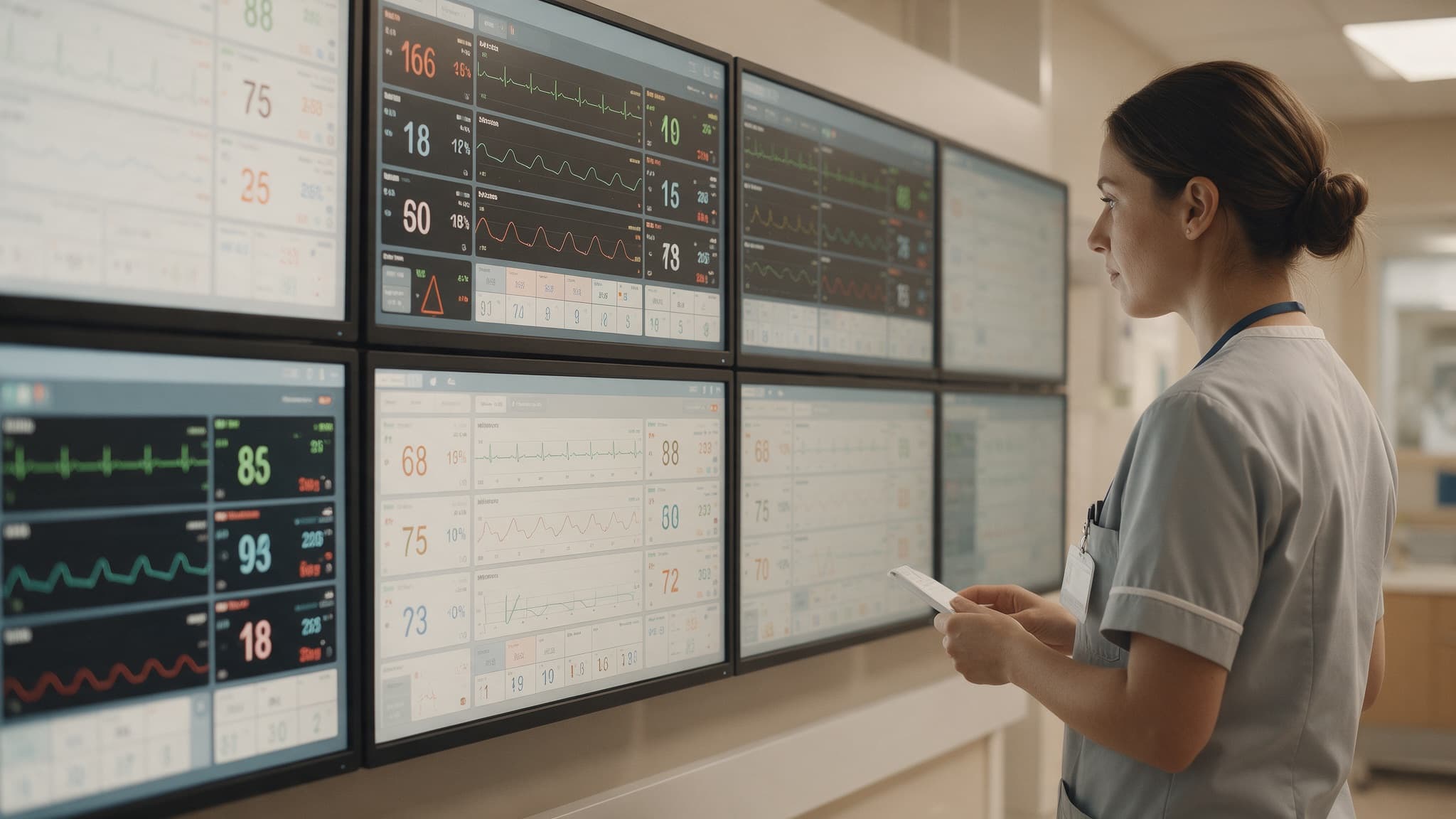
A complete AI remote-monitoring solution has seven layers, in order of importance: a staffed same-day clinical response with authority to change treatment; validated medical devices rather than consumer wearables; AI that ranks and suppresses alerts so the team works the right ones; integration into the electronic health record; medication reconciliation, because many alerts are missed or doubled doses; patient engagement so people keep measuring; and governance — validation, monitoring, fairness checks, exit rules and outcome tracking. The AI's honest job is to make the clinical team faster and less fatigued, not to replace it.
A comprehensive AI solution for remote patient monitoring is seven layers, and they are ranked here by how much each decides whether the programme improves outcomes rather than by how much of the vendor's demo they occupy. First, and decisive: the clinical response layer — staffed, same-day, with titration authority under protocol, because every positive RPM trial had it and every null one did not. Second: validated devices — upper-arm cuffs, scales, CGMs, oximeters, cardiac patches — since wrong data drive wrong responses and consumer wearables do not qualify. Third: the triage AI — risk-ranking the alert queue, suppressing duplicates, learning each patient's baseline — which is the only place AI genuinely earns its name in RPM and only matters if the first layer exists. Fourth: EHR integration, so flags appear where clinicians work and actions are recorded where they count. Fifth: medication reconciliation at enrolment and at each alert, because a large share of alerts are medication events. Sixth: patient engagement — onboarding, adherence prompts, disengagement prediction — since data stop when patients stop measuring. Seventh: governance — device validation, algorithm monitoring, equity audit, exit criteria, outcome measurement by blood pressure, HbA1c and admissions rather than by billed minutes. A solution is comprehensive when all seven are present and honest about the AI's role, which is to make the humans in layer one faster and less tired, not to replace them.
- The response layer decides the outcome; every other layer serves it.
- Devices must be validated; the AI cannot repair a cuffless watch reading.
- Triage AI is the real AI in RPM, and it is worth having only for a staffed queue.
- EHR integration and medication reconciliation are the two layers vendors most often leave out and programmes most often fail without.
- Governance turns a pilot into a programme: validation, monitoring, equity, exit criteria and outcome measurement.
Graded by CureMed against human clinical evidence, and reviewed by CureMed Labs.
The seven layers, ranked by how much each decides outcomes
Ranked on: how much the presence or absence of each layer has explained the difference between positive and null RPM trials and between programmes that survive and programmes that collapse.
| # | Option | Verdict | Grade |
|---|---|---|---|
| 1 | 1. Clinical response with titration authority | The intervention itself | GRADE AEstablished |
| 2 | 2. Validated devices | Wrong data, wrong response | GRADE AEstablished |
| 3 | 3. Triage AI and alert suppression | The real AI in RPM; useful only for a staffed queue | GRADE AEstablished |
| 4 | 4. EHR integration | Where actions get recorded and repeated | GRADE BPromising |
| 5 | 5. Medication reconciliation | The layer that halves the alerts | GRADE BPromising |
| 6 | 6. Patient engagement | No measurements, no programme | GRADE BPromising |
| 7 | 7. Governance | Turns a pilot into a programme | GRADE BPromising |
- 01
1. Clinical response with titration authority
GRADE AEstablishedThe intervention itselfNurses, pharmacists or physicians working the alert queue the same day under written protocols — blood-pressure titration steps, heart-failure diuretic adjustment, glucose regimen changes, COPD action plans — with authority to act and a physician available for escalation. Staffing ratio and response time are the two numbers to specify in the contract.
- 02
2. Validated devices
GRADE AEstablishedWrong data, wrong responseUpper-arm cuffs from validated-device lists, connected scales, CGMs, pulse oximeters, cardiac patches, smart inhalers where indicated. Cellular-connected devices for patients without smartphones. Consumer wearable metrics — sleep, HRV, cuffless blood pressure — are not inputs to clinical decisions and should not feed the alert queue.
- 03
3. Triage AI and alert suppression
GRADE AEstablishedThe real AI in RPM; useful only for a staffed queueRisk-ranking alerts so the highest-risk patient is opened first; suppressing duplicate and implausible readings; learning each patient's baseline so a stable outlier stops alerting; flagging patterns that predict deterioration. This is where machine learning earns its place, and it is worthless without layer 1 to serve.
- 04
4. EHR integration
GRADE BPromisingWhere actions get recorded and repeatedFlags in the clinician's own record, orders and notes written back, the patient's medication list and problem list visible next to the reading. A separate dashboard is where alerts die and where the titration that was done goes undocumented.
- 05
5. Medication reconciliation
GRADE BPromisingThe layer that halves the alertsA pharmacist-led reconciliation at enrolment and a prompt at every alert review: was a dose missed, doubled, changed by another prescriber, or is a new drug (a decongestant, a steroid, an NSAID) explaining the reading. Many blood-pressure and glucose alerts resolve here without a titration.
- 06
6. Patient engagement
GRADE BPromisingNo measurements, no programmeDevice onboarding in the patient's language and skill level, adherence reminders, feedback that the readings are being seen, and AI that predicts disengagement early enough to call. Measurement adherence falls steeply within months in programmes that ignore this.
- 07
7. Governance
GRADE BPromisingTurns a pilot into a programmeDevice validation policy, algorithm performance monitoring and drift checks, equity audit (the AI section's documented bias case applies), privacy and consent, exit criteria for stable patients, and outcome measurement by blood pressure, HbA1c, admissions and patient-reported measures rather than by monitoring minutes billed.
Build, buy, or assemble: what each option covers
How the options map to the seven layers
| Option | Layers covered | Layers you must add | Best for |
|---|---|---|---|
| Condition-specific vendor with staffed response | 1, 2, 3, 6; often 5 | 4, 7 | Practices and systems without monitoring staff |
| EHR vendor's RPM module plus own staff | 3 (basic), 4 | 1, 2, 5, 6, 7 | Health systems with clinical capacity |
| Device-vendor portals assembled in-house | 2; some 3 | 1, 4, 5, 6, 7 | Small programmes with a pharmacist and a nurse |
| General RPM aggregator | 2, 3, 6; billing | 1 (often), 4, 5, 7 | Reimbursement-driven programmes; verify the response |
| Consumer wearable platform | None that qualify | All seven | Not RPM |
Frequently asked questions
What does a comprehensive AI remote patient monitoring solution include?
Seven layers, ranked by how much each decides outcomes: a staffed same-day clinical response with titration authority; validated devices; triage AI with alert suppression; EHR integration; medication reconciliation; patient engagement; and governance covering validation, algorithm monitoring, equity, exit criteria and outcome measurement. The AI's honest role is to make the response team faster and less fatigued.
Which layer of an RPM solution matters most?
The clinical response. Every positive RPM trial — hypertension with pharmacist titration, heart failure with same-day nurse response, diabetes with prescriber titration — had a staffed team acting on alerts; every null trial lacked one. Response time and staffing ratio are the two numbers to write into any contract.
What does AI genuinely do in remote patient monitoring?
Triage: rank the alert queue by risk, suppress duplicates and implausible readings, learn each patient's baseline so stable outliers stop alerting, flag patterns that precede deterioration, suggest the next protocol step, and predict which patients are about to stop measuring. It does not call the patient or change the dose, and a solution that implies it does has misdescribed itself.
Can consumer wearables be part of a comprehensive RPM solution?
Not as inputs to clinical decisions. Sleep, HRV, 'stress' and cuffless blood pressure are not validated for that purpose and the flags built on them are unregulated. The regulated exception — smartwatch atrial-fibrillation detection — is a referral trigger. RPM devices are validated cuffs, scales, CGMs, oximeters, patches and smart inhalers.
Why is medication reconciliation part of an RPM solution?
Because a large share of alerts are medication events: a missed or doubled dose, a change by another prescriber, a new decongestant, steroid or NSAID raising blood pressure or glucose. A pharmacist-led reconciliation at enrolment and a prompt at each alert review resolve many alerts without any titration, and prevent titrating against a reading that a missed tablet caused.
How should an RPM programme be measured?
By clinical outcomes — blood pressure at target, HbA1c, heart-failure admissions, COPD exacerbations, patient-reported measures — plus measurement adherence, response time, alert volume per patient (falling over time if suppression works) and an equity audit of who is enrolled and who benefits. Monitoring minutes billed is a revenue metric, not an outcome.
Keep reading
- Best AI health system for remote patient monitoring programs.
The system types ranked.
- AI health analytics software for hospitals and clinics.
The analytics layer across the institution.
- AI-powered health forecasting
The evidence standard and the documented bias case.
- Free stack check
Reconciliation, the layer that halves the alerts.
More in AI health tools
- What is the best AI tool for health tracking?
FDA-cleared cardiac algorithms on major smartwatches — irregular-rhythm notification and single-lead ECG — rank first, validated; chatbots rank last.
- Which AI health app helps monitor chronic conditions?
Diabetes and hypertension apps that connect glucose or blood-pressure readings to a clinician who titrates treatment have the best evidence among these apps.
- How to choose the best AI health assistant?
Choosing an AI health assistant starts with defining its job — information, triage, tracking or coaching — since none are licensed for actual medical advice.
- Which AI health platform offers personalized wellness recommendations?
Clinician-reviewed biomarker platforms that set a measured target, like ApoB, rank as the most genuinely personalized wellness AI, ahead of wearables.
- What AI health solution supports early disease detection?
AI-supported mammography has the strongest evidence of any AI in medicine, a 105,934-woman trial, ranking above colonoscopy AI and unproven consumer detection.
- Best AI health assistant for personalized diet and exercise.
AI programmes with human coaching, like Noom and Omada, rank first for weight-loss and diabetes-prevention trial evidence; chatbot meal plans rank last.