AI health analytics software for hospitals and clinics.

See more of CureMed in your Google results.
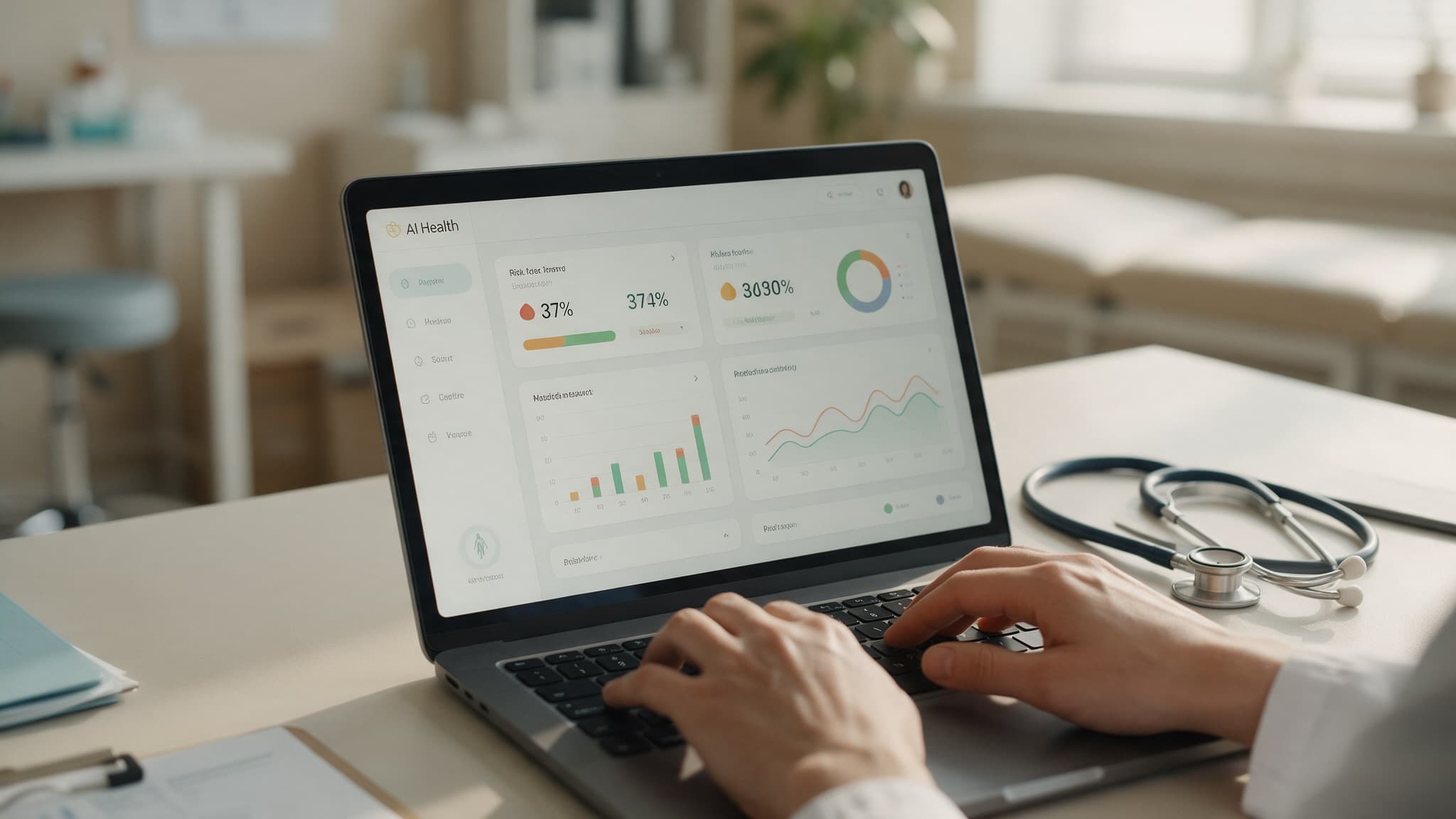
'AI health analytics' bundles very different tools, so they are ranked by function: imaging and diagnostic AI in radiology and emergency departments have the best evidence; operational analytics for beds, theatres and staffing deliver measurable value; ambient documentation saves clinician time but needs accuracy review; care-gap analytics that find overdue patients work when outreach follows and carry a known bias risk; deterioration and sepsis predictors have mixed real-world results and cause alert fatigue; readmission and cost predictors predict well and change little without an intervention attached.
'AI health analytics' is a procurement category, not a clinical one, and it bundles functions whose evidence ranges from randomised trials to nothing, so the ranking is by function. First: imaging and diagnostic AI inside clinical workflows — mammography support, stroke and haemorrhage triage, fracture detection, ECG algorithms — with prospective and in some cases randomised evidence and daily operational value in radiology and emergency departments. Second: operational and capacity analytics — bed management, theatre scheduling, staffing forecasts, discharge planning — where the outcome is measurable in hours and beds and the models are conventional forecasting doing reliable work. Third: ambient documentation and coding — speech-to-note and coding assistants — with strong evidence for clinician time saved and accuracy risks that need review, the most rapidly adopted analytics in the sector. Fourth: population-health and care-gap analytics that find patients overdue for screening, vaccination or risk-factor control and drive outreach, with trial evidence for uptake and one of the field's documented bias cases as the caution. Fifth: deterioration and sepsis prediction, with mixed real-world performance, frequent alert fatigue and poor external validation for widely deployed models. Sixth: readmission and cost prediction, which predicts well and changes little unless an intervention is attached. Every function needs local validation, subgroup audit and drift monitoring; the ones near the top earn it, and the ones near the bottom need it most.
- Rank the function, not the platform; the bundle hides the evidence gap.
- Imaging AI and operational forecasting have the strongest evidence and the clearest value.
- Ambient documentation is the fastest-adopted analytics and needs a review step for accuracy.
- Care-gap analytics work when outreach follows; the documented bias case lives here.
- Deterioration prediction is where alert fatigue and poor external validity have hurt most deployments.
Graded by CureMed against human clinical evidence, and reviewed by CureMed Labs.
AI analytics functions ranked on evidence and value
Ranked on: evidence level for the function (retrospective, prospective, randomised), measurability of its operational outcome, real-world deployment record including alert burden, and the governance it requires.
| # | Option | Verdict | Grade |
|---|---|---|---|
| 1 | Imaging and diagnostic AI in clinical workflows | Prospective and randomised evidence; daily value | GRADE AEstablished |
| 2 | Operational and capacity analytics | Conventional forecasting doing measurable work | GRADE AEstablished |
| 3 | Ambient documentation and coding | Time saved; accuracy needs a review step | GRADE BPromising |
| 4 | Population-health and care-gap analytics | Works when outreach follows; the bias case lives here | GRADE BPromising |
| 5 | Deterioration and sepsis prediction | Mixed performance; alert fatigue; poor external validity | GRADE CEarly |
| 6 | Readmission and cost prediction | Predicts well; changes little without an intervention | GRADE CEarly |
- 01
Imaging and diagnostic AI in clinical workflows
GRADE AEstablishedProspective and randomised evidence; daily valueMammography support (randomised, 105,934 women), stroke large-vessel-occlusion and haemorrhage triage that reorders the queue and shortens time to treatment, fracture detection in emergency departments, ECG algorithms. Cleared per function, with process outcomes measured in minutes and misses. Governance: per-function validation and local miss-rate monitoring.
- 02
Operational and capacity analytics
GRADE AEstablishedConventional forecasting doing measurable workBed and discharge forecasting, theatre and clinic scheduling, staffing demand, emergency-department flow. Mostly time-series and regression models under an AI label; outcomes measured in hours, beds and cancelled lists. Low clinical risk, high operational value, and the easiest analytics to evaluate honestly.
- 03
Ambient documentation and coding
GRADE BPromisingTime saved; accuracy needs a review stepSpeech-to-note assistants that draft the consultation record, and coding assistants that suggest billing and diagnostic codes. Strong evidence for minutes saved per encounter and clinician satisfaction; documented risks of omission and fabrication that require the clinician to review before signing. The fastest-adopted function in the sector, and the one that most changes daily work.
- 04
Population-health and care-gap analytics
GRADE BPromisingWorks when outreach follows; the bias case lives hereRegistries and models that identify patients overdue for screening, vaccination or risk-factor control and drive outreach, with trial evidence for raised uptake. The AI section's documented bias case — a care-management algorithm using cost as a proxy for need, whose correction would have raised the share of Black patients receiving extra help from 17.7% to 46.5% — was exactly this kind of tool. Subgroup audit is mandatory.
- 05
Deterioration and sepsis prediction
GRADE CEarlyMixed performance; alert fatigue; poor external validityEarly-warning scores on vital signs and laboratory data. Some deployments show earlier recognition; widely used commercial models have missed many cases and alerted on many non-cases in external validation, and on tabular data machine learning often does not beat logistic regression. Deploy only with local validation, alert-rate limits and a response team.
- 06
Readmission and cost prediction
GRADE CEarlyPredicts well; changes little without an interventionModels that flag patients likely to be readmitted or high-cost. Discrimination is often decent; benefit depends entirely on an intervention — transitional care, pharmacist medication reconciliation at discharge, follow-up calls — being attached to the flag. Without one, the model generates a list.
Where pharmacy analytics fit, and what every function requires
Analytics functions with pharmacy value, and governance requirements for all
| Function | Pharmacy use | Evidence | Governance required |
|---|---|---|---|
| Medication-safety surveillance | High-risk drug monitoring, interaction alerts with suppression, dose-for-renal-function checks | Established for rule-based; ML adds prioritisation | Alert-rate limits; override monitoring |
| Antimicrobial stewardship dashboards | Days of therapy, de-escalation prompts, culture-result matching | Stewardship programmes reduce resistance and cost | Clinical ownership; audit |
| Discharge medication reconciliation triggers | Flags complex regimens for pharmacist review before discharge | Reconciliation reduces readmission and harm | Attach the pharmacist, not just the flag |
| Ambient documentation | Medication histories drafted from consultation audio | Time saved; accuracy risks | Pharmacist review before the list is trusted |
| Any function | — | — | Local validation; subgroup audit; drift monitoring; kill switch; outcome measurement |
Frequently asked questions
What is the best AI health analytics software for hospitals and clinics?
It depends on the function, because 'AI analytics' bundles tools with very different evidence. Ranked: imaging and diagnostic AI in clinical workflows first; operational and capacity analytics second; ambient documentation and coding third, with a review step; population-health and care-gap analytics fourth, with outreach staffed and a bias audit; deterioration and sepsis prediction fifth; readmission and cost prediction sixth, only with an intervention attached.
Does AI sepsis prediction work?
Inconsistently. Some deployments show earlier recognition with prospective evidence; widely used commercial models have performed poorly on external validation, missing a large share of cases while alerting on many non-cases, and on tabular clinical data machine learning frequently does not outperform logistic regression. Deploy only after local validation, with alert-rate limits and a response team.
Is ambient AI documentation accurate?
It saves clinicians meaningful time per encounter and is being adopted rapidly; it also omits and occasionally fabricates details, so the clinician must review before signing and the organisation should audit accuracy. For medication histories in particular, a pharmacist should verify before the drafted list is trusted.
What is the bias risk in healthcare analytics?
Documented, not hypothetical: a widely deployed care-management algorithm used healthcare cost as a proxy for need and systematically under-identified Black patients; correcting it would have raised their share of extra-care referrals from 17.7% to 46.5%. Any care-gap, risk or resource-allocation model needs subgroup performance audited in the local population before and after go-live.
Are readmission prediction models worth buying?
Only with an intervention attached. Many predict readmission risk reasonably well; none reduces readmissions by itself. Transitional-care programmes, pharmacist medication reconciliation at discharge and structured follow-up calls do, and the model's value is directing them to the right patients. A model without a programme produces a list.
What governance does AI analytics need in a hospital?
Per-function local validation on the hospital's own data; subgroup performance audit by ethnicity, sex, age and deprivation; alert-rate limits and override monitoring; drift detection and re-validation on model updates; a named clinical owner; a documented kill switch; outcome measurement by clinical and operational results rather than vendor metrics; and a data-governance clause covering training use. Pharmacy should sit on the committee.
Keep reading
- How to choose the best AI platform for healthcare?
The procurement method, criterion by criterion.
- What is the best AI solution for health diagnostics?
The diagnostic functions by evidence level.
- AI-powered health forecasting
The evidence counts and the bias case.
- Comprehensive AI health solution for remote patient monitoring.
One analytics function specified in full.
More in AI health tools
- What is the best AI tool for health tracking?
FDA-cleared cardiac algorithms on major smartwatches — irregular-rhythm notification and single-lead ECG — rank first, validated; chatbots rank last.
- Which AI health app helps monitor chronic conditions?
Diabetes and hypertension apps that connect glucose or blood-pressure readings to a clinician who titrates treatment have the best evidence among these apps.
- How to choose the best AI health assistant?
Choosing an AI health assistant starts with defining its job — information, triage, tracking or coaching — since none are licensed for actual medical advice.
- Which AI health platform offers personalized wellness recommendations?
Clinician-reviewed biomarker platforms that set a measured target, like ApoB, rank as the most genuinely personalized wellness AI, ahead of wearables.
- What AI health solution supports early disease detection?
AI-supported mammography has the strongest evidence of any AI in medicine, a 105,934-woman trial, ranking above colonoscopy AI and unproven consumer detection.
- Best AI health assistant for personalized diet and exercise.
AI programmes with human coaching, like Noom and Omada, rank first for weight-loss and diabetes-prevention trial evidence; chatbot meal plans rank last.