What antiaging medications should I discuss with my dermatologist?

See more of CureMed in your Google results.
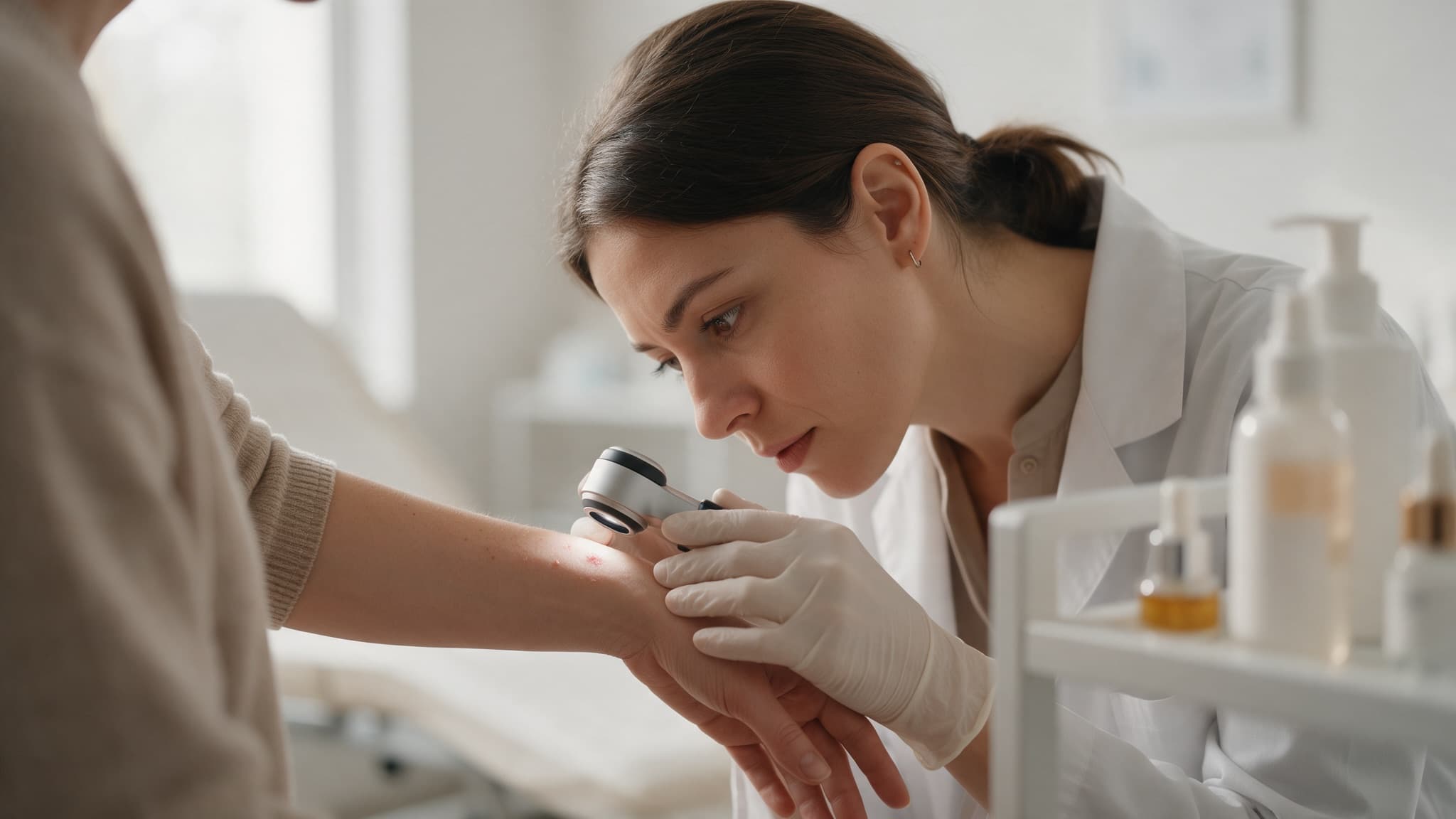
When you see a dermatologist about ageing skin, the things worth asking about are the ones you cannot get on your own: a tretinoin prescription (the best-evidenced anti-ageing cream), prescription treatments for dark patches, Botox-type injections and fillers, stronger or gentler retinoid options, and — most important — a skin-cancer check. Bring everything you currently use and take, plus photos, and name the exact concern.
The anti-ageing medications worth discussing with a dermatologist are the ones a prescription changes — ranked by how much it adds over what you can buy: tretinoin first, because it is the best-evidenced topical for photoageing and cannot be bought over the counter in most countries; hydroquinone or tranexamic acid for pigmentation, which need a prescriber for dose, duration and screening; botulinum toxin and hyaluronic-acid fillers, which are procedures with trial evidence that a dermatologist performs or refers; tazarotene as a step up from tretinoin; azelaic acid where retinoids and hydroquinone are unsuitable, including pregnancy; low-dose oral isotretinoin as a specialist option for severe photoageing; and a skin-cancer check, which is the most important thing a dermatologist does and the one patients forget to ask for. Bring your current products and medicines, photographs, and the specific concern — texture, pigmentation, lines, volume — because the answer differs for each.
- Ask about what a prescription unlocks; a dermatologist's value is in the drugs and procedures you cannot buy and the diagnosis you cannot make.
- Tretinoin is the single most useful prescription to leave with, and the one most people have replaced with a weaker retinol.
- Pigmentation needs a prescriber: hydroquinone's duration limits and tranexamic acid's clotting screen are not over-the-counter decisions.
- Ask for the skin-cancer check; it is the most consequential five minutes of the appointment.
- Bring the list of everything you use and take — interactions and irritation stacking are the commonest reasons prescriptions fail.
Graded by CureMed against human clinical evidence, and reviewed by CureMed Labs.
Medications to raise, ranked by what the prescription adds
Ranked on: how much a dermatologist's prescription, procedure or screening adds over what is available without one, weighted by the evidence for the treatment and by how often the item is missed at appointments.
| # | Option | Verdict | Grade |
|---|---|---|---|
| 1 | Tretinoin (or tazarotene) | The prescription to leave with | GRADE AEstablished |
| 2 | A skin-cancer check | The most consequential item, and the one nobody asks for | GRADE AEstablished |
| 3 | Hydroquinone, tranexamic acid or the triple combination for pigmentation | Needs a prescriber for dose, duration and screening | GRADE AEstablished |
| 4 | Botulinum toxin | The procedure with the largest effect on expression lines | GRADE AEstablished |
| 5 | Hyaluronic-acid fillers | Volume, with the injector as the variable | GRADE BPromising |
| 6 | Azelaic acid | For when retinoids and hydroquinone are unsuitable | GRADE BPromising |
| 7 | Adapalene | The gentler retinoid, sometimes over the counter | GRADE BPromising |
| 8 | Low-dose oral isotretinoin | A specialist option for severe photoageing | GRADE CEarly |
| 9 | Chemical peels, lasers and energy devices | Evidence varies widely by device; ask which and why | GRADE CEarly |
| 10 | Peptides, growth-factor serums, 'medical-grade' cosmeceuticals sold in the clinic | Small trials, clinic margin | GRADE CEarly |
- 01
Tretinoin (or tazarotene)
GRADE AEstablishedThe prescription to leave withDecades of randomised, histologically confirmed trials on photoageing wrinkles, texture and pigmentation; prescription-only in most countries; and routinely replaced by patients with over-the-counter retinol that is far less potent. Ask for the strength and vehicle that fits your skin, how to introduce it without the irritation that makes people stop, and whether tazarotene is worth the extra effect and irritation.
- 02
A skin-cancer check
GRADE AEstablishedThe most consequential item, and the one nobody asks forA full-skin examination for melanoma and non-melanoma skin cancer is the highest-value thing a dermatologist does for an ageing patient, and it is not an anti-ageing medication. Ask for it at every anti-ageing appointment; the sun exposure that aged the skin is the same exposure that causes the cancers.
- 03
Hydroquinone, tranexamic acid or the triple combination for pigmentation
GRADE AEstablishedNeeds a prescriber for dose, duration and screeningHydroquinone is the best-evidenced depigmenting agent and must be used in courses because of ochronosis with prolonged use; the triple combination with tretinoin and a corticosteroid is the most effective melasma treatment in trials; oral tranexamic acid works in trials and needs a clotting-history screen. None is an over-the-counter decision. Raise it if pigmentation is the concern.
- 04
Botulinum toxin
GRADE AEstablishedThe procedure with the largest effect on expression linesApproved on randomised trials for glabellar, forehead and crow's-feet lines; three to four months per treatment. A dermatologist performs it or refers to someone who does, and can tell you whether your lines are dynamic (it will work) or static (it will not).
- 05
Hyaluronic-acid fillers
GRADE BPromisingVolume, with the injector as the variableApproved devices with controlled trials for folds and volume loss, reversible with hyaluronidase. The risk — vascular occlusion — depends on the injector's anatomical knowledge, which is the reason to ask a dermatologist rather than a salon. Raise it if volume loss, not skin quality, is the concern.
- 06
Azelaic acid
GRADE BPromisingFor when retinoids and hydroquinone are unsuitableRandomised evidence for pigmentation and texture with a mild profile, usable in pregnancy and in retinoid-intolerant skin. Prescription strength adds over the cosmetic concentrations. Ask about it if irritation or pregnancy rules out the first-line agents.
- 07
Adapalene
GRADE BPromisingThe gentler retinoid, sometimes over the counterSmaller photoageing trials than tretinoin, less irritation, and available without prescription in some countries. Worth raising if tretinoin has failed on tolerability rather than effect.
- 08
Low-dose oral isotretinoin
GRADE CEarlyA specialist option for severe photoageingSmall trials suggest improvement in photoageing over months; teratogenic, with lipid, liver and mood monitoring. Only a dermatologist can weigh it, and only for selected patients. Raise it if photoageing is severe and topicals have been exhausted.
- 09
Chemical peels, lasers and energy devices
GRADE CEarlyEvidence varies widely by device; ask which and whySuperficial peels and some laser and light treatments have controlled trials for pigmentation, texture and fine lines; many devices have manufacturer studies only. A dermatologist can say which has evidence for your concern and your skin type, which is the question to ask rather than 'do you do lasers'.
- 10
Peptides, growth-factor serums, 'medical-grade' cosmeceuticals sold in the clinic
GRADE CEarlySmall trials, clinic marginModest evidence, often manufacturer-funded, and frequently sold by the clinic that recommends them. Reasonable as a third line; not the reason to see a dermatologist, and a prescription for tretinoin is worth more than any of them.
Making the appointment count
What to bring, and what to ask
| Bring | Why | Ask |
|---|---|---|
| Every product you use, or a photo of the labels | Irritation stacking — retinoid plus acids plus scrubs — is the commonest reason prescriptions are abandoned | Which of these should stop when I start tretinoin? |
| Every medicine and supplement you take | Isotretinoin, tranexamic acid and some antibiotics interact; photosensitising drugs change the sunscreen advice | Does anything I take change what you would prescribe? |
| Photographs in consistent light | Pigmentation and texture change slowly; a baseline is the only way to judge at six months | What should I photograph, and when do we compare? |
| The specific concern, named | Texture, pigmentation, dynamic lines and volume have different treatments | Which of these is my main problem, and what treats that one? |
| Your sun history and sunscreen habit | It determines the cancer check and underwrites every treatment | Can you check my skin for cancers today? |
| Your budget, honestly | Tretinoin is generic; procedures are not; clinic cosmeceuticals are optional | If I can afford one thing, which? |
Frequently asked questions
What anti-ageing medications should I ask my dermatologist about?
The ones a prescription unlocks, ranked by what it adds: tretinoin (the best-evidenced topical for photoageing, prescription-only in most countries); hydroquinone, tranexamic acid or the triple combination for pigmentation; botulinum toxin for dynamic lines and fillers for volume; tazarotene, azelaic acid or adapalene depending on tolerance and circumstances; low-dose isotretinoin for severe photoageing. And ask for a skin-cancer check — the most important thing a dermatologist does.
Should I ask for tretinoin or just use retinol?
Ask for tretinoin. It is the active retinoic acid with decades of randomised, biopsy-confirmed trials on wrinkles, texture and pigmentation; retinol must be converted in the skin, is far less potent and has small, short, mostly manufacturer-run trials. The prescription is the single most useful thing to leave a dermatology appointment with.
What should I bring to a dermatologist appointment about ageing skin?
Every product you use (or photos of the labels), every medicine and supplement you take, photographs of your skin in consistent light, the specific concern named — texture, pigmentation, lines or volume — and your sun history. Irritation stacking and drug interactions are the commonest reasons prescriptions fail, and a baseline photograph is the only way to judge slow changes.
Is a dermatologist worth seeing for anti-ageing if I have no skin problems?
Yes, for two reasons: the prescription treatments with the best evidence — tretinoin, depigmenting agents, neuromodulators — cannot be obtained without one, and a full-skin cancer check is the highest-value part of the visit for anyone with a history of sun exposure, which is everyone with ageing skin.
What can a dermatologist prescribe for dark patches and melasma?
Hydroquinone in time-limited courses, the triple combination of hydroquinone, tretinoin and a corticosteroid (the most effective melasma treatment in trials), oral tranexamic acid at low dose after a clotting-history screen, or azelaic acid where those are unsuitable, including pregnancy. Dose, duration and screening are why pigmentation is a prescriber's decision rather than an over-the-counter one.
Should I ask about lasers or peels?
Ask which specific device or peel has controlled-trial evidence for your concern and skin type, rather than whether the clinic offers them. Superficial peels and some laser and light treatments have real trials for pigmentation, texture and fine lines; many devices have manufacturer studies only, and results depend heavily on the operator.
Keep reading
- What antiaging pharmaceuticals work best for skin rejuvenation?
The prescriptions ranked by the outcome each treats.
- Which antiaging medicines deliver clinically proven wrinkle reduction results?
Wrinkle medicines by wrinkle type.
- Best longevity skincare routine to slow visible aging
How the prescription fits into a daily routine.
- Skincare, graded
Every skincare intervention on the site by evidence tier.
More in Anti-aging pharma
- Rapamycin for longevity: what the human evidence actually shows
The only 48-week human trial (PEARL, n=129) missed its primary endpoint. What rapamycin has actually shown, the real risks, and who should never take it.
- The AI-designed drug that made patients 'biologically younger': what the trial actually measured
An AI-designed drug lowered predicted biological age across six clocks. It was a secondary analysis of 42 lung-disease patients. Here's what that means.
- Is there a pill that can make you live to 150?
No pill has ever extended human lifespan in a trial. Here is what the compounds behind the 'live to 150' headlines actually proved, and in which species.
- What are the most effective antiaging prescription treatments available?
Tretinoin, botulinum toxin and statins rank on randomised evidence above rapamycin, metformin and senolytics, which lack trial evidence for anti-ageing use.
- Which antiaging medicines deliver clinically proven wrinkle reduction results?
Botulinum toxin has the largest measured effect on dynamic wrinkles in randomised trials, ahead of tretinoin for photoaging and fillers for static folds.
- What antiaging pharmaceuticals work best for skin rejuvenation?
Tretinoin ranks first for skin rejuvenation, improving texture, fine wrinkles, and pigmentation in decades of trials, ahead of hydroquinone and Botox.