Top-rated longevity clinics for advanced biomarker testing packages.

See more of CureMed in your Google results.
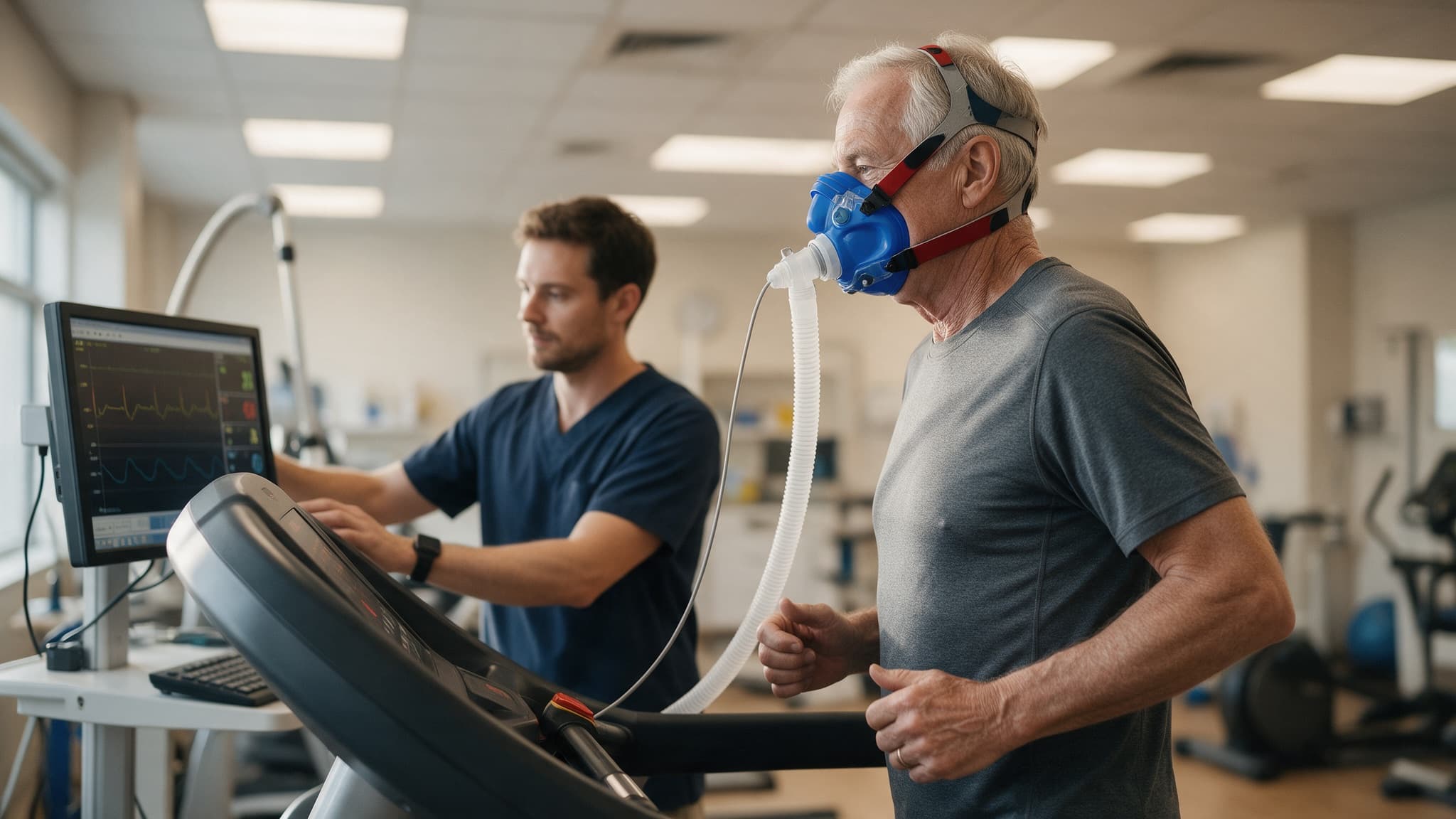
The best biomarker testing package is not the biggest: it is about fifteen blood markers that change decisions — cholesterol particles (ApoB and lipoprotein(a)), blood sugar and insulin, kidney and liver, blood count and iron, thyroid, inflammation, vitamin D — plus a proper fitness test and a DEXA scan, read by a physician who treats to target. Evidence-based prevention-clinic packages that offer exactly that rank first, hospital packages on accredited labs second, physician-reviewed subscription panels third, hundred-analyte 'advanced' packages that bury the good markers in false positives fourth, and consumer kits without a clinician last.
Rating biomarker packages by size rewards the wrong thing, so this ranking rates them on content: whether the markers that change decisions are included, whether the markers that only add cost and false positives are excluded, whether functional measures accompany the blood, and whether a clinician acts on the result. Ranked on that: the evidence-based prevention-clinic package first — ApoB and Lp(a), HbA1c and fasting insulin, kidney and liver function, blood count and ferritin, TSH, hs-CRP, vitamin D, plus CPET VO₂max and DEXA, reviewed by a physician who treats to target; the hospital-affiliated package second, run on an accredited laboratory with specialist review, often with the classic executive-menu items still attached; the physician-reviewed subscription panel third, which repeats a decent core panel quarterly and is only as good as the physician reading it; the 'advanced' hundred-analyte package fourth, which contains the good markers somewhere inside a hundred others that generate false positives and change nothing; and the direct-to-consumer kit last, a panel without a clinician. A top-rated package is about fifteen blood markers plus two functional tests, and the clinics that offer exactly that are the top-rated ones.
- A package is rated on the markers that change decisions, and there are about fifteen of them.
- CPET VO₂max and DEXA belong in a biomarker package; most packages leave them out.
- A hundred-analyte panel contains the fifteen and buries them in false positives.
- Accreditation and physician review are worth more than any additional analyte.
- The package should ask what you take before you bleed, because a dozen medicines and supplements move the markers.
CureMed grades this on human trial evidence; animal data never raises a grade.
Biomarker testing packages, rated
Ranked on: inclusion of the decision-changing markers; exclusion of the cost-and-false-positive markers; inclusion of CPET and DEXA; laboratory accreditation; physician review and action; and a pre-test medication history.
| # | Option | Verdict | Grade |
|---|---|---|---|
| 1 | Evidence-based prevention-clinic package | The fifteen that matter, plus CPET and DEXA, acted on | GRADE AEstablished |
| 2 | Hospital-affiliated package | Accredited lab and specialist review; classic-menu baggage | GRADE BPromising |
| 3 | Physician-reviewed subscription panel | A decent core, quarterly, as good as the reader | GRADE BPromising |
| 4 | 'Advanced' hundred-analyte package | The fifteen, buried in a hundred | GRADE CEarly |
| 5 | Direct-to-consumer kit | A panel without a clinician | GRADE DInsufficient or unsafe |
- 01
Evidence-based prevention-clinic package
GRADE AEstablishedThe fifteen that matter, plus CPET and DEXA, acted onApoB, Lp(a), HbA1c, fasting insulin, creatinine and eGFR, ALT and GGT, full blood count, ferritin, TSH, hs-CRP, vitamin D, urine albumin-creatinine ratio, with home blood pressure, a CPET and a DEXA. Reviewed by a physician who sets targets and retests. A medication history taken first. The top-rated package by content, and usually the cheapest.
- 02
Hospital-affiliated package
GRADE BPromisingAccredited lab and specialist review; classic-menu baggageThe core markers run on an accredited laboratory with specialist interpretation and cardiology on site. Often still bundled with the executive-physical items the evidence does not support, and CPET is sometimes a stress ECG without gas exchange. Ask for the list and for CPET on a metabolic cart.
- 03
Physician-reviewed subscription panel
GRADE BPromisingA decent core, quarterly, as good as the readerQuarterly blood draws of a reasonable core panel with an app and a physician review. Trend data is genuinely useful for ApoB and HbA1c under treatment; the functional tests are absent and the physician's engagement varies from treating to target to a templated note. Ask who reads it and what they prescribe.
- 04
'Advanced' hundred-analyte package
GRADE CEarlyThe fifteen, buried in a hundredMetabolomics, hormones across the board, micronutrients, heavy metals, inflammatory arrays, epigenetic age. The decision-changing markers are in there; so are eighty results that change nothing and a handful of statistical false positives to chase. More expensive, more anxious, no better.
- 05
Direct-to-consumer kit
GRADE DInsufficient or unsafeA panel without a clinicianFinger-prick or phlebotomy-service panels with an app interpretation against reference ranges. No medication history, no physician, no target, no retest plan. Useful to satisfy curiosity; not a longevity package.
What a top-rated package must include, and what it should leave out
Package contents graded
| Marker or test | Why | Grade |
|---|---|---|
| ApoB; lipoprotein(a) once | The lipid markers that set treatment | A |
| HbA1c; fasting insulin | Glycaemic and insulin-resistance status | A |
| Creatinine/eGFR; urine albumin-creatinine ratio | Kidney function and early damage | A |
| ALT, GGT | Liver and metabolic liver disease | A |
| Full blood count; ferritin | Anaemia, iron status, erythrocytosis | A |
| TSH | Thyroid disease | A |
| hs-CRP | Inflammatory risk | A |
| Vitamin D; B12 if at risk | Correctable deficiencies | A |
| Home blood pressure | The largest treatable risk | A |
| CPET VO₂max; DEXA | The functional markers that predict most | A |
| Testosterone (men with symptoms); oestradiol/FSH (rarely needed) | Only with a symptom and a plan | B |
| Omega-3 index, homocysteine, uric acid | Occasionally informative; rarely decisive | C |
| Full hormone arrays, micronutrient panels, heavy metals, metabolomics, epigenetic age, telomeres | Cost, false positives, no decision | D |
Frequently asked questions
Which longevity clinics have the top-rated biomarker testing packages?
Rated on content rather than size: evidence-based prevention-clinic packages that include the roughly fifteen decision-changing blood markers plus CPET VO₂max and DEXA, read by a physician who treats to target, rank first; hospital-affiliated packages on accredited labs second; physician-reviewed subscription panels third; 'advanced' hundred-analyte packages fourth; direct-to-consumer kits last.
What should an advanced biomarker package include?
ApoB and lipoprotein(a), HbA1c and fasting insulin, creatinine/eGFR and urine albumin-creatinine ratio, ALT and GGT, full blood count and ferritin, TSH, hs-CRP, vitamin D (and B12 if at risk), home blood pressure, and the two functional tests — CPET VO₂max and DEXA. That is a complete package; a physician setting targets and retesting is what makes it a top-rated one.
Are hundred-analyte biomarker packages better?
No. They contain the decision-changing markers and bury them in eighty results that change nothing, plus a handful of statistical false positives — with a hundred tests, several will fall outside the reference range by chance — that then need chasing. They cost more, cause more anxiety and produce no better plan.
Why are CPET and DEXA in a biomarker package?
Because VO₂max and body composition are among the strongest predictors of mortality and function, and neither can be estimated from blood. A package that measures ApoB and skips VO₂max has measured the smaller predictor. CPET must be on a metabolic cart with gas exchange, not a stress ECG or a wearable estimate.
Does it matter which laboratory runs the package?
Yes. An accredited laboratory (CLIA-certified in the US or the national equivalent) with validated assays for ApoB and Lp(a) gives results that can be compared over time and against treatment targets. Some direct-to-consumer and finger-prick panels use methods with wider error, which matters most for the markers used to make decisions.
What should I do before a biomarker package?
List everything you take and give it to the clinic: biotin interferes with several assays, high-dose vitamin C with some, statins and metformin move the markers they treat, thyroid replacement affects TSH timing, and proton-pump inhibitors affect B12 and magnesium. Fast if the package requires it, and avoid hard exercise for a day before, which raises liver enzymes and CRP. A package that asks none of this is not a top-rated one.
Keep reading
- What are the best longevity blood tests and biomarkers to monitor?
The panel marker by marker.
- What tests should a top longevity clinic provide?
The full tiered list.
- Best longevity clinics for full-body diagnostics and biomarker tracking
Tracking over time.
- Free stack check
What you take, and what it does to the panel.
More in Longevity clinics
- Best longevity coaching services for personalized anti-aging plans.
Structured coaching cut diabetes incidence by 58% in the DPP trial, beating metformin — but only with weekly contact and a credentialed coach.
- What are the best longevity clinics for anti-aging?
Academic and hospital-affiliated longevity clinics rank best for anti-aging, ahead of blood-panel subscriptions and pricier concierge scan memberships.
- How to choose the best longevity clinic for me?
Choosing a longevity clinic is a matching problem: what your GP covers, what you need, what you'll use and what you can pay decide it, not the clinic's menu.
- Which longevity clinic offers the most comprehensive health optimization?
Physician-led longevity programmes rank most comprehensive for health optimization, covering every outcome-evidence lever ahead of blood-panel subscriptions.
- What tests do top longevity clinics typically include?
Standard and advanced blood work like ApoB and Lp(a) rank first among longevity clinic tests and are available via primary care; whole-body MRI ranks last.
- Are longevity clinics worth the cost for lifespan extension?
A longevity clinic is worth its cost only for mortality-evidenced parts, like blood-pressure and ApoB control; concierge memberships mostly sell unproven scans.