Rapamycin: evidence, dosing, safety & interactions
Sirolimus
Also sold or labeled as: Sirolimus, Rapamune, mTOR inhibitor
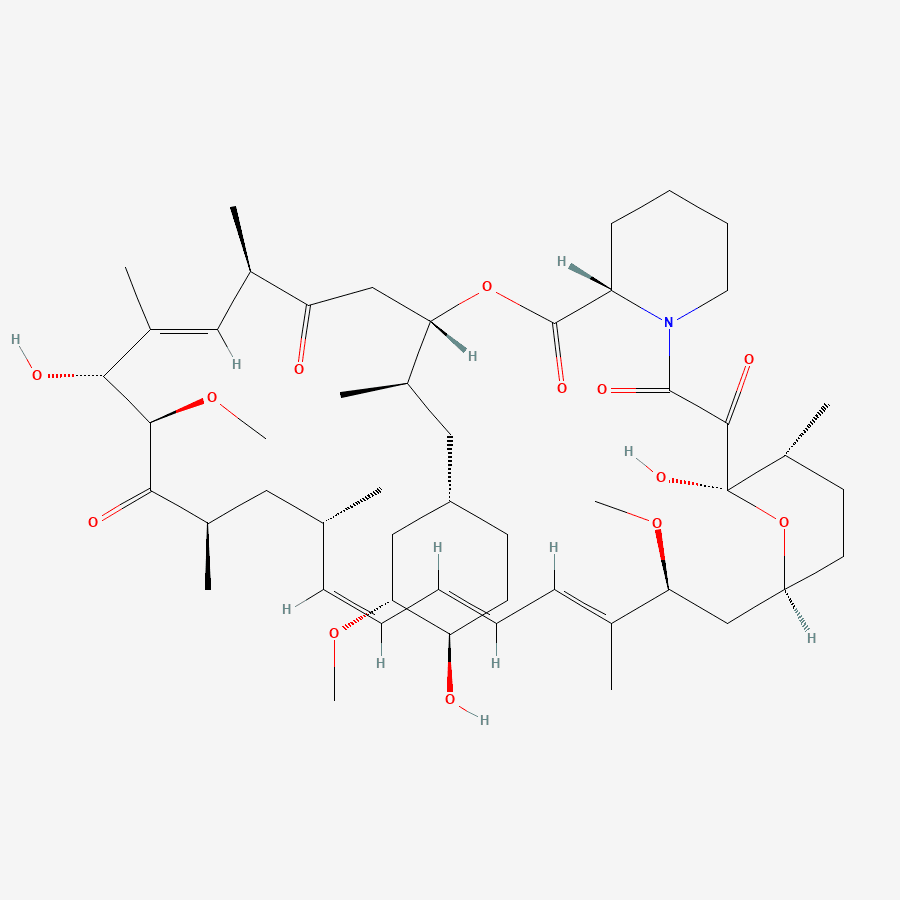
This is an approved drug used to prevent organ-transplant rejection. Some people now take small, occasional doses hoping it slows aging — an idea based on animal studies, not yet proven in people.
- What it is
- A prescription mTOR inhibitor, approved for transplant-rejection prevention and lymphangioleiomyomatosis (LAM) — not for aging.
- Evidence
- A 48-week human safety trial found no significant change in its primary target (visceral fat). Separate mTOR-inhibitor trials improved vaccine response and cut infection rates in the elderly. No trial has shown a lifespan or disease-outcome benefit.
- Studied dose
- 5 mg or 10 mg once weekly (compounded rapamycin) in the longest aging-focused trial — a different regimen from continuous daily transplant dosing.
- Safety
- Adverse events were similar to placebo at low, intermittent doses over 48 weeks. Continuous higher-dose use (the approved indication) carries known immunosuppression risks that have not been tested in healthy people.
What human trials actually show
Randomized, placebo-controlled human trials only. Animal data never appears in this section — it cannot raise a grade, and it is noted separately below.
- 01Aging (Albany NY)2025— Long-term safety and healthspan metrics (PEARL trial)
- Design
- 48-week, decentralized, double-blind, randomized, placebo-controlled (NCT04488601)
- Dose
- Placebo, 5 mg, or 10 mg compounded rapamycin, once weekly
- Duration
- 48 weeks
Healthy, normative-aging adults
The primary outcome, visceral adiposity by DXA scan, did not change significantly at either dose. Adverse and serious adverse events were similar across all groups. Lean tissue mass and self-reported pain improved significantly in women taking 10 mg/week; self-reported emotional well-being and general health improved at 5 mg/week. No other significant effects were found. The authors describe this as evidence of relative safety, not of efficacy.
doi:10.18632/aging.206235 - 02Science Translational Medicine2014— Immune response to vaccination (mTOR inhibition)
- Design
- Randomized, placebo-controlled
- Dose
- Oral RAD001 (everolimus, an mTOR inhibitor closely related to rapamycin)
- Duration
- 6 weeks of dosing, response measured after influenza vaccination
Elderly volunteers
RAD001 improved the antibody response to influenza vaccination by about 20% versus placebo, at doses that were relatively well tolerated, and reduced the proportion of T cells expressing PD-1, a marker that rises with age and is associated with declining immune function.
doi:10.1126/scitranslmed.3009892 - 03Science Translational Medicine2018— Infection rates with selective TORC1 inhibition
- Design
- Phase 2a, randomized, placebo-controlled, multicentre
- Dose
- Low-dose combination of BEZ235 (catalytic) plus RAD001 (allosteric), selectively inhibiting TORC1
- Duration
- 6 weeks of dosing, infections tracked for a year afterward
264 elderly subjects
The treatment group had a significant (p=0.001) reduction in reported infections over the following year, along with up-regulated antiviral gene expression and an improved response to influenza vaccination. This is a Novartis-sponsored follow-up to the 2014 trial, using a different, more selective mTOR-inhibitor combination, not rapamycin itself.
doi:10.1126/scitranslmed.aaq1564
No completed human trial has tested rapamycin, or any mTOR inhibitor, for lifespan or a hard age-related disease outcome — the trials above measure immune biomarkers, infection rates, and short-term safety, not survival or disability. The two Novartis trials also did not use rapamycin itself; they used RAD001 (everolimus) and a RAD001/BEZ235 combination, related mTOR inhibitors dosed and formulated differently from the rapamycin sold for off-label longevity use. And the one trial that did test rapamycin directly (PEARL) missed its own primary endpoint. Extending healthy lifespan in mice is well established; nothing comparable exists in humans.
Grade C — early. Human trials show real immune-function and biomarker effects from mTOR inhibition, but no completed human trial has shown a mortality or healthspan outcome, and the drug is not approved anywhere for longevity use. How we grade evidence.
Side effects & safety
- Reported in the aging-focused trial
- At low, intermittent (weekly) doses over 48 weeks, adverse and serious adverse events were similar between rapamycin and placebo groups in the PEARL trial.
- Known from the approved, continuous-dosing use
- At the doses and continuous schedule used to prevent transplant rejection, sirolimus causes clinically significant immunosuppression, impaired wound healing, mouth sores, elevated cholesterol and triglycerides, and increased infection risk. These risks are well documented in transplant patients, not in healthy adults on intermittent dosing.
- The honest caveat
- Nobody has run a long-term trial of intermittent low-dose rapamycin in healthy adults beyond 48 weeks. The dosing pattern people use for longevity is different enough from the approved transplant regimen that transplant-patient safety data does not simply transfer over — and the off-label safety data set is still small.
Interactions with medications
The section most longevity sites skip. If you take prescription medication, read this before anything else on the page.
Rapamycin is metabolised through CYP3A4/P-glycoprotein. Strong inhibitors can raise blood levels sharply and inducers can drop them below any useful range — this is one of the most consequential interactions with the drug and is not optional to check.
Additive immunosuppression is the mechanism the transplant indication relies on. Combining rapamycin with other immunosuppressive therapy outside a transplant context meaningfully raises infection risk.
Live-attenuated vaccines are generally avoided during immunosuppressive therapy. Ironically, the human evidence above concerns rapamycin's effect on inactivated flu vaccine response, not live vaccines.
Overlapping CYP3A4 metabolism with several statins raises the theoretical risk of higher statin exposure. Not established as a clinical problem, but worth a level check if both are prescribed.
Sirolimus is associated with fetal harm in animal studies and is not used in pregnancy for its approved indication. Avoid.
Is Rapamycin legal where you live?
Regulatory status is tracked per market and reviewed on the date shown. Where a compound is not authorised, this site does not link to sellers.
Sirolimus (Rapamune) is FDA-approved by prescription only, for preventing kidney-transplant rejection and for LAM. Off-label prescribing for aging happens through willing physicians and compounding pharmacies, but carries no FDA approval for that use.
Source: US Food and Drug Administration
Sirolimus is licensed by the MHRA by prescription for transplant-rejection prevention. It is not licensed for aging, and off-label private prescribing is a physician decision outside that licence.
Source: MHRA
Sirolimus has EU marketing authorisation for transplant-rejection prevention, prescription-only. No EU authorisation exists for aging or longevity use.
Source: European Medicines Agency
Le sirolimus est autorisé sur ordonnance pour la prévention du rejet de greffe. Aucune autorisation n'existe pour un usage lié au vieillissement.
Source: ANSM / Agence européenne des médicaments
El sirolimús está autorizado con receta para la prevención del rechazo de trasplantes. No existe autorización para su uso relacionado con el envejecimiento.
Source: AEMPS / Agencia Europea de Medicamentos
Sirolimus ist verschreibungspflichtig zur Vorbeugung von Transplantatabstoßung zugelassen. Für eine Anwendung im Bereich Anti-Aging besteht keine Zulassung.
Source: BfArM / Europäische Arzneimittel-Agentur
Sirolimus (Rapamune) is a globally marketed prescription immunosuppressant for kidney-transplant rejection prophylaxis, and the UAE requires a prescription from a DHA- or DOH-licensed physician for medicines in this class — the same MOHAP framework confirmed for metformin. We could not query the Emirates Drug Establishment's own drug-directory search tool to confirm sirolimus's specific product-registration listing, so this is the prescription-only status implied by the UAE's general pharmaceutical framework rather than a product-specific confirmation. No regulator anywhere, including the UAE, has approved it for anti-aging use.
Source: UAE Ministry of Health and Prevention (MOHAP) / Emirates Drug Establishment (EDE)
The Saudi Food and Drug Authority's own published page on sirolimus (marketed as Rapamune) confirms it as an indicated prescription drug for prophylaxis of kidney-transplant rejection in patients 13 and older, with an explicit safety warning against its use in liver- or lung-transplant patients. SFDA has published no approval for any anti-aging or longevity use.
Source: Saudi Food and Drug Authority (SFDA)
Il sirolimus ha un'autorizzazione all'immissione in commercio a livello UE (procedura centralizzata EMA) per la prevenzione del rigetto in trapianto renale, valida automaticamente anche in Italia senza necessità di un'autorizzazione nazionale separata. È disponibile solo su prescrizione medica. Nessuna autorizzazione esiste, in Italia o altrove, per un uso legato alla longevità o all'anti-invecchiamento.
Source: Agenzia Italiana del Farmaco (AIFA) / Agenzia europea per i medicinali (EMA)
Sirolimus heeft een EU-brede handelsvergunning (gecentraliseerde EMA-procedure) voor de preventie van afstoting na niertransplantatie, die automatisch ook in Nederland geldt zonder aparte nationale goedkeuring. Uitsluitend op recept verkrijgbaar. Nergens, ook niet in Nederland, bestaat een goedkeuring voor gebruik gericht op veroudering of levensduur.
Source: CBG-MEB / Europees Geneesmiddelenbureau (EMA)
O sirolimo tem registro ativo na Anvisa (como Rapamune, da Pfizer, e como genérico) para prevenção de rejeição em transplante renal e para tratamento de linfangioleiomiomatose (LAM) em adultos a partir de 18 anos, disponível apenas com prescrição médica em comprimidos orais. A Anvisa não aprovou nenhum uso relacionado a longevidade ou anti-envelhecimento.
Source: Agência Nacional de Vigilância Sanitária (ANVISA)
Dosing & timing
The PEARL trial dosed compounded rapamycin once weekly for 48 weeks. This intermittent, pulsed pattern is the basis for most off-label longevity protocols, and it is not the FDA-approved dosing schedule.
The approved label for organ-transplant rejection prevention uses a loading dose followed by continuous once-daily maintenance dosing, adjusted to measured blood trough levels — a fundamentally different, more sustained exposure than the weekly pulses studied for aging.
Off-label longevity protocols are extrapolated from small trials and case series using intermittent low-dose schedules. They are not the continuous dosing the safety and efficacy data for transplant rejection was built on — evidence from one regimen does not automatically transfer to the other.
Cost: Compounded rapamycin requires a prescription and typically an out-of-pocket relationship with a physician willing to prescribe off-label, since insurance will not cover an unapproved indication — cost varies widely by clinic and pharmacy rather than following a fixed retail price.
Questions people actually ask
Is rapamycin approved for anti-aging use?
No, in any market. Sirolimus (rapamycin) is approved for preventing organ-transplant rejection and for lymphangioleiomyomatosis (LAM), a rare lung disease. Any use for aging or longevity is off-label, meaning a physician can legally prescribe it for that purpose in some jurisdictions, but no regulator has evaluated or approved it for that use.
Does rapamycin extend human lifespan?
That has not been tested. Rapamycin reliably extends lifespan in mice and other model organisms, which is why it draws attention. In humans, the best available trial (PEARL, 48 weeks) measured safety and biomarkers, not survival, and missed its own primary endpoint of reduced visceral fat.
What is the difference between rapamycin and the drugs used in the immune-function trials?
The two Novartis-sponsored trials cited here used RAD001 (everolimus) and a RAD001/BEZ235 combination — related mTOR inhibitors, but not rapamycin itself, and dosed differently. They are relevant because they support the same mechanism, not because they are the same drug people are taking off-label.
Is low-dose, weekly rapamycin as risky as the transplant dose?
Probably not as risky, based on the 48-week PEARL trial's adverse-event data, but 'probably not as risky' is not the same as 'safe long-term.' Nobody has run a multi-year safety trial of intermittent low-dose rapamycin in healthy adults, which is the actual population and duration the longevity claims are aimed at.
Can I get rapamycin without a prescription?
It is a prescription-only medication everywhere it is approved, and there is no over-the-counter or supplement pathway to it. Sourcing it outside a prescribing relationship also means no assurance of correct compounding, dose, or purity.