NAD+ (injectable): evidence, dosing, safety & interactions
Nicotinamide adenine dinucleotide
Also sold or labeled as: NAD+, NAD, IV NAD+ therapy, NJ100, NJ500, NJ1000
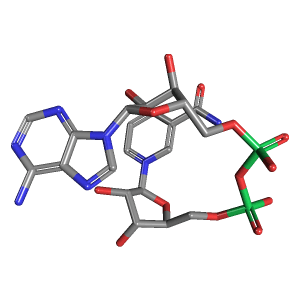
This is the actual coenzyme your cells need for energy production, given directly by IV or injection instead of taken as a pill that your body converts into it. One real clinical trial exists for a specific heart condition; the popular anti-aging, energy and detox claims sold at IV clinics have essentially no published human trial behind them.
- What it is
- The coenzyme itself, given directly by IV infusion or injection — not to be confused with oral NAD+ precursors like NMN or NR, which have a separate and larger evidence base of their own.
- Evidence
- One randomised trial shows a real cardiac-function benefit in heart failure patients. No published trial supports the energy, anti-aging, hangover or addiction-recovery claims sold to healthy people at IV clinics.
- Studied dose
- 10 mg/day IV for 7 days in the heart-failure trial — a low, disease-specific dose, not comparable to the much higher amounts (often 500-1,000 mg) commonly infused or sold in wellness settings.
- Safety
- The heart-failure trial reported no significant safety signal at its studied dose over 7 days. IV NAD+ infusions at the much higher doses used in wellness clinics are commonly reported (outside formal trials) to cause infusion discomfort, flushing and nausea, particularly at faster infusion rates.
What human trials actually show
Randomized, placebo-controlled human trials only. Animal data never appears in this section — it cannot raise a grade, and it is noted separately below.
- 01American Journal of Cardiovascular Drugs2025— Intravenous NAD+ in heart failure from ischemic cardiomyopathy
- Design
- Single-centre, prospective, randomised, placebo-controlled trial
- Dose
- Intravenous NAD+ 10 mg/day for 7 days, alongside guideline-directed medical therapy
- Duration
- Primary endpoint at 1 month; secondary/safety follow-up to 6 months
180 adults with ischemic cardiomyopathy, LVEF ≤45%, NYHA class II-III
NAD+ produced a significantly greater improvement in left ventricular ejection fraction at 1 month versus placebo (45.44% vs 42.44%, p=0.024). NT-proBNP reduction, 6-month major adverse cardiac/cerebrovascular events, and NYHA functional class all trended favourably but did not reach statistical significance in this single trial.
doi:10.1007/s40256-025-00764-7
This is the central gap: exactly one randomised controlled trial of directly administered NAD+ in humans was found, and it studied a specific disease population (advanced ischemic heart failure) at a comparatively low dose (10 mg/day). It has not been replicated. A separate, targeted search specifically for trials of IV NAD+ for the claims it is actually marketed on to healthy consumers — energy, anti-aging, hangover recovery, addiction or detox support — returned no clinical trial evidence of any kind. The much higher doses commonly infused at wellness clinics (often 500-1,000 mg per session) have not been studied in any controlled human trial that a specific search could locate, so neither their efficacy nor their safety at that dose range has trial-level support.
Grade B — promising. One randomised, placebo-controlled human trial (180 patients with heart failure from ischemic cardiomyopathy) found that a week of intravenous NAD+ improved left ventricular ejection fraction versus placebo at one month, with favourable but non-significant trends on hospitalisation and functional class. That is a real, disease-relevant outcome in a proper RCT — genuinely more than most injectable 'research' compounds on this site can show. It stays at Grade B rather than A because it is a single trial, in a specific disease population (advanced ischemic heart failure), not yet replicated, and it says nothing about the energy, anti-aging, hangover or detox claims IV NAD+ is actually marketed for to healthy people — a targeted search of the literature for that specific use returned no clinical trial evidence at all. How we grade evidence.
Side effects & safety
- Reported in the heart-failure trial
- No significant safety signal was reported at the 10 mg/day IV dose used over 7 days, though this is a single trial with limited power to detect rare adverse events.
- Commonly reported at wellness-clinic doses (outside formal trials)
- Infusion-related discomfort, flushing, chest or abdominal tightness, and nausea are frequently reported anecdotally at the much higher doses used in IV wellness settings, especially with faster infusion rates — but this is clinic experience, not published trial data.
- The honest caveat
- The one controlled trial used a dose roughly 50-100x lower than what many wellness clinics infuse. Tolerability data from the trial dose cannot be assumed to apply to the doses this compound is actually sold and administered at.
Interactions with medications
The section most longevity sites skip. If you take prescription medication, read this before anything else on the page.
The one existing trial administered NAD+ alongside standard guideline-directed heart-failure therapy without a reported interaction, but this has not been studied outside that specific clinical context.
No interaction data exists for IV NAD+ in people without heart failure, at any dose, because no such trial has been published.
Is NAD+ (injectable) legal where you live?
Regulatory status is tracked per market and reviewed on the date shown. Where a compound is not authorised, this site does not link to sellers.
Not an approved drug for any indication. IV NAD+ offered at wellness clinics is typically administered as a compounded product at practitioner discretion; NAD+ sold directly to consumers as a self-injectable vial has no lawful route to human use.
Source: US Food and Drug Administration
No UK marketing authorisation as a medicine for self-administered injectable NAD+.
Source: MHRA
No EU marketing authorisation exists for self-administered injectable NAD+.
Source: European Medicines Agency
Germany applies the EU position: no authorised medicinal product for self-administered injectable NAD+.
Source: BfArM / European Medicines Agency
Aucune autorisation de mise sur le marché pour le NAD+ injectable en auto-administration.
Source: European Commission / ANSM
Sin autorización de comercialización para el NAD+ inyectable de autoadministración.
Source: European Commission / AEMPS
Dosing & timing
This is the only dose with any randomised trial evidence behind it, and it was studied in a specific disease population under medical supervision.
This dose range has no published controlled-trial data on either efficacy or safety — it is common clinical practice, not trial-established.
No published trial has tested self-administered NAD+ injection outside a clinical setting at any dose.
Questions people actually ask
Does IV NAD+ actually work for energy or anti-aging?
A targeted search of the published literature found no clinical trial evidence for IV NAD+ improving energy, slowing aging, treating hangovers, or supporting addiction recovery in humans — the one real trial that exists is in heart-failure patients, at a much lower dose than wellness clinics typically use, measuring a cardiac outcome, not any of those claims.
Is injectable NAD+ different from NMN or NR supplements?
Yes. NMN and NR are oral precursors your body converts into NAD+ over time, with their own separate evidence base. Injectable NAD+ delivers the finished molecule directly, bypassing that conversion — the two have different trial evidence and shouldn't be treated as interchangeable just because they raise the same coenzyme.
Is NAD+ IV therapy FDA-approved?
No. It is not an approved drug for any indication in the US. IV NAD+ offered at wellness clinics is typically provided as a compounded product at a practitioner's discretion, which is a different regulatory situation from an FDA-approved therapy, and self-injected 'research use only' NAD+ sold online has no lawful route to human use at all.
Is it safe to inject NAD+ bought online?
The one controlled human trial used a dose far lower than what is typically infused or sold for self-use, and reported no significant safety signal at that specific low dose over 7 days under medical supervision. That does not establish safety at the higher, unsupervised doses this compound is actually sold and used at, on top of the usual purity and sterility concerns for an unregulated injectable.