What results can I expect from a longevity clinic?

See more of CureMed in your Google results.
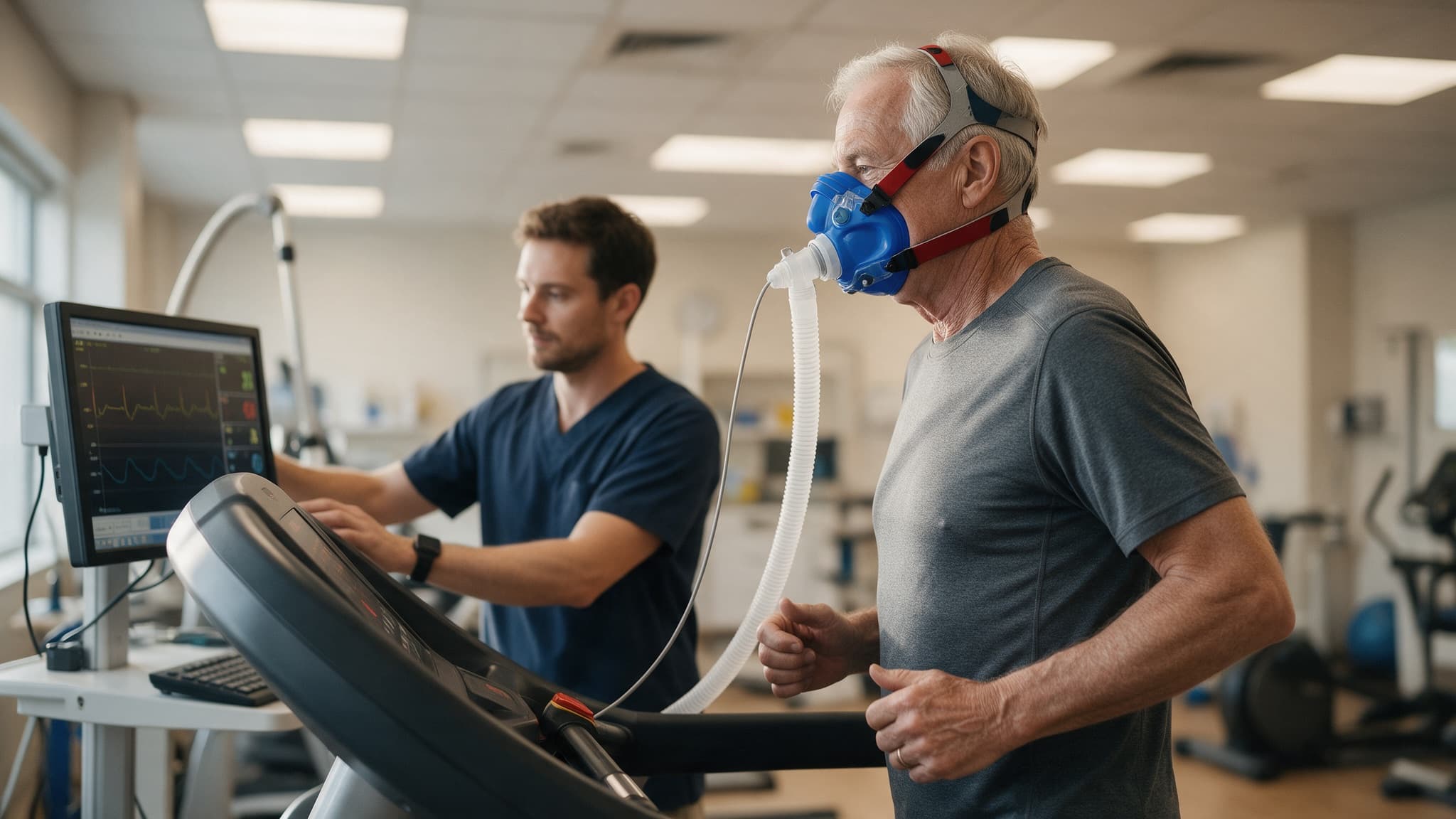
A good longevity clinic should deliver results you can measure within months: blood pressure and cholesterol particles at target, better blood sugar and weight, higher fitness and strength, a cleaned-up medicine list, better sleep and cancer screening done on time. What no clinic can deliver: a meaningful 'reversed biological age', proof of a longer life, a reassuring whole-body scan, or a result from peptides and IV drips. If a clinic's results are numbers from a biological-age test, ask for the ones from a blood-pressure cuff instead.
From a good longevity clinic you can expect results that are measurable within months and have evidence behind them, ranked by how likely a well-run programme is to deliver them: blood pressure and ApoB brought to target (the most reliable result, and the one with mortality evidence); HbA1c, fasting insulin and weight improved, substantially where a GLP-1 agonist is indicated; VO₂max, grip strength and sit-to-stand improved with a coached programme; a shorter, safer medication and supplement list after a pharmacist's review; sleep regularised and apnoea identified; guideline screening completed on schedule; and, less reliably, sustained habit change over years, which depends on contact frequency. What you cannot expect, from any clinic: a reversed 'biological age' that means anything (the clocks vary with a meal and have no validated individual precision); extended lifespan demonstrated to you (no trial has measured it); a clean whole-body scan that reassures (a third of people get a finding); or a result from a peptide, IV or supplement protocol beyond a receipt. The clinics that publish outcome claims — 'three in four members in good health' — publish no methodology, denominator or control group, which is the tell.
- The reliable results are the boring ones — blood pressure, ApoB, HbA1c, fitness, strength — and each has a trial behind it and a number you can see change.
- The result most people are sold — a lower biological age — is a test with no individual precision, and moving it means nothing.
- A good clinic's best result is often subtraction: fewer medicines, fewer supplements, fewer tests.
- Sustained change over years is the result the prevention trials support and the one a single annual review cannot deliver.
- No clinic can show you extended lifespan; anyone who claims to is quoting a marker.
This assessment is CureMed's, reviewed by the PharmD-led team at CureMed Labs.
Results to expect, ranked by likelihood and evidence
Ranked on: how reliably a well-run, physician-led programme produces the result within a year, the strength of the evidence linking the result to health outcomes, and whether the result can be verified with a measurement the patient can see. Results that rest on unvalidated tests rank last regardless of how often they are claimed.
| # | Option | Verdict | Grade |
|---|---|---|---|
| 1 | Blood pressure and ApoB at target | The most reliable result, with mortality evidence | GRADE AEstablished |
| 2 | HbA1c, fasting insulin and weight improved | Reliable with coaching; large where a GLP-1 agonist is indicated | GRADE AEstablished |
| 3 | VO₂max, grip strength and sit-to-stand improved | Reliable with a coached programme; measurable at three months | GRADE AEstablished |
| 4 | A shorter, safer medication and supplement list | The result by subtraction; the one most clinics miss | GRADE AEstablished |
| 5 | Sleep regularised; apnoea found and treated | Reliable when asked about; transformative when apnoea is found | GRADE BPromising |
| 6 | Guideline screening completed on schedule | Reliable if the clinic coordinates it; often omitted | GRADE BPromising |
| 7 | Sustained habit change over years | The real result; depends entirely on contact frequency | GRADE BPromising |
| 8 | A reassuring whole-body scan | Cannot be expected; a third get a finding | GRADE DInsufficient or unsafe |
| 9 | A reversed biological age | The most-marketed result; means nothing for an individual | GRADE DInsufficient or unsafe |
| 10 | Extended lifespan | Cannot be shown by any clinic | GRADE DInsufficient or unsafe |
- 01
Blood pressure and ApoB at target
GRADE AEstablishedThe most reliable result, with mortality evidenceMeasured at baseline, treated with generic medicines and lifestyle, retested at three months: blood pressure under 130/80 and ApoB under 80 mg/dL (lower with risk) are achievable in most members within months, and each has randomised evidence for fewer events and deaths. If a clinic does not deliver this result, nothing else it delivers matters.
- 02
HbA1c, fasting insulin and weight improved
GRADE AEstablishedReliable with coaching; large where a GLP-1 agonist is indicatedStructured diet and activity coaching lowers HbA1c and insulin over three to six months; where obesity with cardiovascular disease or diabetes indicates a GLP-1 agonist, weight loss of the magnitude seen in trials and a corresponding fall in glucose markers. A result you can read on your own scales and your own panel.
- 03
VO₂max, grip strength and sit-to-stand improved
GRADE AEstablishedReliable with a coached programme; measurable at three monthsA supervised aerobic and resistance programme raises measured VO₂max and strength within twelve weeks in most people, and these are among the strongest predictors of mortality and independence. A clinic that tests them at baseline and again at three and six months is delivering the result the fitness evidence supports.
- 04
A shorter, safer medication and supplement list
GRADE AEstablishedThe result by subtraction; the one most clinics missA pharmacist's review typically removes duplicate or ineffective supplements, finds an interaction, and identifies a drug that is raising the very marker being chased. It costs almost nothing, is delivered in one visit, and improves outcomes in trials of medication review in older adults. If your clinic did not do it, ask why.
- 05
Sleep regularised; apnoea found and treated
GRADE BPromisingReliable when asked about; transformative when apnoea is foundA fixed schedule and caffeine and alcohol timing improve daytime function within weeks; screening symptoms for obstructive sleep apnoea and referring for a study finds a treatable condition in a meaningful share of members. A result that depends on the clinic asking.
- 06
Guideline screening completed on schedule
GRADE BPromisingReliable if the clinic coordinates it; often omittedColorectal, breast, cervical and — for smokers — lung screening booked and done. The result with the strongest mortality evidence on the page and the one documented as missing from expensive executive menus. Ask for the schedule at the first visit.
- 07
Sustained habit change over years
GRADE BPromisingThe real result; depends entirely on contact frequencyThe structured-prevention trials showed sustained coached contact produces lasting change; a programme with quarterly contact can deliver it, and one with an annual review cannot. The result that separates a programme from an event, and the one to ask how the clinic delivers.
- 08
A reassuring whole-body scan
GRADE DInsufficient or unsafeCannot be expected; a third get a findingRoughly a third of asymptomatic adults have a critical or indeterminate finding on whole-body MRI, most with no follow-up guideline; the result is a cascade, not reassurance. A clean scan tells you less than a normal ApoB.
- 09
A reversed biological age
GRADE DInsufficient or unsafeThe most-marketed result; means nothing for an individualEpigenetic clocks have technical reproducibility and poor biological reliability — results shift with a meal, stress and time of day — and their error at individual level is well below what any biomarker needs to guide a decision. A clinic that reports your age dropped three years reported the noise. Ignore it, however it is framed.
- 10
Extended lifespan
GRADE DInsufficient or unsafeCannot be shown by any clinicNo membership has been tested against usual care with a mortality endpoint, and none could report one to you in your lifetime. Published outcome claims — 'three in four returning members with severe conditions now controlled' — come with no methodology, no denominator and no control group. The components have lifespan evidence; the result is not observable, and any clinic claiming it is quoting a marker.
What good results look like, on a timeline
Expected results from a well-run programme
| When | Result | How you verify it | If it has not happened |
|---|---|---|---|
| Week 0 | Baseline: panel with ApoB and Lp(a); blood pressure; VO₂max; DEXA; grip; medication review; screening schedule | You have the numbers in hand | The clinic skipped the baseline — leave |
| Month 1 | Medication and supplement list shortened; sleep schedule fixed; training started | Fewer bottles; a written programme | No review, no programme — ask why |
| Month 3 | Blood pressure and ApoB retested and moving to target; HbA1c improving; strength up | Your own numbers versus week 0 | No retest booked — the plan has no follow-through |
| Month 6 | ApoB and blood pressure at target; VO₂max and sit-to-stand improved; weight down where it needed to be; screening done | Second panel, second fitness test, photographs if skin was in scope | Numbers unchanged — the programme is a report |
| Year 1 | Targets held; habits sustained; a plan for year two with fewer tests, not more | Annual review that removes as much as it adds | More tests and a biological-age number — the clinic has run out of medicine |
Frequently asked questions
What results can I expect from a longevity clinic?
Measurable ones within months: blood pressure and ApoB at target, HbA1c, insulin and weight improved, VO₂max and strength up with a coached programme, a shorter and safer medication list, sleep regularised, and guideline screening completed. Over years, sustained habit change if contact is frequent. Not: a meaningful reversed biological age, demonstrated extended lifespan, a reassuring whole-body scan, or a result from peptides or IV therapy.
Can a longevity clinic reverse my biological age?
It can report a lower number from an epigenetic clock, and the number means nothing for an individual: the clocks are technically reproducible but biologically unreliable — results shift with a meal, stress and time of day — and their individual-level error is well below what a decision-guiding biomarker needs. A three-year 'reversal' is within the noise. Judge the clinic on ApoB and blood pressure instead.
How quickly should I see results from a longevity clinic?
Within three months: a shortened medication list and a started programme in month one; blood pressure and ApoB retested and moving in month three; at target with fitness, strength and glucose improved by month six; targets held and habits sustained at a year. A clinic that has not retested by month three has no follow-through, and a programme whose numbers are unchanged at six months is a report.
Does a longevity clinic extend life?
No clinic can show that: no membership has been tested against usual care with a mortality endpoint, and none could report the result within a member's lifetime. The components inside a good programme — blood-pressure and ApoB control, smoking cessation, GLP-1 agonists where indicated, structured coaching, guideline screening — have mortality evidence separately. Any clinic claiming extended life is quoting a marker.
Is a clean whole-body scan a good result?
It is not a result to expect: roughly a third of asymptomatic adults have a critical or indeterminate finding on whole-body MRI, most without a follow-up guideline, and the scan has no evidence of benefit. A normal ApoB, a controlled blood pressure and a completed colonoscopy tell you far more about your future than a clean scan does.
What is the best result a longevity clinic can give me?
Often a subtraction: fewer medicines and supplements after a pharmacist's review, fewer unnecessary tests, and a programme that removes as much as it adds at the annual review — alongside blood pressure and ApoB at target and measurably better fitness and strength. The results that matter are the ones you can see on your own panel and your own scales, retested on a schedule.
Keep reading
- Longevity health clinics
The evidence ledger, the epigenetic-clock reliability data and the outcome-claim analysis.
- Biological age tests: what they measure and what they miss
Why a 'reversed' age is noise.
- Best longevity blood tests and biomarkers to monitor
The targets and retest intervals the results should be judged against.
- Free stack check
The subtraction result, started before the first visit.
More in Longevity clinics
- Best longevity coaching services for personalized anti-aging plans.
Structured coaching cut diabetes incidence by 58% in the DPP trial, beating metformin — but only with weekly contact and a credentialed coach.
- What are the best longevity clinics for anti-aging?
Academic and hospital-affiliated longevity clinics rank best for anti-aging, ahead of blood-panel subscriptions and pricier concierge scan memberships.
- How to choose the best longevity clinic for me?
Choosing a longevity clinic is a matching problem: what your GP covers, what you need, what you'll use and what you can pay decide it, not the clinic's menu.
- Which longevity clinic offers the most comprehensive health optimization?
Physician-led longevity programmes rank most comprehensive for health optimization, covering every outcome-evidence lever ahead of blood-panel subscriptions.
- What tests do top longevity clinics typically include?
Standard and advanced blood work like ApoB and Lp(a) rank first among longevity clinic tests and are available via primary care; whole-body MRI ranks last.
- Are longevity clinics worth the cost for lifespan extension?
A longevity clinic is worth its cost only for mortality-evidenced parts, like blood-pressure and ApoB control; concierge memberships mostly sell unproven scans.