MOTS-c: الأدلة والجرعات والسلامة والتفاعلات
Mitochondrial Open Reading Frame of the 12S rRNA-c, a 16-amino-acid mitochondrial-derived peptide
يُباع أو يُوسم أيضًا باسم: MOTS-c, Mitochondrial-derived peptide c, MOTSc, MS30
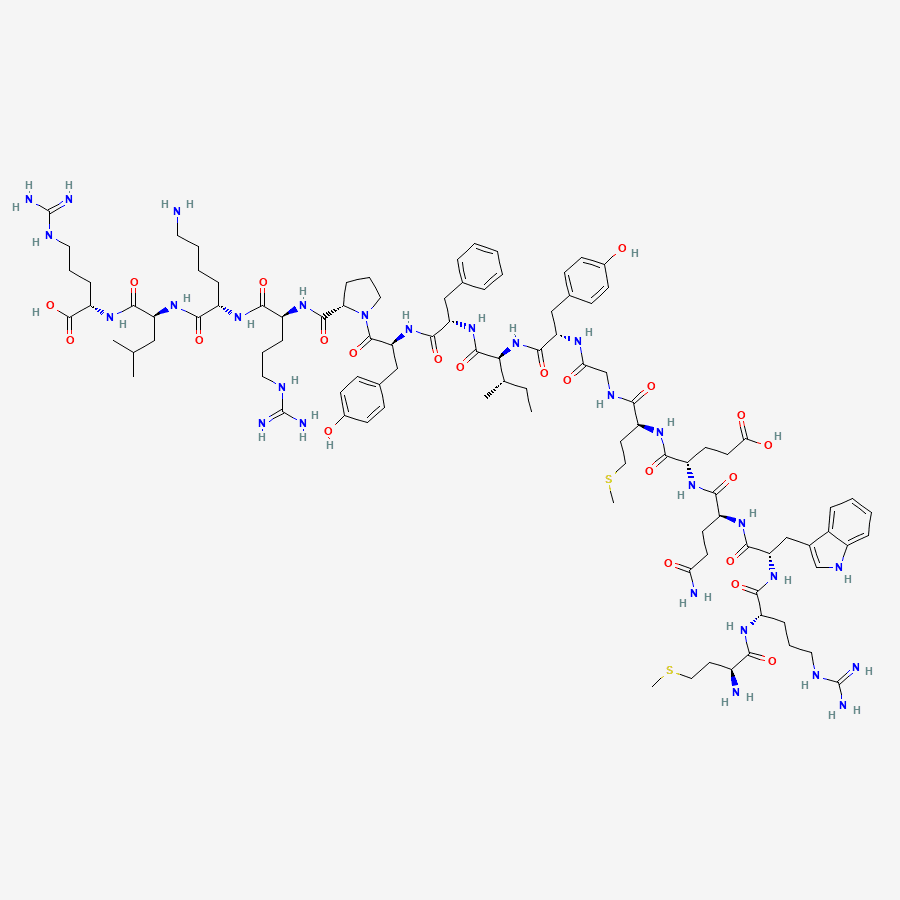
This is a substance your own cells naturally make that may help your body handle exercise and stress. Scientists are actively studying it, but it hasn't been properly tested in people yet, so real-world safety and dosing are unknown.
- What it is
- A peptide made from a short reading frame inside mitochondrial DNA, discovered in 2015 and studied as a metabolic signaling molecule — not a peptide anyone has completed a human dosing trial with.
- Evidence
- Human research measures the body's own circulating MOTS-c levels rising with exercise or heat exposure. Administering synthetic MOTS-c and testing it as a drug has only been done in mice.
- Studied dose
- No human dose exists. Mouse studies used intraperitoneal injection; no published mg/kg dose translates to a validated human starting point.
- Safety
- No human safety data exists at all, because no human has been dosed with it in a published trial. Mouse studies have not reported significant adverse findings, but full toxicology has not been characterized even there.
ما تُظهره التجارب البشرية فعليًا
تجارب عشوائية محكومة بدواء وهمي على البشر فقط. لا تظهر بيانات الحيوانات في هذا القسم أبدًا — فهي لا يمكن أن ترفع التقييم، وتُذكر بشكل منفصل أدناه.
- 01Journal of Applied Physiology2021— Endogenous mitochondrial-derived peptide response to acute exercise
- التصميم
- Randomized, controlled (endurance vs. resistance exercise vs. control)
- الجرعة
- N/A — measured the body's own circulating MOTS-c; no MOTS-c was administered
- المدة
- Blood and muscle samples before, 30 minutes, and 3 hours after a single exercise session
30 subjects
Circulating levels of the related mitochondrial-derived peptide humanin rose significantly after acute endurance exercise; MOTS-c showed a trend toward increase after endurance exercise but not resistance exercise. This measures the body's endogenous peptide response to exercise, not an administered-MOTS-c intervention.
doi:10.1152/japplphysiol.00706.2019 - 02Scientific Reports2021— Endogenous MOTS-c response to a structured exercise program
- التصميم
- Randomized controlled trial (registered, NCT01140282)
- الجرعة
- N/A — measured circulating MOTS-c; no MOTS-c was administered
- المدة
- 16-week aerobic and resistance exercise intervention
49 breast cancer survivors (Hispanic and non-Hispanic White)
A 16-week exercise program significantly increased circulating MOTS-c in non-Hispanic White survivors, associated with reduced fat mass and improved insulin resistance markers, but showed no significant change in Hispanic survivors — again, this is the body's own MOTS-c responding to exercise, not a MOTS-c drug being tested.
doi:10.1038/s41598-021-96419-z - 03Medicine & Science in Sports & Exercise2025— Endogenous mitokine response to heat stress during immobilization
- التصميم
- Randomized controlled trial (heat vs. sham treatment)
- الجرعة
- N/A — measured circulating MOTS-c; no MOTS-c was administered
- المدة
- 2 weeks of ankle immobilization with repeated heat exposure
19 physically active men
Repeated heat exposure during immobilization significantly increased circulating MOTS-c compared with sham treatment, a mitokine response pattern that partially overlaps with what exercise produces. This is, again, endogenous biomarker research, not an administered-peptide trial.
doi:10.1249/MSS.0000000000003825
This is the central gap: as of this review, no completed human clinical trial has administered synthetic MOTS-c to a person and measured a safety or efficacy outcome. Every human study found in a specific search for MOTS-c human trials measures endogenous, circulating MOTS-c as a biomarker of exercise, heat exposure, aging, or disease (including one trial that measured it only as an incidental marker in a metformin/breast cancer chemotherapy study, finding no significant change). The only data on administering MOTS-c itself comes from mice: intraperitoneal injection improved insulin sensitivity and reduced fat accumulation in diet-induced obese mice (Kim et al. 2019, PMID 31293078, DOI 10.14814/phy2.14171). There is no human pharmacokinetic data, no human dose-finding study, and no human safety trial of any kind for the administered peptide — a much earlier stage than the 'exercise mimetic' marketing language implies.
Grade D — غير كافٍ أو غير آمن. Every human study we could find measures endogenous, circulating MOTS-c levels as a biomarker of exercise, heat stress, or disease — none administers synthetic MOTS-c to a person and measures an outcome. The only data on MOTS-c actually working as an administered compound comes from injecting mice, where it improved insulin sensitivity in obese and aged animals. This is real, active, well-funded mechanistic science, but scientific novelty is not the same as human evidence, and as of this review no completed human clinical trial has tested MOTS-c as a drug at all. كيف نُقيّم الأدلة.
الآثار الجانبية والسلامة
- Reported in humans
- None exists. No published human trial has administered MOTS-c to a person, so there is no human side-effect data of any kind to report — not a reassuring absence, but a literal absence of the underlying research.
- Reported in animal studies
- Mouse studies injecting MOTS-c into diet-induced obese and aged animals have not reported significant adverse findings, but a full toxicology profile has not been established even in animals.
- The honest caveat
- "No known side effects" for MOTS-c is not a safety endorsement. It reflects the complete absence of human dosing data, not a demonstrated safety record — this is a meaningfully different situation from a compound that has been dosed in humans and simply not shown problems.
التفاعلات مع الأدوية
القسم الذي تتجاهله معظم مواقع طول العمر. إذا كنت تتناول دواءً موصوفًا، اقرأ هذا القسم قبل أي شيء آخر في الصفحة.
MOTS-c's proposed mechanism (AMPK activation, improved insulin sensitivity) could theoretically compound the effect of insulin or sulfonylureas and increase hypoglycemia risk. This is entirely theoretical, since no human dosing data exists to confirm or rule it out.
Zero human interaction data exists, because zero human administration trials of MOTS-c exist.
هل MOTS-c مسموح به قانونيًا في بلدك؟
تُتابَع الحالة التنظيمية لكل سوق وتُراجَع بتاريخ محدد. عندما لا يكون المركّب مصرّحًا به، لا يربط هذا الموقع بأي بائع.
Not an approved drug and not lawfully marketed as a dietary supplement. No completed human trial of MOTS-c exists, and the FDA has not reviewed it for any use.
المصدر: US Food and Drug Administration
No UK marketing authorisation as a medicine and no permitted route to sell it as a food supplement.
المصدر: MHRA
No EU marketing authorisation and no novel-food authorisation. There is no lawful consumer route of supply.
المصدر: European Medicines Agency
Germany applies the EU position: no authorised medicinal product and no permitted supplement use.
المصدر: BfArM / European Medicines Agency
Aucune autorisation de mise sur le marché et aucun statut de nouvel aliment. Il n'existe aucune voie légale d'approvisionnement.
المصدر: European Commission / ANSM
Sin autorización de comercialización ni condición de nuevo alimento. No existe una vía legal de suministro.
المصدر: Comisión Europea / AEMPS
الجرعات وتوقيت التناول
No human trial has administered MOTS-c, so there is no validated starting dose, frequency, or route for a person at all.
The published mouse metabolomics study does not report an exact mg/kg dose in its abstract, and animal dosing does not translate directly to a human dose regardless.
Any dosing schedule sold online is an extrapolation from mouse research with no human validation behind it whatsoever.
الأسئلة التي يطرحها الناس فعليًا
Is MOTS-c legal in the United States?
It is not an approved drug and is not lawfully marketed as a dietary supplement. No completed human trial exists for it at all, so there is no FDA review of any kind to point to.
What does the human evidence actually show?
It shows that a person's own body increases circulating MOTS-c levels in response to exercise and heat exposure — real, published, biomarker research. It does not show what happens when synthetic MOTS-c is given to a person, because that trial has not been done.
If MOTS-c is such promising science, why hasn't it been tested in people yet?
Peptide drug development typically requires years of preclinical toxicology and formulation work before a first human dosing trial is allowed to start. MOTS-c is a genuinely active, well-funded research area — the mouse and mechanistic data are real — but it appears to still be at the preclinical stage for administration, whatever an individual seller's marketing claims.
Does exercise raise my MOTS-c levels the same way injecting it would work?
Exercise raising your own circulating MOTS-c and injecting synthetic MOTS-c are different questions entirely. The exercise-response studies tell you your body's own mitochondrial signaling responds to exercise — they say nothing about whether adding exogenous MOTS-c would produce the same or any benefit in a person.
Is it safe to inject MOTS-c bought online?
Nobody knows, in the most literal sense: no human has been dosed with it in a published clinical trial, so there is no human safety data of any kind, on top of the usual purity and sterility concerns for an unregulated injectable product.