Ipamorelin: evidence, dosing, safety & interactions
Aib-His-D-2-Nal-D-Phe-Lys-NH2 (a pentapeptide ghrelin-receptor agonist)
Also sold or labeled as: Ipamorelin acetate
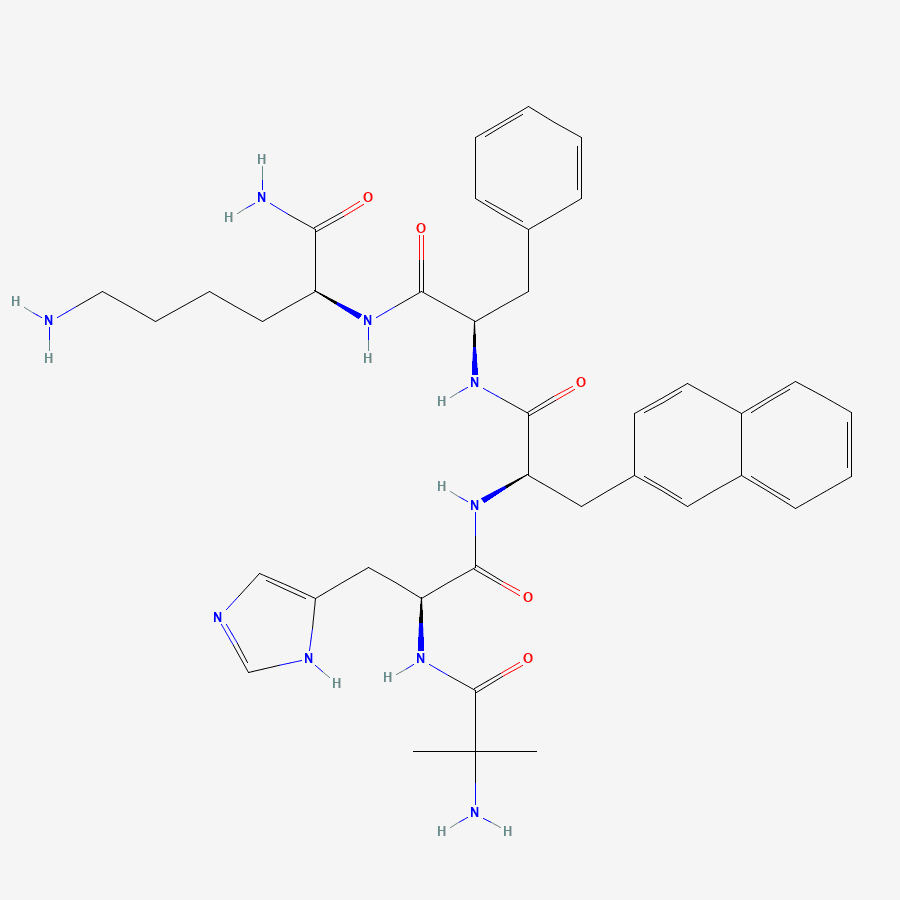
This is a lab-made substance meant to trigger your body to release more growth hormone, often sold combined with another peptide. It isn't an approved medicine, and there's no solid proof it's safe or effective in people.
- What it is
- A short ghrelin-receptor agonist that triggers a single GH pulse, commonly stacked with CJC-1295 and sold as an unregulated research chemical.
- Evidence
- Confirmed to raise GH in a small human pharmacokinetic trial. Its only trial for an actual medical outcome (postoperative ileus, 114 patients) found no significant benefit versus placebo. No trial exists for any longevity, muscle, or fat-loss claim.
- Studied dose
- IV infusions of roughly 3–100 mcg/kg in the pharmacokinetic trial; 0.03 mg/kg IV twice daily in the postoperative-ileus trial. Neither matches the subcutaneous doses typically sold online.
- Safety
- Well tolerated in the two published human trials, with no serious drug-related adverse events reported. Its reputation for sparing cortisol and prolactin comes from an animal study, not confirmed human safety data.
What human trials actually show
Randomized, placebo-controlled human trials only. Animal data never appears in this section — it cannot raise a grade, and it is noted separately below.
- 01Pharmaceutical Research1999— Pharmacokinetics and GH response, dose-ranging
- Design
- Randomized, controlled, dose-escalation trial
- Dose
- IV infusions of 4.21, 14.02, 42.13, 84.27, or 140.45 nmol/kg over 15 minutes
- Duration
- Single-dose pharmacokinetic sampling
40 healthy male volunteers (8 per dose group)
Confirmed dose-proportional pharmacokinetics with a short 2-hour half-life, and a single, time-limited GH pulse peaking around 40 minutes after infusion at every dose tested, with no sustained elevation. This establishes that ipamorelin reliably triggers a GH pulse in humans, and that the pulse is brief.
doi:10.1023/a:1018955126402 - 02International Journal of Colorectal Disease2014— Postoperative ileus after bowel surgery
- Design
- Randomized, double-blind, placebo-controlled, multicenter, Phase 2 proof-of-concept
- Dose
- 0.03 mg/kg IV twice daily for up to 7 days post-surgery
- Duration
- Up to 7 days or hospital discharge
114 adults undergoing open or laparoscopic bowel resection
Ipamorelin was well tolerated (87.5% reported any adverse event versus 94.8% on placebo) but did not significantly speed recovery: median time to first tolerated meal was 25.3 hours with ipamorelin versus 32.6 hours with placebo (P=0.15) — not a statistically significant difference. This is the only trial that has tested ipamorelin against an actual clinical endpoint, and it did not meet it.
doi:10.1007/s00384-014-2030-8 - 03European Journal of Endocrinology1998— Selectivity for GH release over ACTH/cortisol (animal pharmacology, not human)
- Design
- In vitro and in vivo pharmacology in rat pituitary cells, anesthetized rats, and conscious swine
- Dose
- Comparative doses of ipamorelin versus GHRP-6 and GHRP-2, up to 200-fold the dose needed for maximal GH release
- Duration
- Acute dosing studies
Rats and pigs — no human subjects
Ipamorelin released GH with similar potency to older secretagogues GHRP-6 and GHRP-2, but — unlike either of them — did not significantly raise ACTH or cortisol even at very high doses, and had no effect on FSH, LH, prolactin, or TSH. This is the origin of ipamorelin's 'more selective' reputation, and it has never been confirmed in a human trial.
doi:10.1530/eje.0.1390552
The selectivity claim that defines how ipamorelin is marketed — that it spares cortisol and prolactin, unlike older GH secretagogues — comes entirely from a 1998 animal study in rats and pigs. No published human trial has measured whether ipamorelin actually avoids raising cortisol or prolactin in people. Separately, the only trial that tested ipamorelin against a real clinical outcome (recovery time after bowel surgery) found no significant benefit, which should temper any assumption that a confirmed GH pulse automatically translates into a useful effect. No trial of any kind has tested ipamorelin for muscle mass, fat loss, sleep quality, skin, recovery, or longevity — the claims most commonly made about it online — and no trial has tested the CJC-1295 combination it is usually sold alongside.
Grade D — insufficient or unsafe. Completed human trials of ipamorelin do exist, which puts it ahead of some peptides sold online — but they do not show what the marketing implies. A pharmacokinetic trial confirms it reliably triggers a single, short-lived GH pulse in healthy volunteers, and the one trial that tested it for an actual medical condition (postoperative bowel recovery) found no significant benefit over placebo. No trial has tested it for muscle gain, fat loss, sleep, or anti-aging in any population, and its widely repeated 'more selective, fewer side effects' reputation comes from a 1998 animal study, not from humans. How we grade evidence.
Side effects & safety
- Reported in human trials
- Well tolerated in both published trials, with adverse event rates similar to or lower than placebo in the surgical trial. No serious ipamorelin-related adverse events were reported in either study.
- The selectivity claim, precisely
- Ipamorelin avoiding cortisol and prolactin release is a real, specific, and repeatable finding — in rats and pigs. Whether the same selectivity holds in humans has not been directly tested, so carrying that reassurance over to a person injecting it is an inference, not a confirmed fact.
- Product risk
- As an unregulated research chemical, purity, concentration, and sterility of what is actually sold are not independently verified. For an injectable, this is typically the dominant real-world risk, independent of the peptide's own pharmacology.
Interactions with medications
The section most longevity sites skip. If you take prescription medication, read this before anything else on the page.
No human interaction data exists for ipamorelin. Nobody can tell you how it behaves alongside a medication you take, because that study has not been done.
Growth hormone release generally reduces insulin sensitivity. This has not been specifically studied for ipamorelin, but it follows from the same GH-axis mechanism shared by every compound on this page.
Ipamorelin is a growth hormone-releasing peptide and is prohibited under the World Anti-Doping Agency's list (class S2). A tested athlete risks sanction regardless of the health question.
Is Ipamorelin legal where you live?
Regulatory status is tracked per market and reviewed on the date shown. Where a compound is not authorised, this site does not link to sellers.
Not an FDA-approved drug for any indication and not lawfully marketed as a dietary supplement. The FDA has specifically reviewed ipamorelin acetate as a candidate for its list of bulk substances presenting significant safety risks in compounding, citing immunogenicity, impurity, and limited-route safety concerns; its status on that list has been actively under review. Regardless of the compounding-list outcome, no approved product exists.
Source: US Food and Drug Administration
No marketing authorisation as a medicine and not permitted as a food supplement. Any product reaching UK buyers is unlicensed.
Source: MHRA
No marketing authorisation in the EU and no novel-food authorisation. There is no lawful consumer route of supply.
Source: European Medicines Agency
Aucune autorisation de mise sur le marché et aucun statut de nouvel aliment. Il n'existe aucune voie légale d'approvisionnement.
Source: European Commission / ANSM
Sin autorización de comercialización ni condición de nuevo alimento. No existe una vía legal de suministro.
Source: European Commission / AEMPS
Germany applies the EU position: no authorised medicinal product and no permitted supplement use.
Source: BfArM / European Medicines Agency
Not an approved medicine and not sold as a supplement in the UAE. Any access would run through a licensed clinic under physician supervision at most; personal import of an unregistered injectable peptide carries real customs and legal risk.
Source: UAE Ministry of Health and Prevention (MOHAP)
Not SFDA-registered in any category. No legitimate consumer or clinical route to the compound was identified.
Source: Saudi Food and Drug Authority (SFDA)
Non è un farmaco autorizzato né un integratore alimentare consentito, come nel resto dell'UE. La WADA classifica l'ipamorelin tra le sostanze proibite (S2), il che lo colloca anche nell'ambito della Legge 376/2000 sulla tutela sanitaria delle attività sportive per chi lo distribuisce fuori dai canali farmaceutici autorizzati.
Source: Ministero della Salute / Legge 376/2000 antidoping
Geen goedgekeurd geneesmiddel en niet toegestaan als voedingssupplement, zoals elders in de EU. Producten die worden verkocht als 'alleen voor onderzoek' vallen buiten de definitie van geneesmiddel onder de Geneesmiddelenwet, wat de verkoop in de praktijk niet altijd doet handhaven — toediening aan mensen blijft echter niet goedgekeurd.
Source: CBG-MEB / IGJ (Geneesmiddelenwet)
A Anvisa nomeou publicamente a Ipamorelina (junto com BPC-157, TB-500, GHK-Cu e CJC-1295) como peptídeo sem registro em nenhuma categoria, alertando que produtos vendidos como peptídeos injetáveis nas redes sociais são irregulares.
Source: Agência Nacional de Vigilância Sanitária (ANVISA)
Dosing & timing
Intravenous, single-dose, hospital-administered infusions used to characterize the GH-response curve — not a self-administered outpatient protocol.
The dose tested for postoperative bowel recovery, given intravenously in a hospital setting for up to 7 days. It did not significantly outperform placebo on the trial's primary endpoint.
The subcutaneous doses commonly sold and self-administered online, often alongside CJC-1295, have no basis in either published human trial — they are not derived from a dose-finding study.
Questions people actually ask
Is ipamorelin legal?
It is not an FDA-approved drug for any use and is not lawfully sold as a dietary supplement or for human consumption — it is marketed as a research chemical. The FDA has specifically reviewed ipamorelin acetate for its list of bulk substances presenting significant safety risks in compounding, citing immunogenicity, impurity, and limited-route safety concerns.
Does ipamorelin actually increase growth hormone in humans?
Yes — a controlled pharmacokinetic trial confirms a reliable, dose-proportional GH pulse after intravenous administration. What has not been shown is that this pulse produces any of the outcomes it is marketed for; the one trial that tested a real clinical outcome found no significant benefit.
Is ipamorelin really 'safer' than other GH secretagogues?
Its reputation for sparing cortisol and prolactin comes from a well-designed 1998 animal study in rats and pigs, not from a human trial. It is a real and specific finding — just not one that has been confirmed to hold in people.
What's the difference between ipamorelin and CJC-1295?
They raise GH through different receptors — ipamorelin activates the ghrelin receptor, while CJC-1295 mimics GHRH — which is the rationale for combining them. Ipamorelin has a completed human trial testing an actual clinical outcome (which it did not meet); CJC-1295's human data is limited to short pharmacokinetic studies. Neither has evidence for the anti-aging or muscle-building claims made about the combination.
Why did ipamorelin fail its one real clinical trial?
The trial tested whether it would speed bowel recovery after surgery, on the theory that ghrelin-receptor stimulation promotes gut motility. It was well tolerated but the difference in recovery time versus placebo (25.3 vs. 32.6 hours) did not reach statistical significance in a 114-patient study — a genuine negative result, not evidence of harm, but not evidence of benefit either.